09-10-2026
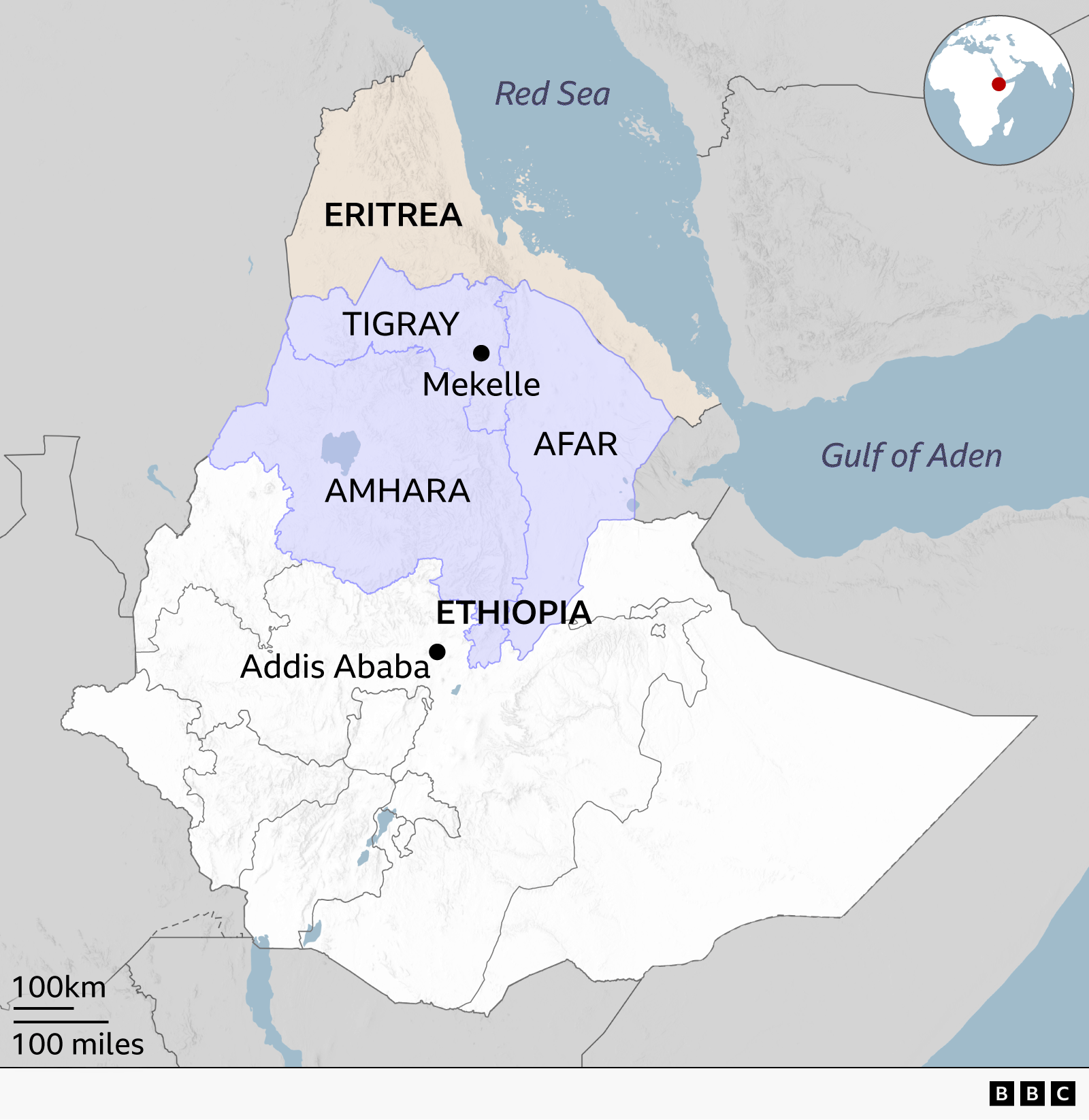
Ethiopia and Eritrea are exchanging accusations of aggression as renewed fighting in northern Ethiopia raises concern that their tensions could develop into another regional war. Ethiopia alleges that Eritrea is supporting Tigrayan rebels, while Eritrea rejects that account and says Addis Ababa has begun an unprovoked war against it. The article reports that Eritrean troops have been deployed in Tigray and that Ethiopian forces have carried out drone strikes against them. A security source estimates that between 5,000 and 8,000 Eritrean soldiers are in the region.
At the same time, Ethiopia’s military has pushed back Tigrayan forces. It has reportedly retaken Mekelle, Tigray’s regional capital, as well as the cities of Shire and Adigrat. The article suggests that the consequences may not remain confined to Tigray: Ethiopia has repeatedly sought direct access to the Red Sea, an objective Eritrea regards as a possible threat to its sovereignty.
The current tensions unfold against a history of severe hostility. Ethiopia and Eritrea fought a brutal border war from 1998 to 2000, and their relations have since deteriorated sharply, despite the countries once having fought alongside one another. The competing claims, reported troop deployments, drone strikes, and dispute over Red Sea access together raise fears of a wider confrontation. The article presents the situation as a dangerous escalation, while distinguishing the two governments’ opposing accounts and noting that some battlefield details are reported rather than independently established in the text.
Entities: Ethiopia, Eritrea, Tigray, Tigrayan rebels, Addis Ababa • Tone: urgent • Sentiment: negative • Intent: inform
09-10-2026
After nearly two weeks of renewed fighting, Ethiopian federal forces and allied fighters retook Mekelle, forcing an alliance that includes the Tigray People’s Liberation Front (TPLF) to withdraw. The advance has effectively ended the fragile peace established by the 2022 Pretoria ceasefire, but the article cautions that capturing the regional capital may end conventional battles without ending the conflict. Rebel forces say they will continue fighting, and Tigray’s mountainous terrain could support a prolonged insurgency. Ethiopia is also confronting armed insurgencies in Amhara and Oromia, potentially stretching its forces across several fronts.
The fighting has intensified regional tensions, especially between Ethiopia and Eritrea. Ethiopia’s pursuit of access to the Red Sea—particularly amid its dependence on Djibouti and interest in the port of Assab—is viewed by Eritrea as a security threat. Reports that Eritrean troops crossed into northern Tigray have raised the possibility that the conflict could draw the two countries into direct confrontation, though Eritrea has not confirmed the reported movements and denies supporting the opposition alliance.
Egypt, Eritrea, Sudan and Somalia have increasingly shared concerns about Ethiopia’s regional ambitions and met in October to discuss cooperation. The article stresses, however, that this is not a formal military alliance and that the countries’ interests differ. Their concerns span the Red Sea, the Nile and the wider Horn of Africa. The Grand Ethiopian Renaissance Dam dispute remains important to Egypt, while Sudan’s war and accusations of outside support add further complexity. The article describes a regional contest in which the outcome in Tigray could affect Ethiopia’s military freedom of action and the calculations of its neighbours, but the supplied text ends before explaining whether those countries will intervene.
Entities: Tigray conflict, Mekelle, Ethiopia, Eritrea, Tigray People’s Liberation Front (TPLF) • Tone: analytical • Sentiment: negative • Intent: analyze
09-10-2026
Ethiopia has accused Eritrea of invading its northern Tigray region and says it will defend itself, while Eritrea rejects the accusation and says Ethiopia is waging an unprovoked war. The dispute comes amid renewed fighting between Ethiopia’s government and the Tigray People’s Liberation Front (TPLF), which began about two weeks ago. The two sides accuse each other of breaking the 2022 agreement that ended a civil war. Ethiopia alleges Eritrea is supporting the TPLF; Eritrea denies this and accuses Ethiopia’s leaders of seeking a pretext to seize Eritrean territory and bring about regime change.
In a letter to the UN Security Council, Ethiopian Foreign Minister Gedion Timothewos described Eritrean forces’ reported advance as a blatant act of aggression and said Ethiopia had no choice but to defend itself. He said the forces had moved as far as 60km into Tigray. Conflict monitor Acled and witnesses reported that Ethiopian drone strikes hit Eritrean troops and ammunition in Adigrat on Wednesday and Thursday. A witness said there had been numerous strikes and that some Eritrean lorries were destroyed; another reported that Eritrean forces appeared to retreat north. No casualties have been independently verified, and the BBC says it cannot report from Tigray.
The crisis has escalated as relations between the neighbours have deteriorated, particularly over Ethiopian Prime Minister Abiy Ahmed’s ambition to gain access to an Eritrean Red Sea port. The countries severed diplomatic ties last week. Eritrea became independent from Ethiopia in 1993, and relations were normalised in 2018. During the Tigray civil war, Eritrea had fought alongside Ethiopia’s government against the TPLF.
The latest unrest follows months of tension and the formation in September of a new alliance of armed groups in Ethiopia, including the TPLF. TPLF forces withdrew from Mekelle, Tigray’s main city, last week; Ethiopian government forces now control it. The competing accusations, reported troop movements and drone strikes have raised fears that renewed fighting could expand into a wider regional conflict.
Entities: Ethiopia, Eritrea, Tigray, Tigray People's Liberation Front (TPLF), Abiy Ahmed • Tone: analytical • Sentiment: negative • Intent: inform
09-10-2026
The article reports growing fears of a wider regional conflict as Eritrean troops are reported to be present in Ethiopia’s Tigray region and both governments exchange increasingly forceful statements. An anonymous security source cited by AFP estimated that 5,000 to 8,000 Eritrean soldiers were in northern Tigray. Ethiopia has asked the UN Security Council for their immediate withdrawal, with Foreign Minister Gedion Timothewos warning that Ethiopia may have to defend itself. Eritrea’s information minister, Yemane Meskel, has accused Ethiopia of provoking war and issued a warning about Eritrea’s sovereignty.
The escalation comes amid renewed fighting in Tigray and broader opposition to Prime Minister Abiy Ahmed’s government. Ethiopian forces, supported by the Tigray Peace Force militia, have retaken Mekelle, but opposition groups have begun collaborating through the Tsimdo movement and the Ethiopian Peoples’ Forces Alliance for Survival. The alliance, announced in September, aims to remove the current government and initiate constitutional dialogue. Analysts say Ethiopia’s conflicts remain unresolved: fighting involving Oromo, Amhara and Tigrayan groups has continued or resumed despite earlier efforts to secure peace. ACLED data indicates that three of the alliance’s seven groups—the Tigrayan Defence Forces, Amhara Fano National Movement and Afar group Ugugumo—participated in recent fighting.
The article also describes regional tensions that could draw in neighboring states. Sudan, Egypt, Eritrea and Somalia each have disputes or concerns involving Ethiopia, including the Nile, alleged support for Sudanese paramilitaries, and Ethiopia’s pursuit of sea access. Abiy’s statement that sea access is a priority has fueled speculation about possible action against Eritrea’s port of Assab. Ethiopia’s 2024 agreement with Somaliland over access to Berbera also angered Somalia. The four neighboring countries issued a joint declaration emphasizing sovereignty, territorial integrity and the littoral states’ role in Red Sea governance. Although they endorsed peaceful solutions, the article notes that events on the ground could point in another direction.
Entities: Ethiopia, Eritrea, Tigray, Abiy Ahmed, Gedion Timothewos • Tone: analytical • Sentiment: negative • Intent: analyze
09-10-2026
Ethiopia and Eritrea have accused one another of launching a “war of aggression,” raising fears that fighting inside Ethiopia’s Tigray region could expand into a regional conflict. The accusations came days after the neighboring countries severed diplomatic relations. Ethiopia says Eritrea is supporting the Tigray People’s Liberation Front (TPLF), whose forces launched attacks against Ethiopian federal troops last month. A foreign security source estimated that between 5,000 and 8,000 Eritrean soldiers were in Tigray. Ethiopian Foreign Minister Gedion Timothewos described Eritrea’s alleged actions as aggression and said Ethiopia had an inherent right to self-defence. Eritrean Information Minister Yemane Gebremeskel countered that Ethiopia had started an unprovoked war.
Ethiopian forces have advanced against the TPLF, taking control of Tigray’s capital, Mekelle, and, according to witnesses, the cities of Shire and Adigrat. Flights to Mekelle are expected to resume on October 11. Ethiopian drone strikes have reportedly targeted Eritrean forces, and TPLF fighters are retreating toward Sheraro, near the Eritrean border. An aid worker reported deaths and injuries in Shire amid gunfire linked to looting after TPLF fighters and local administrators departed. A regional specialist said the TPLF was weakening, with low morale and defections, but warned that Ethiopian Prime Minister Abiy Ahmed might not stop at the border.
The dispute is compounded by Ethiopia’s repeated calls for direct access to the sea. Eritrea views those demands as a possible threat to its port at Assab and has portrayed them as evidence of Ethiopian invasion plans. The countries’ relationship has shifted sharply over time: Eritrea became independent in 1993, the two fought a brutal border war from 1998 to 2000, and relations improved after Abiy came to power in 2018. Eritrea later fought alongside Ethiopia during the 2020–2022 civil war against the TPLF. Relations soured again after that war ended, amid Eritrean dissatisfaction with its conclusion and fears of an Ethiopian invasion.
Entities: Ethiopia, Eritrea, Tigray, Tigray People’s Liberation Front (TPLF), Mekelle • Tone: analytical • Sentiment: negative • Intent: inform
09-10-2026
The article examines why renewed peace talks over the fighting in Ethiopia’s Tigray region may fail to make progress. As clashes intensify, the central obstacle identified by analysts is not simply a lack of diplomatic initiatives, but the belief among the warring parties that they can still achieve their objectives through military means. Dr Jalale Getachew Birru, an East Africa regional expert at ACLED, says that belief makes an immediate negotiating breakthrough difficult. If either side expects continued fighting to improve its position, calls for restraint may not be enough to bring it to the table.
The article also questions the durability of the November 2022 Pretoria agreement, which ended the previous war between Ethiopia’s federal government and the Tigray People’s Liberation Front (TPLF). Renewed fighting, the article argues, has exposed the fragility of the settlement. Birru says important political issues remained unresolved and that implementation did not address the tensions underlying the conflict.
Mulat Haregot, representing the Community of Tigrayans UK, emphasizes the human consequences and the gap between the agreement’s commitments and conditions on the ground. He cites continuing civilian displacement and the failure to achieve the normalization envisioned in the deal. In his view, a settlement should be assessed not only by whether fighting stops, but also by whether people can return home and rebuild their lives. The article concludes by posing a question for future initiatives: whether a new agreement would change the incentives driving the conflict or merely produce another temporary pause in the fighting.
Entities: Tigray, Northern Ethiopia, Ethiopia’s federal government, Tigray People’s Liberation Front (TPLF), Dr Jalale Getachew Birru • Tone: analytical • Sentiment: negative • Intent: analyze