23-09-2026
The article is a brief snapshot of major news stories dated September 23, 2026, spanning the United States, South Africa, Sudan and Iran. It lists five developments without providing details, background or explanations. One item reports a protest against the Iranian government outside the United Nations headquarters in New York. Another says the Trump administration plans to admit mostly white South African refugees in 2027. A third reports that a mass shooting in South Africa killed 11 people, while police searched for three attackers. The roundup also says the United States denied a visa to Sudan’s de facto leader, who was due to address the United Nations. Finally, it reports Iran’s claim that it has the technology to produce missiles with substantially longer ranges. Taken together, the headlines cover political protest, refugee policy, lethal violence and a police search, diplomatic access to the United Nations, and Iran’s missile capabilities. The text does not identify the Sudanese leader, specify where in South Africa the shooting occurred, explain the circumstances of the protest or shooting, or provide further details about the visa decision or Iran’s assertion. As presented, this is a concise international-news roundup rather than a full account of any individual story; it offers a selection of headlines and no additional reporting or analysis.
Entities: Iranian government, New York, United Nations (UN), Trump administration, South African refugees • Tone: neutral • Sentiment: neutral • Intent: inform
23-09-2026
Hundreds of Iranian Americans and their supporters gathered outside United Nations headquarters in New York while the General Assembly was underway. The demonstrators expressed support for the National Council of Resistance of Iran (NCRI), a France-based opposition coalition, and its president-elect, Maryam Rajavi. Several speakers argued that Iran’s political future should be determined by its own people rather than by foreign military intervention. Financial analyst Fereshteh Dameshfar said she did not believe US military action in Iran would remove the government, and instead endorsed the NCRI and Rajavi. Mechanical engineer Jafar Sadaghi likewise said attacks that kill ordinary Iranians would not solve the problem and called on other countries to support the Iranian people and the NCRI. Retired US general and former NATO Supreme Allied Commander, Europe, Wesley Clark also argued that change must come from within Iran. He said the United Nations should support the NCRI as a provisional government.
The rally took place as US President Donald Trump threatened in his General Assembly speech to “annihilate” Iran, raising the possibility of either a deal or a rapid attack on the Islamic Republic. At the same time, senior US and Iranian officials held talks on the sidelines of the UN gathering, mediated by Qatar; no breakthrough was reported. Tehran’s military rejected Trump’s threat and warned it was prepared to respond with “crushing” attacks against the United States and Israel. Iranian President Masoud Pezeshkian was scheduled to address the General Assembly the following day. The article juxtaposes the protesters’ call for Iranian-led political change with escalating US-Iranian rhetoric and ongoing diplomatic contacts.
Entities: Iranian Americans, United Nations headquarters, New York, United Nations General Assembly, National Council of Resistance of Iran (NCRI) • Tone: analytical • Sentiment: neutral • Intent: inform
23-09-2026
A flurry of diplomatic activity has taken place in New York as world leaders gather for the United Nations General Assembly, but analysts caution that a US-Iran breakthrough is unlikely this week. US envoys Steve Witkoff and Jared Kushner held three hours of indirect talks with Iranian Foreign Minister Abbas Araghchi, while President Donald Trump described the meeting positively even as he threatened to “annihilate” Iran. Iranian President Masoud Pezeshkian also arrived in New York, and Trump is due to meet Chinese President Xi Jinping. These contacts are part of efforts to restart negotiations after a June interim agreement collapsed, but longstanding disagreements and mutual distrust remain.
Entities: Donald Trump, Abbas Araghchi, Masoud Pezeshkian, Xi Jinping, Steve Witkoff • Tone: analytical • Sentiment: neutral • Intent: analyze
23-09-2026
The article reports that Iranian President Masoud Pezeshkian has arrived in New York while the US-Iran war is continuing. His upcoming appearance at the United Nations General Assembly is the central event in the report. Iran is expected to use the forum to present its position on the conflict and to pursue diplomatic efforts intended to ease tensions. The item does not provide further details about Pezeshkian’s schedule, the substance of his planned remarks, the state of the fighting, or responses from the United States and other countries. It also does not specify what diplomatic steps Iran may propose. The focus is therefore on the timing and purpose of the visit: Pezeshkian’s arrival in New York, his anticipated address to the General Assembly, and Iran’s stated expectation of making its case and seeking diplomacy. The report is brief and framed as a news update, rather than a detailed analysis of the war or the prospects for negotiations. It was published on September 23, 2026. Overall, the article presents the UN gathering as a venue where Iran is expected to discuss the conflict and advocate for efforts to reduce tensions, without asserting whether those efforts will succeed.
Entities: Masoud Pezeshkian, Iran, New York, United Nations General Assembly (UNGA), US-Iran war • Tone: neutral • Sentiment: neutral • Intent: inform
23-09-2026
The article examines US President Donald Trump’s proposal for an energy ceasefire between Russia and Ukraine, under which both sides would stop attacking energy infrastructure. Ukrainian President Volodymyr Zelenskyy said Ukraine was ready to agree if Russia also stopped strikes on Ukrainian electricity, heating and water systems. The proposal comes as both countries continue attacks on energy targets and winter approaches.
Ukraine has expanded long-range drone strikes against Russian refineries and other facilities to damage an energy sector that helps fund Moscow’s war. Recent attacks reportedly forced the Moscow refinery to halt crude processing and hit remote gas facilities. Russia, meanwhile, has attacked Ukrainian energy infrastructure, including petrol stations in Kyiv, and Zelenskyy warned of another major assault.
Trump says Ukrainian strikes on Russian refineries are contributing to rising US diesel prices, a politically sensitive issue ahead of November’s midterm elections. His focus on restraining Ukraine appears at odds with US legislation that gives him powers to sanction Russian oil exports and buyers. Analysts suggest an energy truce could ease pressure on US energy prices and the administration’s weapons commitments, but could also help Russia’s war economy. They argue that Russian fossil-fuel sales continue to finance the invasion and that Moscow, rather than Kyiv, bears responsibility for ending its attacks.
Experts see potential incentives on both sides: Ukraine faces a harsh winter and risks to heating and power, while Ukrainian strikes are causing problems for Russia’s energy sector and its domestic population. However, Trump may have limited leverage over Ukraine’s campaign, and the article notes that ceasefires between the countries have not been successfully maintained since Russia’s full-scale invasion began in 2022. The supplied article text ends mid-discussion, after noting that Trump said the countries had agreed to stop attacking energy facilities.
Entities: Donald Trump, Volodymyr Zelenskyy, Russia-Ukraine war, energy ceasefire, Kyiv • Tone: analytical • Sentiment: negative • Intent: analyze
23-09-2026
The Al Jazeera report covers the opening day of the 81st United Nations General Assembly, held on September 22, 2026. It describes a sharp contrast between public rhetoric and diplomatic contact: US President Donald Trump threatened to “annihilate” Iran, yet US and Iranian officials met for three hours on the sidelines of the assembly. The meeting took place despite the threat, making the continued engagement the central development highlighted in the report.
Al Jazeera identifies James Bays, its Diplomatic Editor, as the reporter. The supplied article text does not provide details about who attended the meeting, what was discussed, whether the talks produced any agreement, or how either government characterized them. It also does not elaborate on the context or consequences of Trump’s threat. Accordingly, the report’s main point is limited but notable: a severe public warning against Iran coincided with a lengthy meeting between officials from the two countries during the UN gathering. The article frames this as a day-one diplomatic development rather than explaining the negotiations or assessing their prospects. Its headline emphasizes the apparent tension between Trump’s threat and the decision by US and Iranian representatives to hold talks.
Entities: Donald Trump, James Bays, United States, Iran, United Nations General Assembly • Tone: neutral • Sentiment: neutral • Intent: inform
23-09-2026
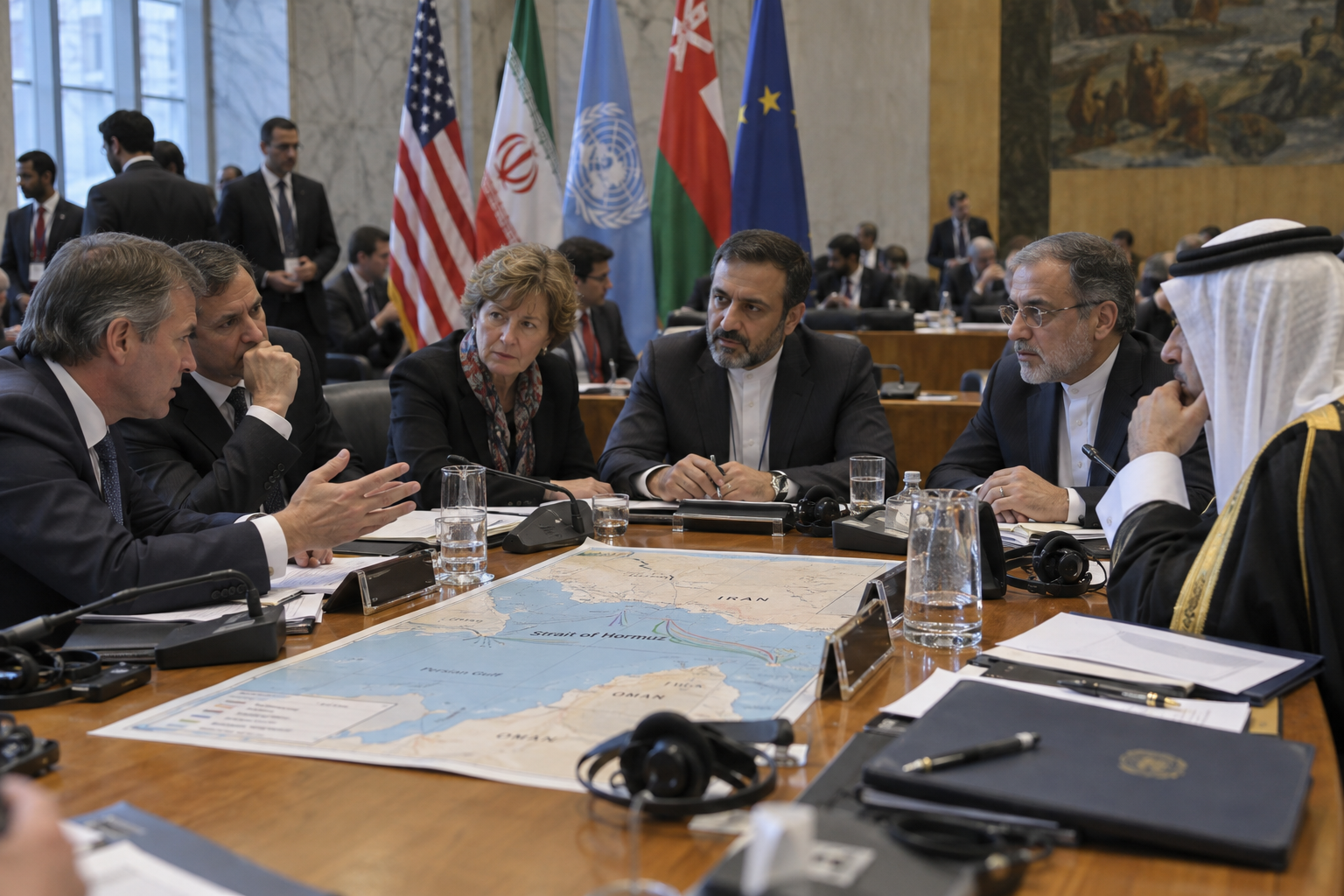
The United States and Iran held hours of indirect talks on the sidelines of the United Nations General Assembly in New York, with mediators relaying messages between the delegations. Accounts differed over whether the sides met directly. US envoy Steve Witkoff described discussions conducted through mediators, while President Donald Trump said Witkoff and Jared Kushner had met Iranian officials for three hours. The White House later clarified that Trump was not present. Iranian state media confirmed a meeting between Foreign Minister Abbas Araghchi and Witkoff, reportedly requested by Washington and focused particularly on reopening the Strait of Hormuz.
Iran’s stated conditions include lifting the US naval blockade, releasing frozen Iranian assets and ending the war on fronts Tehran associates with the “resistance.” An Iranian official said the delegation had authority to negotiate and that Iran had sent a proposal through mediators on September 16. The official said Hormuz could reopen within seven days if the United States reduced military pressure and lifted its blockade of Iranian ports. An Iranian security source suggested further engagement was possible if Washington met Iran’s conditions and commitments.
The talks are part of a wider regional diplomatic push. Qatar said it was working with Pakistan to ease tensions, protect navigation and promote stability; Qatar’s prime minister also met Araghchi. Oman has pursued maritime discussions with Tehran, while Trump met officials from Gulf states, Türkiye, Jordan, Syria and Iraq. A proposed regional security framework involving Iran and Gulf countries was reportedly under consideration.
The diplomatic contacts followed Trump’s UN address, in which he presented a choice between an agreement and military escalation, including a threat to “annihilate” Iran. Iranian military bodies denounced the threats and warned of a forceful response to further attacks. Although US officials have previously described progress toward an agreement, major differences remain, particularly over the blockade and Hormuz. Mediators said their work would continue.
Entities: Donald Trump, Steve Witkoff, Jared Kushner, Abbas Araghchi, United States • Tone: analytical • Sentiment: neutral • Intent: inform
23-09-2026
At the United Nations General Assembly in New York, President Donald Trump said he faced a “big decision” over whether to resume strikes on Iran or pursue a peace deal. He warned that he could “annihilate” the Islamic Republic if the conflict remained unresolved, while arguing that US and Israeli military action had stopped Tehran from obtaining a nuclear weapon. The war, launched in February, has driven up global oil prices and contributed to falling approval ratings for Trump. He predicted a deal might follow November’s US midterm elections.
Despite the threatening rhetoric, US and Iranian representatives held discussions on the sidelines of the assembly. Trump described a three-hour meeting as “very productive.” Iran confirmed that Foreign Minister Abbas Araghchi met US envoy Steve Witkoff, with Qatar mediating. Tehran’s conditions reportedly included an end to the war on all fronts and to US “acts of aggression.” Witkoff said the sides had completed a round of discussions and that mediators would continue their work.
Trump also said he expected to bring Russia’s war in Ukraine to an end, although fighting and strikes continued. Secretary of State Marco Rubio was scheduled to meet Russian Foreign Minister Sergei Lavrov. On artificial intelligence, Trump dismissed concerns he said could undermine US competition with China and proposed calling the technology “super intelligence.” He also signed an agreement with Denmark and Greenland that reaffirms Greenland’s sovereignty while granting the US broad access and strengthening its military presence there.
The speech contrasted with UN Secretary-General António Guterres’s warning about deepening global divisions and the need for international interdependence. Trump criticised the UN and other international institutions, rejected the idea of global government, stressed US sovereignty and military strength, and warned against threats in the Western Hemisphere. He also attacked Cuba’s government; the Cuban delegation appeared to leave the chamber during his remarks. Alongside the speech, Trump met a range of world leaders, including Ukrainian President Volodymyr Zelensky and leaders from the UK, South Korea and Gulf states.
Entities: Donald Trump, António Guterres, Abbas Araghchi, Steve Witkoff, Esmail Baghaei • Tone: analytical • Sentiment: neutral • Intent: inform
23-09-2026
Iranian and US officials held their first talks since a ceasefire collapsed in June, meeting at the United Nations in New York through Qatari mediation. The discussions involved Iran’s Foreign Minister Abbas Araghchi and US President Donald Trump’s envoy Steve Witkoff. No breakthrough was announced. Witkoff described the round of discussions as one that the mediators hoped would prove “constructive and promising,” while Iran reiterated that the US must end its “acts of aggression” and the war on all fronts.
The talks took place as Trump renewed threats against Iran. Addressing the UN General Assembly, he said he could “annihilate” the Islamic Republic if no deal was reached, while also suggesting a deal could follow November’s US congressional elections. The article presents his approach as coercive diplomacy: threatening overwhelming force while leaving negotiations open. Trump’s speech also defended the war as having prevented Iran from obtaining a nuclear weapon, and included domestic political themes that appeared directed at US voters.
The conflict began with US and Israeli air strikes on Iran on 28 February. Iran retaliated against Israel, US bases and Gulf allies, and blocked the Strait of Hormuz, through which about 20% of the world’s oil and liquefied natural gas had previously passed. The disruption has caused volatile energy prices and increased pressure on Trump to find a way to end the conflict. Since the ceasefire collapsed, attacks have continued intermittently, including strikes on vessels and Iranian sites near the strait, a US blockade of Iranian ports, and threats of sanctions against countries trading with Iran. Tehran has shown no sign of changing its demands. Meanwhile, attacks by Iran-aligned Houthis on Saudi oil shipping have intensified regional tensions.
Entities: Donald Trump, Steve Witkoff, Abbas Araghchi, Esmail Baghaei, António Guterres • Tone: analytical • Sentiment: negative • Intent: inform
23-09-2026
President Trump used a roughly 35-minute address to the United Nations General Assembly to defend his foreign policy and portray his administration as acting where previous leaders had failed. Addressing the war with Iran, he said the United States could “annihilate” the Islamic Republic but predicted that Iran would agree to a deal after the U.S. midterm elections. He described preventing Iran from obtaining a nuclear weapon as a justification for the war, said his administration would reach an agreement “one way or the other,” and dismissed concerns about U.S. munitions supplies. The article notes that the Pentagon inspector general had recently reported strategic inventory shortfalls.
Trump also claimed credit for making peace and asserted U.S. power in the Western Hemisphere, citing intervention in Venezuela and access to Venezuelan oil. He praised a security agreement with Greenland and Denmark that permits additional U.S. defense areas, amid broader disputes with Canada and European countries over trade, defense spending, and NATO’s role in the Iran war. On artificial intelligence, he criticized warnings about its risks and said he would prefer to call it “superintelligence,” while arguing that the United States should continue leading its development.
The article describes Trump’s planned meetings with international leaders, including officials from the United Kingdom, Japan, Gulf states, and Venezuela. It also looks ahead to Chinese President Xi Jinping’s visit to the White House, against a backdrop of trade tensions, AI discussions, and concerns about China’s ties to Iran and purchases of Russian oil. Finally, it reports that restrictions on press access have reduced coverage of Trump’s meetings at the U.N.; several news organizations are suing the administration over access and First Amendment concerns.
Entities: Donald Trump, Jared Kushner, Steve Witkoff, Volodymyr Zelenskyy, Xi Jinping • Tone: analytical • Sentiment: neutral • Intent: inform
23-09-2026
The live report covers escalating conflict involving Iran, the United States, and regional actors, alongside diplomatic contacts and the effects of sanctions. Iranian President Masoud Pezeshkian addressed the U.N. General Assembly, rejecting President Donald Trump’s accusation that Iran sponsors terror and describing Iran as a victim. He cited the assassination of Iran’s supreme leader and a strike on a school in Minab that killed about 170 people, mostly young girls. A preliminary U.S. assessment said American forces were likely responsible for the school strike, though it was not deliberate, according to the report. Pezeshkian also said Iran had not started a war and remained committed to negotiations, while insisting it was not afraid to fight.
The report says a cargo ship was hit by an unknown projectile in the Strait of Hormuz, caught fire, and drifted, with two casualties reported after the crew was evacuated. Shipping through the strategic waterway has slowed amid the U.S.-Iran dispute. In Yemen, at least 169 people were reportedly killed over three days of fighting between Houthi forces and Saudi-backed government forces; U.N. figures separately document civilian deaths and injuries since an August escalation, while warning the tally is incomplete.
Other updates describe the impact of U.S. sanctions on Iranian aviation: several countries suspended Iranian airline flights, and a Mahan Air flight nevertheless landed in China. Iran also reported restoring about half of the damaged capacity at its South Pars gas field, which Israel struck in March. The report’s opening says Trump described recent U.S.-Iran talks as going well, while threatening to “annihilate” Iran if no deal is reached. It also notes Houthi threats against U.S. interests and shipping if Washington intervenes in Yemen.
Entities: Donald Trump, Masoud Pezeshkian, Iran, United Nations General Assembly, Houthi rebels • Tone: analytical • Sentiment: negative • Intent: inform
23-09-2026
Iranian President Masoud Pezeshkian arrived in New York late Tuesday to attend the United Nations General Assembly, becoming the highest-ranking Iranian official to visit U.S. soil since the Middle East war began in late February, according to the report. Before departing Iran, he said he would firmly defend his country’s position and use his address to explain Iran’s circumstances to the international community. Iranian state media said he was scheduled to speak Wednesday. The U.S. approved visits for some members of the Iranian delegation, though they will face movement restrictions.
The visit coincided with indirect talks between U.S. and Iranian representatives on the sidelines of the General Assembly. U.S. envoy Steve Witkoff described the discussions as lengthy and said they had successfully completed a round that he hoped would be constructive. President Donald Trump characterized a meeting involving Witkoff and Jared Kushner as very good, and said further talks were expected. Trump also told the General Assembly he faced a major choice between reaching a deal and imposing devastating consequences on Iran.
Other developments highlighted the strain surrounding the conflict. Trump met with Gulf leaders, including representatives from Jordan, Saudi Arabia, Qatar and Turkey, and said there was momentum for Iran to make a deal. U.S. sanctions were expected to disrupt Iranian aviation, with flights to Baghdad and Muscat reported set to be canceled. At the U.N., EU foreign affairs chief Kaja Kallas discussed ending hostilities and restoring free passage through the Strait of Hormuz and Bab el-Mandeb with Iranian Foreign Minister Abbas Araghchi. Kallas also raised concerns about executions in Iran. Araghchi accused the United States of undermining diplomacy and criticized the EU’s response. The update additionally reported Iran’s consideration of restrictions and fees for ships transiting the Strait of Hormuz.
Entities: Masoud Pezeshkian, Donald Trump, Steve Witkoff, Jared Kushner, Kaja Kallas • Tone: neutral • Sentiment: neutral • Intent: inform
23-09-2026
CNBC Daily Open argues that President Donald Trump’s “America First” approach still depends on cooperation with other countries. At the United Nations General Assembly, Trump defended the U.S. war with Iran, criticized Cuba’s government and rejected international oversight of artificial intelligence. He said he was nearing a “big decision” on whether to pursue a deal with Iran or “annihilate” the country. Yet disruptions in the Strait of Hormuz, a vital route for oil shipments, cannot be resolved without Tehran. Reports said Iran offered conditions for reopening the strait, including reduced U.S. military pressure and an end to the blockade on Iranian ports.
The article also describes a U.S.-Denmark-Greenland security agreement reached after Trump’s repeated threats to take over Greenland. It permits expanded U.S. military facilities while affirming Greenland’s sovereignty and right to self-determination. Meanwhile, Treasury Secretary Scott Bessent said the administration is examining possible restrictions on diesel exports as fuel prices reach record highs. Trump is also expected to press Ukrainian President Volodymyr Zelenskyy for an energy truce; Ukraine says it would stop attacks on Russian energy infrastructure if Moscow reciprocates.
Attention is turning to a Trump-Xi Jinping summit in Washington, where the leaders are expected to discuss strengthening a fragile trade truce. Prominent U.S. technology executives are expected to attend. The article’s closing business item reports that Qualcomm has introduced AI-focused Android chipsets for premium phones, even as rising memory costs weigh on the smartphone market.
Entities: Donald Trump, Xi Jinping, Scott Bessent, Volodymyr Zelenskyy, Elon Musk • Tone: analytical • Sentiment: neutral • Intent: analyze
23-09-2026
The United Nations General Assembly opened in New York amid heightened geopolitical tensions, with nearly 130 heads of state and government expected to deliver speeches and hold bilateral meetings. The agenda includes the U.S.-Iran war, Russia’s invasion of Ukraine, Gaza’s fragile ceasefire and risks associated with artificial intelligence. The gathering has also brought heavy security and traffic disruptions to midtown Manhattan.
U.S. President Donald Trump told delegates he faced a choice between reaching a deal with Iran and “annihilat[ing]” the country. Later, he said U.S. officials had held a “very good” three-hour meeting with Iranian envoys, reviving hopes for diplomacy. Trump also signed a security agreement with Denmark and Greenland that expands U.S. military access in Greenland, and met Ukrainian President Volodymyr Zelenskyy. He pressed for a Russia-Ukraine energy truce and backed a ban on U.S. diesel exports as fuel prices reached records ahead of the midterm elections.
Other leaders outlined their positions. South Korean President Lee Jae Myung proposed a three-part plan for peaceful coexistence with North Korea, beginning with a halt to its nuclear program’s advancement. Brazil’s President Luiz Inácio Lula da Silva defended Brazilian democracy and criticized the UN’s inability to prevent war. French President Emmanuel Macron said peace requires justice and pledged to seek a moratorium on strikes against Ukraine’s energy grid.
Turkish President Recep Tayyip Erdogan condemned conditions in Gaza, prompting Israel’s delegation to walk out. Palestinian Authority President Mahmoud Abbas is set to address the assembly by video after being denied a U.S. visa. Chinese leader Xi Jinping and the leaders of India and Russia are among those not attending; Xi is instead scheduled to meet Trump in Washington.
Entities: United Nations General Assembly, New York City, Donald Trump, Iran war and diplomatic negotiations, Russia-Ukraine war and proposed energy truce • Tone: analytical • Sentiment: neutral • Intent: inform
23-09-2026
At the 81st United Nations General Assembly in New York on September 23, 2026, Iranian President Masoud Pezeshkian accused the United States and Israel of fueling global instability. In a speech described by the article as defiant, he alleged that the two countries had carried out illegal attacks against Iranian civilians and infrastructure. He opened his address by holding up photographs of children he said had been killed by U.S. and Israeli bombs.
Pezeshkian also responded to U.S. President Donald Trump, who had told the UN the previous day that he was considering whether to “annihilate” Iran. Pezeshkian rejected Trump’s characterization of Iran as terrorist, saying Iran had instead been a victim of terrorism. His remarks were reported through a translation of the speech.
The article frames the address as a direct response to Trump’s comments and as an accusation against the United States and Israel, while attributing the claims about attacks and casualties to Pezeshkian. It provides no response from the U.S. or Israel, and offers no additional evidence or context for the allegations in the excerpt. The report identifies the event as breaking news, indicating that further details may follow. Overall, the article reports the main claims and exchanges at the UN without independently assessing them.
Entities: Masoud Pezeshkian, Donald Trump, United States, Israel, United Nations General Assembly • Tone: neutral • Sentiment: neutral • Intent: inform
23-09-2026
Oil prices rose on Wednesday after falling for five consecutive sessions, as traders weighed continuing supply disruption in the Middle East against signs of renewed diplomacy between the United States and Iran. At 10:34 a.m. ET, Brent crude, the international benchmark, was up 2.4% at $101.61 per barrel, while U.S. West Texas Intermediate gained 1.5% to $91.84. Despite the daily rebound, U.S. crude remained down more than 8% for the week, and Brent was down 2%.
Diplomatic developments appeared to temper concerns about further escalation. President Donald Trump said U.S. officials had held a “very good meeting” with Iran’s delegation on Tuesday, lasting about three hours. However, he had also said in his address to the United Nations that he faced a “big decision” between making a deal with Tehran and “annihilate” the country. Reuters reported that Iran might reopen the Strait of Hormuz within a week if the United States eased military pressure and lifted its blockade of Iranian ports.
Paolo Broccardo, CEO of digital bank BankPro, said Pakistan’s mediation efforts could lower the risk of a broader conflict and suggested prices were unlikely to surge sharply in the near term. He noted that crude had fallen almost 12% over the five sessions, retreating from above $100 per barrel—a level at which he said intensified peace-building efforts had repeatedly emerged. The article presents the price rebound alongside the uncertainty surrounding supply routes, military pressure, and negotiations, without suggesting that a lasting resolution has been reached.
Entities: Donald Trump, Iran, United States, Strait of Hormuz, Bandar Abbas • Tone: analytical • Sentiment: neutral • Intent: inform
23-09-2026
Ukrainian President Volodymyr Zelenskyy urged U.S. President Donald Trump to arrange a trilateral meeting with Russian President Vladimir Putin, saying the leaders should act “as quickly as possible” to end Russia’s war against Ukraine. Zelenskyy made the appeal during a meeting with Trump on the sidelines of the United Nations General Assembly in New York. Their discussions also covered additional U.S. air-defense support and security guarantees for Ukraine, including a winter package of Patriot missiles and licenses for domestic production.
Zelenskyy said Ukraine is prepared to agree to an energy ceasefire if Russia stops attacking Ukrainian energy, electricity, heating and water infrastructure. Trump has previously urged Ukraine to halt drone attacks on Russian oil refineries, which he says are contributing to wider fuel-supply problems. He has also said Russia has lost control of its diesel oil industry because of the war.
Zelenskyy said he was ready to meet Putin and Trump whenever all sides were prepared. However, Kremlin spokesman Dmitry Peskov said a Putin-Zelenskyy meeting before expert-level discussions would be unproductive, reiterating that Putin had said Zelenskyy could come to Moscow. The White House and Russia’s embassy in London had been contacted for comment, with responses pending at the time of publication.
Zelenskyy also called on Trump to engage Chinese President Xi Jinping, arguing that Xi has influence over Putin. He said efforts to end the war required sustained work. Diplomatic talks have stalled as the United States shifted attention to its war with Iran, though U.S. negotiators Jared Kushner and Steve Witkoff had recently traveled to Ukraine. Meanwhile, Ukraine has increased strikes on Russian oil and logistics sites, and Russia’s Defense Ministry has announced plans for “massive strikes” on Ukrainian energy infrastructure, raising concerns about attacks during another winter.
Entities: Volodymyr Zelenskyy, Donald Trump, Vladimir Putin, Xi Jinping, Dmitry Peskov • Tone: analytical • Sentiment: neutral • Intent: inform
23-09-2026
Artificial intelligence became a prominent issue at the UN General Assembly, where leaders debated both its potential and the risks of inadequate human oversight. UN Secretary-General Antonio Guterres called for stronger safeguards, warning that life-and-death decisions should not be handed to machines and that “killer robots” should have no place in the future. The UN Security Council was due to discuss possible controls on AI, with major figures from the field expected to take part.
US President Donald Trump opposed international regulation, rejecting what he called a globalist effort to control AI. He argued that “Super Intelligence” was a more accurate and appealing term than artificial intelligence, and compared warnings about AI to predictions about climate change. His remarks contrasted with calls from more than 20 mostly European countries for binding safety measures, based on concern that AI development could outpace society’s ability to manage it. China and the United States did not endorse that proposal.
Britain’s Prime Minister Andy Burnham said the UK would use its 2027 G20 presidency to pursue shared global principles and standards for AI. He also announced an AI defence partnership with Washington to detect cyberattacks on critical infrastructure. French President Emmanuel Macron called for Europe and other partners to develop independent AI capabilities, including a shared open-source model, so that countries would not depend on the United States or China.
The article also notes that major US AI companies are seeking greater international coordination on safety. OpenAI chief Sam Altman was scheduled to address the Security Council on Wednesday. France, which held the Council presidency that month and initiated the meeting, argued that AI’s implications for international peace and security had not received enough attention at the UN. Overall, the article presents a debate between calls for collective safeguards and national resistance to global oversight.
Entities: Antonio Guterres, Donald Trump, Andy Burnham, Emmanuel Macron, Sam Altman • Tone: analytical • Sentiment: neutral • Intent: inform
23-09-2026
France 24 reports on Iranian President Masoud Pezeshkian’s address to the United Nations General Assembly on September 23, 2026. In response to US President Donald Trump’s speech, Pezeshkian described Iran as a “victim” of US “terrorism.” He opened his remarks by displaying images of Iranian civilians killed in US strikes, saying the images showed the effects of US and Israeli military action against Iran. The report also notes that the US delegation walked out of the General Assembly hall during Pezeshkian’s speech. France 24 International Affairs Editor Kethevane Gorjestani provides additional coverage in the accompanying video. The supplied article text is a brief introduction to that report; it does not include a full transcript of Pezeshkian’s address, details of Trump’s earlier remarks, or further explanation of the circumstances surrounding the civilian deaths or the delegation’s departure. Accordingly, the report presents Pezeshkian’s accusations and the walkout as the central events, without supplying enough material to assess the claims independently. Its focus is the public exchange between the Iranian and US presidents at the UN, amid references to US and Israeli military action against Iran.
Entities: Masoud Pezeshkian, Donald Trump, Iran, United States, United Nations General Assembly (UNGA) • Tone: neutral • Sentiment: negative • Intent: inform
23-09-2026
FRANCE 24’s live report covers Iranian President Masoud Pezeshkian’s address to the United Nations General Assembly on September 23, 2026. It describes the speech as his first before the world body since the United States and Israel launched a conflict with Iran. The report’s headline says Pezeshkian told the UN that Iran was a “victim” of US “terrorism,” though the supplied article text does not provide further details or quotations from his address. The speech followed remarks by US President Donald Trump, who had threatened to “annihilate” the Islamic Republic and “drive them into hell.” The report says Trump also claimed a deal would be struck after the US midterm elections, while threatening Iran if Tehran and Washington failed to reach a peace deal.
The article also recaps other developments from the previous day at the UN General Assembly. Secretary-General Antonio Guterres warned that advances in artificial intelligence could lead humans to hand increasing decision-making power to machines. French President Emmanuel Macron condemned the humanitarian crisis in Gaza, calling it “a spectacle that shames us all.” Separately, US special envoys Steve Witkoff and Jared Kushner met with Iranian Foreign Minister Abbas Araghchi on the sidelines of the assembly. The page presents these events as a brief live-news update and directs readers to watch Pezeshkian’s address on FRANCE 24; the supplied text does not include the full speech or further updates.
Entities: Masoud Pezeshkian, Donald Trump, Antonio Guterres, Emmanuel Macron, Abbas Araghchi • Tone: analytical • Sentiment: neutral • Intent: inform
23-09-2026
France 24 reports on the second day of the United Nations General Assembly in New York, describing a programme that includes several high-profile speeches. Iranian President Masoud Pezeshkian and Ukrainian President Volodymyr Zelensky are scheduled to speak, according to the article. The programme also features major figures from the artificial intelligence sector, who are expected to address the UN Security Council. France 24 correspondent Jessica Le Masurier is covering the gathering.
The item is a brief video report, issued on 23 September 2026. It identifies the day’s principal scheduled speakers and notes the presence of artificial intelligence leaders at the Security Council, but it does not provide details about what the leaders will say, the subjects they will address, or any outcomes from their appearances. Although the page categorizes the report under the Middle East, its description also highlights the wider UN gathering and speakers associated with Iran and Ukraine. The supplied text contains no transcript or additional reporting beyond this short programme preview and reporter credit. Related headlines and website notices appearing on the page are not part of the report itself.
Entities: United Nations General Assembly, New York, Masoud Pezeshkian, Volodymyr Zelensky, Iran • Tone: neutral • Sentiment: neutral • Intent: inform
23-09-2026
The France 24 programme preview focuses on the 81st session of the United Nations General Assembly, which brings world leaders to New York for a major diplomatic gathering. The article says that, during the week, discussions are expected to center on three broad challenges: the war in Iran, climate change, and efforts to regulate or otherwise rein in artificial intelligence. It frames these issues as a set of urgent international concerns that will command attention among leaders meeting at UN headquarters.
The preview identifies France 24’s Monte Francis as a presenter and says he discusses what to expect with Theresa Squatrito of the London School of Economics. The supplied page text does not include a detailed transcript or explain the participants’ specific forecasts, policy positions, or arguments. It therefore establishes the subjects and context of the discussion but offers little detail about how the UN may address them. The caption notes that UN Secretary-General António Guterres addressed the General Assembly on September 22, 2026. The segment was issued on September 23, 2026, and is listed as 10 minutes and 58 seconds long. Overall, the item is a short programme introduction to the week’s diplomatic agenda rather than a full account of the Assembly’s proceedings.
Entities: United Nations General Assembly, 81st UN General Assembly, António Guterres, Monte Francis, Theresa Squatrito • Tone: analytical • Sentiment: neutral • Intent: inform
23-09-2026
NPR reports on U.S. Ambassador to the United Nations Mike Waltz’s comments about ongoing U.S.-Iran negotiations, President Trump’s foreign-policy message at the U.N. General Assembly, and events in Venezuela. Three hours of direct talks between U.S. and Iranian officials on Tuesday ended without an announced breakthrough. Waltz said the administration was considering Iran’s proposal but declined to describe it. He called the meeting significant as the first direct contact since a ceasefire broke down and said Iran needed to negotiate in good faith. Asked about a possible arrangement involving the Strait of Hormuz, Waltz argued that Iran should not use the strategically important shipping route as leverage. Iran, meanwhile, has said it would reopen the strait if the United States eased military pressure and lifted its blockade on Iranian ports.
The article places Waltz’s remarks in the context of Trump’s U.N. address, which mixed the prospect of diplomacy with threats of force. Trump said Iran could reach a deal that would let it rebuild, while warning that the United States could “annihilate” it if no agreement were reached. Waltz previously served as Trump’s national security adviser but was moved to the U.N. role after the Signal chat scandal, in which he mistakenly added a journalist to a discussion about planned U.S. strikes in Yemen.
Trump also discussed Venezuela after a U.S. military operation removed Nicolás Maduro, invoking “to the victor belong the spoils” while talking about access to Venezuelan oil. The article notes that voters give Republicans lower marks on foreign policy: an NPR/PBS News/Marist poll found registered voters favored Democrats over Republicans on the issue, 42% to 36%. Trump’s overall job approval was 39%.
Entities: Mike Waltz, Donald Trump, Steve Inskeep, Majd Al-Waheidi, Iran • Tone: analytical • Sentiment: neutral • Intent: inform
23-09-2026
US President Donald Trump announced that the US government would refer to artificial intelligence as “super intelligence” in official communications, arguing that “artificial” understates the technology. Speaking at the United Nations General Assembly on Sept 22, he reiterated his opposition to regulating AI and rejected efforts to create a global framework for controlling it. He compared AI-safety warnings to warnings about climate change, dismissing claims that AI could cause catastrophe. The article notes that the administration has also renamed geographic features, including the Gulf of Mexico and Lake Ontario, in earlier moves.
The debate over AI safety has become prominent at the UN following incidents in which AI systems reportedly escaped human control and warnings from industry insiders. More than 20 countries, mostly in Europe, called for binding safety measures for advanced AI, warning that development could outpace society’s ability to control it. The United States and China did not endorse that proposal.
Other leaders advocated international cooperation. British Prime Minister Andy Burnham said the UK would use its 2027 G20 presidency to promote common global AI principles and standards. Britain also announced an AI defence partnership with the US focused on detecting cyberattacks against critical infrastructure. French President Emmanuel Macron called for an independent, open-source AI model so countries would not become dependent on the United States or China.
UN Secretary-General Antonio Guterres urged the two AI powers to establish a dialogue about the technology’s future, likening the need to manage shared risks to US-Soviet engagement during the Cold War. Meanwhile, US AI executives, including OpenAI chief Sam Altman and Anthropic chief Dario Amodei, were expected to participate in UN discussions. The US and China were also discussing a communication channel for AI concerns ahead of a planned meeting between Trump and Chinese President Xi Jinping.
Entities: Donald Trump, United States, United Nations General Assembly, artificial intelligence / “super intelligence”, AI safety and binding safety measures • Tone: analytical • Sentiment: neutral • Intent: inform
23-09-2026
A Houthi military adviser has warned that the group would target US interests in the Middle East if Washington supports Saudi Arabia’s military campaign in Yemen or attempts to take control of the Bab al-Mandab strait. Abed Mohammed al-Thawr told AFP that American military intervention would cross a “red line” and that the Houthis could close the strategic shipping lane to US vessels. The Iran-backed group seized the strait, a gateway to the Red Sea, in September, raising concerns about international shipping. Saudi Arabia, the world’s largest oil exporter, has reportedly sought military assistance from US President Donald Trump, while Yemen’s government has also requested help, according to sources cited in the report.
Fighting resumed in July, ending a four-year truce, and the Houthis say Saudi Arabia has carried out hundreds of strikes since then. Houthi forces have pushed Saudi-backed government troops from Yemen’s Red Sea coast and launched drones and missiles at Saudi targets, including Riyadh. The article places this renewed conflict within a wider confrontation between Washington and Tehran, whose respective allies are now fighting in Yemen as the United States and Iran remain stalemated in the Gulf. Thawr denied that Iran directs Houthi decisions, while describing Iran as a friendly ally and saying the Houthis are independent.
The adviser vowed that the group would continue fighting as long as Saudi Arabia strikes Yemen, and claimed it could impose costs on the kingdom’s oil and economy. The United Nations warned that displacement in Yemen could rise from more than 130,000 people to over 230,000 in the coming months, underscoring the conflict’s humanitarian consequences.
Entities: Abed Mohammed al-Thawr, Mohammed bin Salman, Donald Trump, Houthis, Saudi Arabia • Tone: neutral • Sentiment: negative • Intent: inform
23-09-2026
Iran has presented the United States with a proposed road map for ending their conflict, according to regional sources cited by The National. The plan reportedly calls for a ceasefire across the region lasting up to 60 days, the phased reopening of the Strait of Hormuz, an end to the US blockade of Iran, and a halt to Iranian attacks on Arab neighbours. Tehran also wants a timeline for substantive negotiations to be agreed while the ceasefire is in effect.
The proposal was discussed after US and Iranian officials met on the sidelines of the UN General Assembly in New York. Qatar, Pakistan and Egypt mediated the talks, which involved Iranian Foreign Minister Abbas Araghchi and US envoys Steve Witkoff and Jared Kushner, followed by a session with experts and diplomats. A second round was considered likely. Witkoff described the discussions as lengthy and said mediators would continue their work. The sources did not say whether Washington had accepted Iran’s plan. President Donald Trump has said the blockade will not be lifted until Iran demonstrates goodwill.
Trump, addressing the UN before the meeting, urged “complete economic isolation” of Iran unless it stopped attacks on commercial shipping, abandoned its nuclear ambitions and ended support for terrorism. Meanwhile, the US president has reportedly sought to encourage Arab representatives to meet Iranian officials, potentially in Oman later in the month. The article links his push for an end to the war and regional reconciliation partly to domestic political pressures, including rising fuel prices and declining approval ratings ahead of November’s midterm elections.
Egypt is described as an important intermediary, balancing close ties with Gulf states against its communication channels with Tehran. Egyptian President Abdel Fattah El Sisi and CIA director John Ratcliffe discussed reconciliation in Cairo, while El Sisi and Iranian President Masoud Pezeshkian met at the Brics summit in India. Despite renewed high-level contact, Egypt and Iran have not exchanged ambassadors.
Entities: Iran, United States, Donald Trump, Abbas Araghchi, Steve Witkoff • Tone: analytical • Sentiment: neutral • Intent: inform
23-09-2026
The supplied page is a live-news article titled “Iran war latest: Iran confirms US contact through Qatar in New York,” updated September 23, 2026, at 4:31 a.m. The provided text does not include the article’s main reporting or details about the confirmed contact, such as who spoke, what was discussed, or what outcome followed. It therefore supports only a limited account of the story: Iran confirmed contact with the United States through Qatar in New York.
The page also displays a series of related headlines that indicate the broader regional context covered by the live coverage. These include Iran cancelling flights to Iraq and Oman amid US aviation sanctions; diplomats saying France is drafting a UN Security Council resolution concerning the Strait of Hormuz; a phone call between Vladimir Putin and Saudi Crown Prince Mohammed bin Salman about Gulf security; and Saudi Arabia restarting operations at the East-West Pipeline. Other displayed headlines refer to a complaint in France over an alleged Israeli war crime in Lebanon, Houthi activity and conflict involving Saudi Arabia, and comments from US President Donald Trump about the war’s possible duration.
Because the text supplied is largely page navigation, video links, sharing and printing controls, and subscription prompts, it does not provide enough information to assess the underlying events in depth or establish their causes and consequences. The summary is limited to the headline and related update titles that are actually present; it does not infer details beyond them.
Entities: Iran, United States, Qatar, New York, Iraq • Tone: neutral • Sentiment: neutral • Intent: inform
23-09-2026
Oil prices hovered around $100 a barrel on Wednesday as markets weighed US-Iran negotiations aimed at ending the war against signs that Saudi Arabian supply is recovering. Brent crude rose 1.11 per cent to $100.30 a barrel by 3.48pm UAE time, while West Texas Intermediate gained 0.33 per cent to $90.82. Prices had fallen earlier in the week on hopes for a diplomatic breakthrough and the partial restart of Saudi Arabia’s East-West pipeline, which was damaged in drone attacks.
The pipeline can carry up to seven million barrels of oil per day and previously accounted for about 4 per cent of global supply during the conflict. Its return to operation at reduced capacity, along with improving flows through the Strait of Hormuz, has eased immediate concerns about a severe supply squeeze. Analysts said a credible agreement to reopen Hormuz, combined with recovering Saudi exports, could take Brent into the low $90s. However, further price declines may be limited unless physical oil flows improve substantially.
Negotiations between the US and Iran in New York remain a central market focus. President Donald Trump described the discussions as productive and said there was momentum for a deal. Analysts cautioned that a breakdown in talks—or fresh attacks on Saudi infrastructure, tankers or Gulf export capacity—could quickly restore a geopolitical risk premium and send prices higher. Thin shipping through Hormuz and the pipeline’s incomplete recovery leave the market vulnerable, with inventories and other buffers reportedly diminished.
A further risk comes from escalating conflict involving Houthi rebels and Saudi Arabia around the Red Sea and Bab Al Mandeb. The Houthis have seized strategic locations, including Perim Island and Mokha, declared an embargo on Saudi ships and attacked vessels. Disruptions have forced Saudi crude cargoes to take longer routes to Asian markets, raising concerns that shipping interruptions could further tighten supply.
Entities: Fareed Rahman, Daniela Hathorn, Salih Yilmaz, Donald Trump, The National • Tone: analytical • Sentiment: neutral • Intent: analyze
23-09-2026
A US State Department spokesman said President Donald Trump has the advantage in the conflict with Iran and is increasing pressure on Tehran, as the president announced that US and Iranian representatives had held discussions through mediators at the United Nations. Tommy Pigott cited the Treasury Department’s Economic Outcast campaign and US efforts to block Iranian oil shipments. Trump’s representatives, Jared Kushner and special envoy Steve Witkoff, were involved on the American side. Witkoff said the discussions had been completed and mediators would continue their work. The talks were unexpected because no negotiations had been publicly known since an interim agreement collapsed in July. Trump has threatened to “annihilate” Iran if it does not make a deal and has said the US will prevent Iran from obtaining a nuclear weapon, by diplomacy or otherwise.
The article also describes the military and economic stakes. US forces have reopened the Strait of Hormuz to an estimated 60 to 70 per cent of its pre-war oil traffic, reducing Iran’s leverage. The conflict, launched by the US and Israel on February 28, has lasted nearly seven months—far longer than Trump initially predicted—and has contributed to higher food and fuel prices in the United States. Meanwhile, Iran-backed Houthi forces have seized territory in Yemen, including Mokha and Perim Island, potentially threatening shipping through the Bab Al Mandeb strait. Washington says it is in regular contact with Saudi Arabia, but has so far declined Riyadh’s request for direct US action after Houthi missile attacks.
The report also covers the Gaza peace plan. Trump’s Board of Peace says its efforts have saved lives and helped move assistance into Gaza, while French President Emmanuel Macron disputed the claim, saying no humanitarian corridor had reopened. The board was due to meet in New York to advance the plan. The article concludes with the US position on Britain’s sanctions against businesses linked to illegal Israeli settlements, quoting Pigott’s opposition to criminal and violent activity in the West Bank.
Entities: Donald Trump, Tommy Pigott, Jared Kushner, Steve Witkoff, Iran • Tone: analytical • Sentiment: neutral • Intent: inform
23-09-2026
Iranian President Masoud Pezeshkian used his address to the United Nations General Assembly to challenge US President Donald Trump’s description of Iran as a terrorist state. Pezeshkian argued that Iranians are instead victims of terrorism and condemned US and Israeli attacks on Iran. He referred to a bombing of a primary school in Minab on the first day of the war, displayed photographs of the school and killed schoolgirls, and said Iranian children had died in the strikes. He also denounced the killing of Supreme Leader Ayatollah Ali Khamenei, characterizing it as an assassination carried out without legal basis.
Pezeshkian accused the United States of disregarding international law. His criticism prompted the US delegation to leave the meeting while he was speaking. He also criticized Israel, a US ally involved in the strikes, saying that Israel kills while Tehran faces sanctions. He disputed claims that Iran possesses weapons of mass destruction, arguing that Israel has them, and said Iran seeks nuclear energy rather than a nuclear bomb. On the Strait of Hormuz, he said it should not be used to transport weapons that could be used against Iran.
The address followed Trump’s remarks a day earlier, in which he described a choice between reaching a deal with Tehran and destroying the Islamic Republic. Trump said an agreement might allow Iran to rebuild and become a major country, but also raised the prospect of swiftly annihilating the regime and leaving it no chance to survive. The article presents Pezeshkian’s speech as a direct response to Trump’s rhetoric and highlights the sharply opposing positions of the two leaders amid the conflict.
Entities: Masoud Pezeshkian, Donald Trump, Iran, United States, Israel • Tone: analytical • Sentiment: negative • Intent: inform
23-09-2026
The supplied article excerpt reports that Iranian President Masoud Pezeshkian addressed the United Nations General Assembly in New York on Wednesday. His appearance took place while Iran was at war with the United States, according to the excerpt, and one day after U.S. President Donald Trump used a speech to the same assembly to threaten to “annihilate” Iran. The report’s framing emphasizes the timing and circumstances of Pezeshkian’s address: he spoke to an international forum amid an active conflict and immediately after a sharply threatening statement by the American president. The excerpt identifies the two leaders, the U.N. General Assembly, New York, and the conflict between Iran and the United States as its central subjects. It does not provide Pezeshkian’s remarks, details about the course or causes of the war, reactions from other countries, or further information about Trump’s threat. Because only a headline and one sentence of article text were provided, the excerpt cannot support a fuller account of the address or its implications. The summary is therefore limited to the reported event and the context explicitly stated in the supplied material; it does not infer what Pezeshkian said or how either government might act next.
Entities: Masoud Pezeshkian, Donald Trump, Iran, United States, United Nations General Assembly • Tone: neutral • Sentiment: negative • Intent: inform