09-10-2026
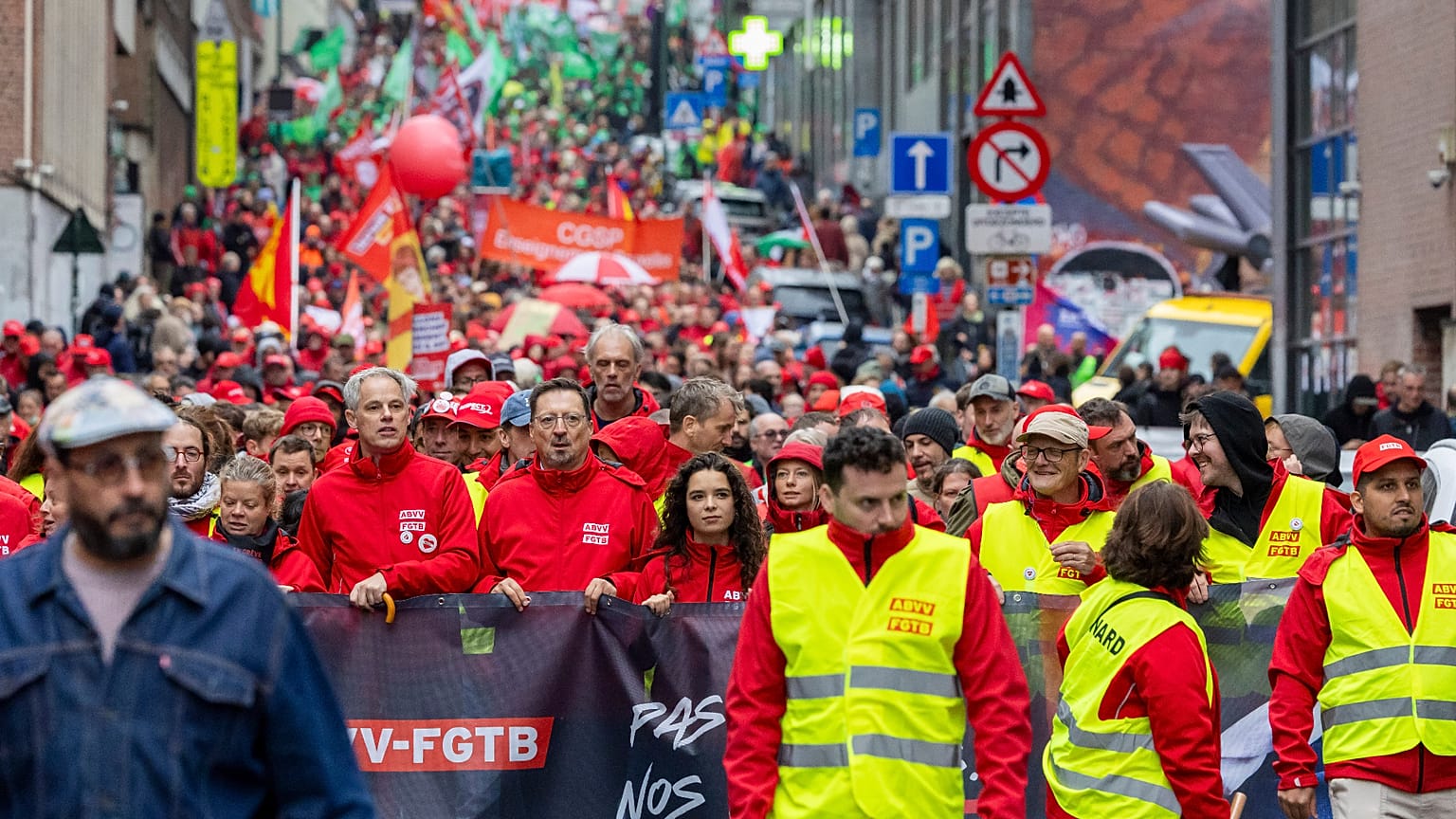
Hundreds of protesters clashed with police in central Brussels on Friday during a nationwide anti-austerity demonstration organized by trade unions. Although the main union march proceeded peacefully, masked youths on its outskirts threw rocks, sticks, bottles and other projectiles at officers. They also vandalized property, attacking two buses after passengers had been evacuated and setting fire to trash cans, rental bikes and scooters. Firefighters extinguished several fires, including those involving buses. Police used water cannons and tear gas to respond and said they had made about 20 arrests, mostly of minors. They reported that several hundred youths had joined the demonstrators and that the situation escalated into serious public-order disturbances. Union leader Bert Engelaar had urged those planning violence to stay away, saying they did not represent the thousands who came to protest.
Between 30,000 and 50,000 people took part in the demonstration, one of many union protests across Belgium against planned austerity measures. The center-right government, led by Prime Minister Bart De Wever, wants to save €10 billion by the end of its term in 2029. Belgium faces substantial public debt and a persistent budget deficit. Unions oppose cuts to areas such as health care and an increase in VAT, and instead advocate higher taxes on top earners. The Brussels clashes followed a tense week in Liege, where authorities banned public gatherings after students clashed with police and vandalized shops. More than 200 people were arrested there, and dozens of police officers were injured.
Entities: Brussels, Belgium, Liege, Bert Engelaar, Bart De Wever • Tone: analytical • Sentiment: negative • Intent: inform
09-10-2026
Tens of thousands of people joined a national strike and trade-union march in Brussels on Friday to protest rising living costs and the Belgian government’s proposed austerity measures. Police estimated that about 30,000 people attended. The union-organised march through the city centre remained peaceful, but separate groups of young protesters clashed with riot police nearby. Some masked youths threw rocks and firecrackers at officers near Brussels Central railway station and set fires, including one involving city bikes and electric scooters. Police responded with water cannons and tear gas.
The unrest followed a week of student demonstrations in Liège, where clashes, damage to shops and a ban on public gatherings resulted in more than 200 arrests and injuries to dozens of police officers. Belgian high-school students, particularly in the French-speaking community, have been protesting proposed education cuts, drawing inspiration in part from demonstrations in France.
The strike comes as Prime Minister Bart De Wever’s government tries to agree on a budget and reduce Belgium’s high deficit. The government is seeking savings of €10 billion over the coming years, and coalition partners are negotiating over proposed cuts ahead of a 13 October deadline. Trade unions oppose reductions in areas such as health and increases to VAT, and instead want higher taxes on top earners. Union leaders stressed that the rioters were not part of their rally.
Participants described mounting financial pressure. Union representative Luc Toussaint said conditions were deteriorating for workers and students. Marie Gobert, a social worker and single mother from Namur, said rising school and transport costs made it difficult to make ends meet and left her anxious. She also expressed concern that young people were not being heard as the education system faced cuts.
Entities: Brussels, Belgium, Liège, France, Belgian trade unions • Tone: neutral • Sentiment: neutral • Intent: inform
09-10-2026
An estimated 30,000 people joined a national demonstration in Brussels on Friday to oppose the Belgian government’s planned budget cuts and the rising cost of living. The march was organized amid a daylong national strike called by two of Belgium’s largest labor unions. Most union members and supporters, dressed in red or green, demonstrated peacefully. Separately, groups of mostly young people wearing black and face coverings clashed with police near Brussels’ central railway station. They threw rocks and firecrackers and set several fires, including one involving a shared electric scooter. Police used tear gas and water cannons to disperse the crowds, while the disorder worsened traffic in the Belgian capital. Police and union leaders said those involved in the violence were not affiliated with the organized anti-austerity demonstration or the unions. Protesters cited pressure from the cost of living and public services. Marie Gobert, a single mother and social worker who traveled from Namur, said she could not make ends meet and was particularly concerned about rising school, public transport, and train costs. She also described growing social tension and frustration among young people. The protests come as Belgium’s French Community government has raised standard university tuition by about 43%, from €835 to €1,194, as part of a broader austerity program. Brussels saw clashes over tuition and education-system concerns in June, including overcrowded classrooms and difficulty obtaining study materials. This week, hundreds of students also protested in Liège, where local media reported 107 arrests. A separate public-sector walkout was planned for Monday.
Entities: Brussels, Belgium, Namur, Liège, Marie Gobert • Tone: analytical • Sentiment: neutral • Intent: inform
09-10-2026
Thousands of people marched in Brussels on Friday during a national strike against planned Belgian government budget cuts. The demonstration, called by the country’s two largest unions—the socialist FGTB/ABVV and Christian CSC/ACV—was joined by hundreds of students and drew around 30,000 participants. The unions say the proposed measures would place the burden of reducing Belgium’s deficit on workers, pensioners and low-income households. Prime Minister Bart De Wever has argued that painful budget measures are necessary to prevent a worsening debt and interest-cost spiral that would burden future generations.
Although police said the main march passed peacefully, violence broke out near Brussels Central Station and elsewhere in the city. A few dozen masked protesters threw rocks, bottles, bricks, stones and fireworks at officers, set fires—including on buses—and damaged public property. Police used water cannon and tear gas to disperse the groups. Twenty-one people were detained or arrested, including 13 minors, and firefighters extinguished several fires.
The strike disrupted public transport and air travel, and affected many schools and childcare facilities. Students said their protests also address rising education costs, overcrowded classrooms and reforms they fear could make higher education less accessible. Their demonstrations began earlier in the month in Liege and spread to Brussels, with some students inspired by protests in neighbouring France. One student, Emilie L’Honneux, said young people and workers felt ignored and were struggling. The Belgian walkout is part of wider protests across Europe, including student demonstrations over education funding in France and Italy, as well as rallies in Spain over housing.
Entities: Brussels, Belgium, Brussels Central Station, Liege, Bart De Wever • Tone: neutral • Sentiment: neutral • Intent: inform