09-10-2026
Hundreds of people gathered in Madrid on Thursday, 8 October, to mourn María del Carmen Abascal, known as Maricarmen, and show solidarity after her eviction. Abascal, who was 87, died in hospital on Wednesday, two weeks after she was removed from her home. Her death has intensified public anger over housing costs and evictions in Spain, where the housing crisis has become a major source of protest. The article also places the demonstrations amid a political crisis that has led to a snap election being called for 29 November.
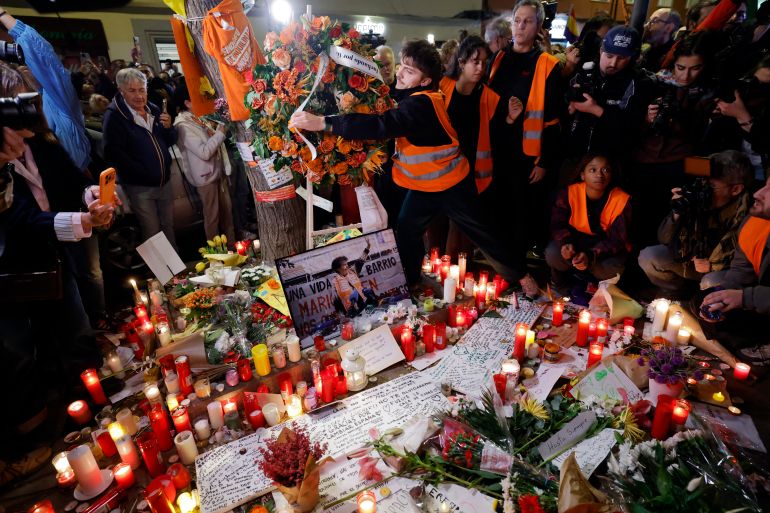
Thousands marched from Puerta del Sol to Abascal’s former home, carrying her portrait and a funeral wreath. Many participants walked in silence, and the crowd observed a minute’s silence at Cibeles. Candles, flowers and messages were placed at a makeshift memorial outside the home from which she had been evicted. Hundreds of people have also been camping in Puerta del Sol, described as the centre of the housing protest movement.
Alicia del Río, spokesperson for the Madrid Tenants’ Union, praised Abascal’s determination to defend her rights. Demonstrators said her struggle had resonated across generations and pledged to continue campaigning for affordable housing. The gathering thus served both as a memorial and as a protest: participants mourned Abascal while directing attention to housing affordability, eviction practices and the broader political response to the crisis. The article presents her case as a catalyst for renewed mobilization, without reporting further details about the circumstances of her eviction or the political parties involved in the snap election.
Entities: María del Carmen Abascal (Maricarmen), Alicia del Río, Madrid, Puerta del Sol, Cibeles • Tone: neutral • Sentiment: negative • Intent: inform
09-10-2026
The death of Maria del Carmen Abascal, an 87-year-old Madrid resident known as Maricarmen, has intensified Spain’s debate over housing and triggered demonstrations ahead of a snap general election. Her eviction on September 23, after living in the same home for 70 years, had become a national symbol of the housing crisis. Abascal was hospitalized with severe anxiety and exhaustion after being removed from her home on a stretcher. Although an agreement was reached for her to return, she died on Wednesday before she could go back. Authorities have not announced a cause of death.
Thousands of people protested outside Spain’s parliament. Mourners left flowers, candles, notes and children’s drawings near Abascal’s former home, while demonstrators chanted that such deaths were “murders.” One protester described the eviction as having killed Abascal through heartbreak.
The protests and public anger over housing shortages and rising rents contributed to Socialist Prime Minister Pedro Sanchez calling a snap general election for November 29, after parliament failed to pass emergency housing measures. Abascal’s case also became the focus of a bitter political dispute in Madrid’s regional legislature. Conservative People’s Party leader Alberto Nunez Feijoo accused Sanchez and the Socialists of exploiting the crisis for political gain. The PP refused to observe a minute of silence, while left-wing deputies held a tribute outside City Hall and gave Abascal a standing ovation in the regional assembly. Left-leaning parties, in turn, criticized conservatives for opposing legislation intended to curb soaring rents.
A poll published by Spain’s state pollster found broad support for government action: 76.3 percent backed market intervention to ensure access to housing, and 79 percent said the right to housing should take priority over treating homes as commodities. Spain’s ombudsman, Angel Gabilondo, called for stronger commitment from all levels of government and proposed expanding public housing, restricting tourist rentals, increasing rent assistance and strengthening eviction protections for vulnerable households.
Entities: Maria del Carmen (Maricarmen) Abascal, Madrid, Spain, Spanish parliament, Pedro Sanchez • Tone: analytical • Sentiment: negative • Intent: inform
09-10-2026
The death of María del Carmen Abascal, an 87-year-old woman known as Maricarmen, has intensified Spain’s debate over housing affordability and rental policy. Abascal died Wednesday after being hospitalized following her eviction from the Madrid apartment where she had lived for 70 years. The eviction took place on Sept. 23 and drew widespread attention after photographs showed the wheelchair user being carried from her home on a stretcher. Police had cordoned off the street and removed demonstrators who tried to prevent the eviction. The images prompted protests in Madrid and other Spanish cities, making Abascal a symbol of the country’s housing crisis. According to The Associated Press, the real estate company responsible for the eviction wanted to rent the apartment at a substantially higher price. Under mounting public pressure, it eventually agreed to let Abascal return, but she died before she could move back. Her cause of death has not been disclosed. Following news of her death, demonstrators gathered outside Parliament and at Madrid’s Puerta del Sol, where some observed a minute of silence and others chanted, “Maricarmen lives, the fight goes on!” The death comes amid broader political turmoil over soaring housing costs and widespread frustration with rising rents. Prime Minister Pedro Sánchez had called a snap election for Nov. 29 after his government failed to pass emergency housing measures through Parliament. Sánchez expressed condolences, as did conservative opposition leader Alberto Núñez Feijóo, who cautioned political leaders against using Abascal’s death for political advantage. Housing activists are using the case to press for changes to Spain’s rental policies ahead of the November election.
Entities: María del Carmen Abascal (Maricarmen), Pedro Sánchez, Alberto Núñez Feijóo, Madrid, Spain • Tone: analytical • Sentiment: negative • Intent: inform
09-10-2026
France 24 reports that tens of thousands of people marched through Madrid on Thursday to mourn Maricarmen Abascal, an 87-year-old Spanish pensioner who died on Wednesday. Her eviction had become a catalyst for national protests over housing, and the article says those protests culminated in the calling of early elections. Abascal was described in the headline as an “icon” of Spain’s housing protests, reflecting the prominence her case had acquired in the movement.
The report also highlights the emotional response to her death in Puerta del Sol, Madrid’s emblematic central square and, according to the article, the epicentre of the protest movement. Mourners there expressed grief and anger, while hundreds were camping in the square as part of the ongoing protest.
The supplied article is a brief video-news description rather than a full account. It does not give details about the circumstances of Abascal’s eviction or death, the specific demands of the protesters, or the political process behind the early elections. Its focus is on the scale of the tribute, Abascal’s symbolic role, and the connection between her eviction and wider housing demonstrations in Spain. The overall picture is of a public mourning that has also become an expression of continued anger and protest over housing.
Entities: Maricarmen Abascal, Madrid, Spain, Puerta del Sol, France 24 • Tone: emotional • Sentiment: negative • Intent: inform