09-10-2026
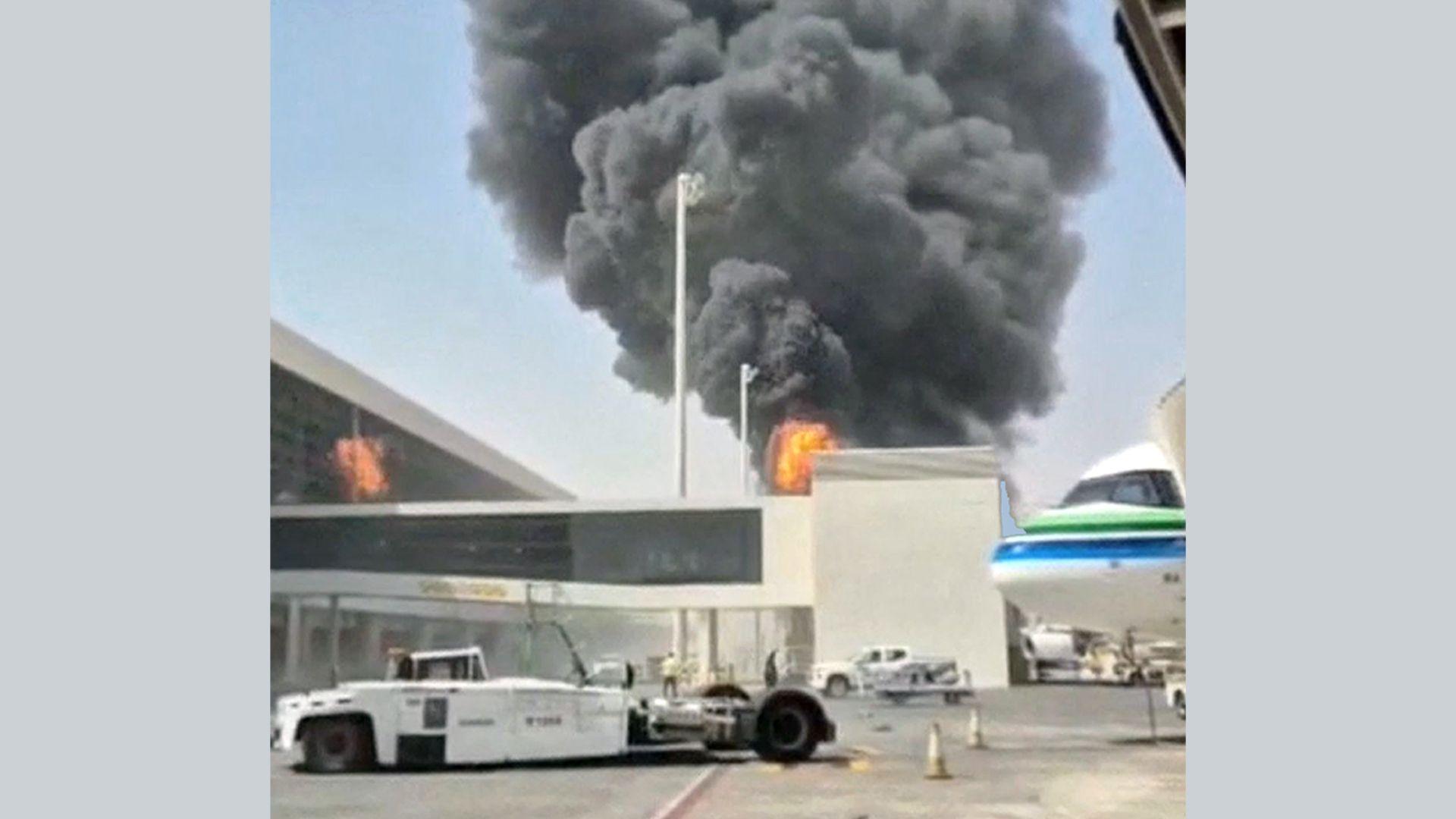
Saudi Arabia reopened King Khalid International Airport in Riyadh after Houthi attacks on Thursday killed three people, including Saudia pilot Captain Hamoud Ali Alkalthami, and injured several others. The attacks damaged airport facilities and a Saudia aircraft, but the General Authority of Civil Aviation said operations had resumed and air traffic was back to normal. The Houthis claimed a ballistic missile struck the airport, while Saudia confirmed the death of its pilot.
The incident follows a series of attacks on Saudi airports. Earlier in the week, attacks at Abha and King Khalid airports reportedly killed three civilians and injured 36; other strikes wounded people near Jazan and Najran. The Houthis have warned airlines against using Saudi airspace, except over Mecca and Medina. The article also recalls suspected missile launches toward Riyadh in September and an explosion near the airport.
The renewed attacks are occurring alongside an intensified conflict in Yemen. Government forces, backed by Riyadh, are counterattacking after the Houthis seized territory near the strategically important Bab al-Mandeb strait. The fighting risks drawing in additional countries: Pakistan and Türkiye have agreed to deploy troops under a mutual defence pact with Saudi Arabia, and Pakistan says it has substantial forces and resources in Riyadh, though its personnel would act defensively rather than cross into Houthi territory.
Meanwhile, the Saudi-led coalition said it had destroyed three Houthi rocket-launch platforms and intercepted missiles aimed at Riyadh and Khamis Mushait. It also reported 97 operations against Houthi reinforcements. The article places the escalation within wider regional instability and warns that the conflict could involve more states.
Entities: King Khalid International Airport, Riyadh, Houthis, General Authority of Civil Aviation (GACA), Saudia Airlines • Tone: analytical • Sentiment: negative • Intent: inform
09-10-2026
Three Saudi nationals were killed in two attacks on Riyadh’s international airport, according to Saudi Arabia’s General Authority of Civil Aviation. The authority said the first attack struck the airport on Thursday and the second hit an aircraft operated by state-owned Saudia. The airline reported that one of its pilots was among those killed. Other Saudi citizens and residents of various nationalities were injured, but air traffic later returned to normal.
Yemen’s Houthi group claimed responsibility for firing two missiles at the Riyadh airport and said it had also targeted an airport in Najran and Khamis Mushait air base. Saudi Arabia has not confirmed those additional claimed attacks. The deaths follow other Houthi attacks on Saudi airports earlier in October, in which three people were killed and 28 wounded at Abha International Airport and another person was killed at King Khalid airport.
The attacks take place amid renewed fighting in Yemen between the Houthis, who control much of the country’s north-west, and forces aligned with Yemen’s internationally recognised government, which is backed by Saudi Arabia. The Houthis say their attacks on Saudi targets are retaliation for Saudi support of those forces and for what they describe as Saudi aggression, including air strikes and a long-running blockade. The article reports a recent escalation in the conflict, including Houthi gains along the Red Sea coast and the group’s announced maritime embargo, alongside missile and drone attacks on Saudi airports, oil facilities and tankers.
A Saudi-led coalition intervened in Yemen in 2015 to support the internationally recognised government. A temporary ceasefire brokered in 2022 followed years of fighting that killed hundreds of thousands and contributed to one of the world’s worst humanitarian crises. The informal truce began to unravel in July, as hostilities intensified again.
Entities: Saudi Arabia, Yemen, Houthi group, Riyadh International Airport, General Authority of Civil Aviation • Tone: analytical • Sentiment: negative • Intent: inform
09-10-2026
The live updates describe a widening conflict involving Iran, its Houthi allies in Yemen, Saudi Arabia and the United States. Three Saudi civilians were killed in attacks on Riyadh’s King Khalid International Airport and a Saudia Airlines aircraft, according to Saudi authorities. The Houthis claimed attacks on the airport, while the strikes came amid intensified fighting between the group and Saudi-backed forces in Yemen. The article characterizes Yemen as a new focal point of the broader Middle East war, which it says began with a U.S.-Israeli assault on Iran in late February.
The attacks prompted international condemnation and practical consequences. European Commission President Ursula von der Leyen expressed solidarity with Saudi Arabia and Gulf partners and said attacks on civilian infrastructure were unacceptable. Several international airlines suspended flights to Riyadh, and the European Union Aviation Safety Agency warned of the Houthis’ demonstrated ability and intent to strike deeper inside Saudi territory. Saudia Airlines also mourned captain Hamoud bin Ali Al-Kalthami, one of those killed.
Pakistan said it already had a substantial number of forces and resources in Saudi Arabia for defensive purposes. Its foreign ministry spokesman said Pakistani personnel would not cross borders to attack the Houthis, while declining to provide details about possible changes to deployments under a regional defense arrangement with Saudi Arabia and Turkey.
The updates also cover diplomatic and economic developments. Iranian President Masoud Pezeshkian said Tehran had revised proposals for peace talks with Washington and was ready to finalize them through mediators. President Trump had rejected an earlier Iranian proposal and said the U.S. would not resume attacks on Iran before the midterm elections, while touting unspecified “productive conversations.” Brent crude eased to around $103 a barrel. Separately, Iran’s Vatican envoy appealed to Pope Leo XIV to oppose U.S. sanctions and air restrictions, arguing they harm ordinary people’s access to travel and essential services.
Entities: Saudi Arabia, Riyadh, King Khalid International Airport, Yemen, Iran-backed Houthi rebels • Tone: neutral • Sentiment: negative • Intent: inform
09-10-2026
The CBS News live update reports developments in the U.S.-Iran war on October 8, 2026. President Donald Trump said the United States would not attack Iran before the November 3 midterm elections and described conversations with Tehran as “productive,” without offering details. His remarks coincided with attention to crude oil prices and shipping through the Strait of Hormuz, though the supplied article cuts off partway through his statement.
The updates describe attacks and security risks across the region. Iran-backed Houthi rebels claimed attacks on Saudi Arabia’s King Khalid International Airport, prompting a U.S. Embassy alert advising Americans to exercise heightened vigilance and warning of possible flight cancellations, airspace closures, and other travel disruption. Saudi authorities reported three deaths at airports on October 6 and 7. A separate report said a crude oil tanker was struck by an unknown projectile in the Strait of Hormuz, with no casualties reported and damage still unclear.
The United States also imposed sanctions on 17 vessels and associated companies accused of helping Iran transport oil and petroleum products through a “shadow fleet.” The Treasury Department said the action was intended to cut off revenue used to wage war. A Congressional Research Service report counted at least 81 U.S. military aircraft and drones damaged or destroyed during the conflict, including Reaper drones, F-15E jets, refueling aircraft, and an F-35A.
Diplomatically, Russian President Vladimir Putin told Iranian President Masoud Pezeshkian that Russia would do what it could to help end the conflict. The update notes close Russia-Iran ties, allegations concerning Iranian support for Russia’s war in Ukraine and Russian assistance to Iran, and an apparent impasse in Tehran-Washington negotiations. The coverage also describes the USS Abraham Lincoln’s return to San Diego after 321 days, including more than 250 uninterrupted days at sea and a deployment supporting U.S. operations against Iran.
Entities: Donald Trump, Iran war, Midterm elections, Strait of Hormuz, Houthi movement • Tone: analytical • Sentiment: neutral • Intent: inform
09-10-2026
Three Saudi nationals, including Saudia pilot Captain Hamoud Ali Alkalthami, were killed in two Houthi attacks on Riyadh’s King Khalid International Airport, according to Saudi aviation authorities. The first strike targeted airport facilities; the second targeted an aircraft belonging to the Saudi carrier. Yemen’s Iran-backed Houthi group claimed responsibility. The Saudi-led coalition fighting the Houthis said it had destroyed three missile launchers and warned that attacks on civilians and civilian infrastructure would receive a “firm response.”
The strikes led to hundreds of flight cancellations, according to aviation data firm Cirium. Saudi Arabia’s General Authority of Civil Aviation said the airport and air traffic had returned to normal by Friday. The attacks are part of a broader escalation involving the Houthis and Saudi Arabia. The article notes that Saudi Arabia backs Yemen’s internationally recognized government in the civil war, which has intensified amid the U.S.-Iran conflict. It also reports that Turkey and Pakistan agreed to help Saudi Arabia implement deterrence measures and support Yemeni counterattacks, while Yemeni forces had retaken a Red Sea port city from the Houthis. France and Saudi Arabia were also reportedly exploring French military assistance to protect the Yanbu oil terminal.
Separately, President Donald Trump said the United States would delay any attacks on Iran until after the Nov. 3 midterm elections and described U.S.-Iran discussions as productive. Iran’s Foreign Minister Abbas Araghchi said Tehran was reviewing a U.S. proposal and would respond within days. The article links the acknowledged talks to a reduction in pressure on oil prices: Brent crude and U.S. West Texas Intermediate futures fell after Trump’s comments and continued lower on Friday. However, a Deutsche Bank analyst said investors were still pricing in a prolonged period of disruption.
Entities: King Khalid International Airport, Riyadh, Saudi Arabia, Yemen’s Houthi movement, Saudi-led coalition • Tone: analytical • Sentiment: negative • Intent: inform
09-10-2026
Saudi-led coalition forces in Yemen said they had carried out strikes against Houthi targets after attacks on Riyadh’s King Khalid International Airport killed three Saudi citizens and injured several other people. Coalition spokesperson Major General Turki al-Maliki said the strikes destroyed three rocket-launch platforms and warned that attacks on civilians would receive a “firm response.” Saudi authorities said the airport was targeted twice on Thursday: first, airport facilities were attacked, and later an aircraft belonging to Saudia was targeted.
The airport attacks disrupted air travel, with hundreds of flights canceled, according to FlightAware. Air India suspended operations through Saturday, and Lufthansa Group airlines said they would stop flying to Riyadh through October 16. The European Union Aviation Safety Agency advised airlines against operating in additional portions of Saudi airspace, citing the Houthis’ demonstrated ability and intent to strike targets farther inside the country, including the capital. The Houthis also warned workers at Saudi oil facilities that oil installations remained targets.
The article places the attacks within a renewed escalation of the Saudi-Houthi conflict. The Houthis have fought the Saudi-led coalition since 2015, after Saudi Arabia intervened in Yemen’s civil war to restore the internationally backed government. The Houthis took control of Sanaa in 2014. Fighting had eased under a UN-brokered ceasefire in 2022, but recent Houthi advances along Yemen’s coast gave them greater control of the Bab al-Mandab Strait. Yemeni officials said coalition forces had counterattacked and recaptured several areas near the strait. The article notes that the conflict remains unresolved and that fighting appears far from over.
Entities: Major General Turki al-Maliki, Saudi-led coalition, Houthis, Riyadh, King Khalid International Airport • Tone: analytical • Sentiment: negative • Intent: inform
09-10-2026
Saudi Arabia reported that three people, including a pilot, were killed in attacks on Riyadh’s international airport on Thursday. The announcement followed claims by Yemen’s Houthi movement that it had carried out a series of attacks targeting the airport. According to Saudi civil aviation authorities, two attacks hit the airport and a Saudia Airlines plane, resulting in the deaths of three people described by the authority as citizens.
The incidents come as fighting between the Houthis and Yemen’s Saudi-backed government forces has expanded. The article describes the Houthis as Iran-backed and says they have repeatedly targeted Saudi Arabia since launching a rapid offensive near the border. Their campaign has included taking extensive territory along Yemen’s Red Sea coast, while attacks inside Saudi Arabia have hit transport hubs, oil facilities, and other civilian targets. Saudi Arabia and the Yemeni government forces it supports have struggled to contain the Houthi advance.
The report provides no further details about the identities of the people killed, the precise damage at the airport, or the circumstances of the attacks. It presents the airport deaths as part of a widening cross-border conflict that is increasingly affecting Saudi civilian infrastructure, including aviation and oil-related facilities.
Entities: Saudi Arabia, Riyadh, Riyadh international airport, Yemen, Houthis • Tone: neutral • Sentiment: negative • Intent: inform
09-10-2026
The National’s editorial argues that Yemen’s Houthi movement has failed to provide a meaningful answer to the country’s political and economic problems, despite claiming to defend Yemeni sovereignty. The group’s recent attacks on airports in Saudi Arabia are cited as evidence that its actions harm civilians and risk drawing impoverished Yemen further into regional conflict. The casualties included ordinary people from several countries, as well as Saudi citizens, rather than only military opponents.
The editorial contrasts the Houthis’ use of missiles and heavy weapons with the conditions faced by Yemenis: an estimated 62–74 per cent of the population lives below the poverty line. It also points to the siege of Taiz, which has trapped aid workers and threatens water supplies, reports of child soldiers among captured fighters, and the Houthis’ poor governance in areas under their control. These examples, it says, undermine the group’s claim to represent the nation.
The article acknowledges that Yemen has genuine political grievances and deep regional divisions, but argues that recognising those problems does not justify armed conquest or the creation of territorial facts by force. It accuses the Houthis of opening new fronts, extorting international shipping and threatening neighbouring states, while subjecting Yemenis to further conflict. The editorial rejects the description of this conduct as “resistance.”
Looking ahead, it says Yemen will need a political settlement because the country’s divisions cannot be resolved militarily. But peace, in its view, must not reward territorial conquest or entrench parallel power structures. The country instead needs functioning institutions, secure borders, open roads and ports, and a political system that represents its people. The editorial concludes that the Houthis’ preference for permanent mobilisation cannot solve Yemen’s problems, and urges pragmatists within the movement to recognise that reality.
Entities: The National, Houthi movement, Yemen, Sanaa, Saudi Arabia • Tone: analytical • Sentiment: negative • Intent: critique