09-10-2026
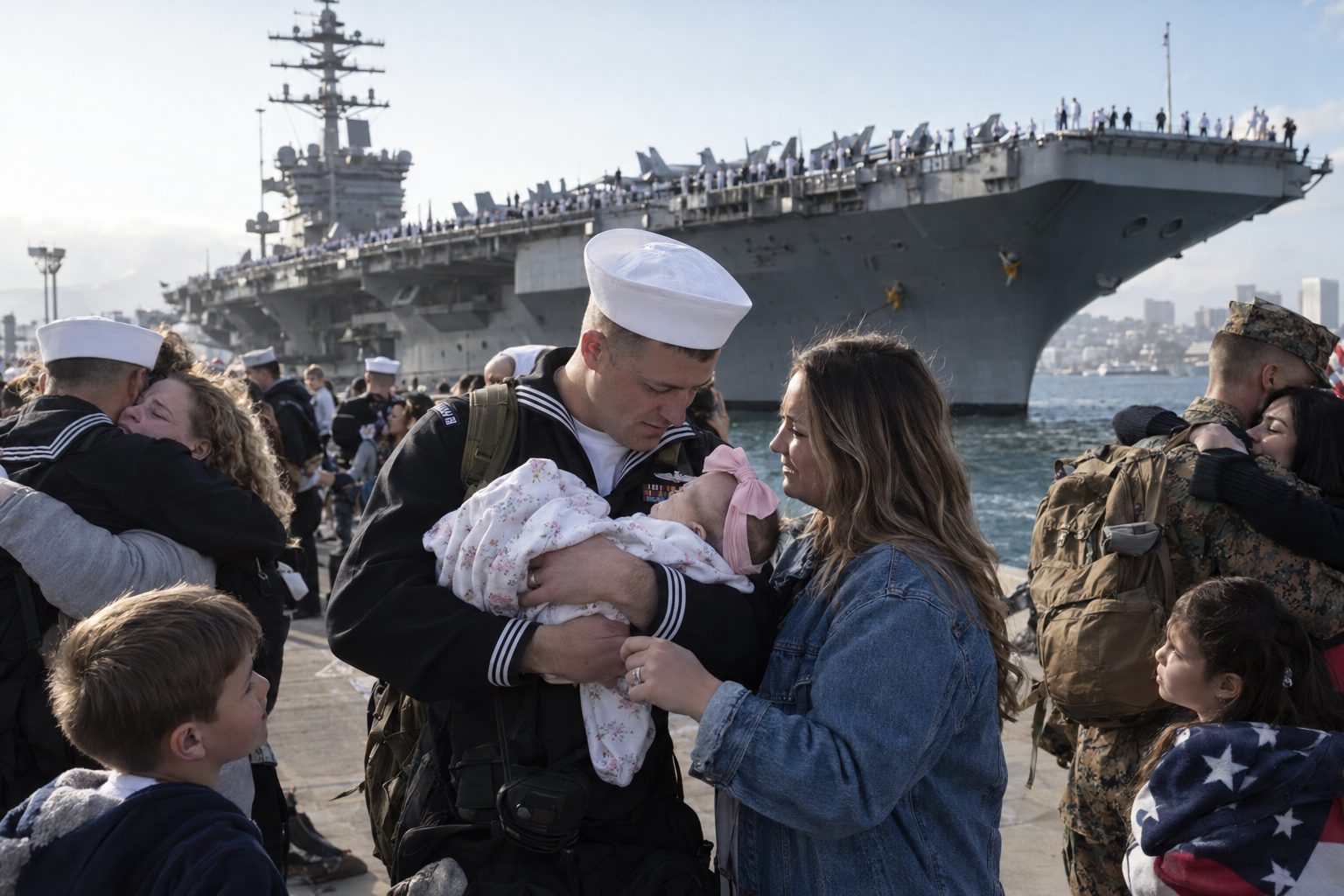
The article reports that the USS Abraham Lincoln returned to San Diego after spending more than 300 days at sea in support of the US-led war on Iran. Its return was marked by an emotional homecoming, with families cheering and embracing crew members as they arrived. The article describes the deployment as record-breaking and highlights the strain associated with its unusually long duration. It says the extended time at sea resulted in supply shortages and facility breakdowns, and that there were reports of suicide attempts. The article does not provide further details about the reported attempts, the specific shortages or breakdowns, or the circumstances of the deployment. It also does not identify individual crew members or family members. Overall, the account contrasts the relief and celebration of the return with serious reported consequences of remaining deployed for more than 300 days. The central news is the carrier’s arrival back home and the reported effects of its prolonged operational commitment. The article is a brief news report rather than an extended investigation or an analysis of the wider war.
Entities: USS Abraham Lincoln, San Diego, United States, Iran, US-led war on Iran • Tone: analytical • Sentiment: negative • Intent: inform
09-10-2026
The USS Abraham Lincoln returned to its home port at Naval Air Station North Island in San Diego on October 8, ending a 322-day deployment that included a record 265 consecutive days at sea. During the deployment, the aircraft carrier supported the US-Israel war on Iran, which began in February and remains without a clear end in sight. Sailors were welcomed by family and friends, and one crew member described the relief of finally coming ashore after believing he might never do so.
The article places the Lincoln’s unusually long deployment in the context of criticism of the US war effort. Reports about the ship described deteriorating conditions, food shortages and suicide attempts among crew members. The deployment has become a focal point in wider concerns that the war is straining military stockpiles and harming service members’ wellbeing. Pentagon chief Pete Hegseth rejected portrayals of the carrier as a sign of dysfunction or low morale, while President Donald Trump dismissed critical coverage as “fake news” and praised the ship’s maintenance.
The report also notes broader political and economic pressures. A Pew Research Center poll found that 65 percent of Americans disapproved of Trump’s handling of the war, while 33 percent approved. The conflict has raised cost-of-living concerns ahead of the midterm elections, and Iran’s hindrance of commercial traffic through the Strait of Hormuz has affected a key route for fuel, fertiliser and other goods. Returning sailors said they looked forward to family time and fresh meals; one sailor’s wife recounted his food cravings and his reports of limited food and showers aboard the ship.
Entities: USS Abraham Lincoln, US-Israel war on Iran, Naval Air Station North Island, San Diego, California, Abel Ramirez • Tone: analytical • Sentiment: negative • Intent: inform
09-10-2026
The USS Abraham Lincoln and more than 4,500 sailors and Marines returned to their home port in San Diego on Thursday after 321 days away. The homecoming drew hundreds of relatives and friends, who waited in the sun as the aircraft carrier entered the harbor. Sailors stood at attention during the ship’s approach, then waved and called people on the pier. The article highlights one reunion: McKenzie Adkins waved to her husband, Alexander, while holding their 10-week-old son, Declan. Alexander met his newborn for the first time after coming ashore.
The Lincoln carrier strike group had been deployed for more than 10 months and spent more than 250 uninterrupted days at sea during the year. Much of its deployment was in the Middle East, where the carrier and its escort ships supported the U.S. war with Iran. The Lincoln left the region in late August, then headed toward San Diego with stops in Thailand and Guam. The Japan-based USS George Washington arrived in the Middle East in August to replace it.
The article also notes scrutiny of conditions aboard the Lincoln during its unusually long deployment. Reports described supply shortages and faulty plumbing, while crew members’ families voiced concerns about worsening mental health conditions. Congressional Democrats demanded more information from the Navy about the reports. The Pentagon defended conditions on the ship. The account thus combines scenes of a joyful reunion with concerns raised about the hardships of the deployment.
Entities: USS Abraham Lincoln, USS George Washington, McKenzie Adkins, Alexander Adkins, Declan Adkins • Tone: neutral • Sentiment: neutral • Intent: inform
09-10-2026
The USS Abraham Lincoln returned to San Diego Bay on Oct. 8 after a lengthy deployment supporting the Iran war. Thousands of sailors came ashore to reunite with family and friends, including dozens of fathers meeting babies born while they were away. The homecoming followed a deployment that lasted 322 days overall, with a record 265 days of uninterrupted time at sea, and was marked by reports of crew stress, limited food options and supply shortages. Families described anxiety over the sailors’ well-being and the difficulty of staying in touch, while returning crew members spoke of relief and emotion at being home.
The Navy initially played down concerns but later acknowledged some problems. The ship’s commander, Capt. Daniel Keeler, said the crew had access to four meals a day and characterized the difficulties as normal during an unusually long deployment. Defense Secretary Pete Hegseth visited the carrier before its return and awarded its crew the Presidential Unit Citation. He praised their resilience and rejected portrayals of the ship as a symbol of dysfunction or a failed mission.
The Lincoln’s deployment was the second unusually long carrier deployment during the Iran war. The USS Gerald R. Ford returned in May after 326 days at sea, the longest carrier deployment in 50 years. The Lincoln’s strike group carried out thousands of combat missions, launched hundreds of Tomahawk missiles and engaged Iranian forces. The article also notes that eight sailors attempted suicide during the deployment, a figure experts described as low for a group of roughly 6,000 sailors over 10 months. The ship had a brief stop in Thailand on its way home, after the USS George Washington relieved it in the Middle East in August.
Entities: USS Abraham Lincoln, San Diego Bay, Iran war, U.S. Navy, Capt. Daniel Keeler • Tone: analytical • Sentiment: neutral • Intent: inform