09-10-2026
European trade commissioner Maroš Sefčovič said China has agreed to reduce its exports of hybrid cars to the European Union by more than half. The reported agreement follows European calls for Beijing to voluntarily limit hybrid-car shipments, although the article notes that Chinese authorities had previously rejected the request, according to the Financial Times. The reduction is not yet final: Sefčovič said it still requires approval from Brussels.
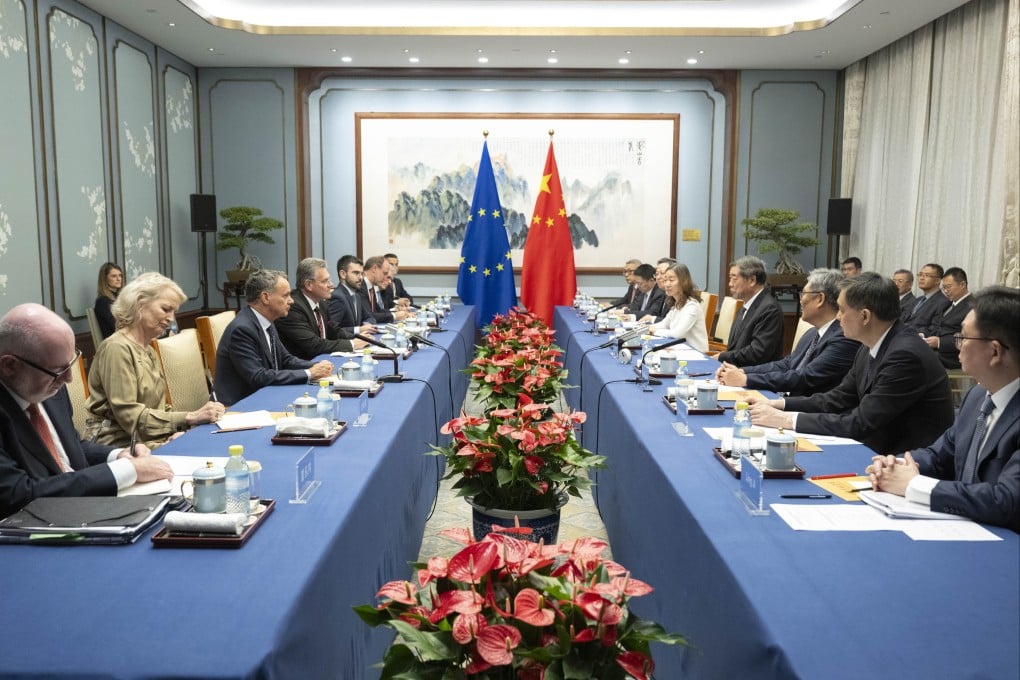
Sefčovič described two days of discussions in Beijing with China’s Commerce Minister Wang Wentao as a positive first step, after a summer of increasing tensions between China and the EU. The talks took place amid concern over the widening trade surplus between the two sides. Germany and France have previously urged the EU to develop a “last-resort” trade instrument to respond to trade imbalances.
China’s Commerce Ministry published a list of 16 outcomes described as a “consensus.” These included licenses for exporting rare earths and permanent magnets to the EU. Sefčovič did not provide a timeline for those exports. The article also refers to an earlier EU-China Trade and Investment Consultations meeting on June 29, though it does not explain its connection to the latest talks. The two sides are scheduled to meet again in March, with a video conference planned for January, according to the Chinese government’s account of the discussions.
Entities: Maroš Sefčovič, Wang Wentao, European Union, China, European Commission / Brussels • Tone: analytical • Sentiment: neutral • Intent: inform
09-10-2026
China and the European Union have reached an agreement intended to moderate Chinese hybrid and plug-in hybrid car exports to the EU, following two days of talks in Beijing. European Trade Commissioner Maros Sefcovic said the arrangement could reduce those exports by more than half over a four-year period, according to projections. He described the deal as a good result, but did not explain how it would be implemented. Sefcovic said the measure could prevent several million cars from being exported from China to the EU.
The parties also agreed to reduce Chinese import duties on about €4 billion ($4.5 billion) of EU exports, including car parts, olive oil and footwear. They also agreed to simplify China’s procedures for issuing export licenses for rare earths and permanent magnets. The agreement still requires approval from the leaders of all 27 EU member states, who are expected to discuss it at the start of a summit in Brussels.
The negotiations took place against a backdrop of a widening EU-China trade imbalance. UN Comtrade figures cited in the article show that Chinese exports to the EU reached $560 billion (€500 billion) last year, rising from $517 billion in 2023. Exports to Germany, Italy, Spain and Poland each grew by about 10%, while shipments to Hungary increased 43%. By contrast, China’s imports of European goods fell slightly, to $268.3 billion (€240 billion) from $269.4 billion the year before. The article notes that purchases from Denmark, Ireland and France were among the leading sources of European goods imported by China. European Commission President Ursula von der Leyen recently characterized the trade gap as having reached a tipping point and said the EU would use available tools to rebalance the relationship.
Entities: China, European Union (EU), Maros Sefcovic, Ursula von der Leyen, European Commission • Tone: analytical • Sentiment: neutral • Intent: inform
09-10-2026
EU Trade Commissioner Maroš Šefčovič announced that the European Union and China had reached a preliminary understanding after two days of talks in Beijing with Chinese counterpart Wang Wentao. The agreement is intended to moderate Chinese exports of hybrid and plug-in hybrid vehicles to the EU and make it easier for European companies to obtain Chinese rare earths and permanent magnets. Šefčovič said the arrangement could reduce Chinese hybrid exports by more than half and improve market access for European products, including car parts, olive oil and footwear. Those exports are currently valued at nearly €4 billion, and the deal could deliver at least €225 million in duty savings.
The understanding comes amid a record EU trade deficit with China—reported at €1 billion a day—and concerns that inexpensive Chinese imports are threatening European industries. Brussels has also been seeking greater access for EU businesses to China’s market, while proposing measures that could restrict Chinese companies’ access to the European market. The article describes the agreement as the conclusion of a “first phase” of negotiations, not a final resolution of the broader trade dispute. The EU has signalled that it may take retaliatory measures if the outcome does not meet expectations.
Rare earth access is another central element. These materials are important to Europe’s green technology, defence and automotive sectors. The EU has accused Beijing of weaponising Europe’s dependence on Chinese rare earths after China restricted exports in 2025 during a trade conflict with the United States.
The agreement will be considered by EU leaders at a Brussels summit the following week. Pressure for a tougher approach is growing: Germany and France have called for strong action against unfair Chinese trade practices, including the possibility of excluding companies from the EU market. Members of the European Parliament have adopted a resolution urging resolute measures, and 44 European industry groups have warned that the bloc needs an effective response to trade distortions to protect industrial capacity, jobs and investment.
Entities: Maroš Šefčovič, Wang Wentao, European Union, China, European Commission • Tone: analytical • Sentiment: neutral • Intent: inform
09-10-2026
China and the European Union have reached an understanding intended to reduce Chinese hybrid-car exports to the bloc by more than half over four years, according to EU trade chief Maros Sefcovic. He described the agreement, announced after extended trade talks in Beijing, as a significant step because China had agreed to moderate exports without first going through a period of escalating trade tensions. The arrangement is presented as a temporary easing of pressure between the two sides, whose disputes had raised the prospect of a wider trade war. The article does not provide a specific annual export quota or explain how the reduction will be implemented. Sefcovic said the reduction would amount to “several million cars” over the four-year period. Alongside the vehicle understanding, the parties agreed to speed up EU applications for licences to export rare earth minerals and to improve market access for a range of goods. Those goods include car parts, olive oil and textiles. Sefcovic estimated that the improved access could represent almost €4 billion (US$4.5 billion) in current export value. The report therefore describes a package involving both restraint on Chinese vehicle shipments and measures addressing trade and market-access concerns. It portrays the deal as easing tensions for now rather than resolving all underlying trade disputes. The account is based on comments made by Sefcovic after the Beijing talks and gives no further detail about enforcement, the precise scope of the products covered, or reactions from Chinese officials.
Entities: China, European Union, Maros Sefcovic, Finbarr Bermingham, Dewey Sim • Tone: analytical • Sentiment: positive • Intent: inform