08-10-2026
President Donald Trump said he no longer wants a deal with Iran, even as reports indicate that his administration is considering renewed U.S. military operations. Speaking at a campaign rally in San Antonio, Trump said Iran was willing to offer “anything to stop,” while also praising U.S. special envoy Steve Witkoff’s work on negotiations. NBC News reported that Trump and his national security team had discussed potentially resuming large-scale operations in the coming weeks. Axios reported that a renewed campaign could involve major strikes on Iranian energy, infrastructure, and nuclear targets, and that the conflict could affect the upcoming midterm elections.
The prospect of escalation comes as Trump’s approval ratings have fallen to a record low, amid public concern about the cost of living and high gasoline and diesel prices. Earlier in the week, Trump said Washington’s main difficulty in negotiations was not knowing who was in charge in Iran. Iranian Foreign Ministry spokesperson Esmail Baghaei rejected that account, arguing instead that contradictory statements from U.S. officials were creating confusion.
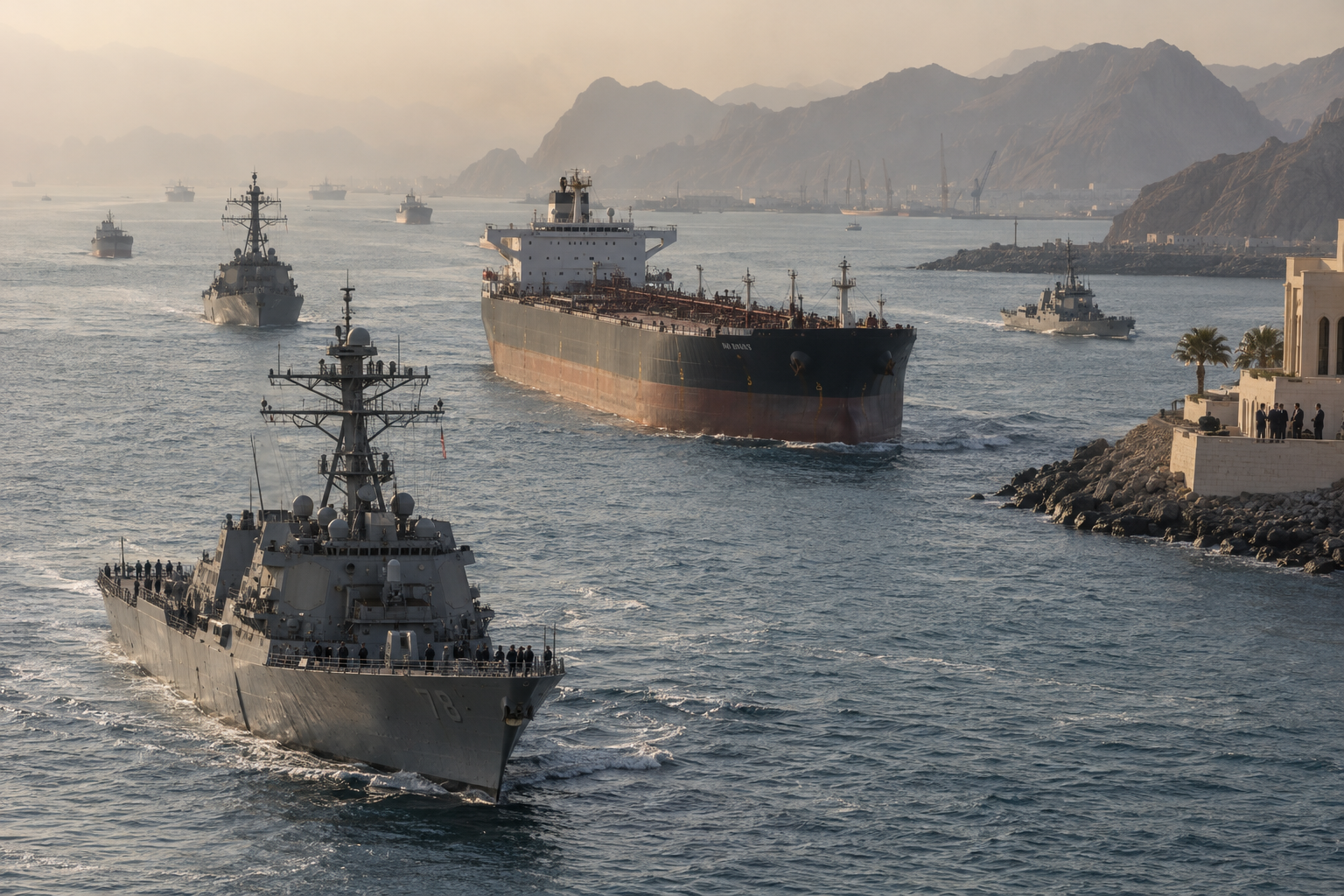
Oil markets remain a concern. Crude prices have stayed elevated even as regional exports have recovered to near prewar levels, according to Kpler. Combined crude flows from the Gulf, excluding Iran, along with exports from Saudi Arabia and the United Arab Emirates, were around the pre-conflict level of 18.5 million barrels per day. Kpler freight analyst Matt Wright said shipping normalisation no longer depends on a diplomatic agreement, though he expects it to be slower and uneven if conflict continues. He said operational adaptation, rather than a diplomatic breakthrough, is enabling traffic to recover.
Entities: Donald Trump, Iran, Steve Witkoff, Esmail Baghaei, Matt Wright • Tone: analytical • Sentiment: negative • Intent: inform
08-10-2026
President Donald Trump said Thursday that the United States would not attack Iran before the Nov. 3 midterm election, reversing comments he made less than a day earlier about possibly launching strikes before Election Day. In a Truth Social post, Trump cited “productive discussions” with Tehran, while saying the U.S. naval blockade would remain and Iran would not be allowed to obtain a nuclear weapon.
The shift comes as public support for the war has declined and rising fuel costs have made affordability a major issue for voters. A Reuters/Ipsos poll found that 31% of Americans supported U.S. military action against Iran in August, down from 37% in March; 83% expected the conflict to be prolonged. AAA data showed the national average gas price at $4.36 per gallon Thursday, about 40% higher than a year earlier and up from $2.98 shortly before the war began in late February. The article notes that the war-related cost increases could make it harder for Republicans to retain control of Congress, and that some GOP candidates in competitive races have sought distance from Trump’s Iran policy.
The election calendar has reportedly influenced White House deliberations for weeks. Reuters reported that Trump aides wanted to contain the war through the midterms to limit potential Republican losses, while leaving open the possibility of heavier strikes afterward. Despite Trump’s announcement, the U.S. is building up forces in the region, including roughly 9,000 sailors and Marines and a third aircraft carrier.
Trump also claimed that 22 million barrels of oil moved through the Strait of Hormuz overnight, with none connected to Iran; CNBC said it could not independently verify the figure. Kpler data, meanwhile, showed 11.3 million barrels per day of crude and petroleum products leaving the strait during the week ended Tuesday, with total regional oil flows at 20.4 million barrels per day.
Entities: Donald Trump, Iran, United States, Nov. 3 midterm election, Truth Social • Tone: analytical • Sentiment: neutral • Intent: inform
08-10-2026
US President Donald Trump said he would not order military strikes on Iran before the November 3 midterm elections. The announcement, posted on social media Thursday, followed reports from two US media outlets that he was considering strike options. The Atlantic reported that Trump may want to preserve a period of relative calm until after the election so the deeply unpopular war would remain out of the news. A Pentagon official told Axios that the Department of Defense was preparing to carry out strikes if Trump ordered them.
The article describes the conflict’s political and economic stakes. A ceasefire agreed by the US and Iran in April did not hold, and fighting resumed in the following months. Trump had said at the UN General Assembly that he might escalate the war. Meanwhile, high fuel and gas prices, alongside the cost of groceries and other goods, are weighing on voters and Republican candidates. The economy is a major concern ahead of the midterms, when Americans will elect members of Congress.
Trump also said his team was having “productive discussions” with Iran. In late September, he had publicly rejected an Iranian proposal to reopen the Strait of Hormuz to commercial shipping if the US met specified conditions. Iran said last week that it had received a counterproposal. The waterway is strategically important because a fifth of the world’s oil once flowed through it.
The announcement came as the US military was reportedly sending additional resources to the Middle East. The Wall Street Journal reported, citing US officials, that a third aircraft-carrier strike group and thousands of troops were expected to arrive by the end of November. The article therefore presents Trump’s pledge not to resume strikes before the election alongside continuing military preparations, stalled ceasefire efforts, diplomacy, and domestic political pressure.
Entities: Donald Trump, Iran, United States, November 3 midterm elections, Department of Defense (Pentagon) • Tone: analytical • Sentiment: negative • Intent: inform
08-10-2026
US President Donald Trump said in a social media post that the United States would not attack Iran before the November midterm elections, pointing to what he described as “productive discussions” with Tehran. The statement represents a pause in the prospect of new US strikes, even as tensions in the region are rising. According to the article, Iran has escalated attacks on tankers in the Strait of Hormuz, militants backed by Tehran have attacked energy facilities in Saudi Arabia, and Trump has moved US bombers from a base in the United Kingdom because of possible Iran-linked threats.
Trump’s announcement also stands against recent reports that his administration had been considering military action before the elections. The Atlantic reported that Trump was weighing strike plans and that the White House had asked the Pentagon to prepare options. The New York Times reported that senior White House national security officials had discussed plans, including a concentrated three-day campaign.
The article highlights the unusual overlap between national security decisions and domestic politics: Trump’s stated timing for avoiding an attack is explicitly tied to the midterm elections, while reports describe military options being considered. His position may also be temporary. In an interview published earlier in the month, Trump told Time magazine that intensified military strikes against Iran were “possible” after the elections. The report therefore presents his latest comments alongside both the continuing regional threats and earlier indications that military action remains under consideration.
Entities: Donald Trump, Iran, United States, November midterm elections, Strait of Hormuz • Tone: analytical • Sentiment: neutral • Intent: inform
08-10-2026
US-Iran communication channels remain open, with Qatar, Pakistan and, at times, China passing messages between the two governments. However, the exchanges have not resolved the fundamental disagreements preventing a durable agreement to end the seven-month-old war. Iran is seeking firm, irreversible guarantees, while Washington has made demands—particularly on Iran’s nuclear programme—without offering assurances Tehran considers sufficient. Iranian sources say opposition to negotiations is also strong inside Iran, amid tensions among the Islamic Revolutionary Guard Corps, diplomatic officials and Parliament.
The renewed diplomatic activity follows the failure to make a breakthrough at the UN General Assembly in New York. Qatar and Pakistan, which previously helped broker a provisional truce in June, are still trying to bring the parties back to talks. Iran has proposed reopening the Strait of Hormuz within seven days and says it is reviewing Washington’s response. The strategic waterway is central to global energy shipping, and the war has disrupted energy markets and fuelled inflation.
At the same time, both sides appear to be preparing for further fighting. Reports say the Trump administration is considering renewed strikes before the November 3 midterm elections, while the Pentagon has prepared for possible major combat operations and a third US aircraft carrier has been sent to the region. Iranian officials have warned of possible pre-emptive attacks and say the country has accumulated new missiles, drones and other weapons. US officials, including Secretary of State Marco Rubio and Vice President JD Vance, have pressed Iran to reduce uranium enrichment and said it has missed opportunities for a deal. The article portrays diplomacy as continuing but fragile, with military escalation increasingly plausible and no clear solution to the opposing demands.
Entities: Donald Trump, Abbas Araghchi, JD Vance, Marco Rubio, Mohammad Akraminia • Tone: analytical • Sentiment: negative • Intent: inform
08-10-2026
The provided excerpt reports that Iran has intensified attacks on vessels in the Strait of Hormuz less than a month before U.S. midterm elections, increasing pressure on President Trump and his administration. The attacks have sharply reduced the amount of oil moving through the strategic waterway. The escalation follows public celebrations by the Trump administration, which had said U.S. naval forces helped restore oil flows to nearly prewar levels. According to data from the United Nations and maritime tracking firm Kpler, Iran struck at least nine vessels in the strait during the previous week—a level of violence not seen in months. The excerpt connects the renewed disruption to the approaching elections, but it does not include further details about the administration’s response, the affected ships, or the broader consequences. The supplied text appears to be only the article’s opening; this summary is therefore limited to the information present and cannot represent the full article.
Entities: Iran, Donald Trump, Strait of Hormuz, United States, U.S. midterm elections • Tone: analytical • Sentiment: negative • Intent: inform
08-10-2026
The supplied excerpt reports that President Donald Trump said Thursday that the United States has no plans to attack Iran before the November midterm elections. The statement is described as an unusual public pronouncement about military plans. Trump also said that “productive conversations” with Tehran were underway, suggesting that diplomatic engagement was occurring alongside the public assurance about military action.
The excerpt connects the timing of the statement to the approaching elections but does not explain whether the election calendar influenced U.S. policy or provide further details about the conversations with Iran. It offers no information about the subjects, participants, or progress of those discussions, nor does it include responses from Iranian officials, members of Congress, or other U.S. authorities. The text also does not describe the broader state of relations between Washington and Tehran, give a timeline for any future decisions, or report on military deployments or contingencies.
Because the provided article text consists only of a headline and a brief opening passage, the report’s wider context and supporting evidence are unavailable here. The central information that can be established from the excerpt is limited to Trump’s stated position—that no U.S. attack on Iran is planned before the midterms—and his assertion that talks with Tehran are productive. The article characterizes the public statement as unusual, but the excerpt does not elaborate on why it is unusual or what consequences it may have.
Entities: Donald Trump, United States, Iran, Tehran, November midterm elections • Tone: neutral • Sentiment: neutral • Intent: inform
08-10-2026
The supplied page content does not contain the article identified by the headline, “U.S. won’t resume strikes on Iran before midterms, Trump says.” After the headline and URL, it consists mainly of Global News website navigation and a reader comment about U.S. oil refining capacity, fuel prices, and political spending. That comment argues that refinery closures during and after the COVID-19 downturn reduced fuel supply, contributing to higher refining margins and prices when demand recovered and later disruptions affected energy markets. It cites closures at facilities associated with Marathon Petroleum, Phillips 66, and Valero; reports large refining profits and increased political spending and lobbying by oil and gas interests; and alleges that policymakers are not adequately scrutinizing the resulting high fuel prices and corporate profits. The comment is cut off mid-sentence, so its complete argument and any article reporting are unavailable. Accordingly, the supplied text cannot substantiate the headline’s claim about Trump or U.S. strikes on Iran.
Entities: Donald Trump, Global News, Iran war, Strait of Hormuz, U.S. refining capacity • Tone: analytical • Sentiment: negative • Intent: critique