08-10-2026
The article reports that hundreds of people protested outside Spain’s Parliament, demanding action over soaring rents and the shortage of affordable housing. The demonstrations followed the eviction of 87-year-old Maricarmen Abascal, which had already fueled days of protests. Her subsequent death intensified public anger as Spain approached snap elections. The report presents her eviction and death as a focal point for broader frustration over housing conditions, rather than describing the protests as an isolated response to one case. It identifies the protesters’ main concerns as rising rental costs and inadequate access to affordable homes, and notes the politically significant timing of the demonstrations. The available article text does not provide further details about the circumstances of Abascal’s death, the location or timing of her eviction, the organizers or political affiliations of the demonstrators, or any response from government officials. It also does not specify what policy measures protesters are seeking beyond action on rents and affordable housing. The article’s central point is that Abascal’s case has sharpened an already active housing protest movement and brought renewed attention to Spain’s housing affordability problems ahead of an election. The report was published on October 8, 2026.
Entities: Maricarmen Abascal, Spain, Spain’s Parliament, housing protests, eviction • Tone: urgent • Sentiment: negative • Intent: inform
08-10-2026
Maricarmen Abascal, an 87-year-old woman whose eviction became a focus of Spain’s housing crisis, has died, according to the Madrid Tenants’ Union. She was forcibly removed from her Madrid apartment on 23 September after rent increases made it unaffordable. The company that owned the flat later offered to reduce the rent, but the proposed amount was still above her monthly pension, and Abascal could not sign an agreement while in hospital. No cause of death was announced.
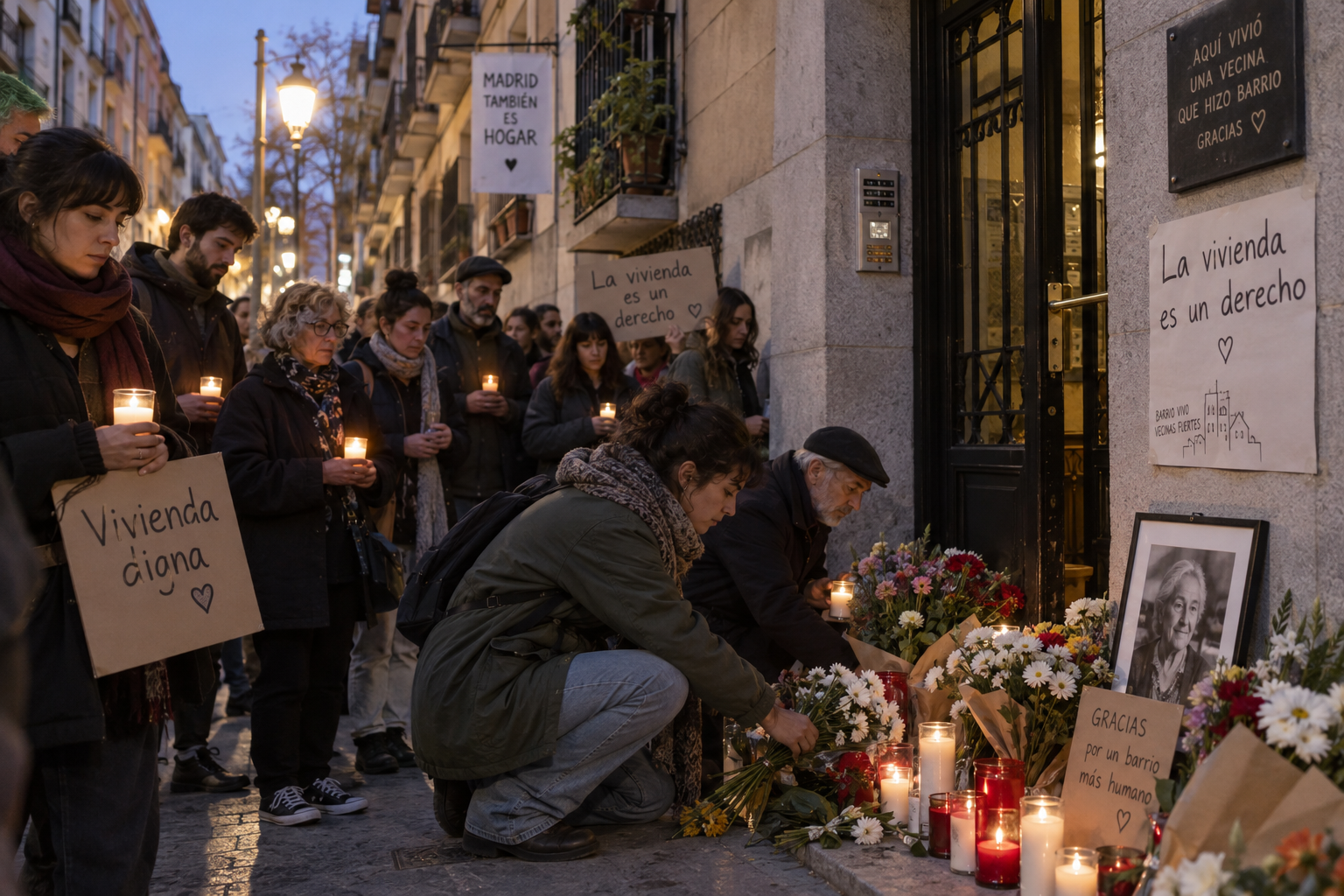
Her death prompted a vigil and protest in Madrid’s Puerta del Sol, where people had been camping for nearly two weeks to demand more affordable housing. Protesters lit candles, displayed messages including “it’s not a death, it’s a killing”, and marched toward Congress. The union described Abascal’s case as a turning point and said the outcome had come too late after what it called a torturing process. In a hospital-bed video, Abascal said she had failed to defend her home but hoped her struggle would teach others to fight for theirs.
Abascal’s family had rented the flat since 1956. After Urbagestión bought it in 2018, the rent rose from €500 to €2,650 a month. Three earlier eviction attempts were blocked by courts. Public anger over the case increased pressure on the coalition government to pass emergency housing legislation, but Congress rejected the bill last week, prompting large demonstrations across Spain.
The dispute has also contributed to political turmoil. Prime Minister Pedro Sánchez called an early election for 29 November after failing to secure the legislation and said he wanted a broader progressive majority to overcome resistance to reform. Opposition leader Alberto Núñez Feijóo offered condolences and called for respect. Unions have separately called a general strike for 11 November to demand housing reforms. The article notes that housing is not the only challenge facing Sánchez: corruption scandals, cost-of-living pressures and immigration are also weighing on his government. Polls suggest conservatives may win the most seats, potentially needing the hard-right Vox party to govern.
Entities: Maricarmen Abascal, Madrid, Puerta del Sol, Madrid Tenants’ Union, Alicia del Río • Tone: emotional • Sentiment: negative • Intent: inform
08-10-2026
María del Carmen Abascal, widely known as Maricarmen, died in hospital on Wednesday at age 87, according to her lawyer and housing activists. Her eviction from the Madrid apartment where she had lived for seven decades had become a national flashpoint over Spain’s housing affordability crisis. On 23 September, police cordoned off the street and removed protesters as the wheelchair-using woman was carried out on a stretcher. She was taken to hospital because of her fragile health. Television coverage of the eviction prompted protests in Madrid and other Spanish cities, contributing to a political crisis that culminated in the government calling for snap elections.
Prime Minister Pedro Sánchez expressed condolences. Demonstrators outside Spain’s Parliament responded with grief and anger, chanting, “Maricarmen lives, the fight goes on!” Her lawyer, Beatriz Duro, did not disclose the cause of death. She said the case had exposed the violence of evictions and their potential effects on people’s health. Maricarmen had been expected to return home after leaving hospital: under public pressure, the real estate company had agreed to let her return after initially evicting her to rent the apartment at a much higher price. The Madrid Tenants’ Union said the agreement came too late and called the outcome avoidable.
The article places her case in the wider context of rising housing costs. Average rents in Spain have nearly doubled over the past decade. Government figures cited in the article say 26% of Spanish renters spend an average of 40% of their income on rent and utilities, compared with 18% of renters across the European Union. Protesters held a minute of silence in Puerta del Sol.
Maricarmen had spent nearly her entire life in the apartment, first living there with her family. After working as a secretary for a pharmaceutical company’s board, she retired in 1998 and remained closely connected to her neighbourhood and belongings. Protesters said they would continue demonstrating in her memory, while one attendee accused those involved in her eviction of responsibility for her death and called for them to face trial.
Entities: María del Carmen Abascal (Maricarmen), Pedro Sánchez, Beatriz Duro, Iciar López, Eugenio Melchor • Tone: emotional • Sentiment: negative • Intent: inform
08-10-2026
María del Carmen Abascal, known as Maricarmen, died in hospital at age 87 after her September 23 eviction from the Madrid apartment where she had lived for seven decades. Police removed protesters who had gathered to oppose the eviction, and Abascal was taken to hospital because of her fragile health. Her lawyer, Beatriz Duro, and housing activists confirmed her death; the cause was not disclosed. Spanish Prime Minister Pedro Sánchez and other political figures offered condolences.
Her death reignited demonstrations over Spain’s housing crisis. Protesters near Parliament chanted, “Maricarmen lives, the fight goes on,” while about 1,000 people had camped in central Madrid’s Puerta del Sol during the preceding week. Activists and her lawyer said the case exposed the human and health consequences of evictions. Although the Madrid Tenants’ Union said an agreement had been reached that would have allowed Abascal to return home, it came too late. The property company had sought to rent the apartment for a substantially higher price before agreeing to her return amid public pressure.
Abascal had spent most of her life in the apartment, first with her family and later on her own. The article places her case in the context of rising rents and limited rental supply: average Spanish rents nearly doubled over a decade, and government figures indicate many renters spend a substantial share of their income on housing and utilities. Public rental housing makes up less than 2% of Spain’s available stock, compared with an EU average of 8%.
The protests have also increased political pressure. Sánchez called an early election for November 29 after his government failed to secure parliamentary support for emergency housing measures addressing evictions and real estate speculation. Protesters have made Abascal a symbol of the broader struggle for affordable housing, though political leaders from across the spectrum urged respect for her and her family.
Entities: María del Carmen Abascal (Maricarmen), Beatriz Duro, Pedro Sánchez, Isabel Rodríguez, Alberto Núñez Feijóo • Tone: analytical • Sentiment: negative • Intent: inform