08-10-2026
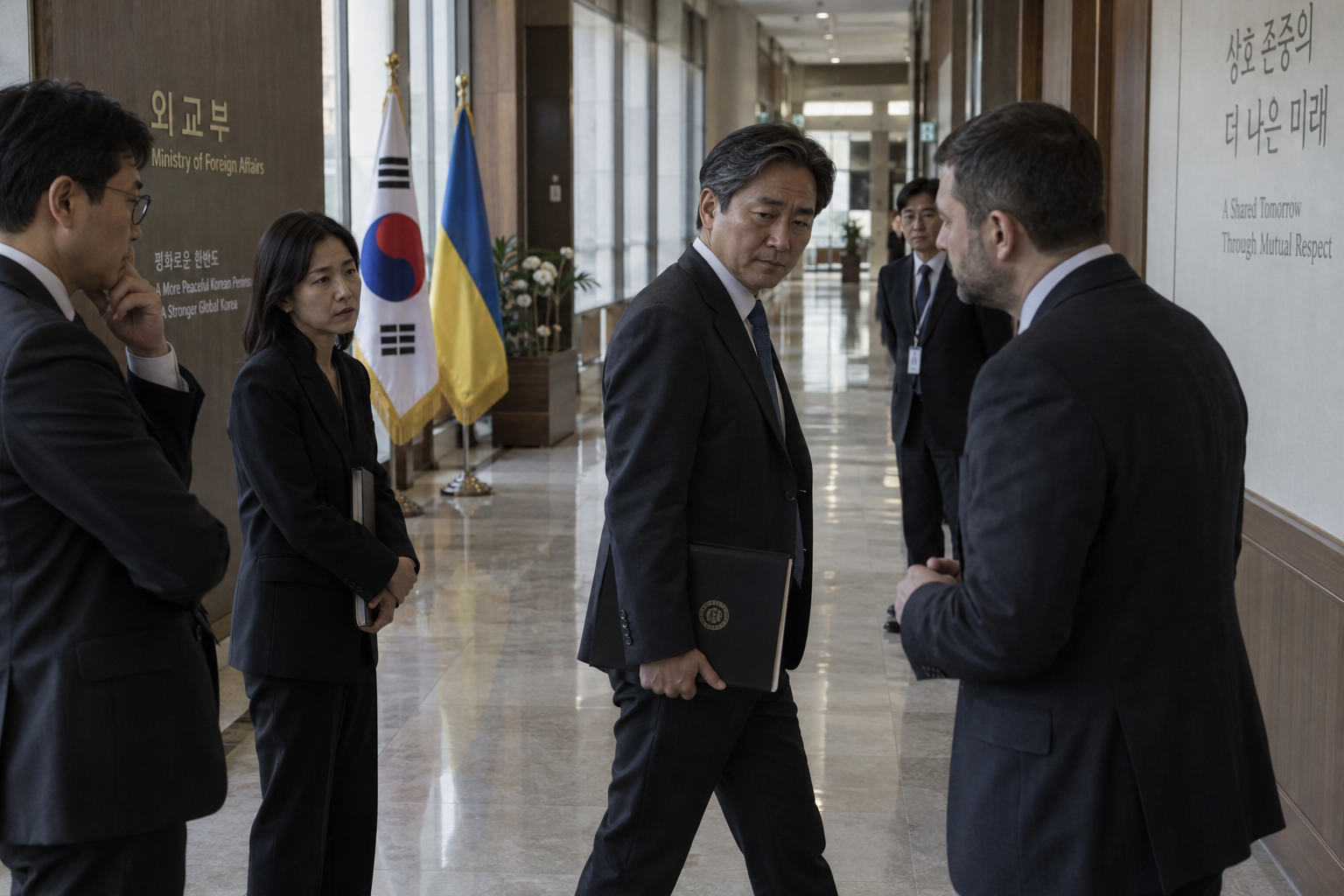
South Korea is recalling its ambassador to Ukraine, Park Hee-chang, amid a diplomatic dispute over Ukraine’s disclosure that two captured North Korean soldiers had been transferred to South Korea. The Foreign Ministry did not say when Park would return, but said Seoul would continue talks with Kyiv and hoped to resolve the issues between the countries.
The dispute centers on whether the transfer was supposed to remain confidential. South Korea says Ukraine breached a non-disclosure agreement when Ukrainian President Volodymyr Zelenskyy disclosed the transfer during a speech at the United Nations last month. Kyiv denies that it agreed to such an arrangement. A few days before the ambassador recall was announced, South Korean President Lee Jae Myung called on Ukraine to apologise and warned that Seoul could take further action.
The two soldiers were among thousands of North Korean troops sent to support Russia’s war against Ukraine. Captured in early 2025, they requested to resettle in South Korea, saying they could face persecution if returned to North Korea. Seoul agreed to accept them under its policy of welcoming and financially supporting North Korean defectors, and because it legally regards North Korea as part of its territory. North Korean state media has not commented on their transfer, although Pyongyang has previously accused South Korea of kidnapping defectors.
South Korean officials said confidentiality was intended to protect the soldiers and their relatives. Some experts, however, suggest Seoul may also fear that publicity could complicate efforts to improve relations with North Korea. The tensions have widened beyond the transfer: Ukraine has accused South Korea of helping Russia address a fuel shortage caused by drone strikes. Ukraine’s sanctions official said more than 30 per cent of Russia’s fuel imports in August came from South Korea. Despite the dispute, South Korea has provided Ukraine with more than $640 million in humanitarian assistance since 2022 and pledged a further $143 million in aid in July.
Entities: South Korea, Ukraine, Park Hee-chang, Volodymyr Zelenskyy, Lee Jae Myung • Tone: analytical • Sentiment: neutral • Intent: inform
08-10-2026
South Korea’s Foreign Ministry says the government will pursue legal action if allegations that South Korean fuel was illegally shipped to Russia are confirmed. The allegations were made by Vladyslav Vlasiuk, an adviser to Ukrainian President Volodymyr Zelenskyy, who said 176,000 tonnes of fuel had been sent from South Korea to Russia in July and August aboard tankers under sanctions. South Korea said it had not verified whether the shipments occurred. It also noted that some commercial exports, including diesel and jet fuel, were not included on its export-control list for Russia.
Seoul rejected Vlasiuk’s statement, saying it could misrepresent South Korean policy. Presidential spokesperson Kang Yu-jung said South Korea had consistently applied sanctions and export controls against Russia in coordination with the international community since Russia’s invasion of Ukraine. She asked Ukraine not to make public claims about South Korean policy without sufficient fact-checking, warning that such remarks could damage international trust.
The dispute comes amid already strained relations between Seoul and Kyiv. South Korea recently accused Zelenskyy of disclosing at the United Nations General Assembly that Ukraine had transferred two North Korean prisoners of war to South Korea. Seoul demanded an official apology, alleging that the disclosure violated a non-disclosure agreement; Kyiv denied that such an agreement existed.
The article also places the disagreement in the wider context of North Korea’s ties with Russia. The two countries signed a mutual defence treaty in 2024, and Ukrainian and South Korean estimates say about 14,000 to 15,000 North Korean soldiers were sent to support Russia’s war effort in Ukraine. The Korean War ended with an armistice in 1953 rather than a peace treaty, leaving North and South Korea technically at war.
Entities: South Korea, Ukraine, Russia, North Korea, Volodymyr Zelenskyy • Tone: neutral • Sentiment: neutral • Intent: inform
08-10-2026
South Korea has decided to recall its ambassador to Ukraine amid a diplomatic dispute over the transfer of two North Korean prisoners of war to South Korea. The announcement followed President Lee Jae Myung’s warning that Seoul could take unspecified punitive measures if Kyiv did not apologise for revealing the transfer. South Korea’s Foreign Ministry said it hoped the outstanding issues would be resolved amicably and that consultations with Ukraine would continue.
The dispute began after Ukrainian President Volodymyr Zelenskyy discussed the soldiers’ transfer during his address to the United Nations General Assembly last month. Seoul says the disclosure violated a nondisclosure agreement made in mid-September; Ukraine denies that it agreed to such an arrangement. South Korean officials say the agreement was intended to protect the prisoners and their relatives in North Korea.
The two soldiers were among thousands of North Korean troops deployed to support Russia’s war against Ukraine. Captured in early 2025, they said they wanted to resettle in South Korea, where they could avoid possible persecution if returned to North Korea. Seoul said it would accept them under its policy of receiving and financially supporting North Korean defectors, and because it legally regards North Korea as part of its territory.
North Korea’s state media has not commented on the transfer, although Pyongyang has previously accused South Korea of kidnapping defectors. North Korea has avoided talks with South Korea and the United States since 2019 and has focused on expanding its nuclear programme. Despite the diplomatic row, South Korea has provided Ukraine with $445 million in humanitarian assistance since 2022; Lee pledged a further $100 million during a meeting with Zelenskyy in July.
Entities: South Korea, Ukraine, North Korea, Lee Jae Myung, Volodymyr Zelenskyy • Tone: analytical • Sentiment: neutral • Intent: inform
08-10-2026
South Korea says it will recall its ambassador to Ukraine, escalating a dispute over the public disclosure that Kyiv transferred two captured North Korean soldiers to Seoul. The soldiers, captured while supporting Russian forces in the war, had reportedly expressed a wish to go to South Korea. The disagreement began after Ukrainian President Volodymyr Zelensky announced the transfer at the United Nations General Assembly in September. Seoul says Ukraine had agreed to keep the transfer secret, while Zelensky’s office says no non-disclosure agreement existed. South Korea maintains that Kyiv had indicated the soldiers would be mentioned in Zelensky’s speech, but not that their transfer would be revealed.
The disclosure drew criticism from South Korean President Lee Jae Myung, who called it disappointing and a sensitive national-security matter. Lee also faced domestic criticism, with opposition figures accusing his government of trying to conceal the transfer to avoid antagonizing North Korea. His office said confidentiality was intended partly to protect the soldiers’ families and that Ukraine had also wanted secrecy to avoid criticism for losing a possible prisoner-exchange opportunity.
South Korea subsequently demanded an apology. Foreign Minister Cho Hyun said he had received one, but that it did not meet Seoul’s expectations. Ukraine’s Foreign Ministry spokesperson later denied that Foreign Minister Andrii Sybiha had apologized. South Korea’s Foreign Ministry says consultations will continue and expressed hope that outstanding issues can be resolved.
The row comes amid broader tensions over South Korea’s support for Ukraine. Seoul has condemned Russia’s invasion and announced a $100 million assistance package, but it maintains a policy against supplying lethal weapons to countries engaged in active conflict. Kyiv has pressed South Korea to provide advanced air-defence missiles, particularly after North Korean troops joined Russia’s war effort in 2024. Moscow has warned that it would retaliate if Seoul supplied weapons. South Korea also seeks to preserve working relations with Russia and China, which it considers relevant to efforts to influence North Korea.
Entities: South Korea, Ukraine, North Korea, Russia, Volodymyr Zelensky • Tone: analytical • Sentiment: neutral • Intent: inform
08-10-2026
South Korea has recalled its ambassador to Ukraine as a diplomatic dispute deepens over the public disclosure of two North Korean prisoners of war captured while fighting alongside Russian forces. The dispute began after Ukrainian President Volodymyr Zelenskyy discussed the soldiers’ capture and transfer to Seoul during a speech at the UN General Assembly last month.
Seoul says Ukraine breached a confidentiality agreement concerning the prisoners’ transfer and argues that disclosure could endanger their families in North Korea. President Lee Jae Myung has demanded a public apology, saying Ukraine requested confidentiality during the exchange and later disclosed the information unilaterally. He also criticized Kyiv for denying the agreement existed and said South Korea could take further measures if it did not apologize.
Ukraine disputes Seoul’s account, saying no confidentiality agreement existed. Foreign Minister Andrii Sybiha described the issue as a “diplomatic misunderstanding” and said Ukraine hoped to resolve it, but Kyiv has not apologized. South Korea’s Foreign Ministry said the ambassador would be recalled while consultations continued, expressing hope that outstanding issues could be settled amicably.
The dispute comes amid other strains in bilateral relations. The Guardian published an investigative report alleging that fuel was shipped from South Korea to Russia using sanctioned tankers, helping ease pressure on Russian diesel supplies after Ukrainian strikes on refineries and other oil infrastructure. South Korea has sought to balance support for Ukraine—including humanitarian aid, non-lethal equipment and financial assistance—with maintaining cordial relations with Russia.
The article also places the dispute in the context of North Korea’s military cooperation with Russia. North Korean troops helped Russia try to reclaim the Kursk border region, parts of which Ukraine had occupied. Pyongyang has publicized the deployment domestically and used it to strengthen ties with Moscow.
Entities: South Korea, Ukraine, North Korea, Russia, Volodymyr Zelenskyy • Tone: analytical • Sentiment: neutral • Intent: inform
08-10-2026
South Korea said it will recall its ambassador to Ukraine, Park Hee-chang, escalating a diplomatic dispute over Ukrainian President Volodymyr Zelenskyy’s public disclosure that two North Korean prisoners of war had been transferred to South Korea. The announcement followed President Lee Jae Myung’s warning that Seoul could take unspecified punitive measures if Kyiv did not apologize. South Korea’s Foreign Ministry did not say when Park would return, but said consultations with Ukraine would continue and expressed hope for a smooth resolution.
The dispute centers on the soldiers’ transfer in mid-September. South Korea says Ukraine violated a nondisclosure agreement; Kyiv denies that it agreed to one. The soldiers were among North Korean troops deployed to support Russia’s war in Ukraine and had been captured in early 2025. They reportedly wanted to resettle in South Korea, where officials said they would be accepted. South Korea regards North Korea as part of its territory and has a policy of accepting and financially supporting North Korean defectors. Seoul said secrecy was intended to protect the soldiers and their relatives, while experts suggested the government may also fear the disclosure could complicate efforts to improve relations with Pyongyang.
North Korea has not commented on the transfer, but has previously reacted angrily to defections and accused South Korea of kidnapping its citizens. It has avoided talks with South Korea and the United States since 2019 while expanding its nuclear program.
The article notes that worsening ties with Ukraine could conflict with South Korea’s interests. Experts say Kyiv could provide intelligence on North Korea’s growing cooperation with Russia and its battlefield experience, and that cooperation with Ukraine matters to Seoul’s relationships with Western countries supporting Kyiv. Observers say Zelenskyy disclosed the transfer to highlight North Korea’s military support for Russia and encourage further international assistance. South Korea has provided $445 million in humanitarian aid to Ukraine since 2022; Lee pledged another $100 million in July.
Entities: South Korea, Ukraine, North Korea, Volodymyr Zelenskyy, Lee Jae Myung • Tone: analytical • Sentiment: neutral • Intent: inform
08-10-2026
South Korea says it will take legal action if an investigation finds that fuel shipments from its ports to Russia violated domestic law. The announcement followed a Guardian investigation based on port records and ship-tracking data, which found that more than 176,000 tonnes of fuel—mostly diesel—were loaded onto seven tankers at South Korean ports during July and August. The vessels made 14 voyages to Russia’s far east; three were under UK and EU sanctions. One tanker received about 26,000 tonnes in a ship-to-ship transfer near Yeosu.
Seoul says it is checking further information but emphasizes that refined petroleum products are not covered by its Russia export controls, which mainly restrict industrial machinery, electronics and vehicles. The government also says it has not confirmed that the fuel was of South Korean origin and that no diesel, aviation fuel or motor petrol was exported to Russia through South Korean customs clearance. It argues that a vessel changing course from its declared destination does not, by itself, establish a false declaration. Authorities say they will assess the ships’ routes, destination changes and reasons for them before deciding whether laws were broken.
The report describes tankers that declared destinations such as Japan or Singapore before sailing to Vladivostok. The Russian-flagged Aram Khachaturian, which is not under Western sanctions, loaded fuel at Ulsan three times and each time declared a destination other than Russia. The trade comes as Ukrainian drone strikes have disrupted Russian refining, with refinery throughput reaching a more-than-20-year low in June and diesel output down nearly 30% year on year, according to the International Energy Agency. A CREA analyst said the shipments undermine sanctions and South Korea’s support for Ukraine.
The shipments have also intensified tensions between Seoul and Kyiv. Ukraine has raised the issue through diplomatic channels and says it has its own information about the activity. South Korea rejected a Ukrainian adviser’s criticism as inaccurate and inappropriate, and announced it would recall its ambassador to Ukraine while continuing consultations.
Entities: South Korea, Russia, Ukraine, Volodymyr Zelenskyy, Heorhii Tykhyi • Tone: analytical • Sentiment: neutral • Intent: inform