08-10-2026
Britain says its consulate in East Jerusalem will remain open, but at a smaller scale and under the name “UK Mission, Jerusalem,” after a dispute with Israel over British sanctions on Israeli settlements in the occupied West Bank. Israel had set a 30-day deadline for the consulate to close, with the deadline expiring on Thursday. Israeli Foreign Minister Gideon Saar said the consulate would formally end operations, while acknowledging that some British diplomats could remain in the building under an arrangement between the two countries. British Foreign Secretary Ed Miliband said the UK does not accept that Israel has the legal right to close the consulate. He said the renamed mission would continue providing vital services and working with Palestinians.
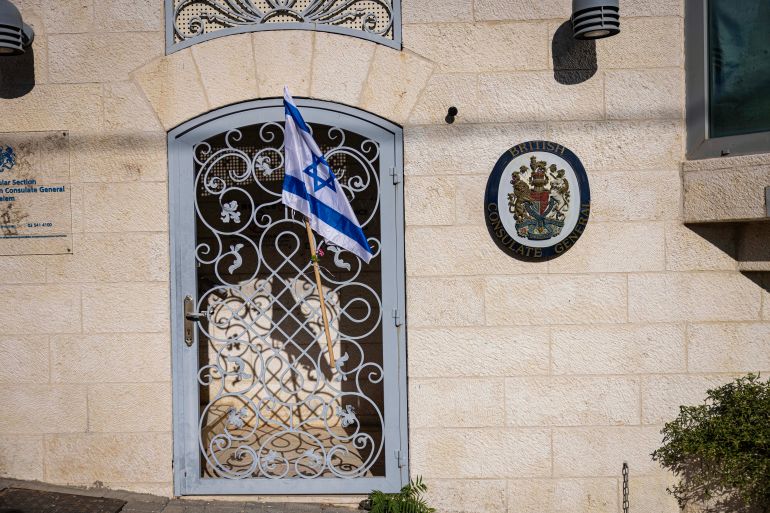
The consulate is in Sheikh Jarrah, East Jerusalem, an area Israel captured in the 1967 war and later annexed—a move most countries do not recognise. The United Nations and most countries consider Israeli settlements illegal under international law, while Israel disputes that position. The consulate, founded in 1839, serves Palestinians in Jerusalem, the West Bank and Gaza and provides consular services. Britain’s embassy in Tel Aviv, which handles relations with Israel’s government, is unaffected by the closure order. Signs identifying the building as the British Consulate General were removed, although the British flag remained flying earlier in the day.
The dispute has further strained relations between the longtime allies. Britain has criticised Israel over its conduct in the Gaza war and attacks by Israeli settlers on Palestinians in the West Bank. Israel’s government, led by Prime Minister Benjamin Netanyahu, has accused Britain’s governing Labour Party of hostility towards Israel. Britain had also sent its national security adviser to Israel for talks as it sought to keep the consulate operating.
Entities: UK Mission, Jerusalem, British Consulate in Jerusalem, East Jerusalem, Sheikh Jarrah, West Bank • Tone: analytical • Sentiment: neutral • Intent: inform
08-10-2026
Israel removed the signage from the British consulate in East Jerusalem and announced that the consul general and 20 British diplomats would leave the country, following the UK’s decision to impose sanctions on illegal Israeli settlements in the occupied West Bank. Britain says it has not ended its presence: Foreign Secretary Ed Miliband described the consulate as downgraded to the “UK Mission, Jerusalem,” which the government says remains operational and will continue its work with Palestinians and support for a two-state solution. The UK has temporarily withdrawn some staff and family members for safety, but says it intends to rebuild its presence and is not taking reciprocal action while discussions continue.
Israeli Foreign Minister Gideon Saar presented the measures as retaliation for British sanctions and rhetoric. In addition to closing the consulate, Israel said it would remove British representatives from the International Assistance Centre for Gaza, end British training of Palestinian Authority forces in the West Bank, and bar 12 British officials and other citizens it accused of anti-Israeli or antisemitic activity from entering Israel. UK officials have said talks with Israel are continuing, while declining to confirm reports that Britain might expel Israeli diplomats in response.
The article explains that a consulate generally provides services to citizens, while a mission represents a diplomatic presence, but former consul general Vincent Fean says the change in name matters less than the continued presence. He links the dispute to the planned E1 settlement, which could connect Ma’ale Adumim and other settlements to occupied East Jerusalem and divide the West Bank. The British consulate dates to 1839, with a later re-establishment in 1948.
The UK’s sanctions target settlement activity, not Israel as a whole, according to Miliband. Israel has condemned them as anti-Israel. The article concludes that Israel lacks the legal right to close the mission in territory it captured in 1967 and has occupied since, although its control over East Jerusalem gives it practical power over what operates there.
Entities: Ed Miliband, Gideon Saar, Vincent Fean, Bezalel Smotrich, United Kingdom • Tone: analytical • Sentiment: neutral • Intent: inform
08-10-2026
The article traces episodes of strain in UK-Israel relations, prompted by Israel’s order that the British Consulate General in occupied East Jerusalem close after the UK announced sanctions on illegal Israeli settlements in the occupied West Bank. The governments reached a last-minute compromise: seven British diplomats could remain in the building, while 20, including the consul general, would leave. The UK says the facility remains open as the “UK Mission, Jerusalem” and rejects Israel’s authority to close a consulate it owns. The mission supports British nationals and Palestinians and represents the UK across East Jerusalem, the West Bank and Gaza.
The timeline reaches back to Britain’s Mandate in Palestine. In 1917, Foreign Secretary Arthur Balfour expressed support for a Jewish national home, subject to protections for the rights of existing non-Jewish communities. In 1946, the Irgun, led by Menachem Begin, bombed Jerusalem’s King David Hotel, which housed British administrative and military offices. The explosion killed 91 people. The article notes that the Irgun said it had issued warnings, but accounts differ over whether they reached people able to act; the hotel was not evacuated in time, and a claim that a British official refused to respond was denied.
After Israel’s establishment in 1948, the countries came close to military confrontation. Israeli forces entered Sinai in December, then shot down British aircraft in January 1949, killing two pilots. Britain considered its treaty obligations to Egypt and sent forces to Aqaba, but US intervention helped ease the crisis. Historians disagree about how close the countries came to war; Britain withheld formal recognition of Israel until 1950.
The article also describes Britain’s arms restrictions after Israel invaded Lebanon in 1982, which lasted until 1994, and Israel’s arms sales to Argentina during the Falklands War that year. Israel later acknowledged supplying Argentina, while British officials suspected that lingering resentment over the Mandate may have influenced the decision. The supplied article ends at a “Gaza genocide” heading, without further text.
Entities: United Kingdom, Israel, British Consulate General in East Jerusalem / UK Mission, Jerusalem, Occupied West Bank settlements, Ed Miliband • Tone: analytical • Sentiment: negative • Intent: inform
08-10-2026
Most British diplomats are leaving the UK consulate in occupied East Jerusalem after Israel moved to implement measures announced in response to UK sanctions on Israeli settlements in the occupied West Bank. Israel says the consulate is closing its operations and that 20 diplomats, including the consul general, will leave. It has permitted a task force of seven UK diplomats to remain in the building, with activity limited in scope. The UK disputes Israel’s characterization: Foreign Secretary Ed Miliband says the building will remain open as the UK Mission, Jerusalem, and that the staff who have left were temporarily withdrawn for security reasons. The Foreign Office says the remaining diplomats will continue to provide vital services and engage with Palestinians, including the Palestinian Authority.
The dispute follows the UK’s sanctions on settlements, which Israel announced it would retaliate against by closing the consulate. The consulate, established in 1838, manages UK relations with Palestinians in Jerusalem, the West Bank and Gaza, separately from the UK embassy in Tel Aviv. The two governments have reached an understanding allowing a reduced UK presence, but Miliband says Israel has not provided necessary assurances about staff and premises security. The UK maintains that East Jerusalem is occupied territory and that Israel has no legal right to close the consulate.
The arrangement is described as a compromise that has, for now, eased the risk of further deterioration in UK-Israel relations. Israel can present the move as the closure of the consulate’s operations, while the UK emphasizes that its presence will continue and that the withdrawal is temporary. Miliband has reserved the UK’s right to take reciprocal action, but says it will not do so while credible discussions are ongoing. Any retaliation is therefore considered unlikely before Israel’s elections later in the month.
Entities: Gideon Saar, Ed Miliband, Stephen Doughty, British consulate in East Jerusalem, UK Mission, Jerusalem • Tone: analytical • Sentiment: neutral • Intent: inform
08-10-2026
Britain has reduced its diplomatic presence at its consulate in East Jerusalem following a dispute with Israel over British measures targeting Israeli settlements in the occupied West Bank. The two countries reached an agreement concerning the mission’s future, but describe its status differently. Israeli Foreign Minister Gideon Saar said the consulate had stopped operating in its former capacity and that 20 British diplomats, including the consul general, were leaving Israel. Seven diplomats would be permitted to remain in the building, but their work would be “very limited.” The consulate’s sign and diplomatic emblem were removed.
British Foreign Secretary Ed Miliband said some staff and their families had been temporarily withdrawn for their safety. He maintained that the site would remain open as the UK Mission, Jerusalem, and continue operating independently, providing vital services and working with Palestinians. Miliband also rejected Israel’s claim to have the legal right to close the consulate, which was established in 1838.
Israel ordered the closure on September 8 in response to British trade restrictions and sanctions aimed at settlements and people linked to settler violence against Palestinians. Israel characterized the measures as a diplomatic attack. The consulate has traditionally managed Britain’s relations with Palestinians in East Jerusalem, the West Bank and Gaza, separately from the British embassy in Tel Aviv.
The dispute also concerns the status of East Jerusalem: Israel captured and later annexed it in 1967, but most countries, including Britain, do not recognize the annexation. Miliband said Britain would not take retaliatory diplomatic action while discussions with Israel continued. He reaffirmed the UK’s support for a two-state solution to the Israeli-Palestinian conflict.
Entities: Gideon Saar, Ed Miliband, United Kingdom, Israel, East Jerusalem • Tone: analytical • Sentiment: neutral • Intent: inform
08-10-2026
Britain and Israel have agreed that Britain’s nearly 200-year-old diplomatic consulate in Jerusalem will remain open, but in a reduced form and under a new name. The compromise follows Israel’s order to close the consulate amid a dispute over sanctions related to West Bank settlements. Founded in 1839, the consulate is to be renamed the “UK Mission.” Israel said 20 British diplomats, including the consul general, would leave, leaving seven staff members in a limited role. Britain described the departure of some diplomats as temporary, said it intended to rebuild its presence, and said it would not take reciprocal measures for the time being. The report presents the arrangement as a last-minute agreement that preserves the mission’s operation while reducing its staffing and changing its status or designation. Britain says the remaining mission will continue providing “vital services.”
Entities: Britain, Israel, Jerusalem, UK Mission, British diplomatic consulate • Tone: neutral • Sentiment: neutral • Intent: inform
08-10-2026
Israel has said the British Consulate General in east Jerusalem will lose its consular status, requiring 20 British diplomats, including the consul general, to leave the country. Israel’s Foreign Minister Gideon Saar said a seven-member diplomatic task force would remain at the site but have a very limited remit. Britain says the building will stay open and provide services under the name “UK Mission, Jerusalem,” with a smaller team continuing its work. Foreign Secretary Ed Miliband said the arrangement would preserve Britain’s presence and its support for a two-state solution. London had previously threatened to expel Israeli diplomats in response, but has put that option aside for now and says it hopes to rebuild its presence. The dispute follows Britain’s recent ban on trade with Israeli settlements in the occupied West Bank. Miliband challenged Israel’s legal authority to close the consulate, which he said had existed for nearly 200 years, and reiterated Britain’s position that east Jerusalem is occupied territory. Despite the tensions, Middle East Minister Stephen Doughty said the UK still has a strong relationship with Israel and that British officials would continue engaging with Palestinians and assisting British visitors. The article places the latest dispute within wider strains over Israel’s war against Hamas in Gaza and Britain’s recognition of a Palestinian state the previous year. It also describes the competing positions on the West Bank: Palestinians claim it, along with Gaza and east Jerusalem, for a future state; Israel has established settlements there, now home to more than 500,000 Jewish settlers. Prime Minister Benjamin Netanyahu’s government views the West Bank as the Jewish people’s biblical and historical homeland and considers the settlements important for security.
Entities: Israel, United Kingdom, East Jerusalem, British Consulate General in Jerusalem, Gideon Saar • Tone: analytical • Sentiment: negative • Intent: inform
08-10-2026
The provided material is only a headline and a brief opening sentence, not the full Washington Post article. It reports that Israel downgraded Britain’s 188-year-old consulate in East Jerusalem on Thursday, expelling 20 diplomats and reducing the services the facility provides to Palestinians. The action was connected to sanctions against Israeli settlers, according to the headline. Israel did not close the consulate entirely: the opening says that last-minute negotiations led to a decision to scale back the facility’s role instead.
The excerpt therefore describes a significant diplomatic measure with practical consequences for the consulate’s staffing and its services to Palestinians, while indicating that negotiations limited the extent of the action. It does not identify who took part in those negotiations, specify which services will be reduced, explain the sanctions or the events that prompted them, or provide responses from the British or Israeli governments. Those details cannot be reliably summarized from the supplied text. The article’s framing is primarily factual and news-oriented, though the reported expulsion and service reductions convey a strained diplomatic situation. The headline and opening provide no basis for assessing the wider effects or the parties’ arguments. This summary is limited to the information included in the prompt; it does not infer details from the linked article.
Entities: Israel, United Kingdom, East Jerusalem, British Consulate in East Jerusalem, Steve Hendrix • Tone: analytical • Sentiment: negative • Intent: inform