08-10-2026
Italy’s parliament is considering a proposed electoral law that would replace the current mixed system with proportional representation while giving extra seats to the party or coalition that wins at least 42 percent of the vote in both chambers. The bonus could add up to 70 seats in the 400-member Chamber of Deputies and 35 in the 200-member Senate, potentially ensuring a governing majority. The proposal would also require coalitions to name their prime ministerial candidate before the election. Prime Minister Giorgia Meloni argues that the changes would make governments more stable, addressing a history of fragile coalitions. Critics contend the bonus could give a bloc disproportionate power and say the proposal is intended to benefit Meloni’s Brothers of Italy ahead of the next election. Some also question whether the reform would improve stability: if no alliance reaches the threshold in both chambers, proportional allocation could still produce a hung parliament and require post-election negotiations. The bill has passed the Senate and faces a final secret-ballot vote in the Chamber of Deputies. Political scientist Giovanni Orsina expects it to pass; Meloni has said she would resign if it fails. Italy’s next general election is due by December 22, 2027, though it could be called earlier. Polling cited in the article puts Brothers of Italy at 27 percent, with its coalition partners at a combined 12 percent. Opposition parties also have a possible route to a majority: simulations suggest a centre-left alliance including the Democratic Party and Five Star Movement could reach 44 percent. Analysts therefore say the law’s effects will depend on how coalitions form and may not inherently advantage the incumbent government.
Entities: Giorgia Meloni, Italian parliament, Rosatellum, Chamber of Deputies, Senate • Tone: analytical • Sentiment: neutral • Intent: inform
08-10-2026
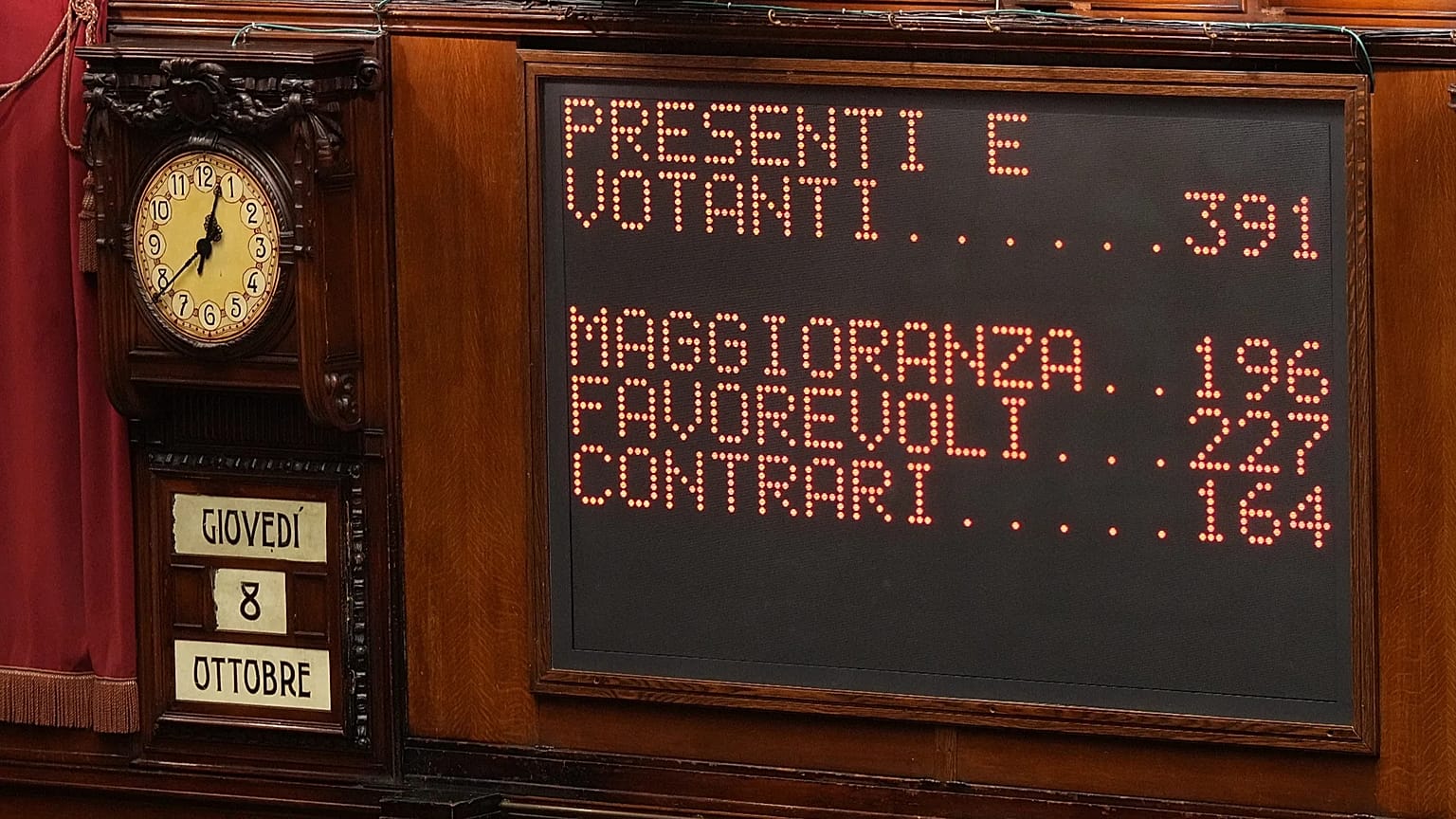
Italy’s parliament has approved a controversial overhaul of the country’s electoral system, voting 227 to 164 in favour of changes promoted by Prime Minister Giorgia Meloni before elections expected next year. The reform replaces Italy’s current hybrid system—under which roughly one-third of lawmakers are elected by first-past-the-post and the remainder through proportional representation—with a fully proportional system. Parties planning to govern together must declare a joint prime-ministerial candidate and publish a shared programme before the election. A party or coalition receiving the largest vote share, if it exceeds 42%, would receive 105 bonus parliamentary seats: 70 in the lower house and 35 in the senate. The government says the changes are intended to make it easier to form stable governments and secure clear parliamentary majorities. Opposition parties argue instead that the rules are designed to help Meloni’s right-wing coalition remain in power, and accused the government of undermining democracy during a heated debate. Democratic Party leader Elly Schlein said her side would win under any electoral system. The vote also revealed tensions among coalition partners, including Meloni’s Brothers of Italy, the League and Forza Italia. However, analysts had considered rejection unlikely, partly because lawmakers could lose eligibility for a parliamentary pension if an early election ended their terms prematurely. Meloni had warned she might resign and call an early election if the proposals failed, making the secret ballot a test of her authority. After the vote, she described her coalition as united and said the new rules would promote stability and parliamentary coherence regardless of a government’s political orientation. Her term is due to end in October 2027, though elections could be brought forward to spring. The article places the reform against a backdrop of unusual political stability under Meloni, whose government became Italy’s longest-running since World War Two.
Entities: Giorgia Meloni, Elly Schlein, Italy, Italian parliament, Brothers of Italy (FdI) • Tone: analytical • Sentiment: neutral • Intent: inform
08-10-2026
Italy’s Chamber of Deputies has approved the government’s electoral reform, known formally as the Stabilicum and dubbed the Melonellum by opponents, by 227 votes to 164 in a secret ballot. The measure is intended to apply at the 2027 general election and its passage marks the unofficial start of the campaign, although an early election before 14 April 2027 is considered unlikely. The government used confidence votes to advance the legislation, limiting amendments and debate. The final vote followed a third reading and Senate amendments, including changes to preference voting and candidate lists.
The reform introduces preference voting alongside blocked list leaders, changes the rules for electing both chambers, raises the signature threshold for parties without parliamentary representation from 1,500 to 6,000, and revises gender-representation rules. It also addresses single-member constituencies in Bolzano and gives people living away from their registered residence the right to vote. The government presented the outcome as evidence of unity, while opposition leaders argued that the law was designed to protect the governing coalition and criticized its provisions.
The political contest now turns in part on possible alliances. Giorgia Meloni has ruled out joining forces with Roberto Vannacci’s National Future, while centre-left parties have not settled on a common leader and remain divided, including over the war in Ukraine. An early election is also constrained by the date when first-term MPs become eligible for a parliamentary pension: 14 April 2027, when the legislature will have served four years, six months and one day.
The reform could still face a challenge in the Constitutional Court. Critics question the Senate’s majority bonus, a requirement for some parties to collect 300,000 signatures, and the absence of a minimum share of women among lead candidates. Opponents warn that the law could leave Italy in political deadlock.
Entities: Giorgia Meloni, Elly Schlein, Giuseppe Conte, Roberto Vannacci, Italy’s Chamber of Deputies • Tone: analytical • Sentiment: neutral • Intent: inform
08-10-2026
Italy’s parliament has given final approval to an electoral reform backed by Prime Minister Giorgia Meloni. The new system is proportional but awards a seat bonus to any pre-election alliance winning more than 42% of the vote, guaranteeing it a parliamentary majority. The winning alliance would receive 70 additional seats in the lower house and 35 in the Senate. Parties and alliances must also publish a governing programme and identify their candidate for prime minister before the election. The lower house approved the bill 227–164 in a secret ballot, despite opposition from centre-left parties. Meloni had said she would resign if the measure failed. She argues the changes will make governments more stable and give voters a clearer role in choosing political programmes and leadership. Opposition figures say the reform is designed to improve Meloni’s electoral prospects. Democratic Party leader Elly Schlein says her bloc can win under any system, while Five Star Movement leader and former prime minister Giuseppe Conte calls the law a convoluted scheme intended to benefit the government. The new rules also spotlight disagreements between Schlein and Conte over how a potential opposition alliance should select its leader: Schlein favors the leader of the largest party, while Conte advocates a primary. Political scientist Piero Ignazi cautions that a primary could increase divisions. Recent polls put Brothers of Italy at about 28%, the Democratic Party at 20%, and Five Star at 12.5%. Neither camp is expected to cross the 42% threshold alone, though a survey suggests a broader opposition alliance including smaller parties could do so. The reform replaces a hybrid system that combined proportional representation with first-past-the-post constituencies. Meloni’s coalition also faces pressure from Roberto Vannacci’s far-right National Future party, which has drawn support from coalition partners the League and Forza Italia. Meloni’s term runs until October 2027, but an earlier election is possible in April or May. Opposition parties say they will challenge the law in court.
Entities: Giorgia Meloni, Elly Schlein, Giuseppe Conte, Giovanni Donzelli, Piero Ignazi • Tone: analytical • Sentiment: neutral • Intent: inform