08-10-2026
Two commercial tankers were reportedly hit in separate incidents outside the Strait of Hormuz within 24 hours, raising concern that attacks linked to the Iran-US war may be spreading beyond the strategic waterway. The UK Maritime Trade Operations agency said projectiles struck the Antigua and Barbuda-flagged tanker Acers off Qatar on Wednesday, with casualties reported. It was the first reported attack in that area in more than six months. On Thursday, a fire broke out aboard a tanker near Fujairah in the Gulf of Oman. Maritime intelligence firm Vanguard identified it as likely the Marshall Islands-flagged Dhalgout, although the cause was unclear and UKMTO had not recorded the incident. NASA satellite fire data confirmed a blaze, while US military aircraft were operating nearby.
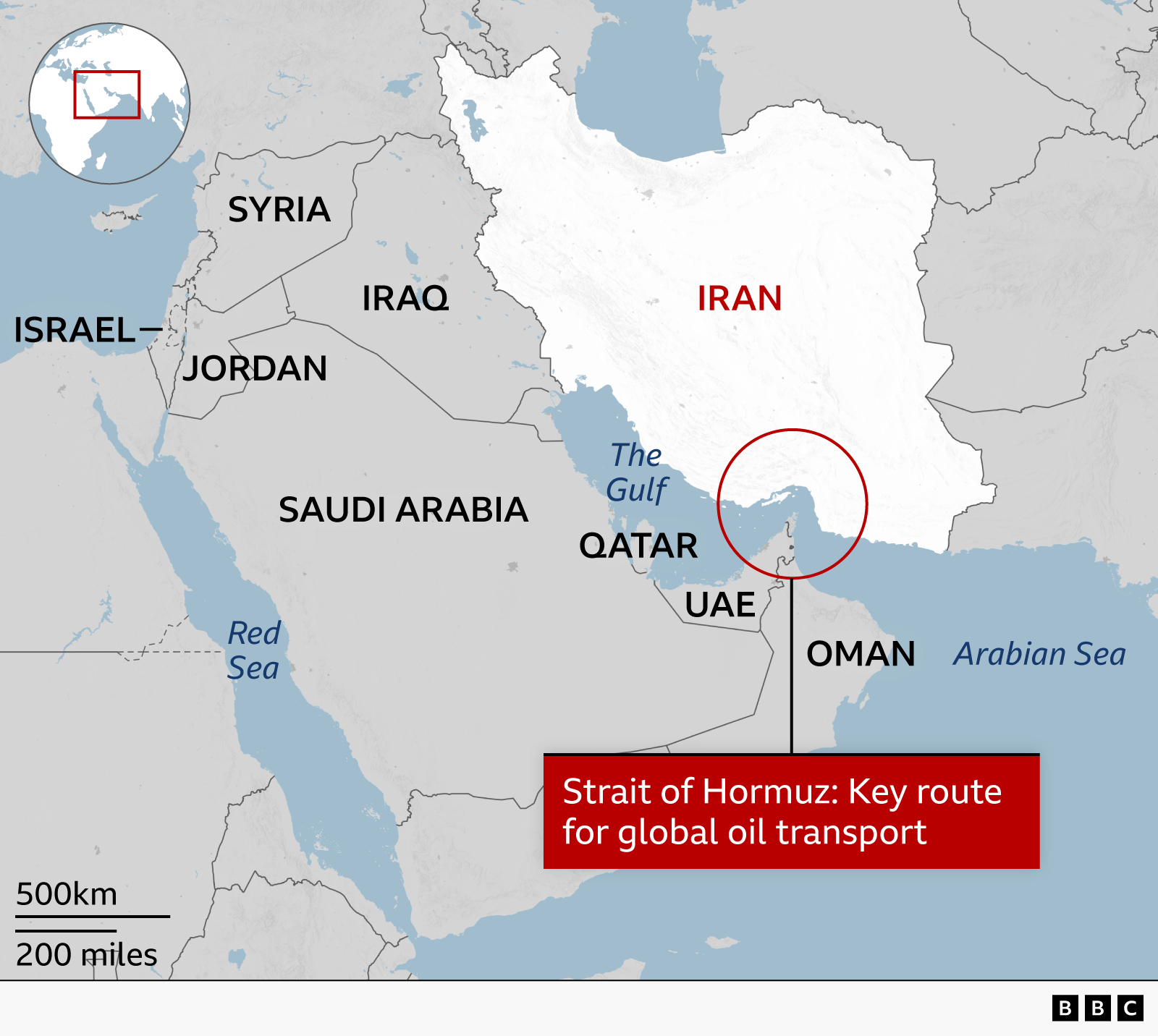
Neither Iran nor IRGC-affiliated media officially claimed responsibility. However, outlets linked to the Islamic Revolutionary Guard Corps suggested Tehran had expanded operations against commercial vessels it considers to have violated Iranian rules, extending them to waters beyond Hormuz. The incidents occurred amid the effective closure of the strait, through which about one-fifth of global oil and gas shipments normally pass, following concurrent Iranian and US naval blockades that began during the war in late February.
Iranian officials issued warnings indicating the conflict could spread geographically. Acting Defence Minister Majid Ebn ol-Reza referred to the Gulf of Oman and Indian Ocean and warned of further consequences if the United States made a mistake. Senior military adviser Yahya Rahim Safavi also said Iran could extend the war as far as the Indian Ocean or elsewhere if attacked by the US or Israel. Iran’s army spokesman said forces were prepared for pre-emptive operations. The article also notes a change in Iran’s defence leadership: Ebn ol-Reza became acting minister after Aziz Nasirzadeh was killed on the war’s first day, while Mehrdad Akhlaqi was nominated as permanent successor.
In the United States, President Donald Trump defended the war at a Nebraska campaign rally, making remarks that appeared to accept the possibility of destruction in Los Angeles and San Diego. After criticism, he said at a Texas rally that the United States would protect its cities and would not allow such an attack.
Entities: Iran, United States, Strait of Hormuz, Gulf of Oman, Qatar • Tone: analytical • Sentiment: negative • Intent: inform
08-10-2026
Iran has warned regional countries that attempts to establish new oil-export routes through or around the Strait of Hormuz without its approval will be considered hostile. Officials briefed by Tehran say Iran is prepared to block such routes, potentially using missile and drone attacks or boats to intimidate ships. The warnings come amid a rise in tanker attacks: the previous week saw the most attacks in the strait since the Iran war began, while vessel traffic fell to its lowest level in more than two months.
A recent attack also suggests the danger may be spreading beyond the strait. Projectiles struck the Antigua and Barbuda-flagged chemical tanker Acers about 51 nautical miles off Qatar. Its crew suffered minor injuries. Maritime risk analysts said the incident could put shipping approaches to Qatar, Bahrain, Saudi Arabia, Kuwait and Iraq at risk. BIMCO safety chief Jakob Larsen said the threat appears to have increased and is discouraging shipowners from transiting the strait.
The conflict is straining energy markets and the wider economy. Governments and energy companies have used oil stockpiles to offset unprecedented supply disruptions, but industry executives warned that accessible reserves are running low, increasing market fragility and pressure on prices. Maersk has raised an emergency fuel surcharge for inland transport in the UK and Ireland. The article also notes that US President Donald Trump is weighing next steps against Iran, while the war’s estimated monthly cost of US$3 billion has become a campaign issue ahead of November’s midterm elections. A British Royal Navy official warned that the consequences of conflict at sea extend well beyond the maritime domain.
Entities: Iran, Strait of Hormuz, Acers, Qatar, Gulf of Oman • Tone: analytical • Sentiment: negative • Intent: inform
08-10-2026
Oil prices rose on Thursday, October 8, 2026, after reports that the US Defence Department was identifying potential targets in Iran for strikes that could take place before the US midterm elections. Brent crude gained more than 2 per cent to $102.20 a barrel at 8.10am UAE time, recovering after briefly dropping below $100 earlier in the week. The article reports that West Texas Intermediate also moved, but the supplied text gives its price as “$8.73” and describes the increase as “1.64 per cent lower,” figures that appear inconsistent as written.
Crude had remained above $100 a barrel despite a lull in the US military campaign. President Donald Trump had previously suggested that US strikes would resume only after the midterms, amid domestic backlash over the war. However, increased Iranian attacks on oil and gas tankers in the Strait of Hormuz could affect that timing. The Atlantic, citing unnamed US officials, reported that the scale of any potential strikes was still under discussion. One possibility was a limited campaign before the elections, followed by a larger operation afterward.
Shipping through the Strait of Hormuz—a key passage through which about a fifth of the world’s oil and gas travelled before the conflict—remained thin. Tanker attacks reached their highest weekly rate since the conflict began on February 28, while the number of vessels crossing the strait fell to its lowest level in more than two months, according to Kpler data. Only seven commodity ships transited on Tuesday, the lowest count since July 23. In the latest reported incident, a tanker north of Qatar was struck by multiple projectiles, causing casualties, according to the UK Maritime Trade Operations agency.
Entities: Sarmad Khan, Donald Trump, The Atlantic, US Defence Department (Pentagon), UK Maritime Trade Operations • Tone: analytical • Sentiment: negative • Intent: inform
08-10-2026
The National’s October 8, 2026, episode of “Trending Middle East” rounds up several regional developments. Flights from Riyadh’s King Khalid International Airport were disrupted after the Houthis claimed a ballistic missile strike there. The disruption follows Saudi authorities’ confirmation that three people were killed in earlier attacks on airports in Riyadh and Abha. The report also covers a dispute over the Strait of Hormuz: US Secretary of State Marco Rubio said Iran had lost control of the waterway and that Gulf oil exports had returned to near prewar levels, while Iran disputed his account. In Israel, National Security Minister Itamar Ben-Gvir faced backlash after distributing pins depicting a hangman’s noose to high school pupils in Herzliya. The gesture was described as part of his campaign to promote the death penalty for Palestinians convicted of deadly attacks. The roundup then turns to Abu Dhabi’s plan to train 20,000 government employees in artificial intelligence, supporting the emirate’s ambition to become the world’s first AI-powered government by 2027. Finally, President Sheikh Mohamed called for special prayers for rain, known as Salaat Al Istisqaa, to be held at mosques across the UAE on Friday. The programme is identified as AI-assisted, based on original reporting by The National and curated and edited by humans.
Entities: The National, Trending Middle East, Riyadh, King Khalid International Airport, Houthis • Tone: neutral • Sentiment: neutral • Intent: inform
08-10-2026
Ship traffic through the Strait of Hormuz fell to its lowest level in more than two months on Tuesday, with only seven commodity vessels recorded, according to data from analytics firm Kpler. The decline followed a week in which attacks on tankers in the strait reached their highest level since the Iran war began. Traffic rose to 10 vessels on Wednesday, but remained far below the more than 20 vessels recorded on Sunday and Monday. Kpler’s figures do not include ships that switched off their Automatic Identification System transponders to avoid detection. Separate LSEG data recorded eight crossings on Tuesday, down from 14 the day before, including five oil tankers and the liquefied natural gas carrier Al Mafyar, which had loaded in Qatar and was bound for Pakistan.
Crude oil volumes crossing the strait fell 27 per cent from a wartime high the previous week to at least 10.1 million barrels per day. This returned the flow to its September average and left it at 74 per cent of its prewar level. Much of the decline came from ship-to-ship transfers in the Gulf of Oman. At the same time, Gulf producers increased exports through routes on the Gulf of Oman coast and the Red Sea. Those shipments reached 6.7 million barrels per day—more than twice prewar levels—helping offset reduced Hormuz volumes and keep overall Middle East crude exports at prewar levels.
The latest reported attack involved projectiles striking a tanker 94 kilometres north of Madinat ash Shamal, Qatar; casualties were reported, according to the United Kingdom Maritime Trade Operations agency. Before the war began on February 28, about 125 large commercial vessels crossed the strait each day. Their cargoes represented roughly one-fifth of global crude oil and liquefied natural gas supplies, underscoring the strategic importance of the waterway.
Entities: Strait of Hormuz, Iran war, Kpler, Emmanuel Belostrino, Yui Torikata • Tone: analytical • Sentiment: negative • Intent: inform
08-10-2026
A tanker sailing in the Gulf off Qatar’s northern coast was hit by multiple projectiles, the United Kingdom Maritime Trade Operations (UKMTO) agency reported. The vessel was struck about 94 kilometres (58 miles) north of Madinat ash Shamal. UKMTO said casualties had been reported but did not provide a death or injury count, identify the ship’s origin, or say who was responsible. Authorities were investigating. Qatar had not commented, although the incident took place within its exclusive economic zone.
The attack is unusual because it occurred in the western half of the Gulf, rather than in the Strait of Hormuz, where vessels have more commonly been targeted. The Maritime Executive described it as the first reported tanker attack in that part of the Gulf in weeks. UKMTO has also reported a rise in attacks in the Strait: nine tanker attacks there this month, or half the total recorded across the strait and Gulf in September.
The article situates the incidents within the conflict involving Iran, the United States and Israel. Before the war began on February 28, the Strait of Hormuz typically handled about 125 large commercial vessels daily and carried roughly 20 percent of global crude oil and liquefied natural gas supplies. Iran effectively closed the strait in retaliation for US-Israeli attacks, while Washington maintained a blockade on Iranian ports.
Despite attacks and disruption, Middle Eastern oil exports have recently recovered to, and according to provisional data exceeded, pre-war levels. Kpler data put the seven-day average of regional crude exports at 18.3 million barrels per day on September 30, compared with an average of about 18 million barrels per day in the year before the war.
Entities: United Kingdom Maritime Trade Operations (UKMTO), Qatar, Madinat ash Shamal, Strait of Hormuz, Gulf of Oman • Tone: neutral • Sentiment: neutral • Intent: inform
08-10-2026
A tanker was hit by multiple projectiles in the Gulf north of Qatar, in what the United Kingdom Maritime Trade Operations agency described as a rare attack so far inside the Gulf. The incident occurred 51 nautical miles (94km) from Madinat al-Shamal, and casualties were reported. Maritime intelligence firm Vanguard identified the vessel as the Antigua and Barbuda-flagged oil and chemical tanker Acers, which had been reported sailing towards the Strait of Hormuz.
The attack comes amid repeated assaults on merchant vessels since the US and Israel’s war with Iran began in February. The International Maritime Organization says 24 seafarers have been killed in 93 confirmed incidents. The last reported attack with casualties before this incident was on 9 September, when two sailors died aboard the Panama-flagged tanker El Gaia in the Strait of Hormuz. A shipping-risk specialist said this was also the first reported attack this far west of the strait since that date.
Separately, Vanguard corrected an earlier report of a fire aboard the Marshall Islands-flagged tanker Dhalkut in the Gulf of Oman, saying there was no indication a fire had occurred.
The Strait of Hormuz, a crucial route for about a fifth of global oil and gas shipments, was effectively closed after the war began, amid Iranian missile and drone attacks on commercial vessels and a US naval blockade of Iranian ports. A preliminary US-Iran agreement to end the war and reopen the strait collapsed within weeks when shipping attacks resumed and the blockade was reinstated. Iran has asserted a measure of control over the waterway and targeted vessels using a southern route through Omani waters. The US military has been protecting tankers carrying oil through the strait. Kpler analysts estimate crude exports through the waterway averaged 12 million barrels per day over the past two weeks, about 80% of pre-war levels.
Entities: United Kingdom Maritime Trade Operations (UKMTO), Acers, Strait of Hormuz, Qatar, Madinat al-Shamal • Tone: neutral • Sentiment: negative • Intent: inform