31-08-2026
The Al Jazeera video examines the implications of a proposed oil agreement between the United States and Venezuela. Under the reported deal, US companies would gain access to more than one-fifth of Venezuela’s extensive oil reserves, potentially creating a major commercial and political connection between Washington and Caracas. The arrangement is presented as part of efforts to support Venezuela’s economic recovery, with the country’s interim leader arguing that cooperation with the United States could help rebuild the national economy and oil sector.
However, the agreement faces opposition inside Venezuela. The report highlights disagreement over whether the deal would serve Venezuela’s interests and whether it is legally valid. These questions place the arrangement within a broader debate about national sovereignty, control of natural resources, foreign investment, and the political authority of Venezuela’s leadership. The deal could bring investment and access to international expertise, but it may also generate concerns about the distribution of oil revenues and the extent of US influence over Venezuela’s most valuable economic resource.
Presented by Tom McRae, the discussion features political risk and oil analyst Jose Chalhoub, commodity specialist Cornelia Meyer, and Francisco Rodriguez, a senior research fellow at the Center for Economic and Policy Research at the University of Denver and former head of the Economic and Financial Advisory of the Venezuelan National Assembly. The supplied article description does not provide a final assessment of the agreement, instead framing the program around its possible economic, political, and legal consequences.
Entities: United States, Venezuela, Caracas, Washington, US-Venezuela oil deal • Tone: analytical • Sentiment: neutral • Intent: analyze
31-08-2026
The article examines the limited publicly available information about an agreement that US President Donald Trump described as “the biggest oil deal in world history” involving Venezuela’s oil reserves. The deal follows the article’s account that US forces captured former Venezuelan President Nicolás Maduro in January and brought him to New York to face federal drug-trafficking charges. The White House has released few details, and no formal text of the agreement has been made public.
According to Venezuela’s interim leader, Delcy Rodríguez, the arrangement creates a new company involving the US government and an unnamed private operator. The company would receive rights to develop 17 untapped oil fields with a stated proven potential of 65 billion barrels. Venezuelan authorities estimate that the agreement could attract $100 billion in investment and generate more than $209 billion in tax revenue. The United States would receive 55% of the company’s effective output through a combination of ownership and rights to buy oil at cost. Some of the oil would reportedly go to the US Strategic Petroleum Reserve and the military.
Rodríguez presented the agreement as a path toward economic recovery, modernization and greater energy production while insisting that Venezuela would retain ownership and sovereignty over its resources. However, the deal has drawn criticism from some Venezuelans, who view US access to the country’s resources as a betrayal. Harvard professor and former Venezuelan minister Ricardo Hausmann questioned Rodríguez’s legitimacy and predicted that the arrangement would not last.
US lawmakers are also divided. Trump allies praised the deal, while Democratic senators accused the administration of pursuing Venezuelan oil at the expense of democratic and military interests. Major uncertainties remain over financing, the identity of the private operator, the precise structure of the US stake, legal protections, security and infrastructure. Chevron and Exxon Mobil declined to comment, while economist David Oxley warned that Venezuela’s reserves may have been overstated and that US companies may prefer less risky investments.
Entities: Donald Trump, Venezuela, United States, Delcy Rodríguez, Nicolás Maduro • Tone: analytical • Sentiment: neutral • Intent: inform
31-08-2026
The Trump administration has announced an agreement with Venezuela to develop the country’s vast oil reserves, with the United States reportedly receiving a 55% share of production through a joint venture with a private Venezuelan company. President Trump described it as the “biggest oil deal in the world” and claimed it would substantially reduce gas prices for American taxpayers. Energy experts interviewed by NPR, however, say the agreement raises major operational, financial and political questions.
The United States does not have a national oil company or an established government-owned oil-production operation, making its proposed role as a shareholder highly unusual. It remains unclear which entity would manage operations in Venezuela or whether American oil companies would be willing to invest. The administration’s promise to receive oil “at cost” could also make the arrangement unattractive to private investors, since companies would have limited opportunities to benefit when oil prices rise.
Experts also question the legitimacy and durability of the agreement because it was made with acting President Delcy Rodríguez, who took office after the United States seized and arrested former President Nicolás Maduro in January. Rodríguez says the deal benefits Venezuelans, but some citizens question whether its terms are fair. Investors may likewise be concerned about whether the government will remain recognized and stable over the next several years.
The agreement is unlikely to affect U.S. gas prices in the near term. Many of the oil fields under discussion remain largely undeveloped, and bringing them into production would take at least several years. Even then, experts say a substantial increase in Venezuelan output is unlikely to have a meaningful short-term effect on global oil markets. Any effect on gas prices, they conclude, would be far in the future.
Entities: United States, Venezuela, Donald Trump, Delcy Rodríguez, Nicolás Maduro • Tone: analytical • Sentiment: negative • Intent: analyze
31-08-2026
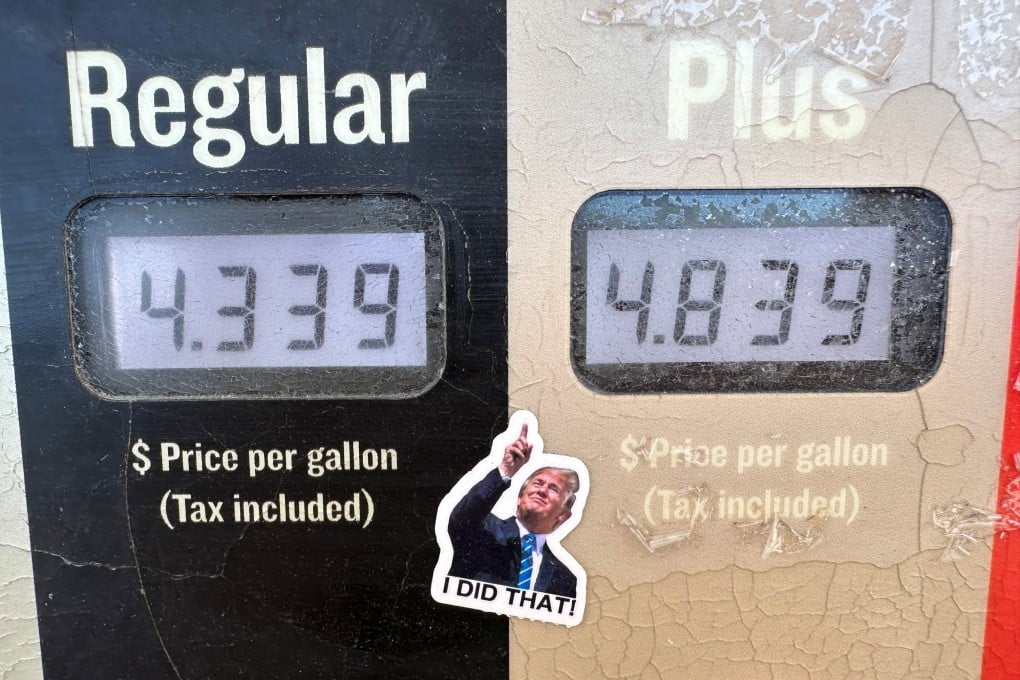
US President Donald Trump is scheduled to meet oil-refining executives at the White House as his administration seeks to reduce fuel prices that have surged during the war between the United States, Israel and Iran. The meeting comes ahead of the November US midterm elections, when Republicans fear that higher gasoline and energy costs could anger voters and increase the broader cost of living.
According to White House spokeswoman Taylor Rogers, the talks will focus on expanding US refining capacity, strengthening domestic energy production and distribution, and lowering prices for consumers. The administration said the meeting would include a mixture of small, medium-sized and large refiners and distributors, although it did not identify the participating companies.
The White House described the discussions as particularly timely because the United States is increasing the flow of Venezuelan crude to American refineries. The move follows Trump’s announcement of a deal granting the United States a major stake in Venezuela’s oil reserves. The announcement came days before the meeting and after Venezuelan President Nicolas Maduro was toppled by US forces in January, according to the article.
The administration is therefore attempting to address fuel-price pressure through increased refining capacity and greater access to crude supplies. The effort combines domestic energy policy with the consequences of US foreign-policy decisions involving Iran and Venezuela. Politically, the issue is significant because persistently high fuel prices have contributed to rising living costs and could damage Republican prospects in the midterm elections. The article reports the administration’s stated objectives and political concerns but does not provide details about the proposed refining measures, the companies attending, or the likely effectiveness of the strategy.
Entities: Donald Trump, Taylor Rogers, Nicolas Maduro, White House, US oil-refining executives • Tone: neutral • Sentiment: negative • Intent: inform
31-08-2026
The article argues that a proposed US arrangement to obtain control of Venezuelan oil reserves is politically provocative, legally questionable and unlikely to deliver the benefits claimed by President Donald Trump. Trump says the United States has secured majority control of more than 65 billion barrels of Venezuela’s proven reserves at no cost to American taxpayers, potentially more than doubling US reserves. The reported plan involves the US Department of Defense’s Office of Strategic Capital partnering with Venezuelan investor Alejandro Betancourt to develop as many as 17 fields in the Maracaibo region and the Orinoco Belt. It targets production of 1.5 million barrels per day over 25 years, requiring approximately $100 billion in investment, while providing Venezuela with an estimated $209 billion in tax revenue.
Robin Mills places the proposal within Latin America’s long history of conflict over petroleum, including foreign exploitation, nationalisation, privatisation and resource nationalism. Venezuela has repeatedly shifted between state control and foreign investment, with the oil industry later damaged by political mismanagement, US sanctions and the decline of state oil company Petroleos de Venezuela SA.
The author identifies several flaws in the plan. The Office of Strategic Capital may lack legal authority to take equity stakes, and foreign-controlled projects cannot simply be counted as part of US national reserves. More importantly, transferring oil rights to Washington could make any Venezuelan government appear to be a US proxy, potentially reviving Chavismo and violating Venezuela’s constitution. Leaving Opec would also undermine Caracas’s interests by exposing its relatively costly production to another price war.
Mills says Venezuela’s output has recovered to roughly 1.1–1.2 million barrels per day but would require years and tens of billions of dollars to reach two million barrels per day. Normal commercial negotiations with companies such as Chevron, Shell and BP could increase production without an aggressive takeover. The proposal may open Venezuela to US oil interests, but it would not quickly lower fuel prices and could intensify anti-American sentiment, encourage Iran’s resistance and make China appear a more respectful partner. The supplied article ends mid-sentence.
Entities: Donald Trump, Venezuela, Venezuelan oil reserves, Office of Strategic Capital (OSC), US Department of Defense • Tone: analytical • Sentiment: negative • Intent: critique
31-08-2026
NPR’s Up First briefing covers four major developments and a longer investigation into climate-related deaths. The Trump administration has announced a partnership with Venezuela to develop part of the country’s estimated 65 billion barrels of oil reserves. Under the reported joint venture, the United States would receive 55% of the oil produced. President Trump says the agreement could reduce gas prices, but energy experts question that claim. The deal also raises political concerns because it follows the U.S. capture of former Venezuelan leader Nicolás Maduro and comes while Venezuela’s democratic transition remains uncertain. Critics say Washington could be undermining Venezuelan sovereignty and legitimizing an unelected government.
The United States and Iran have exchanged fire again after a month without direct attacks. Iran said a U.S. drone strike killed members of its Islamic Revolutionary Guard on Larak Island, while Iran targeted U.S. bases in Jordan. The U.S. said its strikes were intended to prevent Iran from placing sea mines in the Strait of Hormuz and described them as limited and defensive. It remains unclear whether the confrontation will escalate.
The House of Representatives is returning for a one-week session to vote on a government funding measure. Because the Senate has already approved the bill, the vote could prevent a shutdown through December and avoid a funding crisis during the midterm elections. Republicans face political pressure over cost-of-living concerns and the possibility of another shutdown.
The briefing also reports that at least 15 people are missing after a severe flood in Arizona’s Grand Canyon. Dozens were evacuated, bridges were destroyed, and multiple trails were closed.
Finally, NPR presents fertility guidance and an investigative report by climate and health reporter Alejandra Borunda. Working with Boston University scientists, NPR spent two years modeling heat-related deaths and found that heat may kill nearly five times as many people in the United States as official counts indicate. The investigation examines why these deaths are missed and how climate change is affecting human health.
Entities: Donald Trump, Nicolás Maduro, Delcy Rodriguez, Franco Ordoñez, Hadeel-Al Shalchi • Tone: analytical • Sentiment: negative • Intent: inform