31-08-2026
Guinea-Bissau held a referendum on a proposed constitution that would replace its semi-presidential system with a stronger presidential model. The proposal would give the president authority to lead the Council of Ministers and appoint or dismiss the prime minister. It would also reduce parliament from 102 to 65 lawmakers and cut electoral constituencies from 29 to 12.
Supporters, including General Tomás Djassi, the head of the armed forces, argue that the reforms would clarify the distribution of power and end recurring disputes among the presidency, government and parliament. They say a more powerful executive could bring stability to a country that has experienced repeated coups, attempted coups and prolonged political crises.
Opposition parties, led in part by the African Party for the Independence of Guinea and Cape Verde, rejected the draft and called for a boycott. They argued that it would weaken the prime minister, subordinate parliament and political parties, and concentrate excessive authority in the presidency. Critics also questioned whether a military-led transitional government has the legitimacy to rewrite the country’s political system. Some residents said the authorities should prioritize reconciliation, improved living conditions and a more stable political climate instead.
The National Electoral Commission reported that voting was peaceful, although logistical problems occurred in some areas. Participation was expected to exceed 55 percent, with strong turnout in Bafatá, Gabú and Oio but lower participation in parts of Bissau. Preliminary results were expected within three to seven days.
The referendum is taking place ahead of a presidential election scheduled for December 6, which is intended to restore civilian rule. The military seized power on November 27, 2025, after a disputed presidential election in which Umaro Sissoco Embaló and Fernando Dias both claimed victory. The crisis adds to wider democratic instability in West Africa and occurs in a country burdened by poverty, political conflict and cocaine trafficking.
Entities: Guinea-Bissau, proposed constitutional referendum, strong presidential system, military transition and return to civilian rule, General Tomás Djassi • Tone: analytical • Sentiment: negative • Intent: inform
31-08-2026
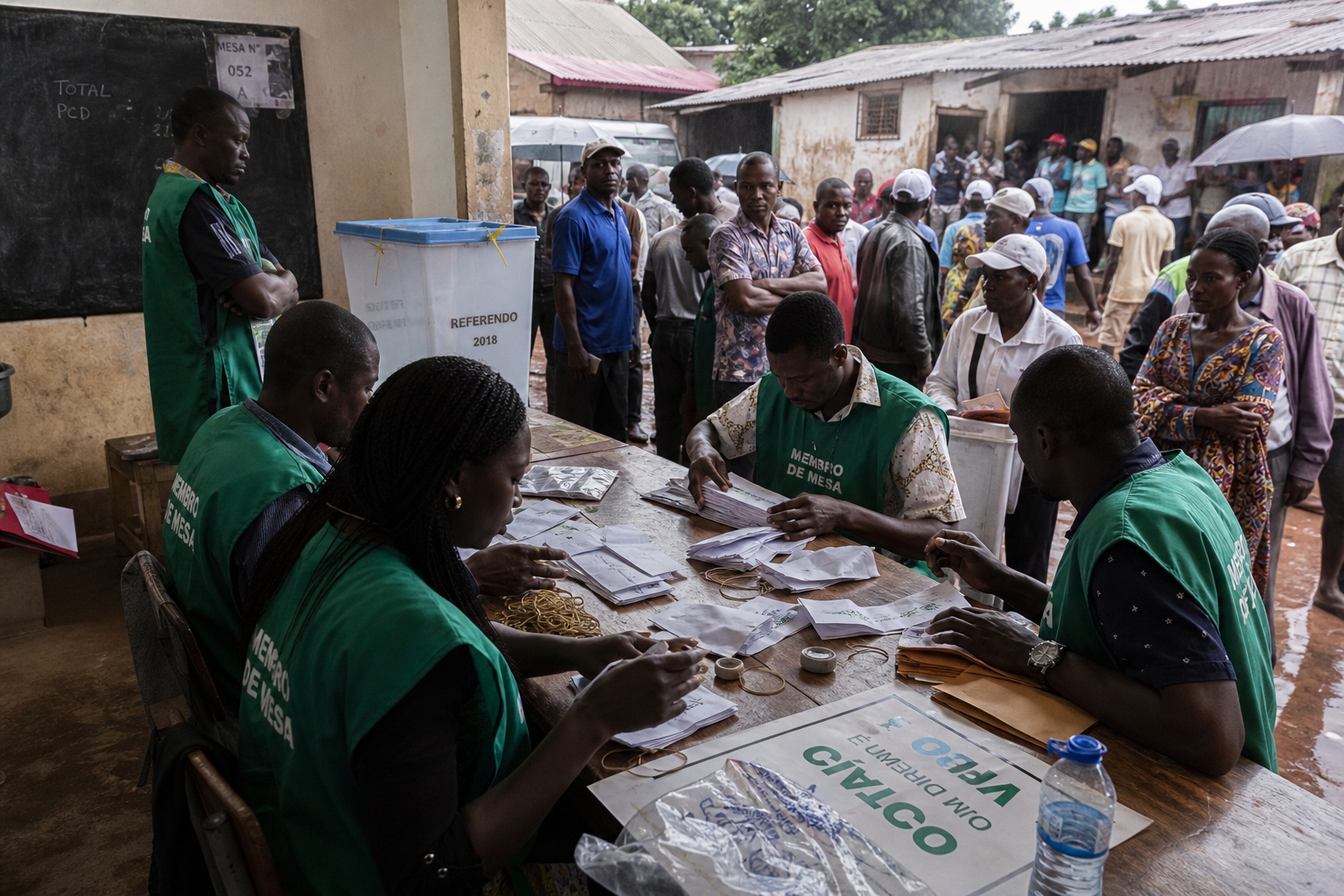
Vote counting is underway in Guinea-Bissau after voters participated in a referendum on a proposed new constitution that would significantly strengthen presidential powers. The vote took place under a military transitional government, less than 10 months after the army overthrew President Umaro Sissoco Embalo and suspended the electoral process. Provisional results are expected Tuesday, and the National Electoral Commission said turnout had exceeded 55 percent. It reported that voting generally took place without incidents that would undermine the credibility of the referendum, although rainfall and security concerns affected activity in some areas.
The constitutional proposal would replace Guinea-Bissau’s parliamentary system with a presidential one. It would allow the head of state to appoint and dismiss the prime minister and government ministers, dissolve parliament, and avoid the unstable power-sharing arrangements that have repeatedly contributed to political crises. The military junta says the changes are needed to stabilize state institutions before presidential and parliamentary elections scheduled for December 6, which are intended to return the country to civilian rule.
The referendum is being held amid a tense political climate. Opposition groups called for a boycott, citing restrictions on public freedoms, while transitional leader General Horta N’Tam urged young people to vote in large numbers. Under the transitional charter, N’Tam is prohibited from standing in the upcoming elections.
Voters interviewed by AFP expressed hope that the constitution could bring stability and improve their lives, though turnout at several polling stations was irregular and relatively light. Guinea-Bissau has experienced five coups and numerous attempted coups since independence from Portugal in 1974. The referendum follows similar constitutional changes in other African countries that have expanded executive authority or extended leaders’ time in office, raising broader concerns about democratic backsliding.
Entities: Guinea-Bissau, National Electoral Commission, Idrissa Djalo, General Horta N’Tam, Umaro Sissoco Embalo • Tone: analytical • Sentiment: neutral • Intent: inform
31-08-2026
Guinea-Bissau has begun counting votes in a constitutional referendum that could substantially increase the powers of the presidency and alter the country’s political system. Voters went to the polls on August 30 to decide whether to approve a new constitution ahead of presidential and parliamentary elections scheduled for December 6. The elections are intended to return the country to civilian rule following a military coup less than 10 months ago.
Idrissa Djalo, executive secretary of the National Electoral Commission, said turnout exceeded 55 percent and that voting took place without incidents that would undermine the credibility of the process. Results are expected on Tuesday.
The proposed constitution would replace Guinea-Bissau’s parliamentary system with a presidential one. Under the current arrangement, prime ministers are drawn from the parliamentary majority, a structure that has frequently produced tense power-sharing relationships. The proposed system would give the president authority to appoint and dismiss the prime minister and other government members, as well as dissolve parliament.
Voters were asked to answer yes or no to whether they agreed to bring into force the constitution approved by the National Transitional Council. Transitional President and military leader General Horta Inta-A Na Man said the referendum was intended to ensure that whoever wins the upcoming elections could complete their mandate without obstruction. However, the transitional charter prevents him from standing in those elections.
The referendum follows years of political turmoil. In the November 2025 presidential election, both leading candidates claimed victory and accused one another of electoral interference. The military seized power the following day, prompting the current transitional process.
Entities: Guinea-Bissau, Bissau, General Horta Inta-A Na Man, Idrissa Djalo, National Electoral Commission • Tone: analytical • Sentiment: neutral • Intent: inform