22-09-2026
Britain is deploying an RAF Voyager aerial-refuelling tanker to Saudi Arabia after Riyadh requested military assistance against intensified drone and ballistic-missile attacks by Yemen’s Iran-backed Houthi movement. The aircraft is expected to operate from RAF Akrotiri in Cyprus within days and remain in the region for several weeks, allowing Saudi Eurofighter Typhoon jets to stay airborne longer during patrols and interception missions.
The deployment is being presented by the UK government as a strictly defensive, time-limited measure rather than the beginning of a new British combat operation in Yemen. Defence Minister Luke Pollard said the support would help Saudi aircraft respond to Houthi drones and missiles while complying with international humanitarian law. The decision is the first major foreign-policy move by new Prime Minister Andy Burnham’s government.
Aviation expert Tim Ripley said the tanker would improve the endurance and sustainability of Saudi combat air patrols over both Yemen and Saudi Arabia, potentially helping fighters intercept threats aimed at the kingdom. However, he stressed that a single tanker would provide only a marginal increase in capability and would not represent a major shift in the military balance.
The move comes as Saudi Arabia faces repeated Houthi attacks on Riyadh and energy infrastructure along the Red Sea coast, while concerns grow over the security of the southern Red Sea and international shipping routes. Britain has previously joined the United States in air strikes against Houthi targets in Yemen, including operations launched in January 2024 after attacks on commercial vessels and a Royal Navy warship. The new deployment therefore adds British defensive support without formally expanding the UK’s combat role.
Entities: RAF Voyager tanker, Royal Air Force (RAF), Saudi Arabia, Houthi rebels, Yemen • Tone: neutral • Sentiment: neutral • Intent: inform
22-09-2026
Iran-backed Houthi forces are battling Yemen’s pro-government forces for control of the Kahboub mountain range, which stretches across the southern-western provinces of Taiz and Lahj. The rugged high ground overlooks areas near the Bab Al Mandeb strait and the coastal town of Dhubab, recently captured by the Houthis during a rapid offensive along Yemen’s western coast. Control of Kahboub would give the Houthis a significant tactical advantage and help protect their positions in the event of a counteroffensive.
The Houthis captured the mountain range in 2015, after taking Sanaa, but lost it and the port city of Mokha in 2017 during a Saudi-led coalition campaign supporting government forces. Analysts say the current fighting is the most intense in Yemen since a de facto truce in 2022. Battles in the mountains have reportedly moved back and forth because the terrain is difficult to attack. Crisis Group analyst Ahmad Nagi said the Houthis are now attempting to consolidate territorial gains before advancing into more exposed areas, rather than rapidly expanding as they did in the past.
The outcome of the battle could depend on the response of government-aligned forces, the extent of Saudi air support and the Houthis’ willingness to continue despite heavy casualties. Yemen’s Presidential Leadership Council head, Rashad Al-Alimi, has asked US President Donald Trump for military assistance, although Trump reportedly made no direct pledge. Britain has agreed to provide Saudi Arabia with limited defensive air-to-air refuelling support through a Royal Air Force Voyager based in Cyprus, citing the disruption of trade and energy routes caused by Houthi attacks. The renewed conflict has displaced more than 120,000 people, mostly from Taiz and Lahj, according to the UN.
Entities: Houthi movement, Kahboub mountain range, Taiz, Yemen, Lahj, Yemen, Bab Al Mandeb strait • Tone: analytical • Sentiment: negative • Intent: inform
22-09-2026
The United Kingdom has agreed to provide limited military assistance to Saudi Arabia as the kingdom faces renewed attacks from Yemen’s Houthi movement, according to British Prime Minister Andy Burnham. The support will involve a Royal Air Force Voyager aircraft conducting air-to-air refuelling for Saudi aircraft carrying out defensive missions. Burnham said he approved the request after consulting the defence and foreign secretaries, emphasizing that the arrangement would be time-limited and subject to review.
The agreement follows a recent escalation in the conflict between the Houthis and Yemen’s Saudi-backed government. Houthi forces have launched missile and drone attacks against Saudi Arabia, including an intercepted strike targeting Riyadh. They have also reportedly advanced inside Yemen, capturing the port city of Mocha and strategic Red Sea islands. These positions could allow the group to monitor shipping through the Bab al-Mandeb, a vital maritime passage through which approximately 12 percent of global trade normally travels.
Burnham said the British government was acting to protect UK and regional interests, prevent further disruption, and help keep oil transportation routes open. British officials said the mission would begin in the coming days and would support Saudi aircraft defending against drones and missiles, rather than assist offensive strikes against Houthi targets.
The deployment builds on decades of military cooperation between Britain and Saudi Arabia, with the UK remaining one of the kingdom’s major arms suppliers. Earlier in the year, Britain sent its Sky Sabre air-defence system to Saudi Arabia to help protect the country from Iranian missile attacks during the United States and Israel’s war with Iran.
Entities: Andy Burnham, United Kingdom, Saudi Arabia, Royal Air Force, Yemen’s Houthis • Tone: analytical • Sentiment: neutral • Intent: inform
22-09-2026
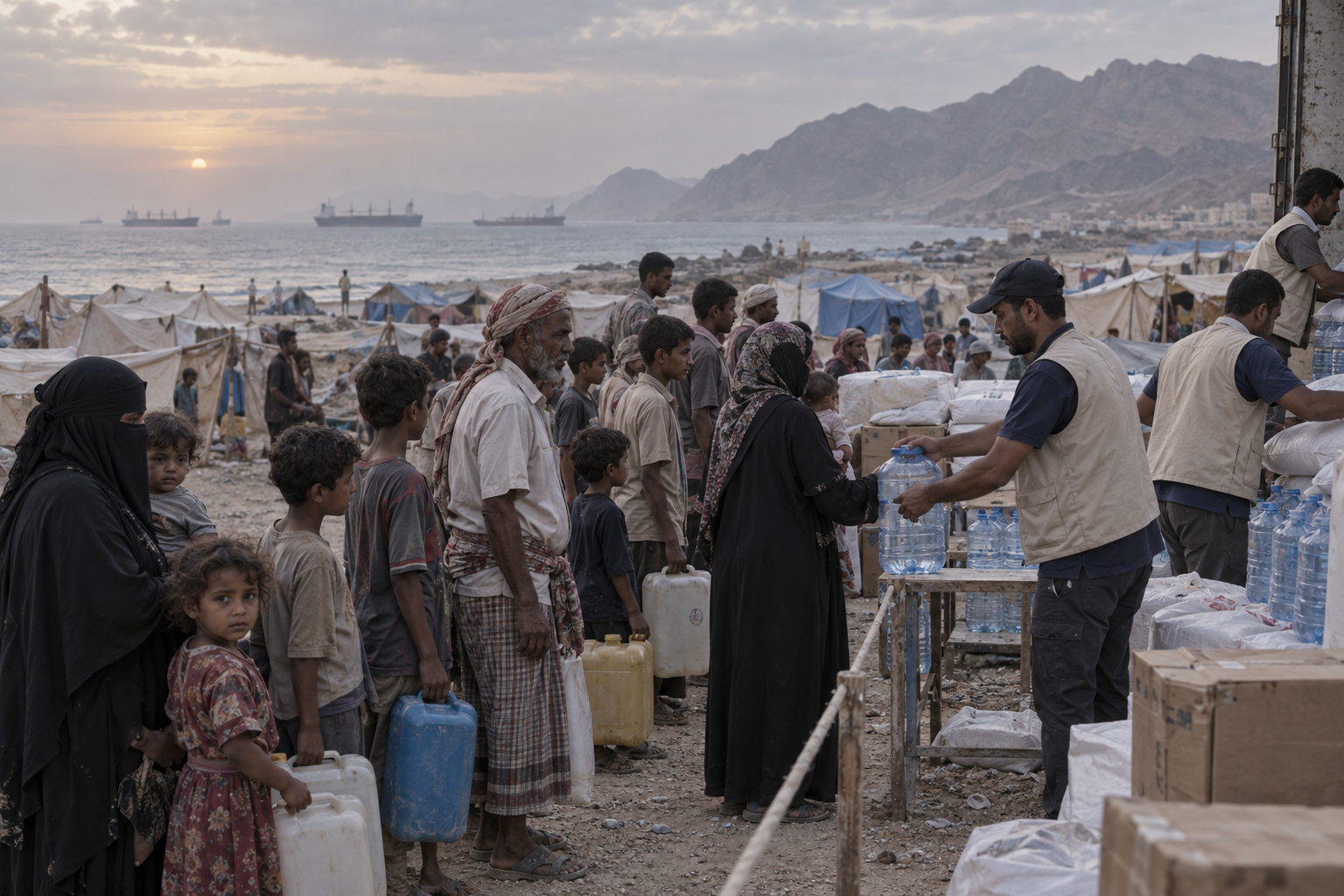
The United Nations has warned that renewed fighting in Yemen could trigger a major new displacement crisis, with up to 10,000 people expected to flee across the Red Sea to Djibouti and more than 230,000 potentially displaced within Yemen. The escalation follows a Houthi offensive that reportedly seized Yemen’s Red Sea coastline earlier in September and left hundreds dead, while also threatening global trade and contributing to higher energy prices.
More than 100,000 civilians have already been forced from their homes inside Yemen, and over 3,000 people crossed the Red Sea to Djibouti earlier in the month. The UN Refugee Agency, UNHCR, expects arrivals to increase after mid-October, when sea conditions are forecast to improve, and is preparing for more than 10,000 arrivals in the coming months.
UNHCR spokesperson Babar Baloch said internal displacement caused by the latest fighting could rise from more than 130,000 people to over 230,000. Women and children are among those who have fled clashes between the Houthis and forces loyal to the Saudi-backed, Aden-based Yemeni government. The new displacement comes on top of the more than 5.2 million people already internally displaced in Yemen.
The conflict is worsening an already severe humanitarian emergency. Approximately 22 million people in Yemen require humanitarian assistance, but relief efforts are being constrained by a serious funding shortfall. UNHCR’s Yemen operation is only 18 percent funded for 2026 and needs $25 million to provide immediate aid to about 231,000 people. Its Djibouti operation is 15 percent funded and is seeking $13.5 million to provide registration, reception, protection and other essential services for new arrivals.
Entities: Yemen, Djibouti, Red Sea, Houthi rebels, Yemeni government forces • Tone: urgent • Sentiment: negative • Intent: inform
22-09-2026
Nearly 130,000 people have been displaced across seven governorates in Yemen as insecurity intensifies following a renewed Houthi advance, according to the International Organization for Migration (IOM). The number rose sharply from 118,086 on September 18 to 129,438 three days later, an increase of 11,352 people. IOM Regional Director for the Middle East and North Africa Othman Belbeisi said many of those affected have been displaced repeatedly.
Taiz Governorate is hosting the largest displaced population, with 73,494 people. The IOM also reported that 3,106 people had crossed the Red Sea from Yemen to Djibouti by Sunday evening, indicating that the worsening conflict is prompting some Yemenis to flee the country.
Violence escalated earlier in the month after Iran-backed Houthi forces advanced along Yemen’s coast and captured the port of Mocha. The IOM warned that Taiz city could be the group’s next target, potentially creating an even larger humanitarian emergency.
Yemen has been embroiled in conflict since 2014, when the Houthis seized control of parts of the country, including the capital, Sanaa. A Saudi-led military intervention began the following year in support of the internationally recognized government. Years of fighting, economic hardship and repeated natural disasters have left millions of Yemenis dependent on humanitarian assistance.
The IOM said it is providing emergency aid to newly displaced people while appealing to the international community for additional support. The agency’s warning highlights the rapidly changing displacement figures, the risks facing Taiz and the broader regional consequences of the conflict, including movement across the Red Sea to Djibouti.
Entities: Yemen, International Organization for Migration (IOM), Othman Belbeisi, Houthi rebels, Taiz Governorate • Tone: urgent • Sentiment: negative • Intent: inform
22-09-2026
The article reports that Iran-backed Houthi forces have captured additional territory in western Yemen, including the port city of Mokha, intensifying the country’s longstanding humanitarian crisis. Saudi-backed Yemeni government forces reportedly abandoned military equipment as the Houthis advanced, while aid organizations estimate that approximately 125,000 people were displaced within days. Many residents fled without belongings, and most healthcare facilities in Mokha closed. Mokha General Hospital remains open but is operating only essential services, including emergency obstetric care and treatment for newborns in intensive care.
The new fighting has shattered a yearslong truce and comes as Yemen faces severe funding shortages. Roughly 22 million people—about half the population—already need humanitarian assistance because of years of war and widespread hunger. The World Health Organization says medical evacuations from Mokha to Aden are no longer possible, while Taiz risks becoming isolated as roads come under attack.
The Houthis claim to have seized about 5,400 square kilometers of territory and islands near the Bab el-Mandeb strait, consolidating their control over a strategically important maritime route. The group says Saudi Arabia has responded with hundreds of airstrikes, while the United Nations has confirmed civilian casualties and hundreds of wounded people. The Houthis have also attacked Saudi oil facilities, air bases and shipping, while Saudi Arabia says missiles targeted Riyadh and Iranian-backed militias in Iraq damaged a major oil pipeline. These attacks, combined with the U.S. conflict with Iran, have contributed to surging oil and diesel prices.
Houthi leaders describe their campaign as retaliation for Saudi attacks and blockades, while Saudi Arabia and the United States accuse Iran of providing the Houthis with weapons and training. Aid officials warn that displacement will continue, including thousands of pregnant women forced to flee frontline areas, worsening the humanitarian emergency in western Yemen.
Entities: Houthi movement, Mokha, Yemen, Western Yemen offensive, Yemen humanitarian crisis, Saudi Arabia • Tone: urgent • Sentiment: negative • Intent: inform