22-09-2026
Ukrainian President Volodymyr Zelenskyy has urged European Union countries not to remove Russian billionaires Alisher Usmanov and Mikhail Fridman from the bloc’s sanctions list. His appeal comes as EU ambassadors attempt to reach agreement on renewing individual sanctions, which are due to expire if no deal is reached by the end of Tuesday.
Zelenskyy argued that sanctions should be renewed unconditionally until Moscow begins serious peace negotiations and takes concrete steps to end its war against Ukraine. He specifically thanked Latvian Prime Minister Andris Kulbergs, whose government rejected a proposed compromise that would have extended sanctions for 36 months while removing Usmanov and Fridman from the blacklist.
The potential delisting has become part of a wider diplomatic dispute. France has reportedly sought Usmanov’s removal in connection with efforts to secure a prisoner release involving Azerbaijan. Slovakia has advocated removing both oligarchs, while Luxembourg has said Fridman should also be removed if Usmanov is delisted. Fridman has filed a $16 billion claim against Luxembourg over frozen assets.
Latvia and France remained opposed to each other during ambassadors’ discussions in Brussels, leaving the compromise unresolved. Zelenskyy’s intervention is unusual because the negotiations are confidential and concern internal EU decision-making. He made the statement while attending the United Nations General Assembly in New York and after meeting French President Emmanuel Macron.
Zelenskyy linked the sanctions dispute to continuing Russian attacks on Ukrainian civilians, including overnight and daytime drone and ballistic-missile strikes. Russia has supported removing sanctions not only from Usmanov and Fridman but from all Russian businesspeople and citizens. EU ambassadors were scheduled to reconvene later on Tuesday.
Entities: Volodymyr Zelenskyy, Alisher Usmanov, Mikhail Fridman, European Union sanctions regime, Russia’s war against Ukraine • Tone: analytical • Sentiment: negative • Intent: inform
22-09-2026
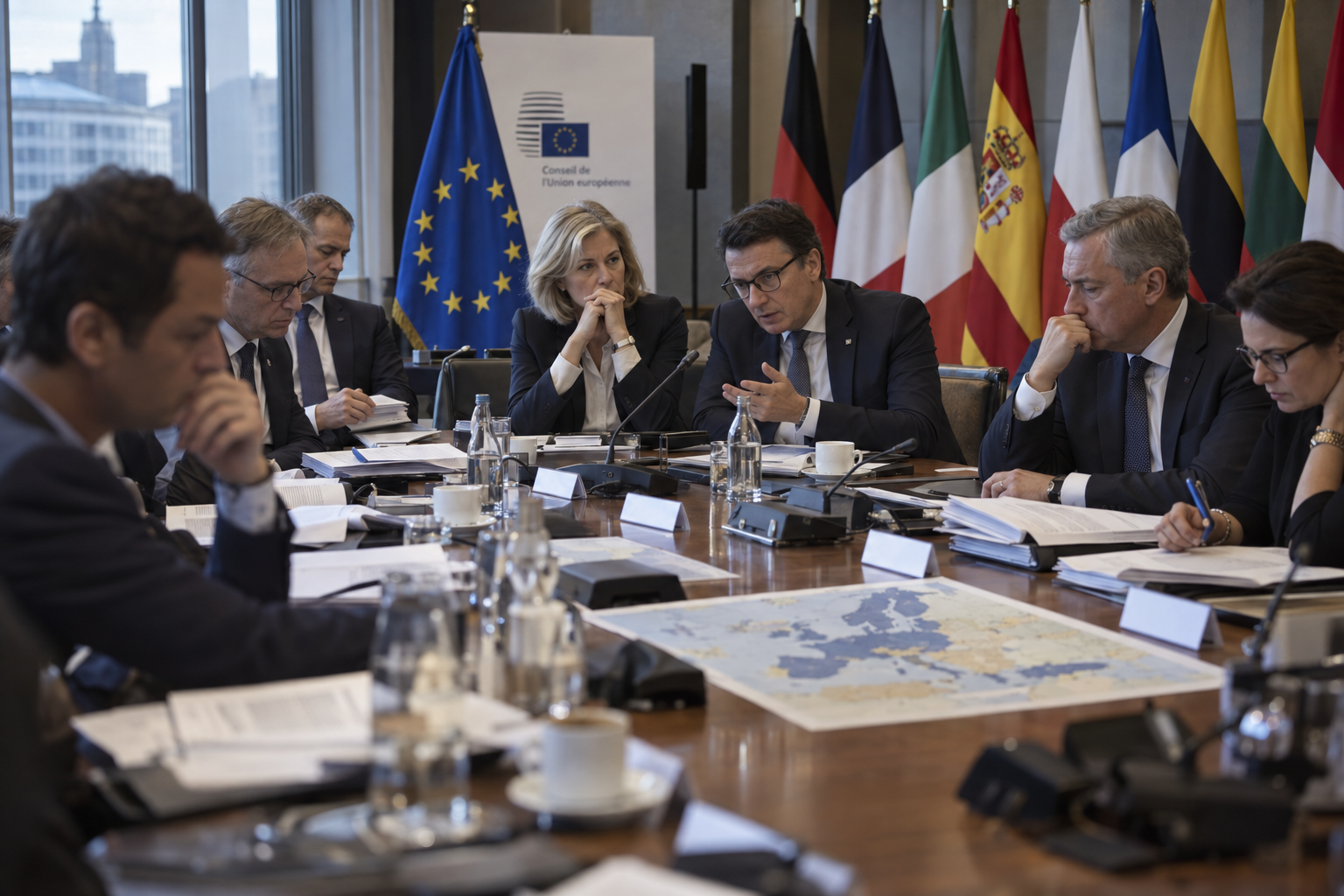
EU member states failed to reach a final agreement on Monday to remove Russian billionaires Alisher Usmanov and Mikhail Fridman from the bloc’s sanctions blacklist. Diplomats said a provisional compromise had been reached to delist the two businessmen while extending sanctions against nearly 3,000 other individuals and entities linked to Russia’s war in Ukraine, but Latvia reportedly lodged a last-minute objection. EU ambassadors were scheduled to resume negotiations in Brussels early Tuesday, before the sanctions renewal deadline.
The dispute emerged after France and Slovakia supported removing Usmanov, a Russian-Uzbek metals tycoon, from the list. French officials cited national security concerns without providing public details. The Financial Times reported that France’s position could be connected to a possible prisoner-release agreement involving French nationals detained in Azerbaijan. Luxembourg subsequently argued that Fridman, who is suing the country for €15 billion over frozen assets, should also be delisted if Usmanov were removed.
Poland and the Baltic states strongly opposed easing sanctions, arguing that pressure on Moscow should instead be increased. As part of the proposed compromise, they secured an agreement to extend the broader sanctions regime for three years rather than through the previous six-month renewals. Ukraine condemned the possible delistings. Foreign Minister Andriy Sybiga said they would send the wrong signal to Moscow and called for sanctions to be tightened.
Despite the disagreement over the two oligarchs, EU diplomats said there was broad support for preventing the sanctions from expiring. EU foreign policy chief Kaja Kallas described sanctions as a central instrument for depriving Moscow of funding and urged member states to maintain them for a longer period. The EU blacklist includes senior Russian officials such as President Vladimir Putin and Foreign Minister Sergei Lavrov. Usmanov and Fridman were added after Russia’s 2022 invasion of Ukraine over allegations that their businesses generated significant revenue for the Kremlin.
Entities: European Union, Alisher Usmanov, Mikhail Fridman, Russia sanctions regime, Ukraine war • Tone: analytical • Sentiment: negative • Intent: inform
22-09-2026
The supplied text is a brief excerpt from a Washington Post article about France’s reported effort to change the European Union’s sanctions policy toward Alisher Usmanov. France is described as pushing the E.U. to remove sanctions against Usmanov, a Russian-Uzbek billionaire with longstanding ties to Russian President Vladimir Putin. The excerpt emphasizes the contrast between France’s current position and the E.U.’s earlier justification for sanctioning Usmanov: following Russia’s 2022 invasion of Ukraine, the bloc characterized him as “one of Vladimir Putin’s favorite oligarchs” and placed him under restrictive measures.
The article is datelined Brussels and is credited to Ellen Francis, Beatriz Ríos and Catherine Belton. Its central focus is therefore a potential dispute within the European Union over whether sanctions against a prominent Russian business figure should remain in force. The passage presents the issue through the lens of European policy and the political significance of Usmanov’s relationship with Putin.
However, the provided material does not include the rest of the article. It does not explain why France is advocating for sanctions relief, whether other E.U. governments support or oppose the proposal, how Usmanov or his representatives have responded, or whether the bloc has taken a formal decision. It also does not provide details about the sanctions’ practical effects or the broader legal and diplomatic arguments surrounding them. Accordingly, the analysis is limited to the excerpt’s clear claims: France is seeking the lifting of E.U. sanctions, Usmanov was sanctioned after the invasion of Ukraine, and the E.U. previously linked him closely to Putin.
Entities: France, European Union (E.U.), Alisher Usmanov, Vladimir Putin, Ellen Francis • Tone: analytical • Sentiment: negative • Intent: inform