22-09-2026
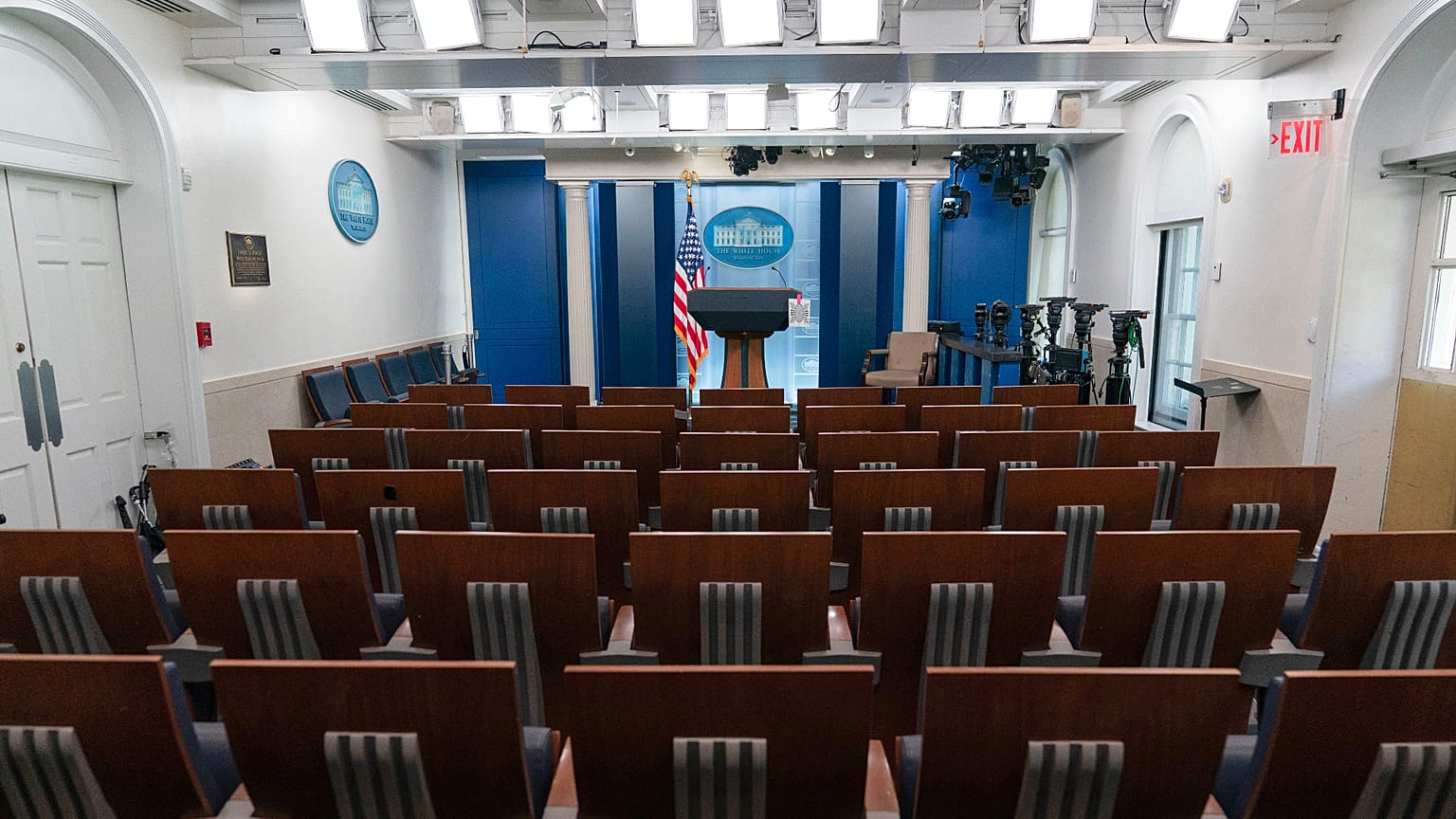
US President Donald Trump held a ribbon-cutting ceremony for a new granite helicopter pad at the White House, but his remarks were largely inaudible because the White House press pool had suspended coverage of his events. The television pool’s decision followed Trump’s ban on CNN, MS NOW and Politico from serving as White House pool representatives.
Trump announced the ban on Friday, accusing the outlets of “constant ‘reporting’ FAKE NEWS” and warning that more media organisations could be excluded. The three outlets were denied access to the White House grounds the following day. In response, the remaining television networks declined to provide replacement coverage, meaning independent news organisations supplied little or no live video of Trump’s movements, including his trip to the United Nations General Assembly in New York.
A press pool is a cooperative arrangement in which news organisations share reporters, photographs, video and notes when access or space is limited. The White House television pool traditionally includes ABC News, CBS News, NBC News, CNN and Fox News, which rotate coverage of the president and distribute the material to other outlets. CNN had been scheduled to cover Trump’s United Nations trip but could not do so after the ban, and the pool chose not to send a substitute crew.
Trump rejected the suggestion that his actions represented an attack on press freedom. He described the banned outlets as “FAKE NEWS” and argued that media organisations have an obligation to be fair. CNN, MS NOW and Politico are suing the administration, claiming the restrictions violate their First Amendment rights. The administration counters that the First Amendment protects the right to publish but does not guarantee a White House pass, briefing-room seat or place in the press pool. The courts will determine whether the administration’s policy is lawful. The dispute follows the Trump administration’s decision last year to end the long-standing practice of allowing the independent White House Correspondents Association to select pool journalists.
Entities: Donald Trump, White House press pool, White House, CNN, MS NOW • Tone: analytical • Sentiment: negative • Intent: analyze
22-09-2026
The article reports that the White House has launched a platform called “Trump TV” shortly after the Trump administration banned a group of news organizations from the White House. According to the report, the new platform is being used to show archived speeches and official announcements associated with Donald Trump and his administration. The launch is presented in the context of the recent restrictions on press access, suggesting that the administration may be creating an alternative channel for distributing its messages outside traditional news organizations.
The brief report does not identify which news organizations were banned, explain the specific reasons for the restrictions, or provide details about the platform’s ownership, audience, technology, or long-term purpose. It also does not include reactions from the affected media organizations, press-freedom groups, or other government officials. The available text focuses only on the timing of the launch and the type of material being shown.
The wording is primarily factual and concise, but the phrase “after press bans” gives the story a critical context. By linking the launch directly to the removal of certain news organizations from the White House, the report highlights a broader issue involving government communication, media access, and the administration’s relationship with the press. The article’s main purpose is to inform readers about the creation of the platform and its connection to the administration’s recent press restrictions.
Entities: Donald Trump, Trump administration, White House, Trump TV, Al Jazeera • Tone: neutral • Sentiment: negative • Intent: inform
22-09-2026
CNN, Politico and MS NOW are suing the Trump administration after their journalists were barred from the White House. President Donald Trump announced the ban after accusing the outlets of publishing fictional or false reports about his administration, although he did not identify specific stories. The three organizations say their credentials were revoked without notice or due process because the White House objected to their reporting, and they are asking a federal judge in Washington to declare the ban unconstitutional and prevent its enforcement.
The dispute has expanded beyond the three outlets. ABC, CBS, CNN, Fox News and NBC withdrew from the White House television press pool after CNN was prevented from carrying out its assigned coverage of Trump’s trip to New York for the United Nations General Assembly. Other organizations, including The New York Times and The Washington Post, also declined to participate in pooled coverage or share images from presidential events. The White House instead listed Real America’s Voice as a secondary crew.
Trump responded by calling the organizations dishonest and suggesting that outlets such as The New York Times and The Washington Post could also face restrictions. The media companies and television networks argue that government access cannot be conditioned on favorable coverage and warn that the ban threatens press freedom and the public’s ability to receive independent information.
The article places the confrontation in the context of broader efforts by Trump’s administration to reshape White House media access. In February, the administration took control of the press pool from the White House Correspondents’ Association and restricted Associated Press access after objecting to the outlet’s use of “Gulf of Mexico” rather than “Gulf of America.” That dispute remains in court. The article also contrasts Trump’s actions with the Obama administration’s 2009 attempt to exclude Fox News from one specific interview, noting that Obama did not seek to bar the network from all pooled coverage. Trump has separately pursued legal action against several media organizations, including the BBC, The New York Times and The Wall Street Journal.
Entities: Donald Trump, CNN, Politico, MS NOW, White House • Tone: analytical • Sentiment: negative • Intent: inform
22-09-2026
Major US television networks suspended their shared, or pooled, coverage of President Donald Trump on Monday after the White House barred CNN, Politico and MS NOW from access. Trump announced the ban on Friday, accusing the outlets of publishing “fiction or lies” about his administration. The organizations said their reporters were denied entry to the White House on Saturday and announced that they would sue the administration, arguing that the government cannot determine what the press reports.
The dispute disrupted normal coverage of presidential events. The New York Times and Washington Post were among the outlets that said they would not participate in pooled coverage or share still images from Trump’s events. As a result, television networks did not provide footage of Trump boarding Air Force One or arriving in New York for the United Nations General Assembly. Coverage of a ribbon-cutting ceremony for a new Marine One helipad was instead streamed on the White House website, although Trump’s remarks were inaudible.
Fox News Washington bureau chief Bryan Boughton told broadcasters that the television pool would no longer cover events designated as pooled coverage. He said the decision followed the White House preventing CNN from carrying out its pool responsibilities during Trump’s trip to New York, and that no replacement pool would be established.
The White House subsequently launched Trump TV, a 24-hour online stream featuring clips of the president. Trump later appeared on television after meeting New York Mayor Zohran Mamdani and dismissed the boycott, saying that the media continued to attend his events. The three barred outlets filed a lawsuit in federal court in Washington, warning that the White House’s actions threaten press freedom and the public’s access to independent journalism free from government interference.
Entities: Donald Trump, White House, CNN, Politico, MS NOW • Tone: analytical • Sentiment: negative • Intent: inform
22-09-2026
A dispute between the Trump administration and several news organizations has disrupted the White House television press pool, a system that allows broadcasters to share the costs and practical burdens of covering the president. The pool provides images and descriptions of presidential activities to the wider media, including events in the Oval Office, on Air Force One and at official ceremonies.
The conflict began when President Donald Trump announced that CNN, Politico and MS NOW would be barred from the White House, accusing them of publishing “fake news” and false stories. The outlets subsequently found that their press credentials had been disabled. In response, CNN, ABC, CBS, Fox News and NBC withdrew from rotating television pool duties. The boycott became visible during Trump’s unveiling of a White House helipad, when limited camera access meant that some coverage lacked clear images or audio of the president’s remarks.
The dispute has raised constitutional questions because the First Amendment limits the government’s ability to discriminate against news organizations based on their reporting. CNN, Politico and MS NOW have sued the administration, arguing that their credentials were revoked without notice or due process because of their coverage. A hearing is scheduled for Wednesday.
Trump has attacked the outlets publicly and said his administration would appeal. Meanwhile, the White House has launched Trump TV, a 24-hour YouTube stream featuring administration speeches and rallies. Conservative broadcaster Real America’s Voice has also been used as a secondary crew, although it is not required to share footage with other news organizations as a traditional pool member would.
The article places the current dispute in a longer history of media-access conflicts, including the administration’s earlier exclusion of Associated Press journalists over the outlet’s use of “Gulf of Mexico” rather than “Gulf of America.”
Entities: White House press pool, Donald Trump, White House, CNN, Politico • Tone: analytical • Sentiment: negative • Intent: analyze
22-09-2026
In an unusual coordinated protest, the five major US television broadcasters—ABC, CBS, CNN, Fox and NBC—suspended their shared White House “pool” coverage after the administration barred CNN, MS NOW and Politico from the White House grounds. The journalists’ access passes were confiscated on Saturday, and CNN was removed from its scheduled pool assignment covering President Donald Trump’s trip to New York for the United Nations General Assembly.
The TV pool announced that it would not provide replacement coverage and that the other networks would indefinitely stop covering events designated as pool assignments. The broadcasters said the public has a vital interest in receiving accurate, independent information and that administrations should not restrict news organisations in response to their reporting. Other outlets, including The Associated Press, AFP, The Washington Post and The New York Times, also declined to publish photographs from presidential events in solidarity.
The boycott meant that Trump’s opening of a new White House helipad and his UN General Assembly trip proceeded without live television pool coverage. The helipad ceremony was streamed only on the White House website, while Trump’s remarks were reportedly inaudible because pool microphones were absent. Later, the White House launched a 24-hour streaming channel called “Trump TV,” initially showing archived footage of Trump speaking at Mount Rushmore.
Vice President JD Vance defended the administration’s position, accusing the networks of spreading “effectively far-left propaganda.” He said the outlets remained free to report but would no longer have offices inside the White House. The affected organisations announced that they were suing the Trump administration, describing the access restrictions as a direct assault on the First Amendment and a violation of constitutional principles. The dispute has escalated into a major confrontation over presidential control of press access and the independence of US journalism.
Entities: Donald Trump, JD Vance, White House, CNN, MS NOW • Tone: analytical • Sentiment: negative • Intent: inform
22-09-2026
A France 24 video report examines a legal and political confrontation between the Trump administration and several major news organizations. CNN, MS NOW, and Politico filed a lawsuit on Monday after being barred from White House grounds. According to the report, the organizations argue that the selective exclusion was based on the content of their reporting and constitutes a “blatant violation” of the First Amendment, which protects freedom of speech and the press.
The report presents the media ban as part of President Donald Trump’s broader and long-running effort to restrict or challenge news coverage he considers unfavorable. France 24 correspondent Kethevane Gorjestani describes the latest action as an escalation, suggesting that the administration’s decision to prevent specific outlets from accessing the White House goes beyond ordinary disputes between a president and the press.
The central issue is selective access: rather than applying a general rule to all journalists, the administration allegedly targeted particular organizations because of the content of their coverage. This raises questions about whether the government can control access to official institutions in response to critical reporting and whether such a policy violates constitutional protections for the news media.
The lawsuit represents a formal response from the affected outlets and places the dispute before the courts. The report does not provide details about the administration’s legal defense, the precise restrictions imposed, or the lawsuit’s likely outcome. Its emphasis is instead on the significance of the ban and its relationship to Trump’s wider conflict with news organizations. France 24 characterizes the development as extraordinary and portrays it as a serious press-freedom dispute with implications for the relationship between the White House and the media.
Entities: Donald Trump, Trump administration, CNN, MS NOW, Politico • Tone: analytical • Sentiment: negative • Intent: analyze
22-09-2026
NPR’s September 22, 2026, Up First briefing focuses on disputes involving the Trump administration, the media, international diplomacy and Hollywood consolidation, while also previewing reporting on an endangered archaeological site and an AI safety feature.
CNN, MS NOW and Politico have sued President Donald Trump and his administration, arguing that restricting their journalists’ access to the White House violates the First Amendment. The networks were excluded from planned pool coverage after the administration accused them of unfair reporting. Other major news organizations, including NPR, The New York Times and The Washington Post, responded by suspending their use of pool photographs and audio. A hearing is scheduled for Wednesday, with the dispute unfolding shortly before the midterm elections.
Trump is also scheduled to address the United Nations General Assembly. NPR reports that he is expected to portray himself as a peacemaker, defend his policy toward Iran and highlight an agreement involving Denmark and Greenland. He is scheduled to meet with several foreign leaders, including Chinese President Xi Jinping, Ukrainian President Volodymyr Zelensky and Gulf leaders. Former Bush administration official Richard Fontaine says that substantive diplomacy is more likely to occur in private meetings than in public U.N. proceedings.
Paramount’s owners have agreed to concessions with 12 Democratic state attorneys general in an effort to resolve an antitrust lawsuit challenging the proposed Warner Bros. Discovery merger. The agreement would keep Paramount and Warner Bros. Studios operating separately for now, require minimum film production levels, mandate additional U.S. investment and establish an editorial-independence board for CBS and CNN. Critics, including Hollywood workers and writers, fear layoffs, price increases and greater corporate control.
The briefing also describes efforts to recover Yup’ik artifacts from Alaska’s storm-damaged Nunalleq archaeological site and examines OpenAI’s Trusted Contact feature, which is intended to alert a designated person during a user’s mental-health crisis. The supplied article ends midway through that investigation.
Entities: CNN, MS NOW, Politico, Donald Trump, White House • Tone: analytical • Sentiment: neutral • Intent: inform
22-09-2026
US President Donald Trump’s decision to exclude CNN, MSNOW and Politico from the White House press operation is likely to face significant legal obstacles, according to four legal experts interviewed by Reuters. The outlets were barred after Trump criticized their coverage as “FAKE NEWS,” and he has suggested that additional news organizations could also be excluded. Legal experts said the administration’s stated justification may undermine its position because courts have generally held that, once the government opens a space to the press, it cannot restrict access based on a news organization’s viewpoint or editorial content.
The three outlets filed a lawsuit in federal court in Washington, D.C., arguing that the ban constitutes unlawful retaliation for constitutionally protected speech and violates their due-process rights. They said their reporters were denied entry to the White House grounds and that their hard passes had been deactivated without advance notice or an opportunity to challenge the decision. District Judge Timothy Kelly, who previously blocked Trump from banning a CNN reporter during his first presidency, scheduled a hearing on the outlets’ request for a temporary restraining order.
The article notes that presidents do retain discretion over access to limited-capacity locations such as the Oval Office and Air Force One. A 2025 appeals-court ruling found that Trump likely could bar the Associated Press from some restricted spaces after its dispute over his preferred name for the Gulf of Mexico, but the court distinguished those areas from White House press facilities generally.
Legal experts said access restrictions may be permissible for genuine security reasons, provided they have a clear, non-arbitrary basis and follow established procedures. Recent litigation over Pentagon press-credential rules also illustrates the constitutional risks of vague policies that could penalize unfavorable reporting. A federal judge blocked those rules, finding potential violations of the First and Fifth Amendments; the administration is appealing.
Entities: Donald Trump, CNN, MSNOW, Politico, White House press access • Tone: analytical • Sentiment: negative • Intent: analyze
22-09-2026
The article reports on a meeting between U.S. President Donald Trump and New York Mayor Zohran Mamdani at Trump’s official residence. The meeting took place one day before Trump was scheduled to address the United Nations General Assembly. According to the report, the two leaders discussed issues affecting New York City and recognized that they hold differing views on several matters.
The central point of disagreement was Trump’s approach to the press. The headline characterizes the encounter as Mamdani challenging Trump over a White House press ban, while the article describes the issue more broadly as Trump’s restrictions on the press. This suggests that press access and the relationship between the administration and media were directly or prominently raised during the meeting.
The report presents the encounter as notable because it brought together two political figures who acknowledge their differences while discussing concerns affecting the same city. However, the brief account does not provide direct quotations, explain the precise nature of the press restrictions, or identify the other city issues discussed. It also does not indicate whether the meeting produced any agreements or changes in policy.
Overall, the article provides a concise news update about the meeting, its timing ahead of Trump’s UN appearance, the city-focused agenda, and the political disagreement over press access. Its primary purpose is to inform readers about the encounter and highlight the tension between cooperation on local concerns and disagreement over media restrictions.
Entities: Donald Trump, Zohran Mamdani, New York City, White House, United Nations General Assembly • Tone: neutral • Sentiment: neutral • Intent: inform