22-09-2026
Paramount has reached a settlement with California and 11 other US states, removing a major legal obstacle to its planned $110 billion acquisition of Warner Bros. Discovery. The agreement follows a lawsuit brought by the states, which argued that the merger would give the combined company approximately 27 percent of the US wide-release theatrical film distribution market and a comparable share of the basic cable industry.
The transaction, approved by the Trump administration in June, would create a major entertainment conglomerate controlling Warner Bros. Pictures, CNN and HBO Max, in addition to Paramount’s existing assets. Paramount, led by David Ellison, won a bidding contest against Netflix. Financing reportedly includes $24 billion from sovereign wealth funds in Saudi Arabia, Qatar and Abu Dhabi, as well as backing from Oracle founder Larry Ellison.
Critics have warned that the merger could lead to job cuts, fewer film productions and threats to CNN’s editorial independence. The settlement includes commitments intended to address those concerns. Paramount and Warner Bros. must produce 30 films annually during the first two years and 32 annually during the next three years, with at least four independent productions and 20 percent classified as blockbusters. The companies must also spend at least $300 million more each year on US film production than they did in 2025, preserve both studios’ production lots, honor labor agreements and support workforce training.
The agreement also establishes a News Editorial Independence Board for CNN and other news operations. Oversight will involve an internal monitor, an independent trustee and a committee representing five states, while the court will retain enforcement authority. California Attorney General Rob Bonta said protecting jobs was a central concern but argued that the settlement reflected the legal facts and the interests of California residents. Four states that had resisted settling ultimately joined the agreement after concluding that continuing without California was not worth the expense.
Entities: Paramount, Warner Bros. Discovery, David Ellison, Larry Ellison, Donald Trump • Tone: analytical • Sentiment: neutral • Intent: inform
22-09-2026
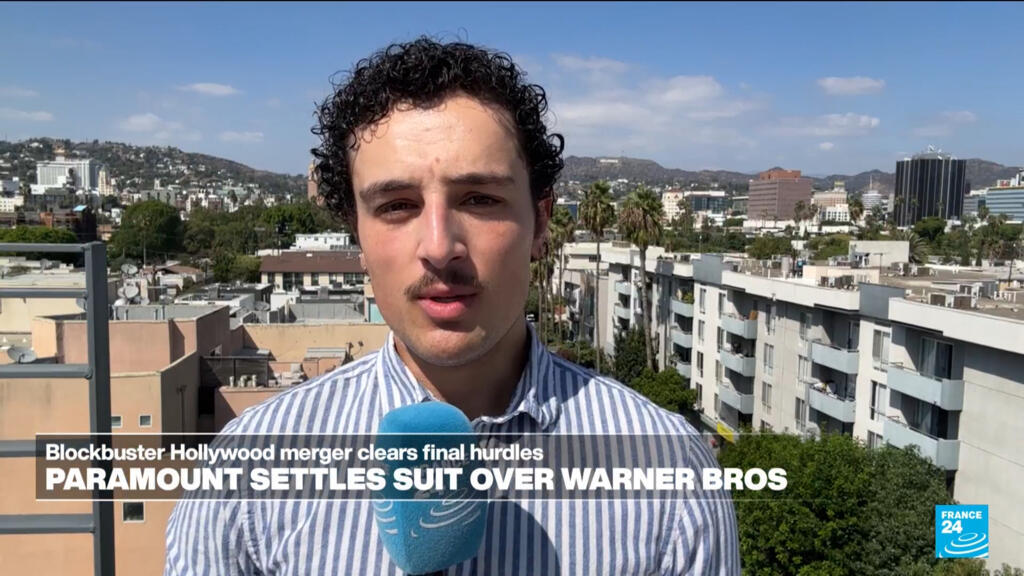
France 24 reports that Paramount has reached a settlement with a group of U.S. states, removing an apparent legal or regulatory obstacle to its planned takeover of Warner Bros. Discovery. According to the brief video report, officials announced the settlement on Monday, and the agreement clears the way for the proposed mega-merger. The transaction would combine two major entertainment companies and create a large Hollywood media group with interests spanning television, news, and cinema.
The supplied article is a short video item rather than a full written news report. It does not identify the states involved, explain the terms of the settlement, provide details about any legal challenge, or describe the expected timetable for completing the acquisition. It also does not include comments from Paramount, Warner Bros. Discovery, government officials, regulators, employees, or competitors. As a result, the central development is clear—the settlement facilitates Paramount’s takeover—but the broader financial, regulatory, and industry implications cannot be assessed from the available text.
The report frames the agreement as significant because of the scale and reach of the proposed combined company. A merged Paramount and Warner Bros. Discovery would bring together assets in television, news, and film, potentially creating a powerful Hollywood entity. However, the wording only states that the settlement clears the way; it does not explicitly confirm that the merger has closed or that all remaining regulatory requirements have been satisfied. The item was issued on September 22, 2026, and is credited to France 24 video journalist Wassim Cornet.
Entities: Paramount, Warner Bros. Discovery, United States, U.S. states, France 24 • Tone: neutral • Sentiment: neutral • Intent: inform
22-09-2026
Paramount chief executive David Ellison welcomed a settlement that clears a path for the company to proceed with its US$111 billion acquisition of Warner Bros. Discovery, but the agreement has produced sharply divided reactions across Hollywood and among state officials. California Attorney-General Rob Bonta praised the settlement while stressing that it did not constitute approval of the merger, while Governor Gavin Newsom described it as beneficial for workers and California’s creative economy. Actor Mark Ruffalo, however, accused Newsom of handing a major victory to President Donald Trump and wealthy allies connected to the Ellison family.
The deal comes as Los Angeles faces a prolonged decline in film and television production, driven by overseas tax incentives and lower labour costs. Officials and industry groups have worried that further consolidation could reduce employment and the number of projects made in the region. To address those concerns, Paramount agreed to release 30 films theatrically each year, invest an additional US$1.5 billion in film production over five years, and increase the share of those productions made in the United States. The settlement still requires court approval.
Some major entertainment unions welcomed the commitments, including the International Alliance of Theatrical Stage Employees and the Directors Guild of America. SAG-AFTRA said the agreement addressed some concerns about production and domestic investment but emphasized that the commitments represented only minimum standards. Other critics remained dissatisfied. Connecticut Attorney-General William Tong said he had wanted CNN and CBS News fully divested rather than placed under an editorial-independence board. Press-freedom advocates called the board ineffective and criticized the settlement as weak, potentially enabling job losses, higher prices and greater media concentration. Overall, the reactions reflect both relief that uncertainty has ended and continuing anxiety about employment, journalism and the health of the entertainment industry.
Entities: Paramount, Warner Bros. Discovery, David Ellison, Rob Bonta, Gavin Newsom • Tone: analytical • Sentiment: neutral • Intent: analyze