09-11-2026
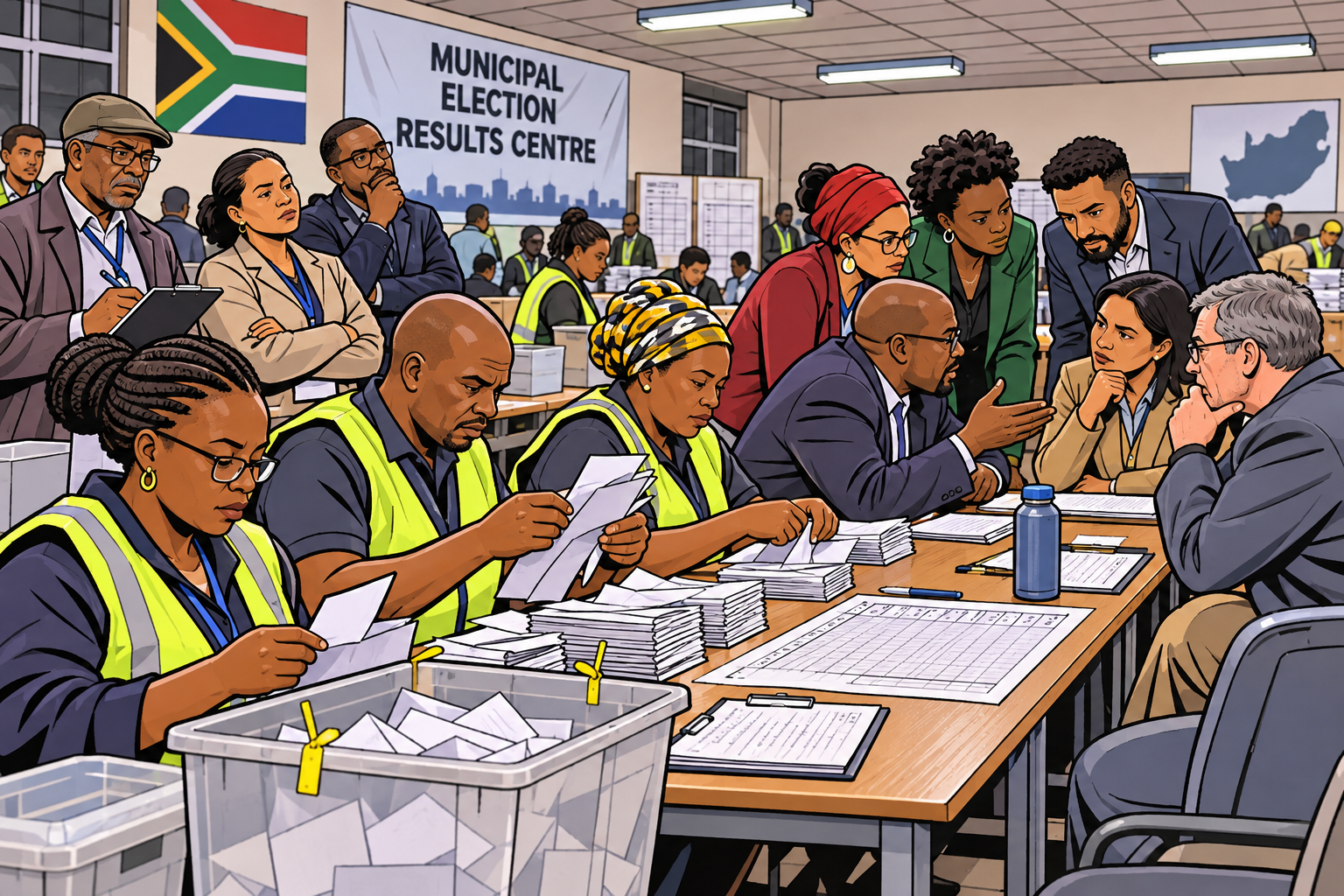
South African President Cyril Ramaphosa has called on political parties to put communities first as they negotiate coalitions after municipal election results left all but one of the country’s eight major cities without an outright majority. He said voters’ verdict must be respected and their concerns and expectations addressed, while warning that essential services should not become hostages to political disagreements. Newly elected councils are legally required to hold their first meetings within 14 days of the formal results declaration, when councillors will elect mayors and other office-bearers, giving parties a limited period to reach agreements.
The African National Congress (ANC), which has governed South Africa since the end of apartheid, won 30.76 percent of the vote—its worst-ever electoral showing, according to the Electoral Commission. Although it remained the largest party, its support has declined sharply from the nearly two-thirds it won in the country’s first democratic elections in 1994. The liberal Democratic Alliance (DA), the ANC’s closest challenger and a partner in the national unity government, received around a quarter of the vote. The DA secured an outright majority only in Cape Town.
The article links the ANC’s weakened support to persistent unemployment, which has exceeded 34 percent, as well as crime and corruption scandals. Voters also weighed practical local concerns, including water shortages, electricity outages, and poor service delivery. Turnout was 52 percent, six percentage points higher than in the Covid-affected 2021 municipal elections, Electoral Commission chairperson Mosotho Moepya said. One municipality will rerun its vote after party supporters stormed a polling station and destroyed ballot papers. The results set the stage for difficult multiparty negotiations over the governance of several major cities.
Entities: Cyril Ramaphosa, South Africa, African National Congress (ANC), Democratic Alliance (DA), Electoral Commission of South Africa • Tone: analytical • Sentiment: neutral • Intent: inform
09-11-2026
The article reports that South Africa’s African National Congress (ANC) has recorded its worst-ever result in local elections, winning 30% of the vote. It identifies the ANC as the party once led by Nelson Mandela and frames the outcome as a historic setback for the organization. Al Jazeera reporter Clement Manyathela is credited with reporting on the result.
The available article text provides no further election details. It does not state when the vote took place, how many seats or municipalities the ANC won, which parties gained support, or what factors may have contributed to the result. It also offers no comments from party officials, voters, or analysts. Consequently, the report establishes the scale and significance of the result as presented, but does not explain its causes or likely political consequences. The central takeaway is that the ANC’s 30% vote share represents its lowest-ever performance in local elections, according to the report.
Entities: South Africa, African National Congress (ANC), Nelson Mandela, Clement Manyathela, Al Jazeera • Tone: neutral • Sentiment: negative • Intent: inform
09-11-2026
South Africa’s African National Congress (ANC) has suffered its worst-ever local election result, winning 31 percent of the vote—down from 46 percent in 2021 and 66 percent in 2006. Although it remains the largest party nationally, the ANC lost its leading position to the Democratic Alliance (DA) in Johannesburg, Pretoria and Ekurhuleni. The DA retained Cape Town and said its modeling showed that it had won more than one million Black South African voters for the first time.
The result deepens a political decline that became evident when the ANC lost its parliamentary majority in the 2024 national election. Analysts and party leaders described the local result as a warning, linking voters’ rejection of the ANC to anger over corruption, failing public services and dissatisfaction with President Cyril Ramaphosa. Complaints include unreliable water, power outages, deteriorating roads, broken streetlights and uncollected rubbish. Ramaphosa also faced criticism over the Farmgate scandal, involving the theft of $580,000 from his private ranch and accusations that he concealed details of the incident.
Because no party won a majority in many cities, parties have 14 days to negotiate coalitions before city councils are formed. The DA signaled it would seek partners committed to accountable government, anti-corruption, service delivery, the rule of law and non-racialism. A coalition between the ANC and DA is possible, but their ideological differences could make cooperation difficult.
Commentators see the vote as evidence that South Africa is moving away from one-party dominance and that coalition government may become the norm. Coalitions could make governing less stable, with the risk of deadlock and delayed municipal decisions, but analysts argue they may also increase accountability and encourage parties to prioritize performance. Ramaphosa is expected to step aside as ANC leader before the party’s 2027 leadership contest, ahead of the next general election in 2029.
Entities: African National Congress (ANC), Democratic Alliance (DA), Cyril Ramaphosa, Nelson Mandela, Fikile Mbalula • Tone: analytical • Sentiment: negative • Intent: analyze