09-11-2026
Iran says it will not abandon its demands for ending the war despite renewed US strikes on the southern island of Qeshm. Iranian officials reported no damage to residential or commercial areas or vital infrastructure. Washington did not directly confirm the latest strikes, but Secretary of State Marco Rubio described similar operations as defensive. The attacks have reportedly focused on Iranian air defences and radar installations, as mediators try to avert the larger US campaign threatened by President Donald Trump.
Iran’s seven demands include lifting the US blockade on southern ports and removing sanctions. Foreign Ministry spokesman Esmail Baghaei defended the proposal as the most logical route to restoring security in the Strait of Hormuz and Persian Gulf. The demands largely return to a June memorandum between the two countries, while adding conditions related to Hormuz. Tehran also rejects a US reward offer for information about its nuclear programme as politically motivated. Iran says it will retain its highly enriched uranium but is open to downblending it. International inspectors have little access to nuclear sites, and Iran has accused the International Atomic Energy Agency and its director, Rafael Grossi, of exceeding their mandate.
Reports of a possible meeting between Trump and Qatar’s prime minister have raised hopes for mediation. However, analyst Andreas Krieg says Washington objects to Iran seeking the benefits of an agreement before making concessions. He also notes that Iran’s proposals would establish a new regional security arrangement and that the US and neighbouring Arab states oppose Iranian-approved shipping corridors. Israel says its military mission in Iran is unfinished, while threatening Hezbollah with further territorial losses.
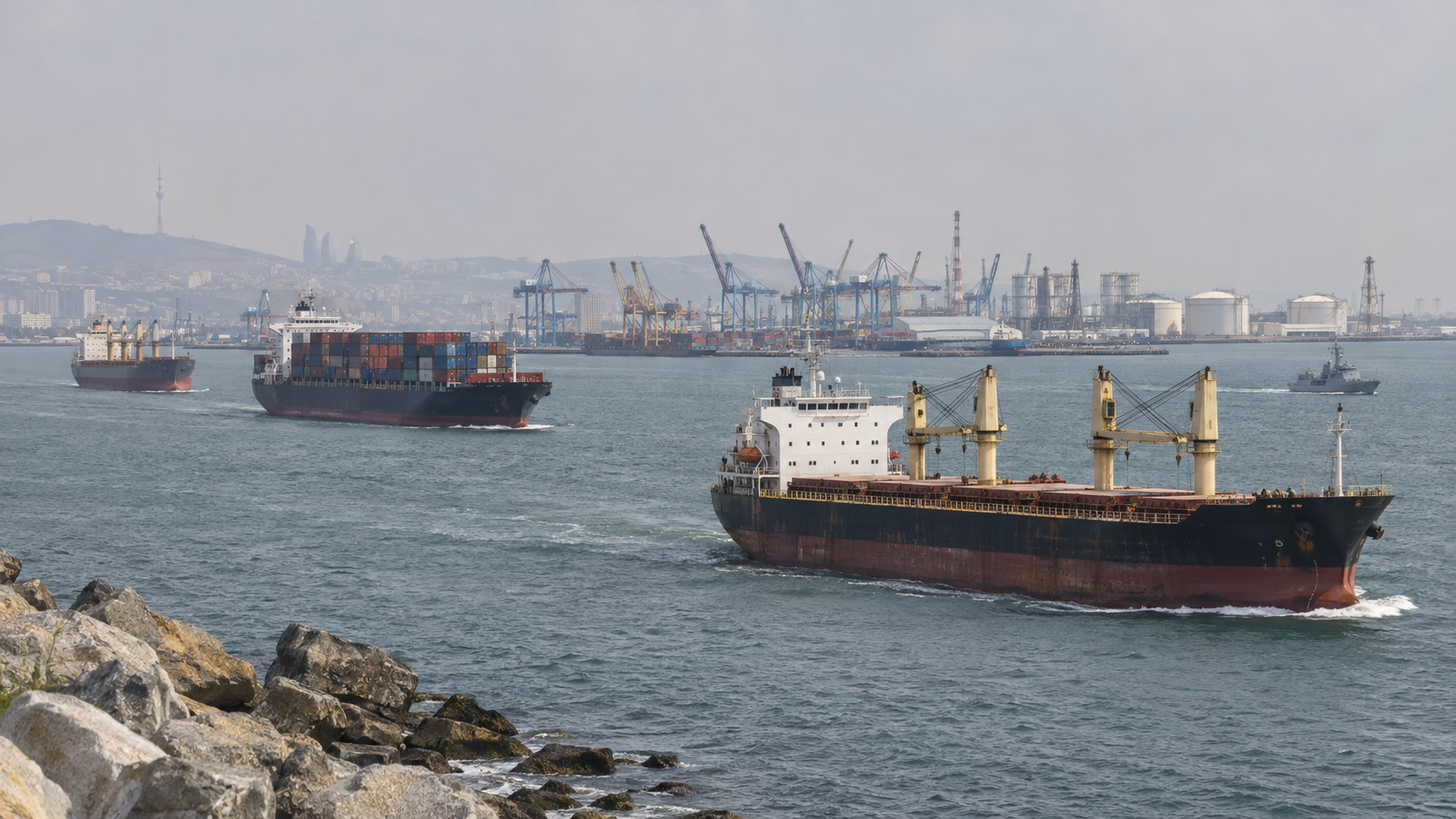
The article also describes rising maritime risks. Iran warns ships against using unauthorised routes and disputes the US claim that mines have been cleared from Hormuz. Iranian media report attacks on 11 tankers in ten days, with four unable to continue, and claim navigation systems were targeted. Trump has played down the likelihood of renewed full-scale war but said civilian infrastructure, including 38 bridges, has been identified as potential targets. Krieg expects Iran to pursue controlled escalation and impose economic costs on Gulf states to encourage pressure on Washington, while warning that Tehran may eventually judge restraint more dangerous than escalation.
Entities: Iran, United States, Qeshm Island, Strait of Hormuz, Persian Gulf • Tone: analytical • Sentiment: negative • Intent: inform
09-11-2026
US Secretary of State Marco Rubio defended President Donald Trump’s decision to go to war with Iran, describing the conflict as unpopular but necessary to address what he called a real threat from Tehran’s nuclear ambitions. Speaking to reporters in Florida, Rubio said Trump had acted to prevent Iran from pursuing a nuclear weapon. He acknowledged that diplomacy was not close to a breakthrough and characterized some Iranian demands as unacceptable and unrealistic, while saying Trump preferred a diplomatic solution.
Trump said he did not regret the decision to go to war, despite acknowledging that many people disliked comments by Vice President JD Vance linking the US-led war to the Republican Party’s defeat in the midterm elections. Trump described the war as potentially one of the best decisions the United States had made and warned that Iran would pose a grave danger if it obtained a nuclear weapon. He also told CNN that renewed US strikes were highly unlikely if negotiations showed progress and produced a strong agreement.
Iranian Foreign Minister Abbas Araghchi urged the White House to decide how it would proceed, pointing to the midterm results and saying Iran’s two-day proposal remained available. Under the proposal, Tehran would reopen the Strait of Hormuz to commercial shipping within two days if Washington met Iran’s conditions, including ending the war on all fronts. Araghchi warned that Iran was prepared to fight if the United States chose war instead.
The article also reports that Trump was scheduled to meet Qatar’s prime minister and foreign minister at the White House. Iran was reviewing proposals from Qatar intended to address differences with Washington. Separately, Rubio denied speculation that he would leave his post to pursue higher office in 2028.
Entities: Marco Rubio, Donald Trump, Abbas Araghchi, JD Vance, Sheikh Mohammed bin Abdulrahman bin Jassim Al Thani • Tone: analytical • Sentiment: neutral • Intent: inform
09-11-2026
The article follows developments in the U.S.-Iran war and stalled efforts to negotiate an end to the conflict. The U.S. military’s Central Command announced Task Force Iron Gate, intended to extend the naval blockade by targeting overland trade routes and preventing military technology and illegal revenue from entering or leaving Iran. The task force may also cover routes involving the Caspian Sea, though it was unclear whether it would use military force. Iran’s military dismissed the initiative as “word play.” President Trump later said the task force was fully operational and described the U.S. naval blockade as highly effective.
Trump defended the war in an interview with 60 Minutes, predicting that history would judge it a good decision because, he said, the U.S. had taken Iran’s nuclear weapon away. Secretary of State Marco Rubio, meanwhile, said the two countries were not close to a breakthrough, describing Iran’s negotiating demands as unacceptable and unrealistic. Trump said renewed attacks were highly unlikely if talks progressed, but warned that this depended on Iran accepting a strong agreement.
Iranian Foreign Minister Abbas Araghchi said mediator travel had stopped following the Republican Party’s heavy losses in the U.S. midterm elections, and that more time would be needed before negotiations could resume. Qatar and Pakistan have been among the regional countries trying to broker an end to the war, which began in late February. Fighting has largely subsided, but Iran continues to blockade the Strait of Hormuz while the U.S. maintains a counterblockade of Iranian ports.
The article also reports that the United Arab Emirates rescued 22 crew members from a cargo ship fire in the Sea of Oman. The cause and identity of the ship were not confirmed, and it was unclear whether it was the tanker reported by a British maritime security organization to have caught fire near Oman. Separately, U.S. forces said they disabled a cargo ship attempting to breach the blockade.
Entities: Iran, United States, Task Force Iron Gate, U.S. Central Command, naval blockade and counterblockade • Tone: analytical • Sentiment: neutral • Intent: inform
09-11-2026
The live updates describe continued uncertainty over the U.S.-Iran war and the prospects for a negotiated settlement. In a 60 Minutes interview, President Donald Trump said he saw no current reason to escalate the conflict, while defending the decision to begin it despite its economic costs. He was scheduled to meet Qatar’s prime minister, as Qatar has mediated indirect U.S.-Iran talks. Secretary of State Marco Rubio cautioned that negotiations were not close to a breakthrough, citing what he called unacceptable Iranian demands.
The updates also report mounting risks around the Strait of Hormuz. Authorities closed a beach in Khor Fakkan, United Arab Emirates, after an oil spill was found. Both Iran and the United States have attacked or disabled commercial vessels, each enforcing competing restrictions on shipping routes. Iran favors northern routes near its coast, while the U.S. maintains that southern routes are safe and open. Iran’s state broadcaster said four tankers had been halted in the strait, and the U.S. military said it disabled a vessel in the Gulf of Oman after repeated warnings.
Economic and diplomatic developments included a further fall in oil prices, with Brent crude down to $96.38 per barrel and U.S. crude to $89.56, although prices remained about 50% higher than a year earlier. Iran described its offer to shorten the implementation period for a potential deal from seven days to two as a goodwill gesture, while reiterating that an agreement should include sanctions relief, an end to the U.S. naval blockade, the unfreezing of Iranian assets, and a regional ceasefire. Rubio continued to question the likelihood of an imminent agreement.
Separately, Syria denied reports that it was sending troops to Yemen or Saudi Arabia to support the coalition fighting the Houthis. Iran’s foreign ministry also said the International Atomic Energy Agency had inspected a nuclear site in Bushehr, following Iran’s suspension of inspections after U.S. and Israeli strikes in 2025. The U.S. military recently announced a reward of up to $20 million for information about Iran’s nuclear program.
Entities: Donald Trump, Marco Rubio, Iran, United States, Qatar • Tone: analytical • Sentiment: neutral • Intent: inform
09-11-2026
U.S. Secretary of State Marco Rubio said negotiations with Iran were not close to producing a breakthrough, describing some of Tehran’s demands as “outrageous and ridiculous” and unrealistic. His comments came as efforts to reach a lasting resolution to the Middle East war appeared stalled. Speaking to reporters in Florida before traveling to Paris for a G7 foreign ministers’ meeting, Rubio noted that Iran had proposed shortening the timeline for restarting talks from seven days to two, but said discussions so far had not been productive.
Rubio said President Donald Trump would prefer to resolve problems diplomatically, while acknowledging that diplomacy is not always possible. Trump had said in a CNN interview that renewed hostilities in the conflict, which had lasted more than eight months, were unlikely if negotiations made progress. The talks are intended to constrain Iran’s nuclear ambitions and reopen the Strait of Hormuz. Trump also said further strikes were “highly unlikely” if negotiations advanced toward a strong agreement.
Oil prices fell on Monday following Trump’s comments. Brent crude declined 0.75% to $97.58 per barrel, while U.S. West Texas Intermediate futures for December delivery fell 0.42% to $90.45, as of 5:25 a.m. ET.
Iran’s position remained a major obstacle: Foreign Ministry spokesperson Esmaeil Baghaei said Tehran wanted U.S. sanctions lifted and the war ended on all fronts before negotiations began. The article portrays the parties as far apart, with the prospect of renewed strikes tied to whether talks can advance.
Entities: Marco Rubio, Donald Trump, Esmaeil Baghaei, Iran, United States • Tone: analytical • Sentiment: neutral • Intent: inform
09-11-2026
US President Donald Trump said that “Task Force Iron Gate” was operating against Iran and claimed that a US naval blockade had sharply limited goods entering and leaving the country. In a Truth Social post, he described the task force as being in “full force and effect” and said little was getting through the blockade. The announcement came as Trump also indicated that additional US strikes might not be needed if diplomatic talks advanced. He said a “very strong agreement” would need to address Iran’s nuclear programme and the reopening of the Strait of Hormuz. However, he warned that Washington had identified 38 Iranian bridges that could be destroyed within an hour if military strikes resumed, and said the US had already significantly weakened Iran’s military and economic capabilities.
The article explains that Iron Gate is a newly established inter-agency initiative, not a new combat deployment. Ordered by US Central Command chief Admiral Brad Cooper, the approximately 20-person team will be based in Tampa, Florida, and coordinate with other government agencies. Its purpose is to disrupt overland supply and trade routes, including routes across Iran’s land borders and the Caspian Sea. The task force is intended to restrict the movement of advanced weapons, dual-use technologies, sanctioned materials and illicit revenue.
Iron Gate extends Washington’s existing naval blockade, announced in July and focused on Iranian ports along the Arabian Gulf and Gulf of Oman. CENTCOM said that blockade had prevented Iran from exporting more than $25 billion in crude oil in recent months. Humanitarian aid is exempt from the restrictions. The article distinguishes the maritime blockade from Iron Gate’s focus on land-based networks and Caspian Sea routes, presenting the initiative alongside Trump’s comments about negotiations and possible renewed military action.
Entities: Donald Trump, Task Force Iron Gate, Iran, US Central Command (CENTCOM), Admiral Brad Cooper • Tone: analytical • Sentiment: neutral • Intent: inform
09-11-2026
Iraqi Prime Minister Ali Al Zaidi made a quiet visit to Tehran on Friday as Baghdad sought to prevent the US-Iran conflict from escalating again. The visit was disclosed on Monday. Iraq’s ambassador to Tehran, Yasir Abdul Zahra Al Hajjaj, described the mission as an effort to reduce tensions and prevent escalation. An Iraqi government official told The National that the trip had been requested by US President Donald Trump and was intended to establish a channel for de-escalation and avert a slide towards war. The official said the diplomatic effort was also intended to protect Iraq from being pulled into a wider regional conflict, but provided no further details.
During the brief visit, Al Zaidi met Mohammad Bagher Ghalibaf, Iran’s parliament speaker and chief negotiator, according to Fars News Agency. An informed source cited by Fars said their meeting focused exclusively on Iraq’s efforts to help end the conflict between Iran and the US. Ghalibaf thanked Iraq for its efforts and presented what the source called Iran’s “two-day proposal.” He said negotiations could move forward only if the United States respected Iran’s rights under that proposal.
The visit reflects Iraq’s longstanding effort to act as a mediator between Tehran and Washington. Baghdad’s close relations with both countries provide a basis for that role, while Iraq also has a direct interest in preventing another war from affecting its territory. The report does not provide further information about the proposal, the discussions, or any response from the US government.
Entities: Ali Al Zaidi, Donald Trump, Mohammad Bagher Ghalibaf, Yasir Abdul Zahra Al Hajjaj, Iraq • Tone: neutral • Sentiment: neutral • Intent: inform
09-11-2026
The supplied page is a live-news landing page for The National, updated November 9, 2026, at 4:44 a.m. Its headline reports that former U.S. President Donald Trump played down the prospect of further strikes on Iran. The page does not include the underlying article text or detailed reporting, so it provides no explanation of what Trump said, when or where he said it, or how officials and other parties responded.
Instead, the available content consists mainly of a list of related regional developments and video links. The listed updates say that a drone attack on the Khor Mor gas field in Iraqi Kurdistan caused power outages; Iran said an attack on navigation systems it described as belonging to an “enemy” had halted oil shipments through the Strait of Hormuz; and Qatar’s prime minister was due to meet Trump at the White House while Iran negotiations stalled. Other headlines mention reported explosions on Iran’s Qeshm Island and Houthi claims of four attacks on Saudi sites and forces. These are presented as brief updates, without supporting detail or independent confirmation in the supplied text.
The page also links to videos and commentary about the conflict, including U.S. Defense Secretary Pete Hegseth defending the war, Trump describing U.S. pressure on Iran as an “occupation,” and analysts discussing possible political and regional consequences. Because the body of the live coverage is absent from the provided material, the summary can only describe the headline and listed teasers; it cannot establish the article’s full account of events or assess the accuracy of the claims.
Entities: Donald Trump, Iran, Iraqi Kurdistan, Khor Mor gas field, Strait of Hormuz • Tone: neutral • Sentiment: neutral • Intent: inform
09-11-2026
Saudi Arabia and Egypt are joining G7 foreign ministers in Paris for discussions on reducing Middle East hostilities, as Iran intensifies attacks on shipping in the Strait of Hormuz and prospects for a US-Iran agreement remain uncertain. US Secretary of State Marco Rubio said negotiations were not close to a breakthrough, describing Iran’s demands as unacceptable and unrealistic. The meeting, hosted by French Foreign Minister Jean-Noel Barrot, will include G7 ministers and the foreign ministers of Saudi Arabia and Egypt; Brazil and South Korea have also been invited. French diplomats said the informal dinner was arranged without a fixed agenda to allow open discussion.
The ministers are expected to focus on Iran’s disruption of shipping through the Strait of Hormuz and Bab Al Mandeb. A French-British initiative to help secure Hormuz passage is prepared to deploy when conditions permit, with more than a dozen ships, including vessels from the Netherlands, Belgium and Germany, in position. The talks will also address conflicts and crises in Palestine, Lebanon and Syria. Egypt is considered an important partner on food security, which has been affected by Iran’s blockade of Hormuz. Saudi Arabia, meanwhile, has faced Houthi attacks on airports, ports and oil facilities and has received military support from Britain, France, Turkey and Pakistan.
European ministers also intend to discuss a possible security vacuum in south Lebanon as the UN peacekeeping mission there prepares to withdraw at year’s end. The US opposes a French-Italian proposal to replace the mission. Paris says Hezbollah has been weakened by Israeli bombing but is rearming, while US-brokered talks between Lebanon and Israel have not produced a diplomatic solution.
The G7 gathering will address Ukraine as well. Ukrainian Foreign Minister Andrii Sybiha will attend ahead of planned Ukraine-Russia peace talks in Abu Dhabi. European officials hope to influence the US-brokered discussions, although reports suggest they may meet Ukrainian and NATO representatives separately from the three-way talks. European Commission President Ursula von der Leyen reiterated support for Ukrainian President Volodymyr Zelenskyy’s call for a ceasefire covering food and energy infrastructure.
Entities: Saudi Arabia, Egypt, Group of Seven (G7), Marco Rubio, Jean-Noel Barrot • Tone: analytical • Sentiment: neutral • Intent: inform
09-11-2026
France 24’s Perspective segment reports that Iran may view the outcome of the US midterm elections as an opening to pursue what a commentator describes as a “sweetheart deal.” Paymon Azmoudeh of Forward Global says Iran sees the election results as a “golden opportunity” for such an agreement. The segment places that assessment against uncertainty over whether the United States might resume military action against Iran, with public statements from the key parties appearing to diverge.
US President Donald Trump says renewed strikes on Iran are “highly unlikely” if negotiations make progress. Iran’s foreign minister, however, says the midterm elections have caused mediators’ work to pause. These accounts leave the status and direction of diplomatic efforts unclear: the US president links the prospect of avoiding renewed strikes to progress in talks, while Iran’s top diplomat describes a temporary interruption in mediation.
The article is a short preview of a video segment and offers no further detail about the proposed terms of a deal, the identity of the mediators, or the specific reasons for the pause. It presents Azmoudeh’s interpretation of Iran’s view alongside statements attributed to Trump and Iran’s foreign minister, rather than resolving the conflicting signals. Overall, the report highlights a potential diplomatic opening following the US midterms while emphasizing that negotiations and the risk of further military action remain uncertain.
Entities: Iran, United States, US midterm elections, Paymon Azmoudeh, Forward Global • Tone: analytical • Sentiment: neutral • Intent: inform
09-11-2026
Iran has abandoned its self-imposed 2,000-kilometer limit on ballistic missile range, according to Islamic Revolutionary Guard Corps spokesperson Brig. Gen. Hossein Mohebbi. The announcement came within hours of the U.S. military’s creation of Task Force Iron Gate, a Central Command initiative intended to disrupt the movement of Iranian weapons, dual-use materials and illicit revenue across Iran’s land borders and the Caspian Sea. CENTCOM commander Adm. Brad Cooper said the task force would work with U.S. government partners to constrain Iran’s ability to finance terrorism, rebuild weapons factories and replenish its military.
Behnam Taleblu of the Foundation for Defense of Democracies said the effort could enable targeted strikes against facilitators and increase political and economic pressure on countries and institutions involved in Iran’s illicit trade. Iran’s IRGC dismissed the task force as “wordplay,” saying Tehran had prepared for added pressure and coordinated with neighboring states.
Mohebbi also warned that Iran is developing new weapons that could be deployed in a future confrontation with the United States and Israel, saying they would “astonish the entire world.” He threatened that Iran’s next strikes would be more damaging if the U.S. or Israel miscalculated. The article notes that Iran’s former range cap already put much of the Middle East and parts of southeastern Europe within reach. In March, Iran unsuccessfully tried to strike the U.S.-British base on Diego Garcia, about 2,500 miles away.
Iran also says it plans to unveil underground missile facilities, which officials call “missile cities,” intended to protect weapons production during wartime. Mohebbi claimed Iran continued making missiles and drones during recent fighting using domestic expertise, and described its growing self-sufficiency as a major achievement. Taleblu highlighted the Caspian Sea basin as a sanctions-evasion route, but the supplied article ends mid-sentence before his point is completed.
Entities: Iran, Hossein Mohebbi, Task Force Iron Gate, U.S. Central Command (CENTCOM), Brad Cooper • Tone: analytical • Sentiment: negative • Intent: inform