09-11-2026
French Prime Minister Sébastien Lecornu has announced that the minimum wage will rise by 1.6% on 1 December, a month earlier than planned. The increase will bring the minimum monthly net wage to about €1,502, or €24 more per month. Lecornu described it as the second-largest increase in two decades and said that, although a minimum-wage rise alone is insufficient, it can prompt broader pay negotiations. The government also plans to review general reductions in social security contributions, with the stated aim of increasing workers’ take-home pay.
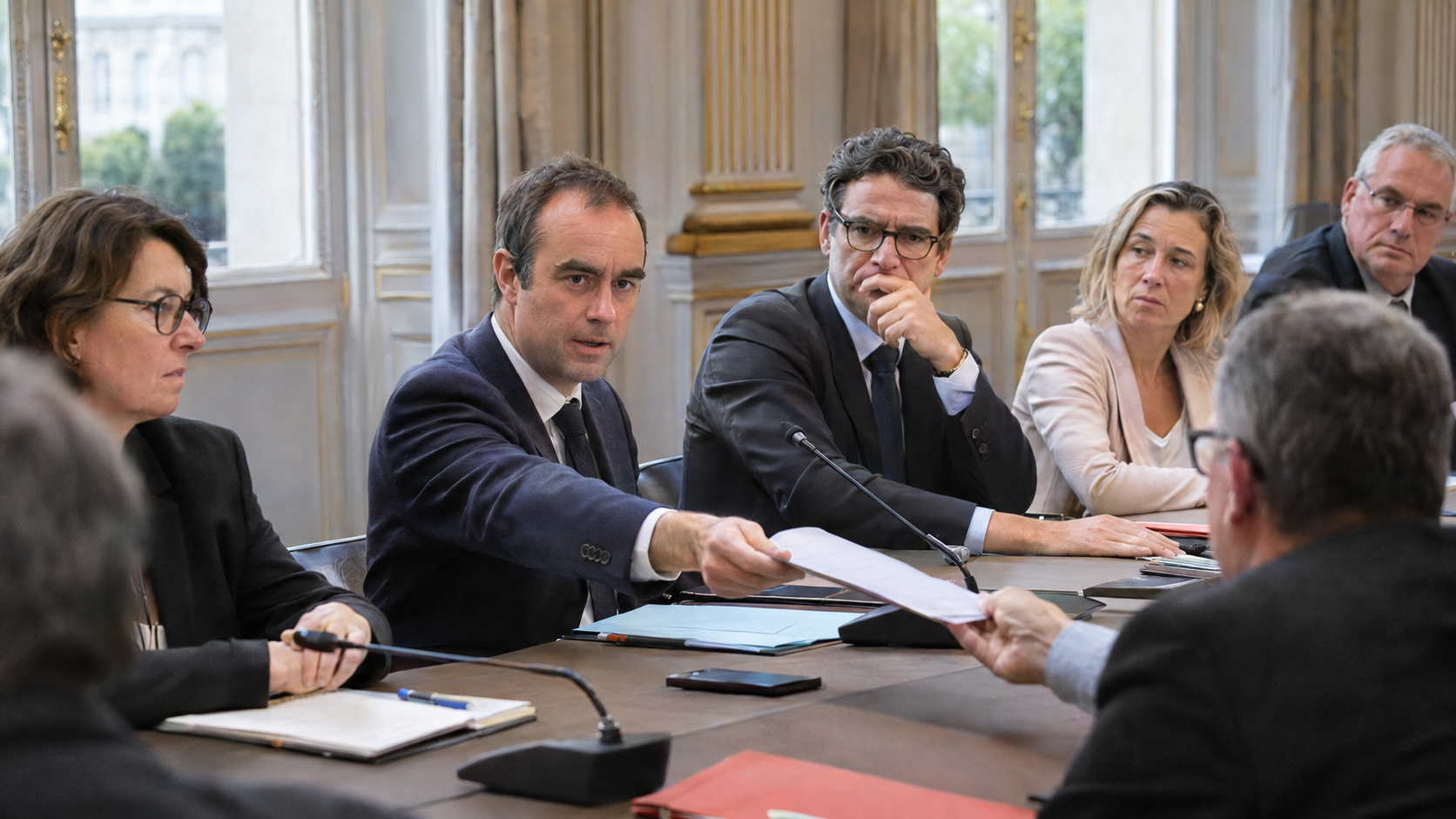
The announcements followed a conference at Matignon with employee and employer representatives. To address employers’ concerns about higher labour costs, the government is considering tax measures: exempting overtime income up to €10,000 from income tax, exempting employers’ contributions to public transport costs, and making value-sharing bonuses tax-free. These bonuses allow companies to distribute a one-off payment to employees under favourable tax and social-security conditions. Lecornu says negotiations should continue across roughly 100 professional sectors, with the government acting as guarantor of commitments made by employers and employees. He defended the gradual approach, arguing that the government should announce measures that work rather than make rushed, headline-grabbing promises.
Trade unions have reacted cautiously, arguing that the increase falls well short of their demands. The CFDT had called for an additional €100 net per month, while the CGT sought about €150. CFTC president Cyril Chabanier had already said the proposals were not proportionate to the level of social anger. CGT general secretary Sophie Binet is calling for another major day of strikes and demonstrations on 17 November. The article presents the plan as an attempt to balance workers’ demands for higher pay with business concerns about competitiveness, while negotiations and union opposition remain unresolved.
Entities: Sébastien Lecornu, France, Matignon, French minimum wage increase, Social security contributions • Tone: analytical • Sentiment: neutral • Intent: inform
09-11-2026
France 24 reports that French Prime Minister Sébastien Lecornu is scheduled to meet with trade unions and representatives of employer federations on Monday, November 9, 2026. The discussions are focused on salaries and purchasing power, issues that have become more pressing following a wave of social unrest across France in recent weeks.
France 24 correspondent Rochelle Ferguson describes the meeting as a difficult undertaking. Lecornu must respond to unions’ demands for higher wages while also addressing widespread public anger. The report presents these aims as a challenge: the prime minister is expected to negotiate with organized labor and employers while seeking to ease broader discontent, but the article does not provide details about specific union proposals, the government’s negotiating position, or the outcome of the talks.
The item is a short video report rather than a detailed account of the negotiations. Its central focus is the political and social pressure surrounding the meeting: concern about pay and purchasing power, recent unrest, and the difficulty of finding a response that can satisfy unions and help placate the public. It conveys that Lecornu faces a sensitive day of discussions, without asserting that an agreement has been reached or predicting the result.
Entities: Sébastien Lecornu, Rochelle Ferguson, France 24, France, French government • Tone: analytical • Sentiment: negative • Intent: inform
09-11-2026
France’s Prime Minister, Sebastien Lecornu, said on Monday that the government would bring forward a planned 1.6 percent increase in the minimum wage. Instead of taking effect in January, the increase is due in December. The announcement comes amid a cost-of-living crisis that has prompted serious social unrest in France, described in the report as some of the country’s worst civil unrest in years.
Lecornu’s move is presented as an effort to ease tensions and address the pressures facing households. He was also due to meet with labour groups on Monday to discuss possible solutions to the cost-of-living crisis. The report links the timing of those discussions and the earlier wage increase to the government’s attempt to defuse unrest, but provides no further details about the proposed solutions, the groups involved, or the expected effect of the increase.
The item is a short France 24 video report, with Rochelle Ferguson providing additional coverage. Its central news is the change in timing for the wage rise and the political context surrounding it: rising living costs and unrest have increased pressure on the government to respond. The article does not include further statements from Lecornu, labour representatives, or people affected by the crisis.
Entities: Sebastien Lecornu, Rochelle Ferguson, France, France 24, French Prime Minister • Tone: analytical • Sentiment: negative • Intent: inform
09-11-2026
French Prime Minister Sébastien Lecornu announced that the government will bring forward a planned 1.6% increase in the national minimum wage, implementing it in December rather than January. Labour Minister Jean-Pierre Farandou said the change will raise the monthly net minimum wage to €1,502, an increase of €24 from its current level. The wage had last been raised in June, by €35, to account for higher inflation.
The move follows weeks of demonstrations and unrest linked to the cost-of-living crisis. Protests began in high schools over underfunded education but broadened into anger about living costs, public services and political stagnation. Riots in major cities on October 17 caught security forces off guard. The government is seeking to ease tensions but faces limited room to act because of its mounting debt burden.
Unions said the increase does not meet workers’ needs. The CFDT, France’s largest union, called for a €100 increase, while the CGT sought a 10% rise, or about €150 a month. Lecornu defended the government’s offer as the second-largest increase in 20 years. CFDT leader Marylise Léon called it insufficient; CGT leader Sophie Binet dismissed it as “crumbs” and called for protests on November 17.
The issue is politically sensitive because France has both a relatively high minimum wage and a large proportion of workers earning at or near it. In 2024, the minimum wage represented 67% of average earnings, and 12.7% of employees were paid at or near that level, compared with 8% in Germany and 3.5% in the Netherlands. The unrest also comes five months before a presidential election. Polls suggest far-right leader Marine Le Pen could face hard-left rival Jean-Luc Mélenchon in a runoff. President Emmanuel Macron, whose approval ratings are at a record low, cannot run for a third term.
Entities: Sébastien Lecornu, Jean-Pierre Farandou, Marylise Léon, Sophie Binet, Marine Le Pen • Tone: analytical • Sentiment: neutral • Intent: inform