09-11-2026
A migrant boat sank off northwestern Senegal, killing at least 35 people, according to emergency services. The article’s headline says at least 39 were killed, but the reported toll in the body rose from an initial 21 recovered bodies to 34 and then at least 35. Officials described the figures as provisional as the search continued, and an indeterminate number of people were reported missing. Authorities said there was one survivor, while an interior ministry source warned the death toll could rise further.
The pirogue-style boat reportedly capsized near the Loumpoul dunes in Senegal’s Kebemer department, between Dakar and Saint-Louis. Accounts differed on whether the sinking happened on Friday or Saturday. Saliou Diouf, founder of migrant aid group Boza Fii, said the nationalities of all victims were not confirmed, though bodies recovered on Saturday were Senegalese. President Bassirou Diomaye Faye said state agencies and resources had been mobilized to search for the missing, care for survivors, and support families.
The tragedy occurred on a perilous Atlantic migration route used by thousands seeking to reach Spain’s Canary Islands, where many have died in recent years. Senegalese authorities also reported intercepting 142 migrants on Friday, including women and children, aboard another boat bound for Spain. The interior ministry said it would strengthen cooperation with neighboring countries to combat people-smuggling networks, and the interior minister planned to visit the affected region.
Meanwhile, El Hierro in Spain’s Canary Islands declared an emergency after more than 3,300 people arrived on about 30 boats since the start of November. Increased patrols by Senegal, Mauritania, and Morocco have pushed some departures farther south toward Gambia, Guinea-Bissau, and Guinea, lengthening an already dangerous crossing.
Entities: Senegal, Bassirou Diomaye Faye, Saliou Diouf, Boza Fii, Senegalese Press Agency (APS) • Tone: neutral • Sentiment: negative • Intent: inform
09-11-2026
At least 39 people have died after a small wooden boat carrying migrants capsized off Senegal while travelling towards Spain’s Canary Islands. Senegal’s interior ministry said one person had been rescued, while the number of people still missing was not yet known. The boat sank between Dakar and Saint-Louis. Search teams are covering 25km of coastline, but difficult access and strong currents have hampered operations and carried bodies south. Authorities said 24 victims had been identified and their remains returned to relatives; 11 others were awaiting identification. Four bodies recovered on Monday were buried after a collective funeral prayer. Saliou Diouf of the Senegalese migrant aid group Boza Fii said the bodies recovered by Sunday evening were Senegalese, while the nationalities of others aboard remained unknown.
President Bassirou Diomaye Faye offered condolences and urged people not to risk their lives on the crossings. He pledged to continue efforts against the networks arranging them and to create reasons for young people to remain in Senegal. The disaster comes amid continuing deaths on the Atlantic migration route: Walking Borders recorded 635 deaths between January and May 2026, and estimates that 21 people die for every 100 who reach the Canary Islands. Senegalese authorities also reported intercepting another boat carrying 142 migrants, including women and children.
Meanwhile, the Spanish island of El Hierro declared a state of emergency after more than 3,300 people arrived in about 30 boats since November began—nearly a third of the island’s population. Canary Islands regional president Fernando Clavijo called the situation “absolutely unsustainable.” The article describes the route’s increased prominence amid tighter controls and greater European cooperation with North African states, as well as factors encouraging Senegalese people to migrate, including limited jobs, family pressures and established networks. Nearly one in four young people in Senegal was unemployed in the second quarter of 2026, presenting a major challenge for Faye’s government. Senegal’s interior ministry says it will strengthen cooperation with neighbouring countries to combat people-smuggling.
Entities: Senegal, Canary Islands, Dakar, Saint-Louis, El Hierro • Tone: analytical • Sentiment: negative • Intent: inform
09-11-2026
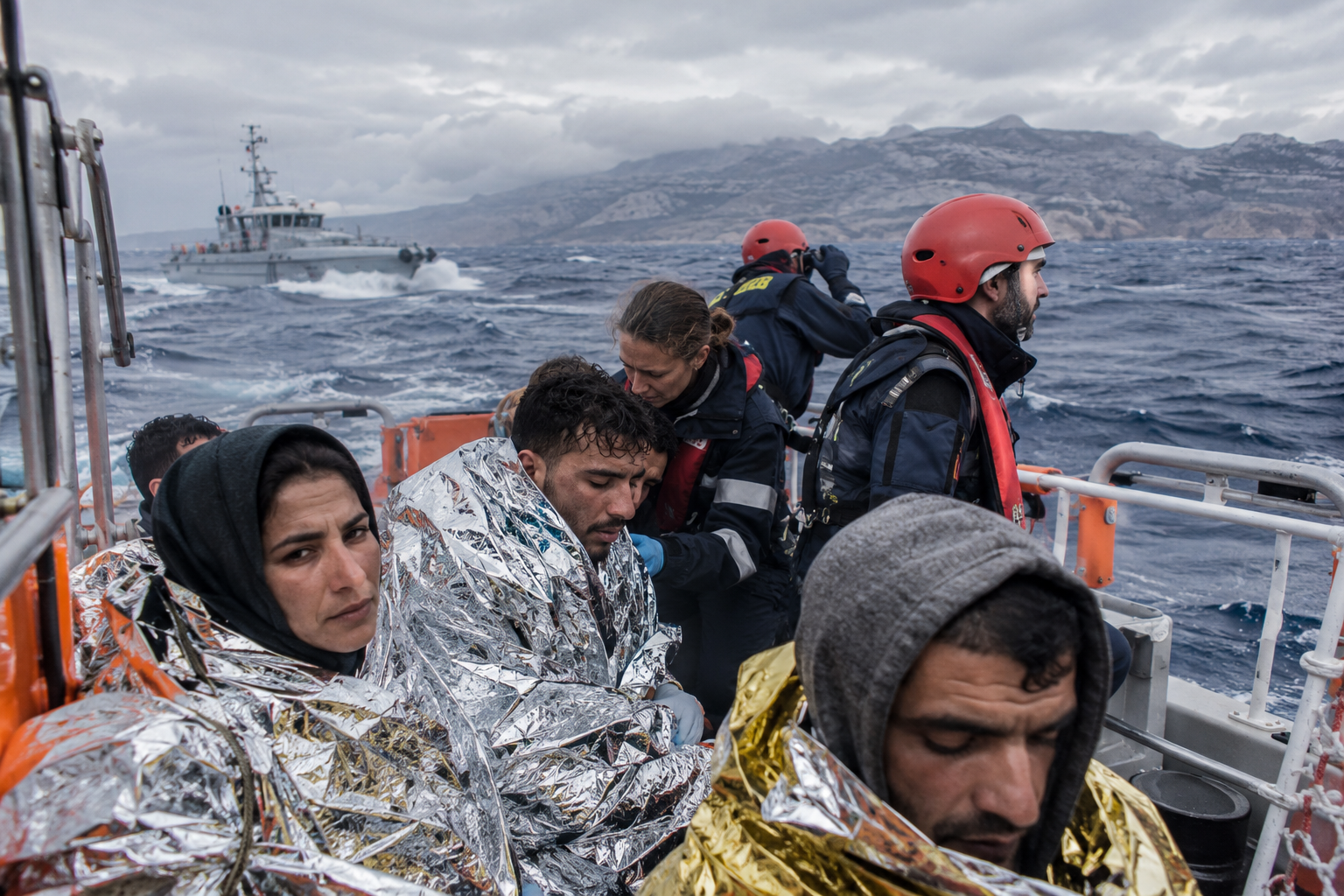
At least 13 migrants have died after a boat sank off the coast of Crete, according to the Greek coastguard. Eighteen people were rescued, all of them Sudanese nationals, and four survivors were taken to hospital, including a toddler. The cause of the deaths was not immediately known. Authorities believe the boat had been at sea for several days and that strong winds may have prevented it from reaching shore. A Moroccan-flagged container ship spotted the boat about 15 nautical miles (28km) from Crete. An unnamed coastguard official told Reuters that the survivors were “shivering from the cold.”
The incident comes amid high migrant arrivals in Greece. More than 22,000 of the 86,400 sea arrivals recorded so far this year landed on Crete, and Greek authorities said approximately 1,700 migrants reached the island in the first three days of November. The coastguard also rescued 187 people in three separate incidents off Greece on Monday. UN figures show that more than 37,000 migrants have arrived in Greece this year, exceeding the total for all of 2025.
The Greek government has announced measures to address the influx, including plans for a temporary housing complex near Heraklion, Crete’s capital. Greece was a major destination during Europe’s 2015–16 migration crisis, when nearly a million people—mostly arriving from Turkey—reached its islands. Arrivals subsequently declined as border controls tightened, but crossings from Libya have increased in recent years. The article says many people making those journeys are fleeing conflict in Sudan or seeking better economic opportunities, including people from Bangladesh.
Entities: Crete, Greece, Heraklion, Sudan, Libya • Tone: neutral • Sentiment: negative • Intent: inform
09-11-2026
Authorities reported multiple deadly migrant-boat incidents near Crete and Senegal, alongside the rescue of scores of people attempting to reach Europe. Off Crete, the Greek coast guard recovered 13 bodies from one boat early Monday. Of 18 people rescued from the same vessel, one later died at a health center, bringing the reported death toll to 14. Authorities had not released the passengers’ identities or nationalities, or explained the cause of death. In a separate incident, eight bodies were found on another boat; about 28 survivors, all Sudanese, were rescued and taken to Crete. Two Sudanese men, including a 16-year-old, were arrested on suspicion of people smuggling after survivors identified them as suspected smugglers. Strong winds complicated the rescue response.
The coast guard also reported that more than 180 people were found aboard three additional boats heading from North Africa toward Crete. Three more boats, carrying roughly 47, 40, and 100 people, were spotted by aircraft or drones operated by Frontex and were expected to be taken to the island. The article describes the Libya-to-Crete crossing as a major and increasingly used route into Europe. Greece is a key entry point for people fleeing conflict and poverty in the Middle East, Africa, and Asia. Though Frontex recorded fewer irregular crossings into the EU overall so far in 2026 than in the comparable period last year, the eastern Mediterranean remained the bloc’s busiest migrant route. A separate recent shipwreck between Turkey and Greek islands killed 12 people, including an infant.
In Senegal, the death toll after a migrant boat capsized off the coast rose to 39 when additional bodies were found. The boat had left Saint-Louis for Spain and overturned near Kébémer. One passenger was rescued alive, while others were still believed missing. The vessel was traveling a well-used Atlantic route taken by young Senegalese seeking better economic prospects. Senegalese President Bassirou Diomaye Faye expressed condolences and vowed to crack down on the networks behind the dangerous crossings.
Entities: Crete, Greece, Senegal, Spain, Libya-to-Crete migrant route • Tone: neutral • Sentiment: negative • Intent: inform
09-11-2026
Thirteen migrants were initially reported dead and 18 rescued after a boat in distress was spotted off the coast of Crete by the crew of a container ship on Monday. The boat was found about 28 kilometres from the port of Kaloi Limenes. The Greek coastguard recovered the bodies and brought the survivors ashore. Four survivors, including a toddler, were taken to hospital; one later died, raising the death toll to 14. The remaining survivors were expected to be transferred to a migrant centre on Crete.
Authorities said the boat may have been at sea for several days and may have struggled to reach shore in strong winds. The cause and circumstances of the deaths were not immediately clear. A local coastguard official told Reuters that those aboard were “shivering from the cold.” The report describes the dangerous conditions facing migrants making the sea crossing.
Separately, the coastguard rescued 187 migrants in three other incidents off Crete that same day. Greece has long served as a major entry point to Europe for migrants and refugees from the Middle East, Africa and Asia. Nearly one million people reached Greek islands, mainly from Turkey, during the 2015–2016 migration crisis. Arrivals have since declined following stronger maritime and border patrols, though journeys from Libya have increased in recent years. The article notes that people making these journeys include those fleeing conflict in Sudan and poverty and instability in Bangladesh.
Entities: Crete, Greece, Kaloi Limenes, Greek coastguard, Reuters • Tone: analytical • Sentiment: negative • Intent: inform
09-11-2026
At least 21 migrants and refugees have died while attempting to reach Crete, a major entry point into the European Union, according to Greek authorities. In an incident early Monday, the Greek coastguard recovered 12 bodies and rescued 18 people from a boat spotted south of the island by a Morocco-flagged container ship. The survivors and those who died were brought ashore, but one of the rescued people later died in hospital. Authorities said the boat may have been at sea for several days and could have struggled to reach land in strong winds; the cause of the deaths was not immediately clear.
In a separate incident on Saturday evening, the coastguard recovered eight bodies and rescued 28 people from another boat off southern Crete. Two people from that vessel remained missing. Authorities also found two additional boats south of the island, carrying about 47 and 40 people. The European Union’s border agency, Frontex, used an aircraft and an unmanned drone to locate the boats, and survivors were taken to a port on Crete’s southern coast.
The article places the incidents in the wider context of migration to Europe. Crete has become a key destination for people fleeing conflict and poverty in the Middle East, Africa and Asia. Despite the deadly crossings, Frontex reported that irregular border crossings into the EU had fallen by about a third so far in 2026. It recorded approximately 31,800 crossings during the first three quarters of the year, 15 percent fewer than during the same period in 2025.
Entities: Crete, Greece, Greek coastguard, Frontex, European Union • Tone: neutral • Sentiment: negative • Intent: inform