09-11-2026
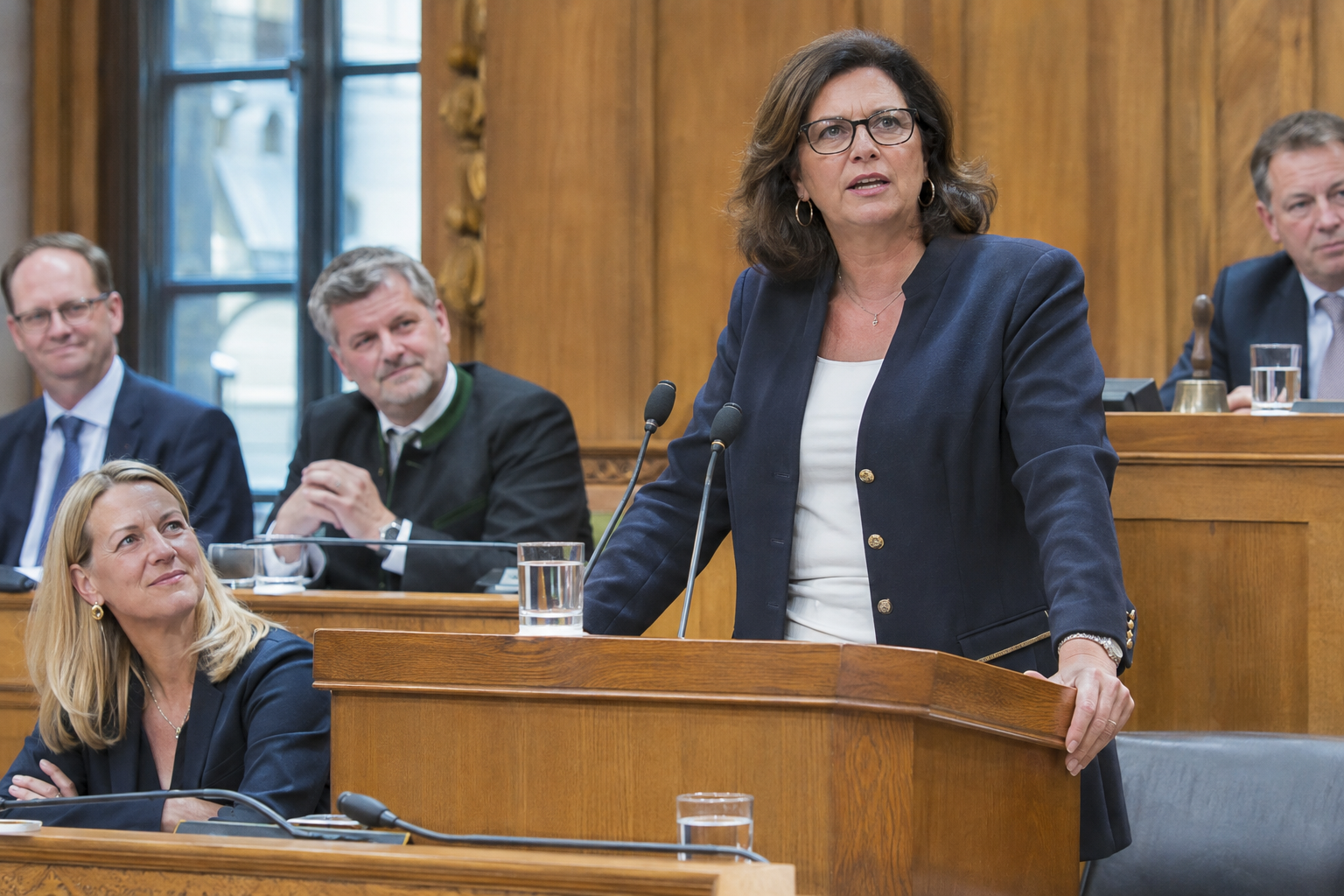
Germany’s Christian Democratic Union (CDU), led by Chancellor Friedrich Merz, has confirmed that it will nominate Ilse Aigner to become the country’s next president. Aigner, 61, is a member of the CDU’s Bavarian sister party, the Christian Social Union (CSU), and currently presides over Bavaria’s state parliament. The CSU supports her candidacy, and the coalition Social Democrats have indicated they would back her if conservatives agree on the nomination. With the CDU/CSU and SPD holding a majority in the Federal Convention that elects the president, Aigner appears to have a strong chance of being selected, though the article notes that unexpected developments could change the outlook.
At a Berlin press conference, Merz praised Aigner’s empathy, openness and commitment to parliamentary democracy. He described the presidency as a role that can unite the country, provide orientation and initiate public debate. He also referred to November 9, the date of the announcement, as one that carries both democratic significance and the memory of Nazi crimes.
Aigner said she was moved and humbled by the support she had received across party lines. She said she wanted to represent Germany’s political center and help bridge divisions, bring people together and reach those who feel excluded. She pointed to the strength of populist parties on the right and left and said the country faces pressures from within and outside.
Aigner’s nomination follows growing support for a female candidate and the CSU’s effort to secure both Bavaria’s first presidency and the country’s first female head of state. The incumbent, Frank-Walter Steinmeier, completes his second five-year term next March. The 1,260-member Federal Convention, made up of federal and state lawmakers and other public figures, is due to meet in late January to choose his successor.
Aigner began her political career in Bavaria’s legislature in 1994, served in the Bundestag from 1998, and returned to Bavarian politics in 2013. She was federal agriculture minister for five years under Angela Merkel and has led Bavaria’s state legislature since 2018.
Entities: Ilse Aigner, Friedrich Merz, Frank-Walter Steinmeier, Angela Merkel, Lars Klingbeil • Tone: analytical • Sentiment: neutral • Intent: inform
09-11-2026
Ilse Aigner, a veteran politician from Bavaria’s Christian Social Union (CSU), has emerged as the leading candidate to succeed Frank-Walter Steinmeier as Germany’s president. The presidency is largely ceremonial, but the head of state is regarded as a moral authority. Chancellor Friedrich Merz is reported to favor Aigner, and the governing CDU, CSU and Social Democratic Party together hold a majority in the Federal Convention, which is scheduled to elect the next president on January 30, 2027. Her election is therefore considered highly likely, though the convention must still make the decision.
Aigner, 61, has followed an unusual path into politics. She trained as a telecommunications technician, worked for helicopter manufacturer Eurocopter, and entered Bavaria’s parliament in 1994. She later served in the Bundestag and, from 2008 to 2013, was agriculture and consumer protection minister under Angela Merkel. After leaving national politics, she returned to Bavaria, where she became economy minister and later president of the state parliament. She is described as respected and capable of navigating pressure and political maneuvering.
Her political career has been intertwined with that of Bavarian Premier Markus Söder. He prevailed over her in the contest to succeed Horst Seehofer as state premier, but Aigner has since become a prominent authority figure in Bavaria. Her potential elevation to the presidency could constrain Söder’s national ambitions: the CDU generally has the upper hand over its smaller CSU ally in choosing a chancellor candidate, and party leaders may resist having two CSU politicians in the country’s top positions. Her departure could also remove a popular rival for Söder within Bavaria and create room for a CDU chancellor candidate.
If elected, Aigner would be Germany’s first female president, its first president from the CSU, and its first never-married president. Women have been nominated in previous presidential elections, but those candidates represented minority parties and lacked the votes to win. Aigner’s candidacy reflects pressure to select a woman with majority-party backing. The new president is due to take office in mid-March.
Entities: Ilse Aigner, Frank-Walter Steinmeier, Friedrich Merz, Markus Söder, Angela Merkel • Tone: analytical • Sentiment: neutral • Intent: inform
09-11-2026
Germany is likely to elect its first female president next January after Chancellor Friedrich Merz nominated Ilse Aigner as the conservatives’ candidate to succeed President Frank-Walter Steinmeier. Aigner, 61, is speaker of the Bavarian parliament and a member of the Christian Social Union, the Bavarian sister party of Merz’s Christian Democrats. Her candidacy has the backing of Merz’s conservatives, their Social Democrat coalition partners and the Greens, making her election by the Federal Convention highly likely. Steinmeier’s term ends in March.
Aigner said she would seek to overcome divisions in German society, warning that democracy and the country face threats from within and abroad. She cited the growth of extremism and ideologies, and said division was being encouraged while consensus was disparaged. Her comments come as mainstream parties confront the rise of the far-right Alternative for Germany, which polls suggest could become the largest party after the next federal elections, scheduled for early 2029.
Merz praised Aigner’s commitment to democratic values and opposition to hatred and extremism, describing her as a president with dignity and heart who could bring people together and encourage debate. Although the German presidency is largely ceremonial, its holder signs legislation and formally appoints ministers, while also serving as an important moral voice beyond day-to-day politics.
Aigner trained as an electrical engineering technician and worked on electrical systems for helicopter manufacturer Eurocopter. She entered politics locally, won election to the federal parliament in 1998, and later served as agriculture minister under former Chancellor Angela Merkel. She returned to Bavaria and became speaker of its parliament in 2018. A senior Social Democrat described her as experienced and down-to-earth, while the Greens’ leadership urged support for her nomination as a way to promote cohesion, mutual respect and a stronger democratic centre across party lines.
Entities: Ilse Aigner, Friedrich Merz, Frank-Walter Steinmeier, Angela Merkel, Germany • Tone: analytical • Sentiment: neutral • Intent: inform
09-11-2026
German Chancellor Friedrich Merz has backed Ilse Aigner, the speaker of Bavaria’s state parliament, as his preferred candidate for Germany’s presidency. If elected, Aigner would become the country’s first female head of state. Merz reportedly conveyed his support at a Sunday dinner hosted by his Christian Democratic Union (CDU) in Berlin, and was expected to make the endorsement official the following day. The account, attributed to Bloomberg and sources familiar with the matter, says pressure within the CDU had grown after Merz failed to put forward a candidate. He had initially held back from supporting Aigner, whose candidacy was promoted by Markus Soeder, leader of the CDU’s Bavarian sister party, the Christian Social Union (CSU).
Aigner, 61, reportedly has support beyond the conservative parties: Social Democrats in Merz’s coalition indicated their backing the previous week, and the Greens had also signalled support. She has held ministerial posts in two governments led by former chancellor Angela Merkel. Before entering politics in the 1990s, Aigner trained as an electrician and worked on electrical systems for helicopters. She returned to Bavaria in 2013.
Her election would also be a first for the CSU, as no CSU member has previously served as Germany’s president; earlier conservative presidents belonged to the CDU. Though the CDU and CSU are separate parties in their home regions, they jointly contest national elections and share a parliamentary group in the Bundestag.
Germany’s president has a largely ceremonial role, separate from daily political competition, but also serves as a symbolic figure and is viewed as the country’s moral conscience. Aigner would succeed Frank-Walter Steinmeier, a Social Democrat and former foreign minister. Steinmeier is completing his second five-year term, cannot seek another, and is due to leave office on March 18.
Entities: Friedrich Merz, Ilse Aigner, Markus Soeder, Angela Merkel, Frank-Walter Steinmeier • Tone: analytical • Sentiment: neutral • Intent: inform