09-11-2026
Paraguayan police raided former President Santiago Pena’s home as part of an investigation into the collapse of Ueno Bank, a major digital lender whose failure froze the savings of nearly three million people. The Senate removed Pena from office after rejecting his attempted resignation, and a judge ordered him held in pretrial detention while the investigation continues. Vice President Pedro Alliana has taken over and is expected to serve until August 2028.
Prosecutors accuse Pena of breach of trust and using his office for personal gain. They allege he pressured government agencies and state-owned entities to place public money in Ueno despite concerns about its finances. Pena held shares in the bank’s parent company until March 2025 and reportedly received two Ueno loans totaling about $500,000 to build his home. Prosecutors say that by June the bank held about $850 million in public funds, including pension-system money. Former central bank chief and Ueno head Carlos Carvallo has also been charged. Pena denies wrongdoing, and his lawyer says he will plead not guilty and cooperate.
The collapse followed regulatory concerns, including questionable loans to companies connected to the bank’s owner and capital falling below the legal minimum. The central bank intervened, while protests over frozen savings and demands for accountability spread, with some demonstrations turning violent. Alliana says about 1.2 million customers have received refunds totaling roughly $158 million, with more payments expected.
Analyst Andrew Nickson doubts the case will produce lasting accountability for powerful figures, citing Paraguay’s politicized judiciary and past corruption cases against former presidents that were dropped on appeal. He expects proceedings against bank and central-bank officials, but little lasting political change. The Colorado Party, which has dominated national politics for decades, is likely to retain its grip. Paraguay’s export-dependent economy may prove resilient, but Nickson says meaningful political reform is unlikely under Alliana, even as the crisis may heighten public awareness of inequality and injustice.
Entities: Santiago Pena, Ueno Bank, Paraguay, Pedro Alliana, Colorado Party • Tone: analytical • Sentiment: negative • Intent: inform
09-11-2026
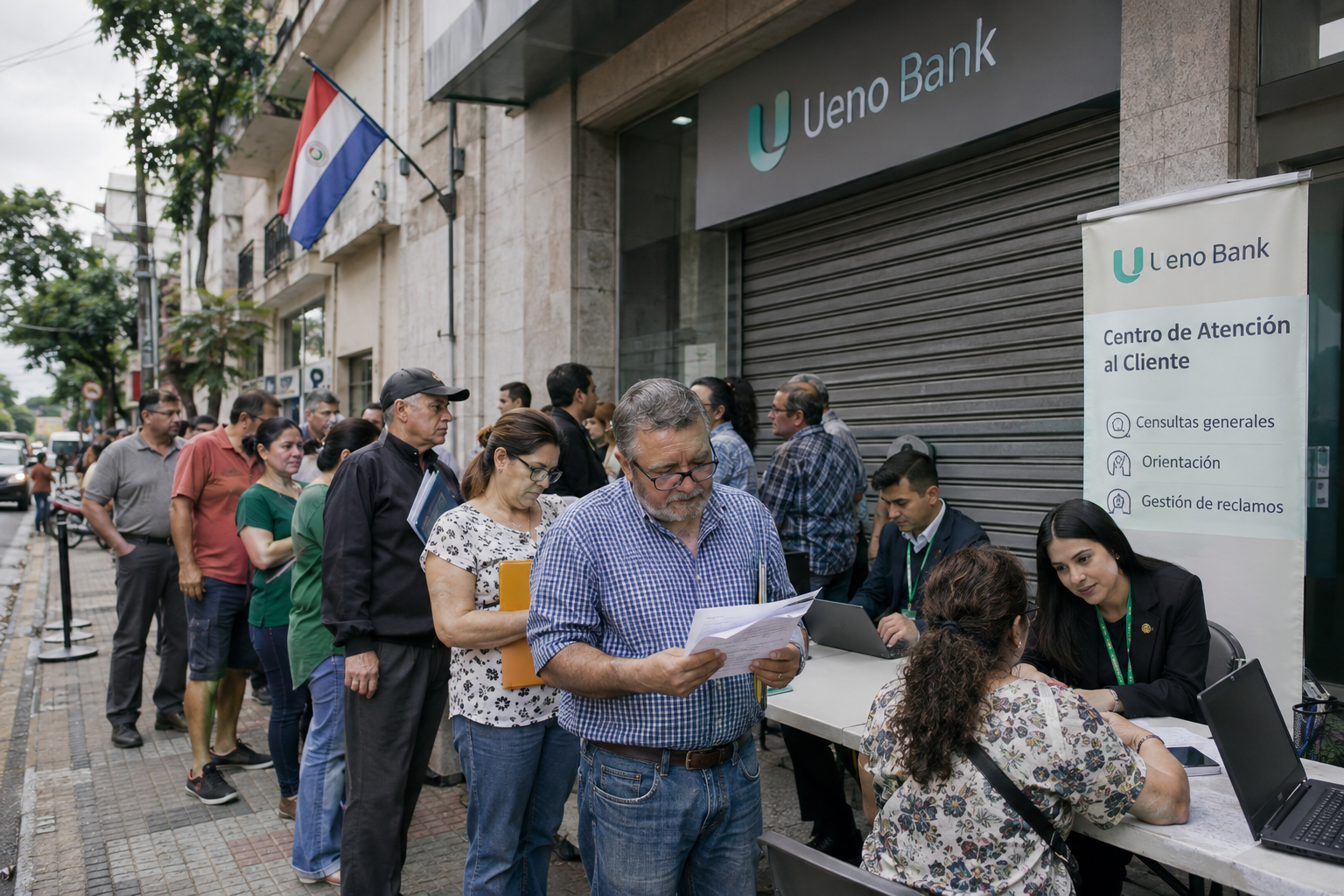
The collapse of Ueno Bank disrupted daily life across Paraguay, leaving millions unable to access their money and triggering a political crisis. The bank said it served 2.9 million customers—about 60% of the country’s adult population—while the Central Bank counted roughly 1.8 million depositors. By Saturday, nearly 1.2 million customers had received an advance through the state deposit-guarantee fund, but many remained without access to their funds. Customers and demonstrators described the hardship and a wider loss of trust in the banking system, including students whose frozen money was needed for bus fares and food.
Ueno began as a fintech in 2021 and became a bank in 2023, growing rapidly through digital services, marketing and cashback promotions. The failure raised questions about its finances and oversight, especially because Paraguay’s Social Security Institute had invested about $355 million in it. Economist and former finance minister Manuel Ferreira questioned the bank’s assets and highlighted loans to companies linked to its controlling owners, Grupo Vásquez—including $146 million lent to three companies.
The scandal also centered on President Santiago Peña’s financial and political connections to Ueno’s parent company. Peña had held shares in Ueno Holding and appointed former Ueno leader Carlos Carvallo to head the Central Bank. Prosecutors allege Peña used his office to influence public entities to keep deposits at the bank. He resigned, was removed by the Senate, and was charged with breach of trust and administration for personal gain; he pleaded not guilty and was ordered into pretrial detention. Carvallo and eight Ueno executives were also arrested and charged. Vice President Pedro Alliana succeeded Peña until the end of the term in August 2028.
The events exposed a power struggle within the ruling Colorado Party. Former president and influential party figure Horacio Cartes had backed Peña’s political rise, but their relationship had deteriorated. After the collapse, Cartes called for an investigation, and his faction supported Peña’s removal—widely interpreted as a withdrawal of political protection and a move to reassert Cartes’ influence.
Entities: Ueno Bank, Santiago Peña, Pedro Alliana, Horacio Cartes, Carlos Carvallo • Tone: analytical • Sentiment: negative • Intent: inform
09-11-2026
Paraguayan President Pedro Alliana has nominated economist Jorge Schreiner to lead the country’s central bank amid continuing fallout from the intervention in digital lender ueno. Schreiner previously served on the central bank’s board for two years, until 1999, and headed the securities commission for a decade, ending in 2013. His appointment must be approved by Congress.
Alliana said the nomination is intended to strengthen the central bank’s institutional framework and restore public confidence. The bank’s intervention in ueno and the lender’s collapse have precipitated a major political and financial crisis. The fallout included the departure of central bank chief Carlos Carvallo and the removal of former President Santiago Peña. Peña was impeached by Congress on grounds of poor performance, in a proceeding connected to his alleged links to the bank; the article notes that he had resigned a day before the trial found him guilty. Prosecutors have charged both Peña and Carvallo over alleged ties to ueno, and both were placed in pretrial detention.
The collapse has left millions of customers struggling to access their accounts and has contributed to social and political turbulence in Paraguay. Separately, Alliana said he had received a call from US Secretary of State Marco Rubio, during which they reaffirmed their countries’ commitment to continued cooperation. The article reports the nomination and its political context but does not provide further details about Schreiner’s policy plans or the congressional approval process.
Entities: Pedro Alliana, Jorge Schreiner, Carlos Carvallo, Santiago Peña, Marco Rubio • Tone: analytical • Sentiment: negative • Intent: inform