09-11-2026
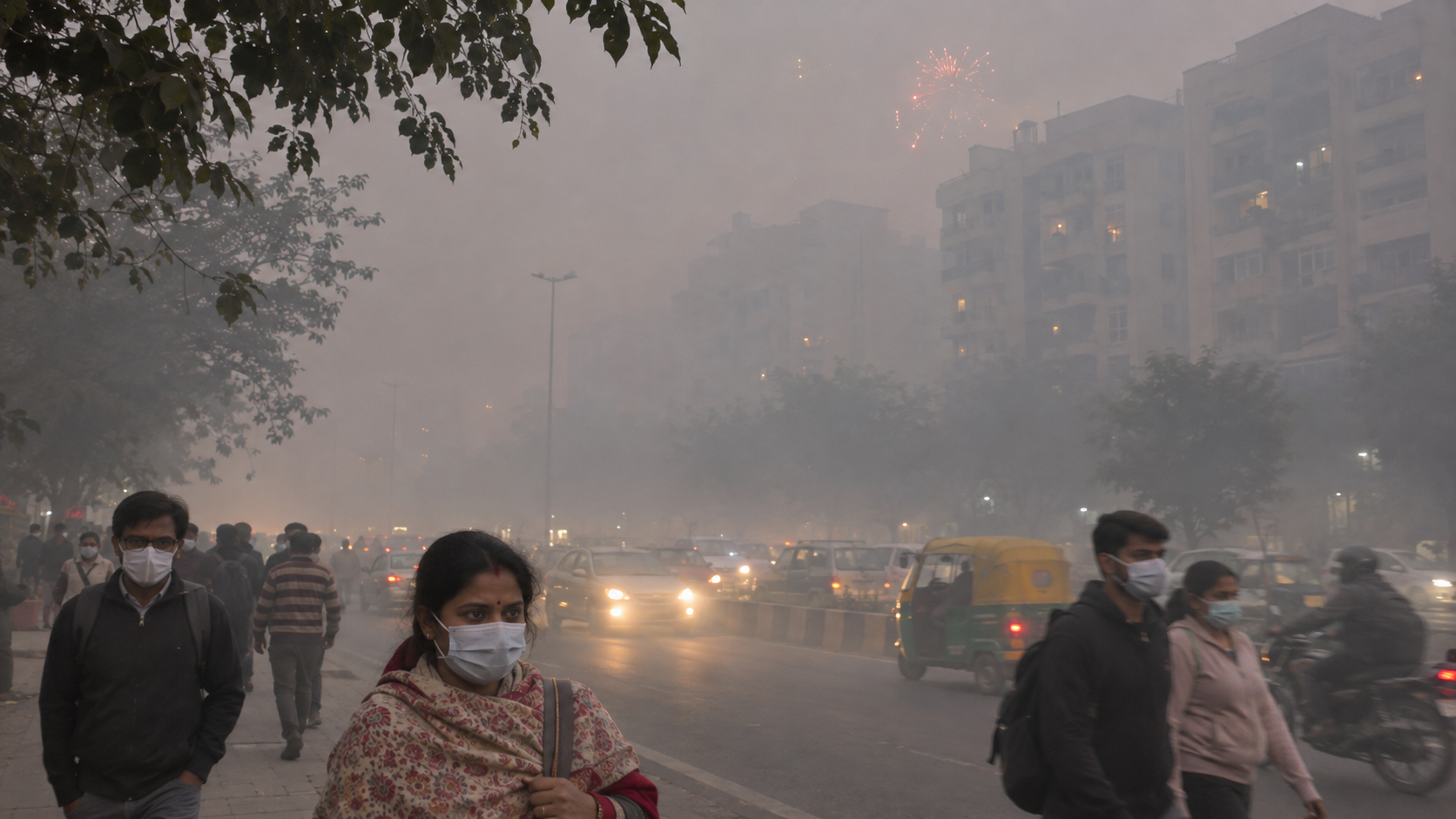
The report says New Delhi woke to thick smog after fireworks were set off across the city during Diwali celebrations overnight. By Monday, air pollution had reached severe levels: the article reports an air quality index (AQI) of 400 in parts of the city, a level it describes as severe. The brief item connects the post-celebration smog with the fireworks, but provides no further measurements, health guidance, official response, or comments from residents or authorities. It is presented as a short Al Jazeera Newsfeed report published on 9 November 2026. The article’s main focus is the hazardous air pollution reported in the city after the festivities.
Entities: New Delhi, Diwali, fireworks, toxic smog, air pollution • Tone: urgent • Sentiment: negative • Intent: inform
09-11-2026
New Delhi was covered by heavy smog on Monday morning after residents celebrated Diwali with firecrackers, despite restrictions intended to curb pollution. The fireworks released smoke and fine particulate matter into the atmosphere, adding to the city’s severe seasonal air pollution. Air Quality Index readings exceeded 350 in several parts of the capital, a level described as “severe” and associated with significant health risks when considered against World Health Organization exposure guidance.
India’s Supreme Court had imposed restrictions ahead of the festival, permitting only approved “green firecrackers” under specified conditions and within three-hour windows on Saturday and Sunday. These fireworks produce fewer emissions than conventional crackers but are not pollution-free. Residents nevertheless set off firecrackers throughout Sunday evening.
The article places the post-Diwali smog in the context of a broader annual pollution crisis. In the days before the festival, monitoring data showed toxic air pollution in New Delhi rising to more than 30 times the WHO’s recommended daily limit. The city, home to about 30 million people, is persistently ranked among the world’s most polluted capital cities. Winter conditions—including cooler temperatures, low wind speeds and stagnant air—make matters worse by preventing pollutants from dispersing, allowing haze to linger over the capital and surrounding areas for days.
According to India’s Ministry of Environment, Forest and Climate Change, vehicles account for 23 percent of New Delhi’s winter pollution, while biomass burning, including farm stubble fires, contributes 20 percent. The article thus presents Diwali fireworks as an additional source of pollution within a larger, recurring problem driven by multiple emissions sources and seasonal weather conditions.
Entities: New Delhi, India, Diwali, Air Quality Index (AQI), World Health Organization (WHO) • Tone: neutral • Sentiment: negative • Intent: inform
09-11-2026
France 24 reports that a thick blanket of smog covered India’s capital, New Delhi, on Monday, November 9, 2026, following Diwali celebrations. Firecrackers had lit up the skies during the festival, adding to pollution levels that were already described as dangerously high. The report says the post-celebration smog compounded the seasonal air-pollution crisis that affects the city every year. The article’s central point is the immediate worsening of Delhi’s air conditions after the festivities, against the backdrop of a recurring seasonal problem. It does not provide measurements of air quality, identify specific pollutants, report health effects, or describe responses by authorities. The supplied page presents the report as a short video, with a listed duration of 1 minute and 40 seconds; the available written article consists of a brief description. Accordingly, the report establishes a connection between firecracker use during Diwali and the already severe pollution, but offers no further detail on the scale of the change or its consequences. Its focus is on the smog and the continuing seasonal crisis rather than on individual experiences or policy proposals.
Entities: New Delhi, Delhi, India, France 24, Diwali • Tone: urgent • Sentiment: negative • Intent: inform