09-11-2026
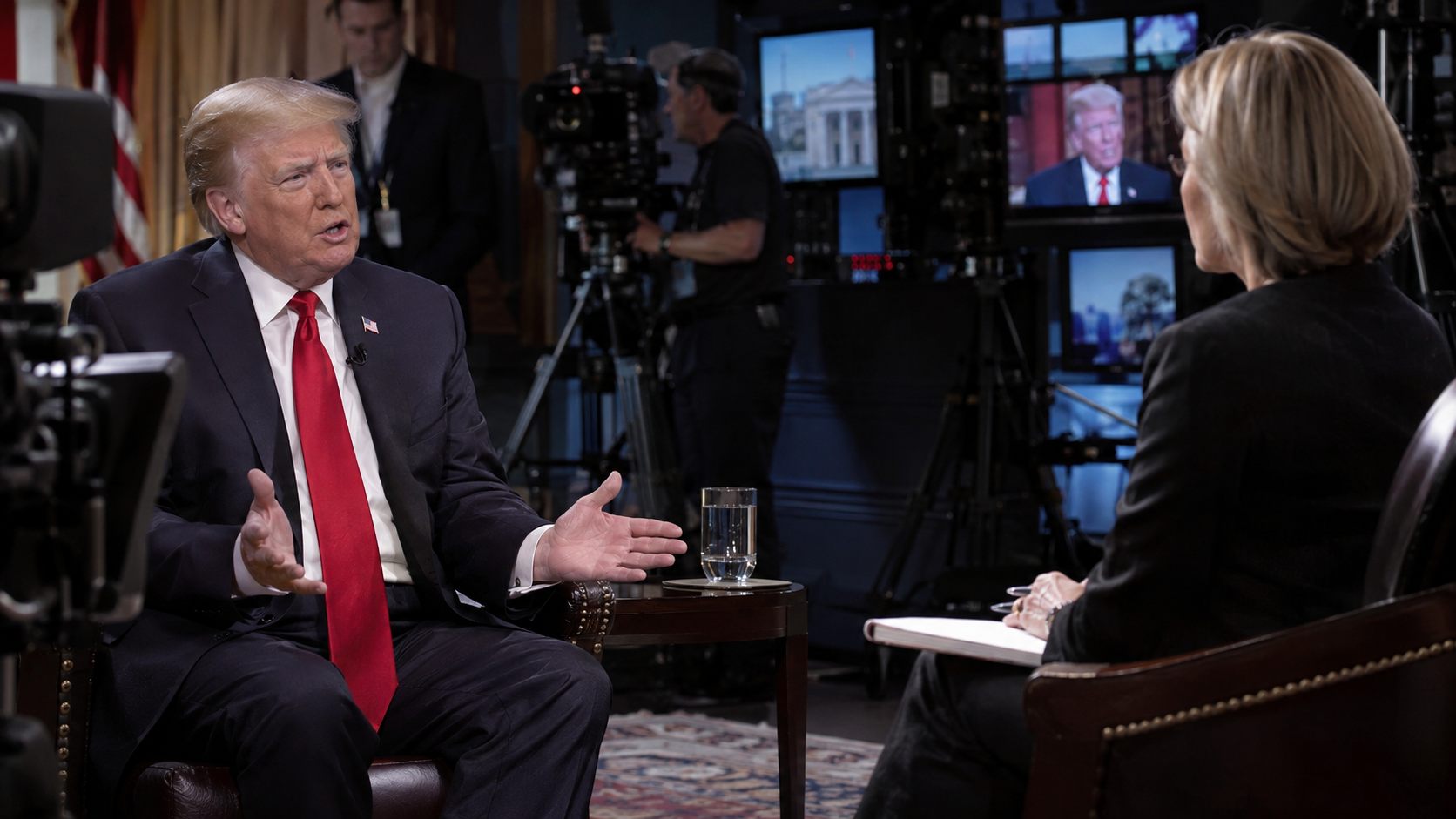
President Donald Trump said his administration’s deportation policy had been “too tough” and suggested that the aggressive immigration crackdown may have contributed to Republicans’ losses in the midterm elections. He made the comments in an interview with CBS’s “60 Minutes,” which aired on Sunday. The article describes Trump’s second term as involving large immigration enforcement operations in multiple US cities, where Immigration and Customs Enforcement (ICE) agents pursued and arrested people suspected of being in the country illegally.
The article also highlights the human consequences of those operations. Two US citizens, Renee Good and Alex Pretti, were fatally shot by ICE agents during protests, and dozens of people who were legally in the country—including US citizens—were reportedly detained unfairly. It further notes that a major element of the administration’s deportation approach involved sending people to countries other than their own. About 25,000 noncitizens deported from the United States had been transferred to countries in Africa, Asia, Central America, and the Caribbean.
Trump maintained that people in the country illegally who are “killers” or “drug dealers” should be deported, while indicating that he might support allowing others to remain if they are working and paying taxes. He also expressed openness to negotiating an immigration agreement with Democrats in the new Congress. However, after recording the interview, Trump named Stephen Miller—identified in the article as the architect of the immigration policy—as White House chief of staff. The article presents this appointment alongside Trump’s remarks, underscoring a contrast between his openness to reconsidering aspects of the policy and his decision to elevate a central figure associated with it.
Entities: Donald Trump, Stephen Miller, Renee Good, Alex Pretti, United States • Tone: neutral • Sentiment: negative • Intent: inform
09-11-2026
US President Donald Trump said his administration’s deportation policy may have been too harsh for voters, and suggested that he could work with Democrats in the new Congress on an immigration agreement. In an interview with CBS, his first major interview since Republicans lost control of both chambers of Congress in the midterm elections, Trump acknowledged that the policy may have contributed to the defeat. He offered no details about what a deal might include. Shortly after the interview, he appointed Stephen Miller, a key designer of the administration’s hardline deportation policy, as his chief of staff. The article notes that the administration had aggressively pursued the deportation of millions of undocumented immigrants, drawing widespread criticism.
The article also reports Trump’s comments about two other matters. He said he had been joking when he urged UFC president Dana White to become White House press secretary, despite a social media post asking White to take the job. White, a longtime Trump friend, had not publicly accepted or rejected the offer and said he would have more to discuss after meeting Trump.
Finally, Trump said he expected to meet Chinese President Xi Jinping and Russian President Vladimir Putin at an APEC leaders’ summit in China, with discussions potentially covering the Iran war and denuclearization. Russia had said preparations were underway for a trilateral meeting. Trump also said he believed a deal to end the Russia-Ukraine war was close, but provided no details and described the outcome as leaving Ukraine in a “little bit different shape.”
Entities: Donald Trump, Stephen Miller, Dana White, Xi Jinping, Vladimir Putin • Tone: analytical • Sentiment: neutral • Intent: inform
09-11-2026
In his first major interview since Republicans lost control of both the House and Senate in the midterm elections, President Donald Trump said his administration may have taken an overly aggressive approach to deportations. Speaking to CBS’s “60 Minutes” in an interview broadcast on Sunday, Trump acknowledged that the policy could have been “too tough” and identified it as one possible reason for the Republican losses. He also said he believed he could work with Democrats in the new Congress on some form of immigration agreement. France 24’s Douglas Herbert is introduced as examining Trump’s remarks and their implications. The supplied article text does not include Herbert’s further analysis, additional details of a proposed deal, or responses from Democrats; it consists mainly of a brief description of the interview and Trump’s quoted assessment.
Entities: Donald Trump, Douglas Herbert, CBS, 60 Minutes, France 24 • Tone: analytical • Sentiment: neutral • Intent: inform
09-11-2026
In a CBS News interview conducted after the 2026 midterm elections, President Donald Trump discussed the Republican Party’s losses and several major policy issues. He acknowledged that the war with Iran may have contributed to the setback, agreeing with Vice-President JD Vance’s assessment, while defending the decision to confront Tehran on the grounds that Iran must not be allowed to obtain a nuclear weapon. Trump also cited rising petrol prices and growing dislike of Israel among factors that may have affected voters.
On immigration, Trump conceded that his administration’s deportation policy “might be too tough.” He said voters supported border security and the removal of criminals, but that deporting people who had established lives and jobs in the United States had caused concern. He expressed openness to working with Democrats on a compromise that could let some long-term residents in fields such as hospitality and landscaping stay legally, while continuing to deport people involved in serious crimes and drug dealing. He said he would even refrain from insulting Democratic lawmakers for six months to help reach an agreement.
Trump maintained that Iran’s nuclear material was buried and that the Strait of Hormuz remained open. He argued that US forces had protected allies and that those countries should eventually reimburse Washington for the war’s costs. On Russia’s war against Ukraine, he predicted a near-term settlement, attributed the obstacle to hostility between Vladimir Putin and Volodymyr Zelenskyy, and claimed he could bring the conflict to an end. He suggested Ukraine would have a “little bit different shape” after a settlement and defended his record of pressure on Russia.
Trump said he might make some Cabinet changes despite expressing satisfaction with his team, and voiced confidence in Defence Secretary Pete Hegseth. He also described artificial intelligence as a critical competition with China, supporting safeguards but warning that excessive regulation could put the United States at a disadvantage.
Entities: Donald Trump, JD Vance, Vladimir Putin, Volodymyr Zelenskyy, Pete Hegseth • Tone: analytical • Sentiment: neutral • Intent: inform