24-09-2026
French President Emmanuel Macron denied reports that the CIA had warned France of a possible Russian drone operation targeting southern Europe. The claim appeared in an article published Thursday by Spanish newspaper El Mundo, which said the CIA had alerted Spain, France and Italy to a potential operation. In a joint interview broadcast by France 2 and TF1, Macron said the CIA had not provided France with such information and noted that Italy’s defence minister had also rejected the report. Guido Crosetto described the newspaper’s alarm as unconfirmed and cautioned that it could add unnecessary tension during an already difficult period.
Macron nevertheless warned that Russia’s broader hybrid campaign against Europe posed a real concern. He referred to a drone attack at Leipzig/Halle Airport on the night of 4–5 August 2026, which German authorities attributed to Russia. France had not experienced a comparable attack, he said, but he considered one possible. Macron also called a Russian attack against Europe “plausible” and said there had been signs that Moscow was preparing for such actions. He characterized Europe as the strategic heart of Ukraine for Russia.
Addressing speculation about Russian mobilisation, Macron said a new call-up of roughly 300,000 personnel was a credible scenario. He interpreted such a mobilisation as evidence that Moscow might be willing to make greater sacrifices in an effort to capture the whole Donbas. At the current pace, he estimated that Russia would need another year and a half to two years to seize the parts of the region it does not control, with severe losses and suffering for Ukraine.
Entities: Emmanuel Macron, Guido Crosetto, Central Intelligence Agency (CIA), France, Italy • Tone: analytical • Sentiment: neutral • Intent: inform
24-09-2026
French President Emmanuel Macron said France would send “military means” to help protect Saudi Arabia’s Yanbu oil terminal from attacks by Yemen’s Iran-backed Houthi movement. The article says Saudi Arabia has been using Yanbu, on the Red Sea, to export oil after Iran blockaded the Strait of Hormuz. It does not specify what forces or equipment France will deploy, when they will arrive, or the details of the protection mission.
The report appears as a short item within FRANCE 24’s coverage of events around the United Nations. It also recaps several developments from the previous day: Syrian President Ahmed al-Sharaa asserted that the Golan Heights would remain Syrian despite Israel’s ongoing military occupation; Iranian President Masoud Pezeshkian accused the United States of terrorism in Iran and said his country would not yield; and Ukrainian President Volodymyr Zelensky said Vladimir Putin had recruited fighters from 47 countries, including North Korea, Ghana and India, to fight against Ukraine. The recap further notes that leaders of major artificial-intelligence companies called for caution, warning that increasingly autonomous systems could advance beyond human oversight.
Overall, the item provides a concise update on a security move related to oil exports and regional conflict, alongside a brief roundup of diplomatic and technology-related statements at the UN. It reports the claims and announcements without offering further verification, detailed analysis, or a direct response from the Houthis, Iran, or Saudi Arabia.
Entities: Emmanuel Macron, France, Saudi Arabia, Yanbu, Red Sea • Tone: neutral • Sentiment: neutral • Intent: inform
24-09-2026
French President Emmanuel Macron said the CIA had not informed French intelligence services of possible Russian drone attacks, rejecting a report by Spanish newspaper El Mundo that the agency had warned European governments about the threat. In a primetime interview with TF1 and France 2 on September 24, Macron nevertheless warned that Russia was carrying out increasingly hostile acts against European countries and that France could face attacks like an attempted drone strike on Leipzig airport in Germany. He said he had ordered a government plan to protect critical infrastructure from drone and cyberattacks, and accused Moscow of trying to intimidate Europe and weaken its support for Ukraine. Russia denies responsibility for alleged hybrid attacks, calling the accusations baseless and a product of anti-Russian hysteria.
Macron also announced that France would send soldiers, radar systems and other defence equipment to Saudi Arabia to protect the Red Sea port of Yanbu, an important energy transport hub. He stressed that the deployment was intended to protect the site, not draw France into a conflict. The announcement comes amid missile attacks by Yemen’s Iran-backed Houthis on routes used to transport Saudi oil, and a recent surge in crude prices. With French households concerned about high energy costs ahead of winter, Macron said France had adequate gas and oil supplies and was working to prevent disruptions.
The interview also covered a possible US ban on diesel exports, which the White House has denied is under consideration. Macron called such a ban “catastrophic” for both the global economy and the United States. The article notes that his position on Russia was complicated by France’s recent role in obtaining an exemption from EU sanctions for Russian-Uzbek metals tycoon Alisher Usmanov, citing national security concerns. The decision angered other EU members and was followed by Azerbaijan’s pardon of a French national imprisoned for espionage.
Entities: Emmanuel Macron, Central Intelligence Agency (CIA), El Mundo, France, Saudi Arabia • Tone: analytical • Sentiment: neutral • Intent: inform
24-09-2026
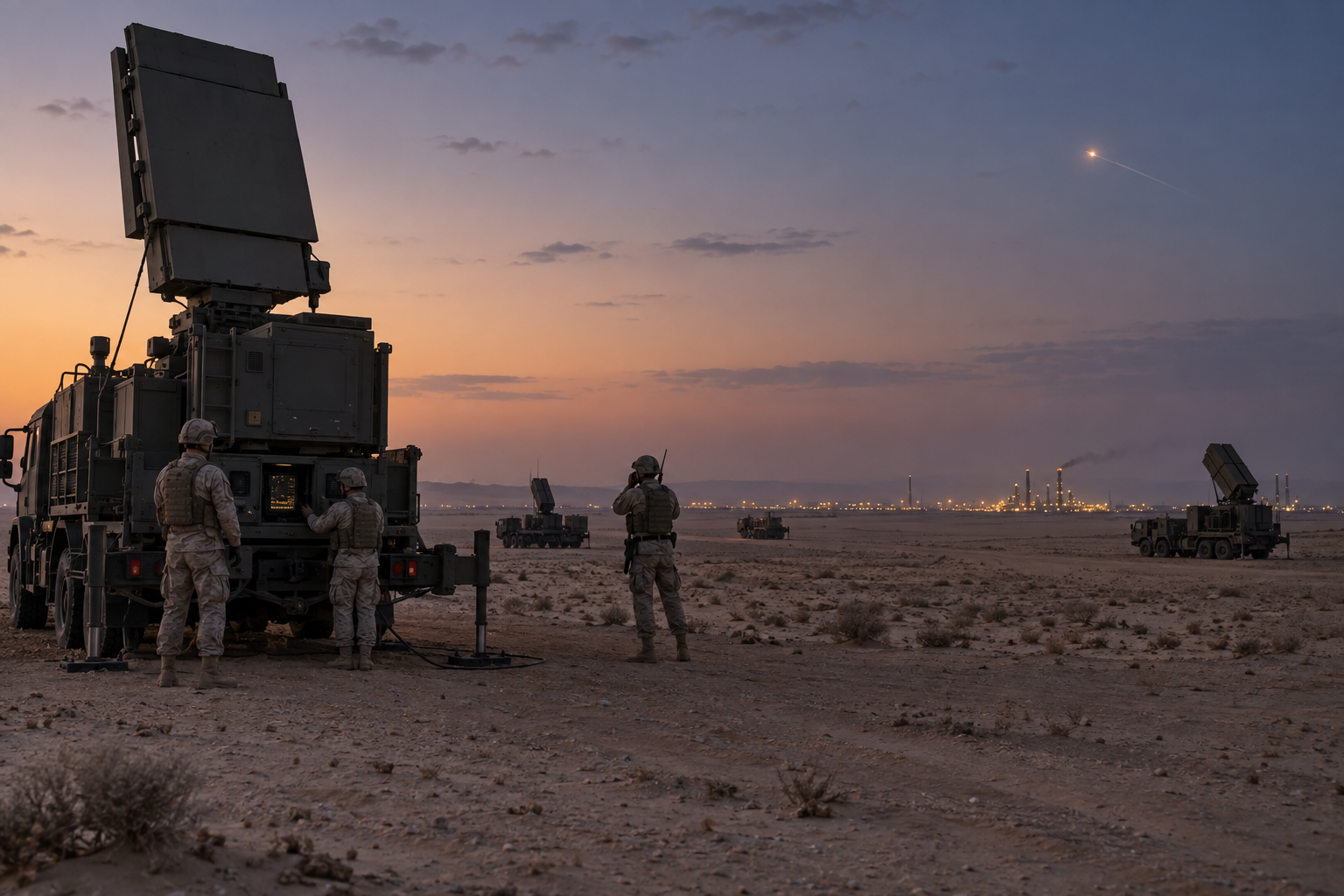
A Greek-operated air defence system in Saudi Arabia intercepted a ballistic missile and a drone on Thursday in the wider Yanbu region, according to Greek security sources cited by Reuters. Yanbu is home to major oil-refining facilities. One source said the Greek Patriot system launched two missiles and brought down both targets; the sources did not identify where the drone or ballistic missile came from. A second source confirmed the interception.
Earlier that day, Saudi civil defence had issued alerts warning of potential danger in several parts of the country: Mecca, Tabuk, the Red Sea areas of Jeddah and Yanbu, and Taif in the south. The report does not say whether those alerts were directly connected to the intercepted weapons or whether there was damage or injury.
The interception was the fifth combat use of the Greek-operated system since the United States and Israel launched their war with Iran at the end of February, the article reports. It presents the event as evidence of an expanding military role for European allies in protecting Gulf energy infrastructure. Greece has deployed a US-made Patriot air-defence battery in Saudi Arabia since 2021 under an agreement to help safeguard the kingdom’s energy facilities. The system is operated by Greek military personnel.
Entities: Greek military personnel, Saudi Arabia, Yanbu, Mecca, Tabuk • Tone: analytical • Sentiment: neutral • Intent: inform