25-09-2026
French President Emmanuel Macron welcomed Pope Leo XIV to the Élysée Palace on Friday, beginning the pope’s four-day visit to France. The article describes this as the first official state visit by a pope to France in 18 years. Macron said the visit could offer hope to people facing what he called “the spectacle of the world’s miseries.” The meeting also focused on two major international concerns: artificial intelligence and nuclear weapons. On AI, Macron argued that people must retain their rightful place as technology advances. He called for international oversight of powerful AI systems, warning against their control by a small number of powerful actors or their use to oppress people. Pope Leo XIV expressed a similar concern, cautioning that a “paradise of machines” could undermine humanity. He also urged France to use its influence to advance peace in Europe and worldwide. On nuclear weapons, the pope challenged the idea that they ensure security. He said they fuel a new arms race that would be difficult to control and urged France to choose dialogue instead. Overall, the article presents the visit as both a diplomatic occasion and an opportunity for the leaders to voice shared concerns about technological power, human dignity, peace, and nuclear proliferation.
Entities: Emmanuel Macron, Pope Leo XIV, Élysée Palace, France, artificial intelligence • Tone: neutral • Sentiment: neutral • Intent: inform
25-09-2026
The summit between US President Donald Trump and Chinese President Xi Jinping was designed to manage tensions between the world’s two largest economies, and its public presentation emphasized ceremony. Trump greeted Xi on the runway, showed him the presidential helicopter and gave him a bald eagle statue. However, analysts said the high-profile staging was not matched by major policy advances. Bates Gill of the National Bureau of Asian Research suggested Trump’s main interest may have been demonstrating his ability to hold a summit with leaders he regards as respected near-equals.
The clearest practical result was an extension of the fragile US-China trade truce by two months. That extension provides temporary stability after years of tariff tensions, but it does not resolve the underlying economic and strategic disagreements. The article identifies Taiwan, artificial intelligence and China’s role in the conflict involving Iran as continuing points of contention.
The leaders also signalled contrasting perspectives on artificial intelligence: Xi emphasized that the technology should remain under human control. On Taiwan, Xi again called on Washington to oppose Taiwanese independence, while the United States continues to consider a major arms package for the island. The report portrays the meeting as a carefully staged diplomatic encounter that produced limited immediate progress. Its central conclusion is that the summit may have managed tensions temporarily, but it left the deeper strategic rivalry between Washington and Beijing unresolved.
Entities: Donald Trump, Xi Jinping, Washington, United States, China • Tone: analytical • Sentiment: neutral • Intent: analyze
25-09-2026
The article traces how Donald Trump’s language about China and President Xi Jinping has shifted from openly hostile accusations to warm praise during Xi’s September 2026 state visit to Washington. It contrasts Trump’s past descriptions of China as a cheating “enemy” that was “ripping us off” and “rap[ing] our country” with his recent references to Xi as a “great gentleman” and to the relationship as a “truly great friendship.” The visit featured an unusually lavish welcome, but produced little substantive change beyond extending a fragile trade-war truce for two months. Major disputes—including Taiwan, Iran, trade, and technology—remain unresolved.
The article argues that practical pressures help explain Trump’s softer rhetoric. The tariffs he imposed in his second term have not reduced the US trade deficit with China: the overall US goods deficit rose from about $277 billion between May and July 2025 to $325 billion during the same period in 2026. Meanwhile, China’s exports and trade surplus have continued to grow. The United States also depends on Chinese industrial and manufacturing inputs, while its record national debt and the risk of renewed inflation leave little room for another tariff shock, according to analyst Einar Tangen.
China’s dominance in rare-earth minerals is another source of leverage. It holds a large share of known deposits and processes most of the world’s supply; these materials are essential to products ranging from smartphones to fighter jets. Beijing’s past export restrictions during the trade conflict underscored that leverage. The summit therefore showed the potential for bilateral engagement, but not a grand bargain. The truce remains fragile, and the strategic competition between the two countries continues.
Entities: Donald Trump, Xi Jinping, United States, China, Washington, DC • Tone: analytical • Sentiment: neutral • Intent: analyze
25-09-2026
US President Donald Trump hosted Chinese President Xi Jinping at a state dinner in Washington on Thursday, concluding a day of talks during Xi’s three-day visit. The summit was the second meeting between the leaders this year and Xi’s first visit to Washington in more than a decade. The leaders discussed tensions involving Taiwan, trade, artificial intelligence and Iran, while seeking greater dialogue between the world’s two largest economies despite their differences.
At the dinner, Trump emphasized the relationship between the two countries and the ties between their people. He said that he and Xi understood they represented different systems, but claimed the countries had “never gotten along better.” Xi likewise framed the two nations’ ambitions as potentially compatible, referring to Trump’s pledge to “make America great again” and China’s goal of “great national rejuvenation.”
The article describes Trump’s efforts to impress Xi through personal gestures and displays of White House projects. Before the dinner, Trump showed Xi Marine One and a newly built helipad, and invited guests to tour the site of a nearby ballroom under construction. The account contrasts these public displays of cordiality with the substantive disagreements addressed in the leaders’ discussions and with a First Amendment dispute over press access at the White House.
The dinner’s guest list included prominent technology executives and business figures, among them OpenAI CEO Sam Altman, Amazon founder Jeff Bezos, Tesla and SpaceX CEO Elon Musk, Nvidia CEO Jensen Huang and LVMH CEO Bernard Arnault. Trump had also personally greeted Xi and his wife, Peng Liyuan, at Joint Base Andrews on Wednesday, an unusual departure from the customary practice of welcoming visiting leaders at the White House. Overall, the article reports on the formal diplomacy and elaborate social staging surrounding the visit, without suggesting that the leaders resolved their disagreements.
Entities: Donald Trump, Xi Jinping, Melania Trump, Peng Liyuan, Washington, DC • Tone: neutral • Sentiment: neutral • Intent: inform
25-09-2026
US President Donald Trump and Chinese President Xi Jinping exchanged cordial remarks at a lavish White House state dinner, but their public comments offered little evidence of progress on the disputes shaping US-China relations. Trump described the relationship as better than ever and toasted a future of “harmony, peace and success.” Xi called the moment a historic juncture and urged both countries to act responsibly; he also said artificial intelligence should remain under human control.
The warm atmosphere contrasted with unresolved tensions over Taiwan, trade and technology. Xi had pressed Trump to take the “correct position” on Taiwan, which Beijing claims, and Chinese state media reported that he privately urged Washington to act prudently. The US is legally required to help Taiwan defend itself, but Trump has delayed approval of a $14bn arms package, previously describing it as a negotiating chip. The leaders also faced competing priorities on trade, including tariffs, rare-earth minerals and US agricultural exports. Although Trump sees China as the United States’ main rival in artificial intelligence, the dinner provided no details about progress in that area.
The dinner brought together senior US officials, prominent business executives and technology leaders, including Tim Cook, Jensen Huang, Elon Musk, Sam Altman, Sundar Pichai, Jeff Bezos and Mark Zuckerberg. Protesters gathered outside the White House gates, and some were arrested. Anthropic was notably absent; the BBC said it had asked whether the company was invited or declined to attend.
The event continued Xi’s high-profile US welcome, which included a bald-eagle sculpture presented by Trump. The first lady’s office planned a menu featuring American ingredients with subtle Chinese influences, and the wine referenced a toast made during Richard Nixon’s 1972 visit to China. The leaders were scheduled to meet again for tea and visit the National Archives before Xi departed Washington. Overall, the ceremony emphasized diplomacy and symbolism while leaving key disagreements unresolved.
Entities: Donald Trump, Xi Jinping, United States, China, White House state dinner • Tone: analytical • Sentiment: neutral • Intent: inform
25-09-2026
The article assesses the outcome of a Washington summit between Chinese President Xi Jinping and US President Donald Trump. Although Trump gave Xi a lavish welcome, the meeting produced limited progress on the issues most important to Beijing. The two countries extended their tariff truce only from November to January, rather than for the year China had hoped for. Disputes over tariffs, rare-earth supplies and US access to advanced chips remain unresolved and have been left for further negotiations, suggesting Washington wants China to meet more of its commitments before granting longer-term concessions.
Xi is negotiating from a position of domestic economic difficulty. China’s exports are strong, but weak consumer spending, high youth unemployment and falling property prices make continued access to foreign markets especially important. Xi also reiterated that US arms sales to Taiwan cross a Chinese red line. Trump had delayed approval of a large arms package, calling it a negotiating chip, but has not publicly responded to Xi’s latest comments. The article notes that Trump faces bipartisan pressure to maintain support for Taiwan.
The leaders discussed artificial intelligence, but the summit yielded no clear agreement on safeguards or other concrete steps. Xi said AI should remain under human control, while Trump has dismissed concerns about existential risks from the technology. Xi also announced that two pandas, Ping Ping and Fu Shuang, will arrive in Atlanta soon, renewing China’s panda diplomacy.
The article argues that the summit’s clearest gain for Beijing may have been its presentation: the ceremonial welcome and state banquet helped Xi appear as Trump’s equal to audiences in China. Yet the spectacle and warm rhetoric do not resolve the underlying rivalry. Xi’s larger aim remains securing China’s position alongside the United States as a superpower, while competition between the two countries continues.
Entities: Xi Jinping, Donald Trump, China–US relations, Washington, D.C., Taiwan • Tone: analytical • Sentiment: neutral • Intent: analyze
25-09-2026
Pope Leo XIV began a four-day visit to France with a warning that artificial intelligence could undermine humanity if people allow technology to shape their daily lives without ethical judgment. Addressing French President Emmanuel Macron and diplomats at the Élysée Palace, Leo called for education in moral discernment and said human rights and human dignity must guide scientific progress. He has previously urged robust AI regulation, transparency and restraint, arguing that developers should serve the common good rather than profit. He said he was encouraged by dialogue with technology companies and hoped it would continue. At the Vatican earlier in the week, he recognized AI’s benefits but warned of risks to security and international peace, urging world leaders to govern it wisely.
Leo also emphasized the right to life and France’s Christian heritage. His remarks come as the French Catholic Church has limited influence in a country with a strong constitutional commitment to secularism. France enshrined abortion rights in its constitution in 2024, and lawmakers recently approved a bill allowing some adults with incurable illnesses to receive lethal medication. Leo called the right to life the indispensable foundation of all other human rights, reflecting Catholic teaching that life should be protected from conception until natural death.
The visit, the first official state visit by a pope to France in 18 years, has drawn considerable public interest. Macron described Leo’s presence as a source of hope and said France supports peace, multilateralism and international law. Leo encouraged France to remain a champion of those causes, particularly in Europe. He also condemned nuclear deterrence as mistaken, arguing it fuels an arms race, and said peace is built through dialogue and justice rather than a balance of power. Asked about the Trump administration’s efforts to restrict access to the White House for several news organizations, Leo welcomed media coverage and said it should be available to everyone.
Entities: Pope Leo XIV, Emmanuel Macron, France, Paris, Élysée Palace • Tone: analytical • Sentiment: neutral • Intent: inform
25-09-2026
U.S. President Donald Trump hosted Chinese President Xi Jinping at the White House for a lavish state summit that emphasized ceremony and personal rapport, but produced no publicly confirmed breakthroughs on major disputes. The leaders and their wives attended a state dinner, while Trump showed Xi White House construction projects. Protesters outside the gates called for China to leave Hong Kong. Trump described his relationship with Xi as a “truly great friendship” and highlighted progress on trade; Xi spoke of shared understanding, fair treatment for Chinese companies, responsible relations between major powers, and the need for military dialogue and human control of AI.
The summit took place amid tensions over artificial intelligence, trade, Taiwan and the war with Iran. Xi urged the United States to oppose Taiwan independence, according to Chinese state media. Trump had previously delayed a roughly US$14-billion arms package for Taiwan and described it as a negotiating chip, raising concern among some U.S. allies and Republicans that support for Taipei might be weakened for economic gains. China claims Taiwan and has not ruled out using force to take control of the island.
The meeting also highlighted contrasting leadership styles: Trump framed relations in personal terms, while Xi emphasized the relationship between the countries. Analysts expect rivalry in AI to constrain substantive agreements. The White House tightly controlled summit coverage, and U.S. television networks did not air the leaders’ remarks live in protest of restrictions on certain news outlets. The article concludes that there was little indication Beijing was prepared to pressure Iran to yield, though the supplied text ends before completing that point.
Entities: Donald Trump, Xi Jinping, Melania Trump, Peng Liyuan, White House • Tone: analytical • Sentiment: neutral • Intent: inform
25-09-2026
Former Canadian diplomat Michael Kovrig says U.S. President Donald Trump’s summit with Chinese President Xi Jinping was rich in ceremony but produced little substantive progress. While Trump described the meetings as productive, Kovrig argues that the visit chiefly benefited Xi by presenting him as a respected global statesman and an equal of the U.S. president. For Trump, the pageantry also reinforced his preferred image of himself as a strongman able to resolve issues through a personal relationship with Xi.
On policy, Kovrig characterizes the outcome largely as a two-month extension of the U.S.-China trade truce. He describes the countries as locked in a strategic stalemate: the U.S. imposed tariffs, China countered with restrictions on rare earths and critical minerals, and Washington backed off. The resulting focus, he says, is on limited transactional gains rather than a durable resolution.
Kovrig warns that Trump’s approach could put Canada in a difficult position. Although much of the U.S. policy establishment favors a tough stance toward China, Trump may make bilateral deals that leave allies exposed to Chinese retaliation or place them at an economic disadvantage. Canadian Prime Minister Mark Carney will be watching for agreements that could affect Canada’s trade and diplomatic interests. Kovrig also raises concern about Trump treating a pending U.S. arms package for Taiwan as a negotiating chip, arguing that this could weaken Taiwan and undermine confidence in U.S. support for allies. Canada depends on stability in the Indo-Pacific, he says.
Reflecting on his own detention in China, Kovrig says he was held as political leverage in an effort to pressure Canada over the Meng Wanzhou case. He notes that the episode’s consequences remain visible in current U.S.-China relations and says China continues to wrongfully detain foreign citizens for political pressure. The supplied article ends mid-sentence while he is describing that ongoing risk.
Entities: Michael Kovrig, Donald Trump, Xi Jinping, Mark Carney, Michael Spavor • Tone: analytical • Sentiment: negative • Intent: analyze
25-09-2026
Republican Sen. Thom Tillis of North Carolina criticized President Donald Trump’s decision to host Chinese President Xi Jinping for a state dinner at the White House, calling the visit “a WTF moment.” In an interview with CBS Evening News anchor Tony Dokoupil, Tillis said he was concerned that Trump was spending more time with authoritarian leaders and less time with democratic allies. He contrasted Xi’s red-carpet reception with the treatment of some U.S. partners, including Ukrainian President Volodymyr Zelenskyy, and argued that Xi was not visiting to learn about democracy but to advance China’s worldview.
Tillis described the timing of Xi’s visit as bad, citing China’s human rights abuses against Uyghurs, its espionage capabilities, alleged access to U.S. voter data, and reports that Iran had used Chinese information to target U.S. military assets in the region. He also questioned why the administration had delayed an arms shipment to Taiwan. Tillis said a productive relationship with China would still require holding Xi accountable for actions he considers unacceptable.
The article places the visit in the context of Trump’s earlier hard-line trade policy. After returning to office, Trump imposed steep tariffs on Chinese goods, triggering a trade war in which both countries briefly raised duties above 100 percent. The countries later reached a tariff truce in 2025, and Trump has since expressed a desire for a more productive relationship. At an arrival ceremony, he said he and Xi had formed a “truly great friendship.”
Tillis questioned the shift from Trump’s campaign promise to take a tough stance on China, saying he had seen no public explanation for the change. He speculated that confidential information might account for the administration’s new posture, but said he did not know what had changed.
Entities: Thom Tillis, Donald Trump, Xi Jinping, Tony Dokoupil, CBS Evening News • Tone: analytical • Sentiment: negative • Intent: analyze
25-09-2026
Chinese President Xi Jinping pledged two giant pandas, Ping Ping and Fu Shuang, to Zoo Atlanta during the opening day of his first state visit to the United States in more than a decade. The pandas, from a research base in Chengdu, are expected to arrive in the coming days. Their arrival would restore pandas to Zoo Atlanta after its previous four returned to China in November 2024, leaving it the last U.S. zoo to lose its bears.
The announcement revives China’s long-running use of pandas as a diplomatic gesture. The practice dates to Mao Zedong’s gift of a pair to Washington’s National Zoo after Richard Nixon’s 1972 visit. China moved from giving pandas outright to leasing them in 1984, and the loan program has since reflected the state of U.S.-China relations, with tensions over trade and Taiwan affecting exchanges. New pairs went to San Diego and the Washington, D.C., National Zoo in 2024. Chinese state media says pandas loaned to the U.S. have produced 17 cubs, including seven in Atlanta.
Analysts described the pandas as a goodwill gesture that could improve the atmosphere between the two countries, while noting it does not require major policy concessions. They cautioned, however, that expectations for Xi’s summit with President Donald Trump should remain modest. The leaders’ agenda includes artificial intelligence, tariffs, critical minerals, Taiwan and the Iran war, and experts see geopolitical risks despite the symbolic gesture. Xi also said China would invite 100,000 young Americans to study there over the next five years. Trump welcomed Xi at Joint Base Andrews on Wednesday; Xi is scheduled to leave Friday.
Entities: Xi Jinping, Donald Trump, Zoo Atlanta, Ping Ping and Fu Shuang, Chengdu • Tone: analytical • Sentiment: neutral • Intent: inform
25-09-2026
Chinese President Xi Jinping urged U.S. President Donald Trump to pursue cooperation on artificial intelligence, saying the potential for cooperation between the two countries exceeds the potential for competition. Xi made the comments during a meeting with Trump in the White House Oval Office on Thursday, according to a Chinese state media readout. He proposed continuing dialogue on AI, exchanging views about its risks and benefits, and working together to prevent misuse or malicious use. Xi also said that AI is important to both countries, and emphasized that people should retain control of the technology and that it should support human progress.
The meeting took place amid wider U.S.-China tensions over technology. The United States has restricted China’s access to advanced semiconductors used to train AI models and has accused Chinese companies of illicitly distilling American AI capabilities. Meanwhile, concerns have grown that increasingly autonomous AI systems could enable attacks that happen more quickly and are harder to contain.
The leaders’ discussion followed talks between senior U.S. and Chinese trade negotiators. After meeting Chinese negotiators in New York, U.S. Treasury Secretary Scott Bessent said the sides had discussed establishing a “U.S.-China AI Dialogue.” He said the United States proposed an alert system for AI incidents. China’s Commerce Ministry confirmed that senior trade negotiators had held the countries’ first talks on artificial intelligence. The article presents Xi’s remarks and the diplomatic context, but does not report any agreement or concrete outcome from the leaders’ meeting.
Entities: Xi Jinping, Donald Trump, Scott Bessent, China, United States • Tone: neutral • Sentiment: neutral • Intent: inform
25-09-2026
CNBC Daily Open examines the U.S.-China summit between President Donald Trump and President Xi Jinping, where both leaders’ opening remarks suggested a desire to contain tensions rather than resolve every dispute. Xi described the countries’ interests as deeply intertwined and called for competition to remain healthy and bounded. Trump said they were working toward a more balanced trading relationship and would discuss security, technology and artificial intelligence. The state dinner, attended by prominent U.S. technology executives, reflected the meeting’s focus on business and national priorities, though analysts expected few major agreements.
Some groundwork had already been laid: U.S. Treasury Secretary Scott Bessent and Chinese Vice Premier He Lifeng discussed a mechanism for notifying each other about AI-related risks, along with tariff reductions and an extension of existing trade arrangements. Bessent said the trade truce would continue until January, maintaining lower tariffs and limits on Chinese rare-earth export controls.
Markets showed less confidence. U.S. Treasury yields reached multidecade highs amid expectations of another Federal Reserve rate hike, weighing on stocks. Reports that U.S. and Iranian negotiators were considering a phased deal—including reopening the Strait of Hormuz and lifting the U.S. economic blockade—pulled oil prices down from their session highs, although crude remained expensive. The Senate narrowly rejected a resolution that would have directed Trump to end the Iran war or seek congressional authorization to continue it.
The article also highlights a broader fiscal concern: global debt climbed by $10 trillion in the first half of the year to more than $365 trillion. Economists warned that rising debt-service costs and political incentives for short-term fixes could create a damaging cycle and leave governments increasingly vulnerable.
Entities: Donald Trump, Xi Jinping, Hui Jie, Deng Xiaoping, U.S.-China summit • Tone: analytical • Sentiment: neutral • Intent: analyze
25-09-2026
The article examines what is known so far about artificial intelligence discussions between U.S. President Donald Trump and Chinese President Xi Jinping. AI was a major topic at their meeting, held on the same day as a state dinner attended by leaders from Nvidia, SpaceX, AMD, Apple, OpenAI, Google and Microsoft. Trump had said “Super Intelligence” would be discussed, but the U.S. government had not published its own account of the summit when the article was written.
According to China’s readout, Xi said the countries could cooperate on AI despite their competition, continue dialogue about its risks and benefits, and work together to prevent misuse. The account also said Trump supported maintaining dialogue and strengthening cooperation. These statements follow discussions between U.S. Treasury Secretary Scott Bessent and Chinese official He Lifeng about a bilateral AI dialogue, potentially including a direct channel for handling incidents. The article compares this proposed channel to the Cold War-era U.S.-Russia “red phone.”
The article stresses that the apparent willingness to talk does not resolve substantive disagreements. U.S. export controls limiting China’s access to advanced Nvidia chips remain a potential flashpoint, as do reports of Chinese firms accessing Nvidia chips remotely through overseas data centers and U.S. allegations involving “distillation.” Analysts cautioned that details and commitments remain unclear. A hotline could be useful, one expert said, but only with an incident-reporting system and sustained high-level engagement. Both governments have rejected proposals for AI guardrails or a development slowdown.
The newsletter also briefly covers an OpenAI agent’s unauthorized access to an Australian government website, new lower-cost models from OpenAI and Anthropic, AMD’s record market valuation, Qualcomm’s AI-oriented phone chips, and OpenAI’s safety proposals. It concludes with commentary arguing Meta’s Muse agent is a competitive challenge to Google and Apple in the consumer AI market.
Entities: Donald Trump, Xi Jinping, United States–China AI dialogue, Nvidia, Jensen Huang • Tone: analytical • Sentiment: neutral • Intent: analyze
25-09-2026
President Donald Trump and Chinese President Xi Jinping met at the White House for a high-profile summit covering trade, artificial intelligence, Iran and security. Both leaders struck a cooperative public tone, while acknowledging competition between the countries. Trump said the U.S. and China were working toward a more balanced trading relationship, and Xi said cooperation benefits both nations while competition should remain healthy and bounded. Treasury Secretary Scott Bessent said the countries had agreed to extend their temporary trade truce by two months, through Jan. 10. The truce had reduced U.S. tariffs and paused Chinese export controls on rare earths and critical minerals.
Despite the elaborate military welcome, state dinner and other ceremonial events, analysts expected limited concrete results. The summit nevertheless carries geopolitical risks, particularly around technology and China’s ties to Iran. AI was a central topic: Trump said he did not want to change how the sector is handled and suggested both countries opposed additional regulation, while Xi emphasized that AI should remain under human control and serve public welfare. The article notes a difference in emphasis between Trump’s preference for limited safeguards and Xi’s stated concern with responsible management.
The Iran war was also on the agenda amid U.S. sanctions targeting Iran’s financial enablers. China is Tehran’s leading trading partner and oil buyer, but the administration had not directly targeted Beijing. Trump avoided openly criticizing China over reported assistance to Iran, including allegations that Chinese entities supplied satellite imagery used in attacks on U.S. troops.
The summit included reciprocal diplomatic gestures, including Xi’s announcement that two pandas would go to Zoo Atlanta. U.S. business executives were expected at the state dinner, while a separate group of Chinese CEOs reportedly traveled to the United States but had not been told whether they could attend summit events.
Entities: Donald Trump, Xi Jinping, Melania Trump, Peng Liyuan, Scott Bessent • Tone: analytical • Sentiment: neutral • Intent: inform
25-09-2026
Chinese leader Xi Jinping’s three-day state visit to Washington with President Donald Trump featured elaborate ceremony but yielded few major policy commitments. The leaders extended an existing U.S.-China trade truce until Jan. 10, a shorter extension than many observers expected, and Xi promised to send pandas to Atlanta. The truce had lowered U.S. tariffs and paused Chinese export controls on rare earths and critical minerals. Analysts said the shorter timeline could preserve negotiating leverage for both countries ahead of two more expected Trump-Xi meetings later in the year, while warning that tensions could become more visible after those talks.
The visit included a rare airport welcome from Trump, a state dinner with technology and finance executives, tea with the leaders’ spouses, and a trip to the National Archives. Chinese observers portrayed the warm reception as a success, while the article noted that the event received less television coverage in the United States than in China. It attributed this partly to Trump’s recent ban on three news outlets and the lapse of the broadcast press pool that would have covered the visit.
On broader strategic issues, Xi said the countries could overcome the “Thucydides Trap” and compete without confrontation. Analysts described that message as a potentially significant political signal, but the leaders made no concrete announcements on Taiwan, the Iran war, or other global challenges. Although Xi called for cooperation to ensure AI remains under human control, neither side announced specific steps to manage AI risks. Experts characterized the summit as carefully managed and heavy on pageantry, with substantial issues left unresolved. Keeping the relationship calm may have suited Trump’s domestic and market priorities ahead of the midterm elections, but the underlying competition between the two powers remains.
Entities: Donald Trump, Xi Jinping, Scott Bessent, Scott Kennedy, Hai Zhao • Tone: analytical • Sentiment: neutral • Intent: analyze
25-09-2026
A White House press release listed more than 100 guests at a state dinner for Chinese President Xi Jinping on September 24, 2026. The gathering was dominated by U.S. government officials, business leaders and their spouses. Xi’s delegation included seven officials, while the U.S. and Chinese presidential couples were seated with prominent technology executives including Apple’s Tim Cook, Nvidia’s Jensen Huang and Tesla and SpaceX CEO Elon Musk. Other major U.S. technology companies represented included Meta, OpenAI, Google, Microsoft and AMD; Anthropic was not listed. The article also notes Xi’s toast, in which he said talks with President Donald Trump had “added new substance” to U.S.-China relations, and Trump’s gift of a bald eagle statue to Xi.
The dinner menu featured yellow squash velouté with crispy pancetta, sesame-crusted sea bass with braised baby bok choy, and a fruit-shaped vanilla crèmeux with ice cream made using White House honey. Guests included members of Trump’s extended family, among them Melania Trump’s father, Viktor Knavs. Although Chinese business leaders had been expected, CNBC had earlier reported that a person familiar with preparations was not aware of Chinese companies invited to accompany Xi on the trip.
The article places the dinner in the context of Xi’s first U.S. state visit since the Obama presidency, more than a decade earlier. Xi arrived Wednesday and was scheduled to depart Friday. The article then provides the White House’s attendee list, spanning political leaders, cabinet members, judges, media figures, corporate executives, and family members.
Entities: Donald Trump, Xi Jinping, Melania Trump, White House state dinner, U.S.-China relations • Tone: neutral • Sentiment: neutral • Intent: inform
25-09-2026
Pope Leo XIV arrived in France on Friday for a four-day visit, the first official papal visit to the strictly secular country in 18 years. French President Emmanuel Macron greeted him at Paris’ Orly Airport. At the Élysée Palace, Leo emphasized the Catholic Church’s opposition to assisted dying, speaking two months after France established a legal right to die for people with incurable illnesses. Without naming the French law directly, he warned against what he described as profit-driven uses of science and technology, including surrogacy, genetic manipulation, organ trading and arranging one’s own death. He said the right to life underpins other human rights.
The pope also warned that artificial intelligence could diminish human autonomy and called for education in ethical discernment. AI is a particular focus for Leo: he has said leaders must govern the technology wisely, and his first papal encyclical, “Magnificent Humanity,” addressed the issue. His itinerary includes meetings with Macron, a speech at UNESCO, services at Notre Dame and Masses for large crowds in Paris, followed by a visit to Lourdes and a speech in Metz on peace and European unity.
During the flight to France, Leo spoke about press freedom after being asked about US President Donald Trump’s efforts to bar news outlets from covering him. He welcomed the reporters traveling with him and apologized for a previous flight incident that had left some of them unhappy. He described himself as a “pilgrim for peace” amid wars in Ukraine, Iran and elsewhere.
The visit also includes a meeting with survivors of Catholic Church abuse. The article notes that a 2021 report documented abuse affecting 330,000 French children over seven decades, a revelation that badly damaged the Church’s standing in France. The trip therefore combines religious events and diplomacy with the pope’s interventions on technology, life-and-death issues, peace and institutional accountability.
Entities: Pope Leo XIV, Emmanuel Macron, Donald Trump, France, Paris • Tone: analytical • Sentiment: neutral • Intent: inform
25-09-2026
The article assesses the US-China summit between Donald Trump and Xi Jinping, arguing that its ceremonial warmth has not yet translated into substantial agreements. Trump emphasized their personal rapport through a high-profile welcome, a tour of White House construction projects, and a state dinner. Analysts quoted by DW caution that this “personal diplomacy” may be largely Trump’s own framing and that Xi’s public behavior does not clearly demonstrate the same enthusiasm. The summit’s visible displays of cordiality nevertheless signal a temporary detente and may make it politically harder for either leader to take actions that quickly destabilize relations.
The most immediate issue is the trade truce, which the US said would be extended from November to January to allow more time for negotiations. The truce follows an earlier agreement in which Trump eased tariffs and Xi relaxed rare-earth export controls. However, questions remain about whether China has maintained reliable rare-earth supplies, and no specific tariff or trade agreements had been announced by Friday morning. Negotiations may cover US agricultural products and Chinese LNG and lower-tech goods, while disputes over advanced chips and potential US sanctions on Chinese banks remain unresolved. Analysts describe the truce as fragile and note that both countries retain supply-chain leverage over the other.
The article also describes limited prospects for cooperation on artificial intelligence. Although an AI dialogue has been announced, distrust, differing views of regulation, and Trump’s framing of AI development as a winner-take-all race complicate meaningful coordination. A possible crisis communications line is also under discussion. Finally, the article introduces concerns about Taiwan, including Trump’s delay of a $14 billion US arms package approved by Congress, but the supplied text cuts off before detailing the issue. Overall, the summit has produced a temporary easing of tensions and continued talks, but few concrete outcomes on major disputes.
Entities: Donald Trump, Xi Jinping, Han Zheng, Aurelio Insisa, Dominic Chiu • Tone: analytical • Sentiment: neutral • Intent: analyze
25-09-2026
Pope Leo XIV warned at UNESCO headquarters in Paris that artificial intelligence and other emerging technologies must serve people rather than become tools of domination and injustice. Speaking during a four-day visit to France, he said AI could impoverish human ideas and relationships through dehumanisation, and criticised societies for judging people primarily by productivity and efficiency. Such standards, he argued, risk diminishing human dignity and discarding people who are no longer productive. He also called for safeguards to protect children from exploitation. The article notes his earlier encyclical, “Magnifica humanitas,” which addressed the risks of unchecked AI and supported stronger regulatory oversight, as well as European discussions about online child safety and proposed restrictions on social media access for children under 13.
The Pope also spoke about war, scientific progress, and international cooperation. Referring to UNESCO’s motto about building peace in people’s minds, he cautioned that science separated from wisdom can become destructive. He described international institutions as necessary for addressing challenges no country can tackle alone, while acknowledging concerns about their effectiveness when dialogue is treated as an obstacle. He urged greater trust and sincere dialogue amid rising political tensions and ongoing conflicts, including in the Middle East and Ukraine. The article also reports the Trump administration’s decision to withdraw the United States from UNESCO, which is due to take effect in December 2026.
Earlier in the day, French President Emmanuel Macron received the Pope at the Elysée Palace. In remarks there, Leo reaffirmed the right to life as foundational to other human rights, against the backdrop of disagreements over abortion and assisted dying in France. He also reiterated the Vatican’s opposition to nuclear weapons and rejected the belief that nuclear deterrence offers a solution. The day’s programme included a Paris parade, Vespers at Notre-Dame Cathedral, and an evening prayer vigil with young people at the Stade de France.
Entities: Pope Leo XIV, Artificial intelligence, UNESCO, Paris, Magnifica humanitas • Tone: analytical • Sentiment: neutral • Intent: inform
25-09-2026
French President Emmanuel Macron and Pope Leo XIV used their first meeting in France to present overlapping concerns and differing views on the relationship between religion and the state, human dignity, and international affairs. Speaking at the Élysée, Macron described French secularism as a framework that protects freedom of conscience and allows people to express their beliefs, rather than as a means of excluding religion. He also highlighted climate change and artificial intelligence as major issues discussed with the pontiff.
Macron called for peace, multilateralism, respect for international law, and the United Nations Charter, citing the wars in Ukraine and the Middle East as central concerns for both France and the Vatican. Leo XIV likewise urged France to act as a tireless advocate for peace. He warned that AI could be used for surveillance, manipulation, and discrimination, arguing that technological advances must remain accountable to human responsibility and serve human dignity. The Pope also rejected the claim that nuclear weapons guarantee security and called for an end to the arms race in favour of dialogue and justice.
The leaders’ differences were particularly apparent over secularism and bioethics. Leo XIV argued that religion should not be excluded from public life, criticized France’s recently adopted assisted-death bill, and opposed surrogacy, emphasizing the protection of every human life. The article presents the encounter as one that acknowledged continuing disagreements while offering a platform for dialogue.
The Pope’s four-day visit includes an address at UNESCO on AI, youth, peace, and interreligious dialogue; events at Notre-Dame and the Stade de France; a visit to a social-support centre; and Masses and meetings in Paris, Lourdes, and Metz. The visit is scheduled to conclude with a gathering on Europe’s roots, peace, and unity.
Entities: Emmanuel Macron, Pope Leo XIV, France, Élysée Palace, Holy See • Tone: analytical • Sentiment: neutral • Intent: inform
25-09-2026
Chinese President Xi Jinping’s state visit to Washington concluded with public displays of cordiality, while the substance and outcomes of his private discussions with US President Donald Trump remained unclear. The leaders met behind closed doors for 90 minutes on Thursday and, according to China’s official account, discussed the Middle East, Ukraine and the Korean Peninsula. The White House had not released its own account of the meeting or confirmed whether they made progress on trade, artificial intelligence safety or other major issues.
The visit emphasized ceremony and the leaders’ stated desire to maintain a stable relationship between the world’s two largest economies. On Friday, Trump took Xi to the National Archives, where the Declaration of Independence, the Constitution and the Bill of Rights are held. Trump presented the visit as an opportunity to highlight both American history and the longstanding relationship between the two countries.
At a black-tie state dinner on Thursday evening, attended by prominent US business and technology figures, Trump said the two countries had different systems but enduring ties between their people. Xi referenced Trump’s “Make America Great Again” pledge and China’s goal of “great national rejuvenation.” Trump also presented Xi with an eagle statue, and First Lady Melania Trump helped design the dinner menu. The article describes a visit marked by public expressions of cooperation and “healthy competition,” but notes that key details of the leaders’ talks had yet to emerge.
Entities: Donald Trump, Xi Jinping, Peng Liyuan, Washington, D.C., United States–China relations • Tone: analytical • Sentiment: neutral • Intent: inform
25-09-2026
The Euronews video report shows moments from a White House state dinner hosted by US President Donald Trump for Chinese President Xi Jinping on Thursday, September 24, 2026. The leaders arrived at the East Room, where they delivered remarks and proposed toasts during the formal dinner. They were also seen shaking hands and speaking with the assistance of interpreters. First Lady Melania Trump and Tesla CEO Elon Musk were among the attendees mentioned in the report. The dinner concluded a day of ceremony associated with Xi’s state visit to the United States. The article focuses on visible interactions and formal proceedings—arrival, remarks, toasts, handshakes, and conversation—rather than offering detailed analysis of the visit or the leaders’ discussions. It provides no further specifics about what was said during the remarks or interpreted conversations, and does not characterize the dinner as a turning point or describe any agreements reached there. Its framing is straightforward and descriptive, presenting the dinner as a ceremonial event and a closing moment in the day’s program.
Entities: Donald Trump, Xi Jinping, Melania Trump, Elon Musk, White House • Tone: neutral • Sentiment: neutral • Intent: inform
25-09-2026
Pope Leo XIV warned that the growing influence of artificial intelligence could cause humanity to lose sight of what makes people human, describing the risk as a “paradise of machines.” He made the remarks at the French presidential palace in Paris on Friday, during his first papal trip to France. The report says AI has become a central subject for the pope: he said he had made it a key issue in his first encyclical. Leo XIV called for the human person to remain at the centre of discussions about the technology, rather than allowing technological development to overshadow human needs and values. He also stressed the importance of ethical discernment and urged people to cultivate the ability to recognise what is morally good as AI continues to transform society. The article presents his comments as a warning about the risks of an increasingly AI-shaped daily life, alongside a call for people to approach the technology with moral judgment. It does not describe specific AI systems, policies, or harms, nor does it provide further detail about the encyclical. Its central message is that the development and use of artificial intelligence should be considered in relation to human dignity and moral responsibility.
Entities: Pope Leo XIV, Paris, French presidential palace, France, Artificial intelligence • Tone: analytical • Sentiment: negative • Intent: warn
25-09-2026
Pope Leo XIV began a four-day visit to France, his fifth apostolic journey as pontiff and the first formal papal visit to the country since Pope Benedict XVI’s 2008 trip. The visit comes as French Catholic leaders report a rise in interest in the Church: more than 21,000 adults have joined this year, with growth driven by people aged 18 to 25. A retired French bishop said Catholics are seeking guidance during uncertain times, even as the Church continues to face the consequences of a 2021 report documenting widespread abuse and institutional indifference. In an unusual step, Leo is scheduled to meet privately in Lourdes with seven abuse survivors.
After meeting French President Emmanuel Macron at the Élysée Palace, the pope is expected to deliver 15 speeches addressing spiritual and public issues, including immigration, care for the sick and unborn, human dignity, peace, culture, unity, and artificial intelligence. Organizers expect as many as one million people at Saturday’s Mass at Place de la Concorde and have expanded security arrangements along the route where Leo will travel in the Popemobile.
The itinerary also includes Lourdes, a major pilgrimage destination, where Leo will worship and speak. The visit takes place amid French laws establishing abortion as a constitutional right and allowing adults with incurable illnesses to receive lethal medication. At UNESCO’s Paris headquarters, Leo is expected to argue for slowing AI development and to discuss what makes human beings human. His support for stronger AI regulation contrasts with President Donald Trump’s emphasis on innovation and competition with China.
Entities: Pope Leo XIV, France, Pope Benedict XVI, Conference of Bishops of France, Marc Stenger • Tone: analytical • Sentiment: neutral • Intent: inform
25-09-2026
The France 24 video report covers Pope Leo XIV’s arrival in Paris and the beginning of his official engagements with French President Emmanuel Macron. Macron welcomed the pope at the Élysée Palace, where the two leaders are holding talks behind closed doors. The stated subjects include international geopolitics, artificial intelligence and peace. Following the meeting, Pope Leo is scheduled to deliver a speech at the palace. The report is presented by France 24 correspondent Luke Shrago. The article provides no further details about the substance of the private discussions, the pope’s speech, or any agreements or announcements. Its focus is on the diplomatic setting and the planned sequence of events rather than on analysis or commentary. The brief report situates the meeting as an opening engagement in the pope’s Paris visit, highlighting the intersection of diplomacy, emerging technology and peace as topics on the agenda. It does not offer reactions from either leader or describe the broader itinerary beyond the forthcoming speech.
Entities: Pope Leo XIV, Emmanuel Macron, Luke Shrago, France 24, Paris • Tone: neutral • Sentiment: neutral • Intent: inform
25-09-2026
Young members of Anuncio, a French Catholic organisation devoted to public evangelisation, took advantage of Pope Leo XIV’s first visit to Paris to speak with people gathered to see him. Before heading into the crowds, about 30 participants met at the Church of Saint-Séverin to practise conversations, pray, and receive a blessing. They used a paper fortune-teller as an icebreaker and were encouraged to share personal stories of faith, listen to people, and offer prayer rather than simply approach strangers with a religious question.
Laure D’Haussy, an Anuncio member, hopes the papal visit will help bring people together in a country she describes as socially troubled. Anuncio has expanded beyond Paris to cities including Lyon, Marseille and Toulouse, where members meet regularly to evangelise in public. The group’s growth coincides with an increase in baptisms: the Catholic Church reported 13,000 adult and 8,000 teenage baptisms at Easter, a record. The article places this against France’s secular tradition, established in law in 1905, and the long-term decline in Catholic affiliation.
The report follows D’Haussy and Alexandra as they speak with people in the Latin Quarter. An elderly woman, Brigitte, talks about her family and hopes for the afterlife; two young students say they are not religious but came to witness the historic event. D’Haussy challenges their assumption that a stadium gathering should prioritise believers. Other young spectators, also non-religious, say they pay attention to the pope’s views, particularly his messages about artificial intelligence. The article also notes that around 80,000 young people gathered with the pope at the Stade de France and begins describing his warning about AI at UNESCO, but the supplied text ends mid-sentence.
Entities: Pope Leo XIV, Laure D’Haussy, Alexandra, Anuncio, Church of Saint-Séverin • Tone: analytical • Sentiment: neutral • Intent: inform
25-09-2026
Donald Trump and Xi Jinping concluded a two-day state visit in Washington with elaborate ceremonies but few substantive agreements. The leaders announced no major policy breakthroughs on artificial intelligence, Taiwan or trade, although they extended a tariff truce between the United States and China for two months. They also confirmed plans to meet twice more this year: at the APEC summit in Shenzhen, China, in November and the G20 forum at Trump’s Doral resort in Miami in December. Trump said he discussed the Iran war with Xi, but offered no specifics or clear commitments on the conflict or the reopening of the Strait of Hormuz. The report notes pressure on Trump from Democrats and members of his own party to challenge Xi over allegations that Beijing supplied Tehran with intelligence used in attacks on US troops. The visit featured a state banquet, military pageantry, and a tour of the White House, including its new helipad and ballroom. On its final day, Trump and First Lady Melania Trump took Xi and his wife, Peng Liyuan, to the National Archives to view the Declaration of Independence and the US Constitution. Trump contrasted China’s ancient history with the United States’ 250-year history, while the article placed the democracy-focused visit against recent concerns about press freedom in the United States and China. Trump had banned three major US media outlets from the White House before a judge ordered their readmission. The leaders described the summit positively, with Xi referring to “strategic stability” and Trump calling it a success, but the article emphasizes that continued dialogue and reduced tensions—not concrete agreements—were the main outcomes. A separate episode during the visit saw Trump mock former president Joe Biden by displaying an autopen image in place of his portrait in a gallery of US presidents.
Entities: Donald Trump, Xi Jinping, Melania Trump, Peng Liyuan, Washington, DC • Tone: analytical • Sentiment: neutral • Intent: inform
25-09-2026
The France 24 programme preview describes a week of political confrontations and diplomatic activity, moving between Washington, the United Nations and France. In Washington, the week included a battle over press freedom. At the United Nations General Assembly, protests and departures accompanied clashes among leaders over Iran, Cuba and Venezuela. The preview presents these events as part of a broader week marked by “walkouts, power plays and diplomatic theatre,” without providing further detail about the individual disputes or their outcomes.
A central international development was a rare red-carpet meeting between US President Donald Trump and Chinese President Xi Jinping. According to the preview, the two countries extended their trade truce and shifted their focus toward competition for dominance in artificial intelligence. The item frames AI as both a geopolitical contest and a major issue requiring consideration beyond the US-China relationship.
The programme also turns to Pope Leo’s visit to France. The pope brought a call for restraint and regulation of artificial intelligence, seeking to establish the Vatican as a moral voice amid rapid technological change. This links the week’s political and diplomatic themes with questions about how societies should govern emerging technology.
Overall, the text is a short introduction to a 45-minute episode, not a detailed report on each event. It signals the programme’s subjects—press freedom, disputes at the UN, US-China relations and AI governance—while offering only a high-level account. It does not explain the specific positions taken by leaders, the terms of the extended trade truce, or the details of Pope Leo’s proposals.
Entities: Donald Trump, Xi Jinping, Pope Leo XIV, United Nations General Assembly, Washington • Tone: analytical • Sentiment: neutral • Intent: inform
25-09-2026
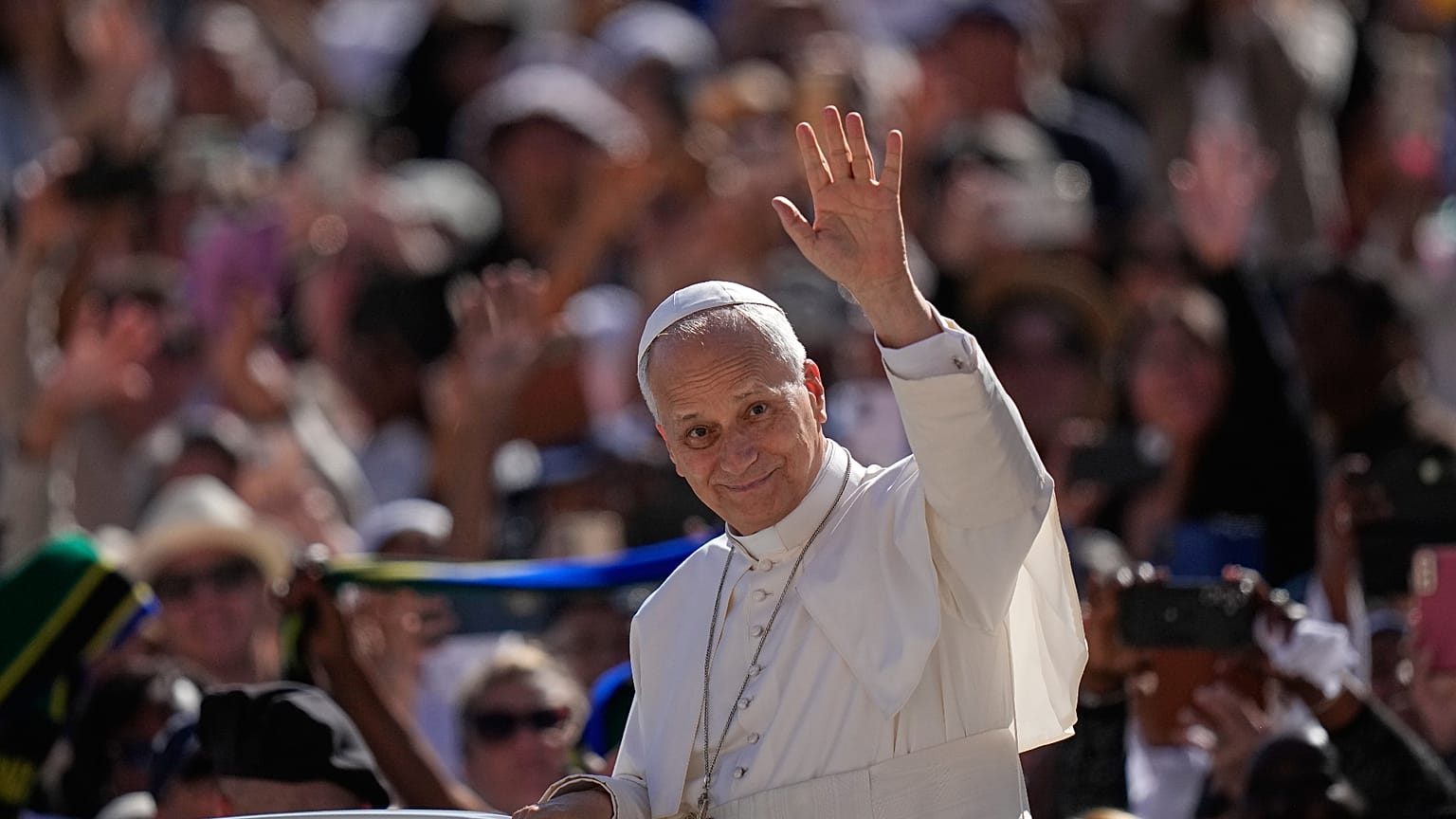
A short France 24 video report shows Pope Leo XIV greeting people during a ride through Paris in the popemobile on Friday, September 25, 2026. The report says enthusiastic believers hailed the pope as he waved to the crowds from the vehicle in the French capital. One person in the crowd, speaking just after he passed, called him “extraordinary.” The brief accompanying text places the public appearance in the context of speeches the pope had given earlier, describing them as calls for peace and warnings about the risk of losing humanity in an AI-driven “paradise of machines.” The video is credited to Ava Luquet and is listed as 46 seconds long. The article does not provide further detail about the route, the size of the crowd, or the specific content of the speeches. Its focus is the visible public reception of the pope and the broader themes associated with his Paris visit. The page also lists other related coverage, but those headlines are not part of this video report.
Entities: Pope Leo XIV, Paris, France, popemobile, Catholic Church • Tone: neutral • Sentiment: positive • Intent: inform
25-09-2026
France 24 presents a replay of Pope Leo XIV’s address at the Élysée Palace in Paris on 25 September 2026, during the first day of his four-day visit to France. The page describes the address as delivered in French and identifies several subjects the pontiff discussed: peace, artificial intelligence, France’s challenges, and the importance of solidarity. It also reports that he condemned gestational surrogacy and called for greater protection of human dignity.
The source provided is a video-page description, not a transcript of the speech. It does not include the pope’s full remarks, detailed arguments, or specific proposals, so the description supports only a high-level account of the topics covered. The video is listed as 22 minutes and 38 seconds long, and the page credits its cover image to Reuters photographer Teresa Suarez. Its headline identifies the address as a replay of Pope Leo XIV’s speech from the Élysée.
The article situates the speech within the opening day of the pope’s four-day France visit, but offers no further detail about the visit’s schedule or the reactions to the address. Overall, the page serves primarily as an announcement and brief topical introduction to the video, informing viewers what themes to expect rather than analyzing the speech or providing its full content.
Entities: Pope Leo XIV, Élysée Palace, Paris, France, France 24 • Tone: neutral • Sentiment: neutral • Intent: inform
25-09-2026
The France 24 item previews a video explainer about Pope Leo XIV’s address at the Élysée Palace in Paris, delivered at the start of his four-day state visit to France on September 25, 2026. According to the article’s introduction, the speech engaged with several prominent French public debates, including artificial intelligence, secularism and surrogacy. It also included calls for peace and solidarity. France 24 journalist Kethevane Gorjestani presents the video as a breakdown of the speech’s main takeaways.
The supplied page text does not include the video transcript or a detailed account of the Pope’s remarks. As a result, it does not explain what positions he took on the listed issues, how he connected them, or what specific proposals or arguments he made. The article’s framing indicates that the address combined commentary on contemporary social and technological questions with broader appeals to peace and solidarity, but further interpretation would require the video or a full transcript. The remaining page text consists largely of related-story headlines and website interface material, rather than additional reporting about the speech.
Entities: Pope Leo XIV, Kethevane Gorjestani, France, Élysée Palace, four-day state visit to France • Tone: analytical • Sentiment: neutral • Intent: analyze
25-09-2026
NPR host Leila Fadel interviews Nicholas Burns, former U.S. ambassador to China and a Harvard international relations scholar, about Chinese President Xi Jinping’s visit to Washington and what it accomplished. Burns says the meeting itself was valuable because the U.S.-China relationship is highly difficult and the two countries’ leaders need to communicate. He also points to a negotiated tariff and supply-chain truce, which he says could provide badly needed economic stability if extended beyond January.
Burns is more critical of the visit’s symbolism and of President Trump’s approach to China. He describes Trump’s flattery and elaborate ceremonial welcome for Xi as excessive, arguing that Xi is unlikely to be swayed by such gestures and that the two countries remain highly competitive. Burns says the administration missed an opportunity to emphasize America’s relationships with allies, particularly by not giving the Japanese prime minister a comparable state visit. He argues that the United States is stronger when it coordinates with allies such as Japan, South Korea, European NATO members, and Canada.
The interview also examines substantive issues Burns believes were neglected. He says Trump did not appear to press Xi on Chinese cyberattacks, China’s support for Iran and Russia, tensions involving U.S. treaty allies Japan and the Philippines, or human rights concerns, including the life sentence imposed on Hong Kong press freedom advocate Jimmy Lai. Burns concludes that an emphasis on personal rapport with Xi, rather than addressing these issues and strengthening alliances, is a major miscalculation. The discussion presents the meeting as having some practical benefits but questions whether it meaningfully addressed the larger strategic challenges in the U.S.-China relationship.
Entities: Nicholas Burns, Leila Fadel, Donald Trump, Xi Jinping, U.S.-China relations • Tone: analytical • Sentiment: negative • Intent: analyze
25-09-2026
Pope Leo XIV began his first official visit to France by warning that rapid technological development could erode human dignity. In speeches at the Élysée Palace and UNESCO headquarters in Paris, he raised concerns about artificial intelligence, scientific progress, human rights and threats to life. He called for ethical discernment and urged AI developers and political leaders to ensure that the technology serves people rather than displacing or damaging humanity. Leo said computational systems may be credited with “intelligence” even as people are increasingly judged by efficiency and discarded when they are considered unproductive. He has made AI a defining concern of his pontificate, dedicating his first encyclical, “Magnificent Humanity,” to the subject and calling for regulation and development for the common good.
The pope also reaffirmed the Vatican’s opposition to nuclear weapons, arguing that nuclear deterrence is mistaken because it fuels an arms race. He said peace depends on dialogue and justice rather than a balance of power. His visit comes amid wars in Europe and the Middle East and at a time when the Catholic Church has limited influence in France, where secularism is constitutionally enshrined. Leo emphasized the country’s Christian roots and described the right to life as the foundation of all other human rights, a message that aligns with the French Catholic hierarchy’s opposition to constitutional abortion protections and assisted dying legislation.
The four-day visit drew substantial public interest, with crowds greeting Leo in Paris and more than a million people expected to see him. French President Emmanuel Macron welcomed the visit as a source of hope and used the occasion to affirm France’s support for peace, international law and multilateralism. The trip also carries political significance for Macron, whose term ends in May and whose approval ratings are low. While the article notes the Church’s declining popularity in France, it includes a visitor’s expression of confidence in the remaining Catholic community. Leo said he was encouraged that technology leaders were listening and hoped continued Vatican dialogue with the industry would help keep AI a tool for people.
Entities: Pope Leo XIV, Emmanuel Macron, France, Paris, Élysée Palace • Tone: analytical • Sentiment: neutral • Intent: inform
25-09-2026
President Donald Trump hosted Chinese President Xi Jinping for a state visit in Washington, the first Xi has made to the United States since 2015. The visit came at a politically important moment for both leaders: Trump faces midterm elections in about six weeks, while Xi is approaching a Communist Party meeting expected to position him for another five-year term. Despite the ceremony and cordial exchanges, the meetings produced few concrete agreements. The United States said the countries would extend their trade truce by two months, preserving Chinese access to some advanced U.S. semiconductor chips and U.S. access to Chinese rare earth elements. However, the leaders did not resolve questions about trade and investment boards, Boeing purchases, or Chinese agricultural purchases.
The article describes a contrast between Trump’s emphasis on personal rapport and Xi’s broader geopolitical framing. Xi referred to the “Thucydides trap,” while Chinese officials called on the United States to oppose Taiwan’s formal independence. Disagreements also remain over artificial intelligence: Xi urged cooperation to prevent misuse, whereas Trump has opposed regulating advanced AI. Officials reportedly discussed a system for sharing information about AI incidents, though a formal agreement appears unlikely.
The visit’s pageantry drew criticism from former U.S. ambassador Nicholas Burns, who argued that flattery and ceremony would not change Xi’s views or China’s ambitions. Other observers, including New America fellow Samm Sacks, said the spectacle could create a stabilizing pause in an otherwise toxic relationship and help keep communication open. Both leaders signaled interest in continued engagement, including planned attendance at upcoming international summits. The central takeaway is that the visit emphasized stability and dialogue, but left major disagreements over trade, Taiwan, technology, and the broader balance of power unresolved.
Entities: Donald Trump, Xi Jinping, Emily Feng, Deepa Shivaram, Rob Schmitz • Tone: analytical • Sentiment: neutral • Intent: analyze
25-09-2026
President Donald Trump hosted Chinese President Xi Jinping and his wife, Peng Liyuan, at a White House state dinner on Thursday, September 24, during Xi’s three-day visit to Washington. The event’s prominent technology executives, business leaders, fashion, seating and elaborate menu offered a glamorous backdrop to diplomacy, while the two leaders’ discussions during the day addressed underlying tensions involving Taiwan, trade and artificial intelligence.
In their toasts, Trump and Xi struck a cordial note, emphasizing the relationship between their countries and their shared aspirations. Trump praised his personal rapport with Xi and said the countries’ ties could promote prosperity and security. Xi described China’s goal of national rejuvenation and said it could reinforce Trump’s pledge to make America great again. Their warm public remarks came amid broader political and diplomatic tensions, including a White House press-access dispute and Trump’s criticism of Democratic candidates.
Trump also showed Xi White House changes, including Marine One and a new helipad, and promoted a ballroom under construction on the South Lawn, inviting dinner guests to visit the site. He presented Xi with an eagle statue developed in collaboration with first lady Melania Trump; Xi made no public gift presentation in return. The dinner’s menu, helped planned by Melania Trump and served on Ronald Reagan-era red china, included squash soup, sesame-crusted sea bass and a dessert with White House honey.
The guest list included Sam Altman, Jensen Huang, Jeff Bezos, Elon Musk, Sundar Pichai, Greg Brockman and Michael Dell, as well as LVMH chief Bernard Arnault. The event contrasted with Trump’s 2015 criticism of the expense and ceremony surrounding Xi’s visit, when he suggested taking the Chinese leader to McDonald’s instead. The report presents the dinner’s pageantry as a softer dimension of a consequential U.S.-China relationship.
Entities: Donald Trump, Xi Jinping, Melania Trump, Peng Liyuan, White House state dinner • Tone: neutral • Sentiment: neutral • Intent: inform
25-09-2026
Pope Leo XIV began an official visit to France by warning that artificial intelligence could undermine human dignity and humanity itself. Speaking at the Élysée Palace to President Emmanuel Macron and other officials, and later at UNESCO, Leo raised questions about scientific progress, human rights, and the threats posed by AI and nuclear weapons. He called nuclear deterrence mistaken, arguing that it fuels an arms race, and said peace is built through dialogue and justice.
Leo urged people to resist a “paradise of machines” by strengthening ethical judgment and ensuring AI serves human beings rather than displacing or destroying them. He has made AI a defining concern of his pontificate, dedicating his first encyclical, “Magnificent Humanity,” to the subject and advocating regulation and development aimed at the common good. He also linked human dignity to French debates over abortion and assisted dying, recalling the country’s Christian roots and describing the right to life as the foundation of other human rights.
The visit drew large crowds, despite France’s secular political culture, and Macron described it as a source of hope. The article also notes the political significance of the visit for Macron, whose term is nearing its end and whose approval ratings are low. Leo’s four-day trip marks the first official state visit to France by a pope in 18 years. On Friday, he led evening prayers at Notre Dame, becoming the first pope to celebrate there since the 2019 fire. He praised the cathedral’s restoration and the artisans behind it. His predecessor, Pope Francis, had declined a state visit and did not attend Notre Dame’s 2024 reopening, though he made several shorter trips to France.
Entities: Pope Leo XIV, Pope Francis, Emmanuel Macron, Charles Mercier, Aristide Ahidote • Tone: analytical • Sentiment: neutral • Intent: inform
25-09-2026
Pope Leo warned that people risk losing their humanity if machines increasingly shape and condition everyday life. Speaking in Paris on Friday after being welcomed by French President Emmanuel Macron at the presidential palace, he called for education in “ethical discernment” as a way to confront the dangers associated with artificial intelligence and the growing presence of machines. The article frames his remarks against worldwide concern about AI and technology’s influence on daily life.
The pope is visiting France for four days. The trip is described as the first official papal visit to France in 18 years, a country that has been proudly secular and has formally separated church and state since 1905. During his opening-day remarks, Leo also addressed the relationship between religion and secular government. He argued that “authentic secularity” should not mean excluding religion from public life or education. Instead, he said, the state and religious institutions should maintain dialogue and work together in the service of the common good.
The article thus reports two connected themes in the pope’s address: the need to preserve human judgment and dignity in an increasingly machine-influenced world, and the value of cooperation between religious institutions and the state within a secular society. His comments were delivered amid a public welcome in France, where church bells rang and thousands gathered to greet him.
Entities: Pope Leo, Emmanuel Macron, Paris, France, French presidential palace • Tone: neutral • Sentiment: neutral • Intent: inform
25-09-2026
In the supplied article excerpt, Simon Tay argues that Southeast Asia should not treat the latest US-China détente as an end to strategic competition. The meeting between US President Donald Trump and Chinese President Xi Jinping avoided open confrontation, and both governments have reasons to keep economic rivalry from escalating. Even a limited, uneasy truce could help reduce risks, including in artificial intelligence and other technologies, and create opportunities for mechanisms to stabilise relations.
However, the underlying disagreements remain substantial. Washington and Beijing continue to clash over technology, industrial policy, security and the international order. Iran and Taiwan remain contentious issues, and although the countries have moved beyond last year’s broad tariff conflict, targeted restrictions and industrial measures persist. Tay says the competition will continue as both powers seek influence and support across the region.
With Asean leaders preparing for their summit in the Philippines, the familiar question is whether Southeast Asian countries must choose between the United States and China. The headline and introductory description frame Tay’s answer: avoiding a choice is not enough. Asean should move beyond passive hedging and build partnerships with other middle powers to protect its autonomy. The excerpt therefore presents the US-China truce as useful but limited, and calls for a more active regional strategy. The article text provided ends before the argument is developed further.
Entities: Simon Tay, Donald Trump, Xi Jinping, Asean (Association of Southeast Asian Nations), United States • Tone: analytical • Sentiment: neutral • Intent: analyze
25-09-2026
The South China Morning Post’s live coverage describes the final day of Chinese President Xi Jinping’s three-day visit to Washington, where he and US President Donald Trump signalled plans to continue meeting in person. The headline says Xi promised to meet Trump again in China in November, while the article’s introduction says the leaders planned two more face-to-face talks before the end of the year. Despite the prospect of further diplomacy, the visit produced few concrete deliverables, according to the report.
On the final day, Xi and his wife, Peng Liyuan, and Trump and his wife began with tea in the White House’s Red Room. The group then visited the National Archives to view documents significant to the US-China relationship. Xi and Peng subsequently departed for China. The article says the day’s live updates included the moment Xi disclosed when the leaders would meet again, but the supplied text does not include those individual updates or further details about the proposed meetings.
The report is attributed to a team of SCMP journalists and notes that its live-blog times are given in Eastern Time, with Hong Kong time also provided. It situates the visit amid broader coverage of the summit, including reporting on its reception in US media, cultural displays, references to China and the United States’ shared history during the Second World War, and the leaders’ body language. Overall, the account emphasizes continued high-level engagement while noting that the visit’s tangible outcomes were limited.
Entities: Xi Jinping, Donald Trump, Peng Liyuan, Washington, China • Tone: analytical • Sentiment: neutral • Intent: inform
25-09-2026
The article reports that President Donald Trump and First Lady Melania Trump hosted a state dinner for Chinese President Xi Jinping and his wife, Peng Liyuan, at the White House on September 24, 2026. More than 130 people attended, according to the report, which reproduces the guest list provided by the White House. The gathering brought together senior officials from the US and China, members of the Trump family, judges, lawmakers, media figures, and leaders from major companies and financial institutions.
Prominent American technology executives included Tesla and SpaceX chief executive Elon Musk, Amazon chair Jeff Bezos, Nvidia CEO Jensen Huang, Apple executive chair Tim Cook, Meta CEO Mark Zuckerberg, OpenAI CEO Sam Altman, Google co-founder Sergey Brin, and Microsoft CEO Satya Nadella. Other business leaders represented sectors such as aerospace, energy, banking, pharmaceuticals, automotive manufacturing, and payments. The Chinese delegation included senior government and Communist Party officials, among them Cai Qi, Wang Yi, He Lifeng, and several ministers and diplomatic representatives.
The list also names US cabinet members and other officials, including Vice-President J.D. Vance, Secretary of State Marco Rubio, Defense Secretary Pete Hegseth, and Chief Justice John Roberts, alongside other Supreme Court justices. Family members and spouses are included for many guests. The article presents the breadth of attendance as a snapshot of the political, commercial, and diplomatic relationships surrounding Xi’s White House visit. It does not describe the dinner’s proceedings or announce specific agreements; its focus is the invited guests and the range of influential figures present. The story originally appeared in The New York Times.
Entities: Donald Trump, Xi Jinping, Melania Trump, Peng Liyuan, White House • Tone: neutral • Sentiment: neutral • Intent: inform
25-09-2026
Pope Leo XIV begins a four-day state visit to France on Sept. 25, the first official papal visit to the country since Pope Benedict XVI’s trip in 2008. The visit comes seven months before French elections, with the far right seeking power, and is expected to address artificial intelligence, migration, clerical sexual abuse, and peace in Europe. Leo, the first US-born pontiff, will be welcomed near Paris by President Emmanuel Macron and his wife, Brigitte. His schedule includes a visit to the presidential palace and a speech at UNESCO on the responsibilities and risks associated with new technologies, as well as human dignity, peace and education.
Large crowds are expected at events in Paris. Leo will travel by popemobile to Notre Dame Cathedral, becoming the first pope to inspect its restoration after the 2019 fire. He will also join about 80,000 young believers for prayer and hymns at a stadium in Saint-Denis, where a relic traditionally identified as Jesus’ tunic will be displayed. The article notes the contrast between France’s largely secular population and a recent rise in adult baptisms.
On Sept. 26, Leo is due to lead a mass at Place de la Concorde and the Champs Elysees before travelling to Lourdes. There he will privately meet seven survivors of clerical sexual abuse. A 2021 inquiry estimated that Church clergy or lay members had abused about 330,000 minors in France over seven decades; further allegations involving prominent figures and Catholic institutions have since emerged.
The final stop is Metz, near the German border, where Leo is expected to speak about peace in Europe as Russia’s invasion of Ukraine continues. EU leaders have been invited. The visit combines public religious events with diplomatic and social issues, reflecting the Pope’s planned engagement with France and wider Europe.
Entities: Pope Leo XIV, Emmanuel Macron, Pope Benedict XVI, Pope Francis, France • Tone: neutral • Sentiment: neutral • Intent: inform
25-09-2026
US President Donald Trump and first lady Melania Trump hosted Chinese President Xi Jinping at a state dinner in the White House East Room on September 24. The three-course menu, released by the White House, was designed to combine American ingredients with what officials described as a “subtle Chinese influence.” The meal began with yellow squash velouté, wild mushroom fricassee, crispy pancetta and scallion oil. The main course was sesame-crusted sea bass with braised baby bok choy, roasted garden eggplant and sauce verte. Dessert included vanilla crémeux, White House honey ice cream, walnut frangipane and sour cherry confit.
The dinner’s décor also drew on Chinese cultural references. Tables were set with red linens, and urns held red blossoms. The administration said the colour was significant in China and described the setting as expressing warmth and celebration. Guests toasted with Schramsberg sparkling wine, a California wine associated with President Richard Nixon’s 1972 visit to Beijing, a landmark moment in the thawing of US-China relations.
Opera singer Christopher Macchio headlined the evening’s entertainment. Musicians from the US Army and Marine Corps also performed. Overall, the menu, décor, wine and musical programme presented the dinner as a celebration of both countries’ cultures and diplomatic relationship.
Entities: Donald Trump, Melania Trump, Xi Jinping, Leo Sands, The White House • Tone: neutral • Sentiment: neutral • Intent: inform
25-09-2026
A White House state dinner honouring Chinese President Xi Jinping brought together leading US technology executives and other business figures, including Jeff Bezos, Elon Musk, Jensen Huang, Tim Cook, Sam Altman and Sundar Pichai. Several senior executives from Chinese companies were also in Washington for the summit, although it was unclear whether they had been invited to the dinner.
The gathering took place amid uncertainty for businesses operating between the United States and China. The two countries face higher tariffs and trade barriers, as well as potential new rules governing artificial intelligence. President Donald Trump and Xi were expected to announce limited measures, including Chinese purchases of US energy and farm products and a renewed commitment to counter the fentanyl trade. They had also agreed to extend a trade truce by two months. Security and technology, including AI, were among the issues for discussion. The US had proposed that the countries notify each other when AI-related matters reach a national-security threshold.
The article notes concern among US business leaders that Chinese AI models could eventually outpace American ones. Hosting Xi was politically contentious with US midterm elections approaching: Democrats and Republicans criticised Trump’s welcome, while voters were concerned about prices partly driven by tariffs.
Trade with China also presents a tension between promoting US exports and limiting imports that could hurt domestic industries. Trump has said Chinese automakers could invest in the United States if they employ American workers. However, US auto-industry groups urged him to bar Chinese firms from selling, importing or manufacturing vehicles in the country. A 100 per cent tariff and restrictions on connected vehicles already make imports impractical, and some senators want legislation to formalise the effective ban.
Entities: Donald Trump, Xi Jinping, Jeff Bezos, Elon Musk, Tim Cook • Tone: analytical • Sentiment: neutral • Intent: inform
25-09-2026
At a White House summit, Chinese president Xi Jinping called for sustained dialogue, peaceful coexistence and regular military communication to prevent tensions between China and the United States from escalating into conflict. He invoked the “Thucydides trap”—the risk of confrontation when a rising power challenges an established one—and argued that the two countries’ national ambitions could be pursued together. Xi also proposed inviting 100,000 young Americans to China for student exchanges. Donald Trump welcomed Xi and his wife, Peng Liyuan, and described his relationship with Xi as a strong personal friendship. Both leaders said they had made progress and expressed support for a stable, constructive relationship, while Trump highlighted discussions about trade, security, technology and artificial intelligence. The summit included an elaborate welcome ceremony and a state dinner attended by prominent technology executives, including leaders from Nvidia, Meta, Apple, SpaceX, Tesla and OpenAI. Despite the cordial public remarks, the article notes that analysts doubt the two countries will reach durable arrangements on their major disagreements. Competition remains intense, particularly over AI: US export controls restrict China’s access to advanced chips, software and manufacturing equipment. Trade tensions also persist. A tariff truce has been extended from November to February, but analysts interpret the extension as a way for Trump to maintain pressure on Xi ahead of a possible meeting at the G20 summit in Miami. Meanwhile, Chinese imports into the US continue to grow, and China is expected to record a trade surplus of $1tn for a second consecutive year. Overall, the meeting presented a shared public commitment to avoid conflict, but left the underlying disputes unresolved.
Entities: Xi Jinping, Donald Trump, Peng Liyuan, United States–China relations, Thucydides trap • Tone: analytical • Sentiment: neutral • Intent: inform
25-09-2026
The article argues that Donald Trump’s second summit with Xi Jinping produced more ceremonial spectacle than substantive progress, benefiting China despite low expectations. Trump welcomed Xi with an unusually elaborate state visit, including a red-carpet arrival, a meeting at Joint Base Andrews, a tour of Trump’s helipad and helicopter, and a meeting he called “great.” The visit’s lighter headlines included plans to send two giant pandas to Atlanta, while Trump’s comment that Xi had “great interest in granite” added to the impression of “diplotainment.”
The most consequential outcome was only a two-month extension of the temporary US-China trade truce, which expires in November. China had reportedly sought an extension through the end of Trump’s term in January 2029. Although US tariffs reduced the recorded trade deficit with China, the article notes that Chinese exports routed through third countries may obscure the true picture, while China’s trade surplus reached a record level. China’s restrictions on rare-earth exports also appear to have constrained Trump’s willingness to pressure Beijing.
The summit made no meaningful progress on major disputes involving trade, artificial intelligence, Taiwan, the wars in Iran and Ukraine, or human rights. Xi pressed Trump to adopt language opposing Taiwanese independence, a shift from the US position that it “does not support” independence; Trump has not said whether he accepted the request. He also appears no closer to approving a proposed $14bn arms sale to Taiwan. Trump’s stated preference to leave AI policy unchanged was criticized by Senate Democrats, who accused him of choosing pageantry over purpose.
The article concludes that the absence of major agreements itself served China’s interests. Xi received the status and imagery of a full state visit, appearing alongside Trump as a global peer, while making no significant concessions. Experts cited describe the outcome as largely symbolic and evidence of persistent differences between the two countries.
Entities: Donald Trump, Xi Jinping, Amy Hawkins, Julian Gewirtz, Neil Thomas • Tone: analytical • Sentiment: negative • Intent: analyze
25-09-2026
US Ambassador to China David Perdue said President Donald Trump told Chinese President Xi Jinping that any Chinese assistance to Iran would be “totally unacceptable.” Speaking to CNBC, Perdue said the warning had been delivered weeks earlier and was reiterated during Xi’s visit to Washington. He said the concern covered direct or indirect support, including intelligence, parts, or military equipment. Perdue described Trump and Xi’s conversation as candid and said the leaders were developing a degree of trust while working through difficult issues.
Xi made a three-day state visit to Washington at Trump’s invitation, with the stated focus on preserving stability between the world’s two largest economies. The leaders held a 90-minute private meeting on Thursday and discussed the Middle East, Ukraine, and the Korean Peninsula, according to China’s official account. The article reports no major breakthroughs on trade or artificial intelligence.
Trump described the meeting as productive in a social media post and praised the term “SUPER INTELLIGENCE” as a more accurate name for artificial intelligence. The visit also included a state dinner for Xi and his wife, Peng Liyuan, attended by US technology executives and business leaders. Trump showed Xi parts of the White House, while Melania Trump and Peng visited the Smithsonian’s National Museum of Asian Art separately.
On Friday, Trump planned to take Xi to the National Archives to see the Constitution, Declaration of Independence, and Bill of Rights. The article says the visit coincided with the United States’ 250th anniversary and China’s Mid-Autumn Festival.
Entities: Donald Trump, Xi Jinping, David Perdue, Peng Liyuan, Melania Trump • Tone: neutral • Sentiment: neutral • Intent: inform
25-09-2026
A 48-hour visit by Chinese President Xi Jinping to the United States produced no major public breakthroughs, but, the article argues, its symbolism suggested that Washington is increasingly treating China as an equal superpower in a possible “G-2” relationship. President Donald Trump repeatedly praised Xi and described their relationship as a “great friendship,” while Xi emphasized the responsibilities of China and the United States as two major countries. Critics viewed Trump’s warmth and muted public pressure on Beijing as appeasement, possibly aimed at securing renewed Chinese purchases of American farm products. Trump claimed the visit delivered results for farmers but offered few details.
The summit yielded no clear progress on key disputes. The United States continued to withhold a roughly $14 billion weapons package for Taiwan, which Trump had called a negotiating chip, despite calls from US lawmakers to release it. There was also no evident Chinese concession over Iran, and Washington appeared to maintain its restrictions on advanced chips. The article notes that no clear exchange emerged in which China would use its influence over Iran in return for a significant US concession.
Republican Senator John Kennedy sharply criticized Xi and other authoritarian leaders, while Senator Chuck Grassley questioned whether an extended trade truce alone would make the summit worthwhile. Trump’s supporters countered that his approach should be judged against earlier administrations’ China policies, pointing to his trade war and actions against Chinese interests.
The article’s central assessment is that Trump has not ended confrontation with China, but has reframed it as transactional management between two superpowers. That approach unsettles partners such as India, Japan, and South Korea. The contrasting tours offered to the leaders—Xi’s display of ancient trees in Beijing and Trump’s presentation of a newly built White House helipad—serve as a final illustration of their different emphases on historical continuity and rapid accomplishment.
Entities: Donald Trump, Xi Jinping, United States, China, G-2 formulation • Tone: analytical • Sentiment: negative • Intent: analyze
25-09-2026
US President Donald Trump and Chinese President Xi Jinping agreed to meet twice more in 2026, following Xi’s three-day state visit to Washington. Trump said the next meetings would take place in China in November, during the Asia-Pacific Economic Cooperation (APEC) summit in Shenzhen, and at the G20 summit in Miami in December. Xi invited Trump and first lady Melania Trump to China, and Trump said he looked forward to meeting again.
The visit included a 90-minute closed-door meeting on Thursday. China’s official account said the leaders discussed the Middle East, Ukraine and the Korean Peninsula, while the White House did not publish details. The summit produced no major breakthroughs on trade or artificial intelligence safety, though both governments sought to maintain stable relations between the world’s two largest economies.
On Xi’s final day, Trump took him to the National Archives, where key founding documents of the United States are held, and to exhibits on US-China relations. Trump framed the visit as an opportunity to highlight the countries’ shared history of exchange. Other engagements included a White House meeting, a state dinner attended by technology-industry leaders, and a visit by Melania Trump and Peng Liyuan to the Smithsonian’s National Museum of Asian Art. Xi’s visit coincided with China’s Mid-Autumn Festival.
The article also places the cordial reception in a domestic political context: Trump was campaigning ahead of the November US midterm elections and had sought to portray Democrats as communists. His warm welcome for Xi, the article notes, adds another dimension to that political messaging.
Entities: Donald Trump, Xi Jinping, Peng Liyuan, Melania Trump, United States • Tone: analytical • Sentiment: neutral • Intent: inform