25-09-2026
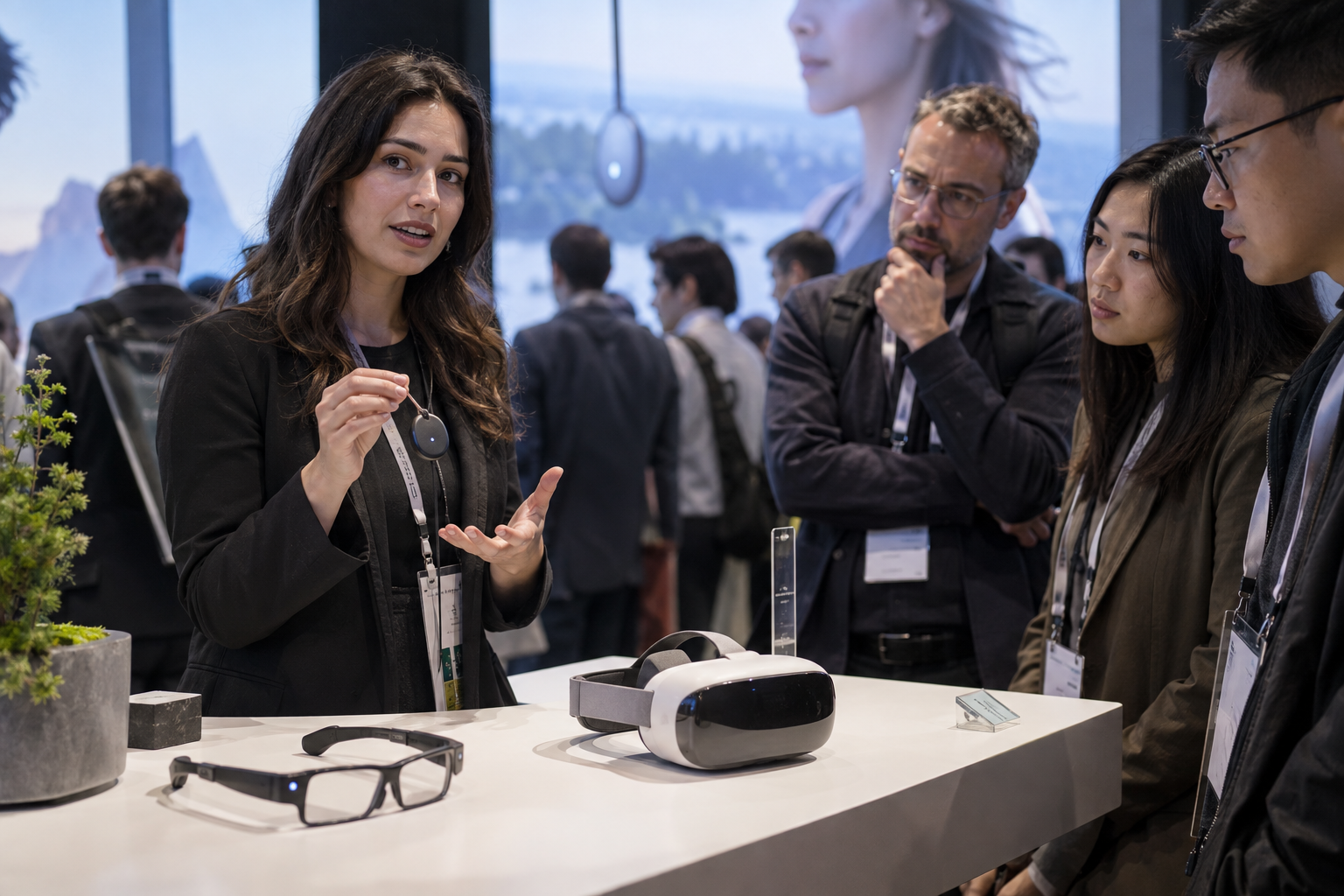
At Meta’s annual Connect conference, CEO Mark Zuckerberg unveiled two products as the company continues to invest in virtual reality while advancing its AI-agent efforts: the $1,299 Meta VR Glasses and the Muse Charm, a handheld device designed to work with Meta’s Muse AI personal agent.
Zuckerberg said Muse Charm will let users speak to their Meta AI agents without unlocking a phone or opening an app. He gave few details about its capabilities or price, explaining that Meta still needs to finalize the device’s components. The company is planning to have it ready to ship in time for the December holidays. Zuckerberg described it as a fast way to communicate with Muse and show the AI what is happening around the user, particularly for people who are not wearing smart glasses.
The Meta VR Glasses are slimmer and lighter than the company’s older Quest-branded headsets, but cost substantially more. They are scheduled to go on sale in spring 2027, making them Meta’s first VR device since the $299 Quest 3S debuted in 2024. The glasses use an external puck containing a Qualcomm processor and battery. The puck serves as a mini-computer and helps reduce the weight and size of the glasses.
Meta says the new glasses offer higher-resolution visuals and views of the surrounding world. Sensors track users’ eyes and hand movements, reducing the need for controllers. Zuckerberg characterized the device as combining immersive VR with a glasses-like form factor. The announcement reflects Meta’s effort to pursue both VR hardware and AI agents, though the article provides limited information about the Muse Charm’s final specifications or price.
Entities: Mark Zuckerberg, Meta, Meta Connect, Menlo Park, California, Meta VR Glasses • Tone: neutral • Sentiment: neutral • Intent: inform
25-09-2026
Meta is positioning its Muse AI agent and a new wearable device, the Muse Charm, as a way to compete in consumer AI while expanding beyond Apple’s control over how people access its services. At its annual Connect conference, Meta said it expects to offer more than 100 styles of AI glasses by the end of 2026 and showed the pendant-like Charm, which will provide quick access to Muse. CEO Mark Zuckerberg gave few details, including no price, and said the device still needs design work before a planned holiday release.
Investors have responded positively to Muse: Meta shares rose 4.5% on Thursday and are up more than 25% since its announcement earlier in the month. The reaction reflects expectations that Meta may have found a stronger AI opportunity than its unsuccessful push to make virtual reality and the metaverse mainstream. Meta also plans to bring Muse to its Ray-Ban smart glasses and introduced lighter, slimmer VR glasses, priced at $1,299 for release next year.
The article emphasizes that the Charm’s commercial prospects are uncertain. Smartphones already provide many similar functions, and some observers question whether consumers will want another device to carry and charge. Others see potential in hands-free, context-aware AI that can answer questions, set reminders, plan, and retrieve information while users are on the move.
Meta must also establish a viable business model and prove that Muse creates incremental value for retailers and customers. Zuckerberg expects Meta eventually to earn small fees on transactions, but Amazon has blocked Muse from scanning its site, as other companies have restricted AI agents. The article presents Meta’s early lead in AI hardware as promising but unproven, dependent on consumer demand, useful integrations, and successful monetization.
Entities: Meta, Mark Zuckerberg, Muse AI agent, Muse Charm, OpenAI • Tone: analytical • Sentiment: neutral • Intent: analyze
25-09-2026
The article argues that Meta’s sharp stock rise and elevated short-term options volatility could create an opportunity for traders who are bullish over a longer horizon. It attributes investor optimism partly to the reported launch of Muse Charm, a keychain-sized consumer device powered by Meta’s AI, following the success of the Muse AI agent. The article presents the device as part of Meta’s effort to challenge Apple and Google and expand its position in consumer hardware and ambient computing. It also notes other reported product announcements, including lighter virtual-reality goggles and audio-only smart glasses, as well as retail integrations for Muse with Walmart, Best Buy, and Gap.
The options setup centers on Meta’s one-month implied volatility, reported at about 44%, compared with a one-year average of 37%. The article characterizes this as roughly one standard deviation above the average and says near-term option premiums are therefore relatively rich. Mike Khouw’s proposed strategy combines a short-dated, out-of-the-money call and put—potentially expiring October 30—with a longer-dated January call. Premium collected from the short strangle may offset some of the cost of the January call, while the near-dated options’ faster time decay may make the position’s carry positive. The suggested outcome is for Meta shares to remain between $700 and $900 through the October expiration, then rise toward year-end.
The article frames this structure as a way to reduce the upfront cost of a bullish position while potentially benefiting from a decline in near-term volatility. It concludes with an optimistic view of Meta’s prospects into 2027, but includes disclosures that Tidal holds the securities mentioned and that the commentary is informational, not individualized investment advice or a recommendation.
Entities: Meta, Mike Khouw, CNBC Pro, Tidal, Muse Charm • Tone: analytical • Sentiment: positive • Intent: analyze