25-09-2026
Iran has proposed a seven-day roadmap to end its conflict with the United States, Foreign Minister Abbas Araghchi told reporters in New York. The plan, reportedly delivered to Washington through mediators, would revive conditions in a June memorandum of understanding (MoU): end hostilities across all fronts, reopen the Strait of Hormuz, and begin talks on Iran’s nuclear programme. It also calls for the United States to release at least $12 billion in frozen Iranian assets, waive sanctions on Iranian oil, and lift its naval blockade. The strait would reopen on the final day of the proposed seven-day period.
The proposal comes as the war, launched by US and Israeli strikes, approaches its seventh month. The June MoU expired in August after both sides accused each other of violations. A deal brokered by Pakistan and Qatar had allowed 60 days for negotiations, but disputes over control of shipping through Hormuz and renewed attacks led President Donald Trump to declare it over on July 7. The article notes that Iran’s new timetable is much shorter and more ambitious than the previous arrangement.
President Masoud Pezeshkian said Iran does not want to continue fighting and that Washington must decide whether to end the war. He also said Iran would be willing to reach an agreement within international legal frameworks, while maintaining that Israeli actions had imposed the conflict on Iran. At the UN General Assembly, he had taken a defiant stance, saying Iran would not “bend at the knee” to Washington.
US officials described discussions through mediators as positive, though one official said Washington would not rush into a deal. An Iranian security source said further diplomacy could be possible if the US met Iran’s conditions. Analysts, however, assessed that little had changed and that significant progress was unlikely before the US midterm elections in November. Qatar’s foreign minister also spoke with Pezeshkian about de-escalation and conditions for dialogue.
Entities: Iran, United States, Abbas Araghchi, Masoud Pezeshkian, Donald Trump • Tone: analytical • Sentiment: neutral • Intent: inform
25-09-2026
The article reports that Saudi Arabia has called for an urgent meeting with Turkiye and Pakistan to discuss implementing their Mecca Joint Defence Agreement, after escalating Houthi attacks on Saudi territory. Turkish Chief of General Staff General Selcuk Bayraktaroglu is travelling to Riyadh, and Pakistan’s Field Marshal Asim Munir is expected to arrive, though Pakistan’s military has not confirmed his departure. The agreement, signed on August 7, states that an attack on one of the three countries is to be treated as an attack on all three.
Saudi Arabia says its air defences intercepted six ballistic missiles aimed at Taif and Yanbu, following Houthi claims of attacks on Saudi targets, including Riyadh and Aramco facilities. Public accounts of the September 24 meeting among the three countries’ foreign ministers differed: Saudi Arabia described discussions about support under the pact and affirmed its right to self-defence, while Pakistan and Turkiye emphasized institutional arrangements and technical negotiations. Turkish Foreign Minister Hakan Fidan separately said Turkiye would honour the alliance commitment and could meet some Saudi military needs.
Analysts suggest the measured public language may reflect Houthi warnings that Pakistan and Turkiye would face an “iron fist” if they joined the war. They also note practical obstacles: Pakistan is managing security pressures on several fronts, while Turkiye has NATO commitments and an insecure border with Syria. Meanwhile, Houthi territorial advances in Yemen have increased their control of the Red Sea coast and Bab al-Mandeb, a key shipping passage.
Saudi religious and political leaders have used increasingly urgent language. The Grand Mufti called for unity against the Houthis, and King Salman condemned what he described as an attempted strike on Mecca. An expert says the religious framing may help mobilize Saudi forces and reinforce solidarity with allies, without changing the formal obligations of Pakistan or Turkiye. A regional diplomat describes the messaging as part of a wider effort to raise public awareness of the threat.
Entities: Saudi Arabia, Turkiye, Pakistan, Houthis, Mecca Joint Defence Agreement • Tone: analytical • Sentiment: neutral • Intent: inform
25-09-2026
Saudi Arabia, Turkiye and Pakistan are planning an urgent meeting of their military chiefs to discuss support for Saudi Arabia under the Mecca Joint Defence Agreement. The plan was announced after the countries’ foreign ministers met in New York. The agreement, signed on August 7, treats an attack on any one of the three countries as an attack on all, and the partners have begun creating mechanisms for defence cooperation. Their ministers and military chiefs previously met in Istanbul and agreed to establish a secretariat in Saudi Arabia and deepen military ties. The foreign ministers also condemned attacks on Mecca and Saudi civilian and economic facilities, and affirmed Saudi Arabia’s right to self-defence under Article 51 of the UN Charter.
The diplomatic activity follows renewed attacks from Yemen. Saudi Arabia said its air defences intercepted six ballistic missiles aimed at Taif and Yanbu. The Houthis claimed separate missile and drone attacks on a target in Riyadh and Saudi Aramco facilities in Yanbu. France has offered defensive assistance, with President Emmanuel Macron saying it would send soldiers, radars and defence systems to protect Yanbu.
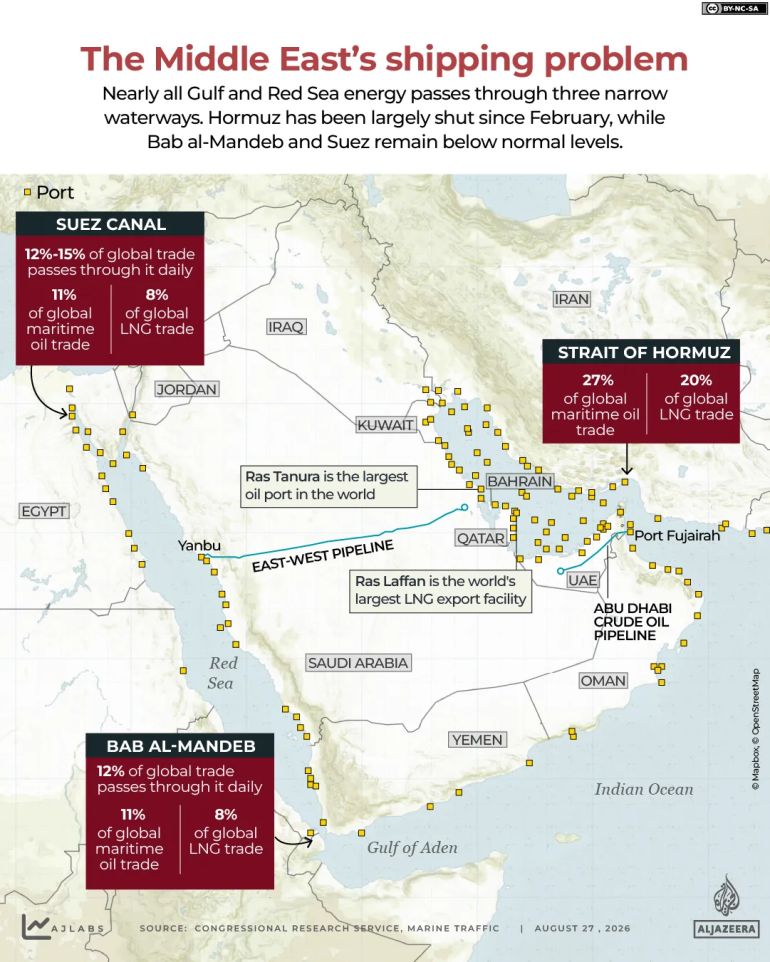
Fighting inside Yemen has also intensified. An AFP tally reported at least 150 deaths among Houthi fighters and forces aligned with Yemen’s internationally recognised government over 24 hours, with clashes around the Kahboub Mountains and between Lahj and Taiz. Houthi advances along the Red Sea coast, including the reported capture of Mocha and strategic islands, have strengthened their position near the Bab al-Mandeb strait, a major shipping route through which about 12 percent of global trade normally passes. Yemen’s government has called for greater international involvement, warning that Houthi control near the strait threatens wider economic interests.
The renewed fighting has displaced more than 230,000 people since early September, according to UNHCR, adding to an estimated 5.2 million already displaced within Yemen. Families have fled across several governorates, often at short notice and with few belongings. UNHCR says urgent needs include shelter, food, clean water, healthcare and protection, while host communities and displacement sites are under increasing strain.
Entities: Saudi Arabia, Turkiye, Pakistan, Mecca Joint Defence Agreement, Prince Faisal bin Farhan Al Saud • Tone: neutral • Sentiment: negative • Intent: inform
25-09-2026
Iran says it has proposed a seven-day timetable to the United States for reopening the Strait of Hormuz, with Qatar facilitating indirect communications between the two sides at the United Nations General Assembly in New York. Foreign Minister Abbas Araghchi said the countdown could start once Washington accepts the proposal. The plan reportedly draws on a June memorandum of understanding that briefly reduced hostilities, but changes the order and timing of steps: fighting would stop across all fronts, the United States would lift its naval blockade and oil sanctions and release frozen Iranian assets, and the strait would reopen after seven days. Talks on Iran’s nuclear programme would follow.
The June agreement had provided for a halt to military operations and a 60-day period for negotiations, during which Iran would allow ships to transit without tolls. It deferred contentious nuclear questions, but collapsed the following month amid renewed confrontation over shipping. Iran wants the strait and its management to be addressed before broader peace negotiations. Washington, by contrast, wants the nuclear programme discussed as part of a single package and has said it is in control of the waterway. Tehran has also demanded sanctions relief and guarantees against renewed US strikes before broader talks.
Analysts cited by Al Jazeera doubt that the proposal will produce a firm peace deal. They say Iran is unlikely to abandon its position on the strait, which it views as essential to economic recovery, while the United States may believe its blockade and sanctions give it leverage to wait for concessions. Publicizing the offer at the UN may also put pressure on President Donald Trump, as disrupted shipping has raised global energy prices and US midterm elections approach. Trump has threatened Iran and denied that the election will shape his policy, while predicting a deal may come after the vote.
Recent Qatar-mediated contacts involving Araghchi, US envoy Steve Witkoff and Jared Kushner were described by Iran as productive, but Secretary of State Marco Rubio cautioned against calling them a breakthrough. The central obstacle remains the two governments’ differing assumptions about leverage and the sequence of negotiations.
Entities: Abbas Araghchi, Donald Trump, Qatar, United States, Iran • Tone: analytical • Sentiment: neutral • Intent: analyze
25-09-2026
Brent crude rose above $105 a barrel as the U.N. General Assembly offered little sign of progress toward ending the seven-month war between the United States and Iran. The conflict continues to threaten regional energy routes: an attack on a commercial vessel in the Strait of Hormuz killed one crew member, while an Iranian adviser warned that Iran and its Houthi allies could open a new front against energy supplies in the Red Sea if the U.S. launches further attacks. France said it would deploy soldiers, radar and defensive systems to help protect Saudi Arabia’s Yanbu oil terminal from Houthi attacks.
Diplomatic efforts remain uncertain. Iran’s foreign minister said Tehran had given U.S. mediators a seven-day proposal that could lead to reopening the Strait of Hormuz and restarting talks, while U.S. officials have cautioned that there has been no breakthrough. The article also reports political and military disagreements over the war: Sen. John Kennedy said the U.S. must choose between escalating and withdrawing, and the Senate rejected a measure to limit President Trump’s war powers, 49 to 50.
Other updates describe the war’s effects across the region. Lebanon’s prime minister told Iran’s president that Lebanon should not be used as an arena for regional conflict, after Hezbollah’s involvement brought Israeli strikes and a ground invasion that killed more than 4,300 people. Separately, sources said U.S. troops killed in a drone attack in Kuwait might have been moved to safer bases in Saudi Arabia, but the unit’s commanding general rejected those plans despite warnings of a possible attack. The supplied article excerpt ends partway through the description of the Senate resolution.
Entities: Iran war, United States, Brent crude, Strait of Hormuz, Red Sea • Tone: analytical • Sentiment: negative • Intent: inform
25-09-2026
Iranian Foreign Minister Abbas Araghchi says Tehran is willing to reopen the Strait of Hormuz and restart nuclear negotiations with the United States within seven days, provided Washington accepts conditions Iran says were included in a June ceasefire memorandum. That agreement, known as the Islamabad Memorandum of Understanding, collapsed in early July, and the Trump administration has said it will not return to its terms. The offer follows a defiant speech by Iranian President Masoud Pezeshkian at the United Nations and comes nearly seven months into the U.S.-Israel war against Iran. Oil prices edged lower after Araghchi’s announcement, though shipping through Hormuz—a route that normally carries about one-fifth of global oil supply—had fallen to just nine vessel transits, according to preliminary tracking data cited by Reuters.
Diplomacy is also taking place during Chinese President Xi Jinping’s state visit to Washington. President Donald Trump has sought Beijing’s help in pushing Tehran toward a settlement. U.S. Ambassador to China David Perdue said Trump had warned Xi that any Chinese assistance to Iran, including intelligence, parts, or military equipment, would be unacceptable. Indirect U.S.-Iran talks also resumed on the sidelines of the U.N. General Assembly.
Meanwhile, regional violence continued. Saudi authorities said the Houthis launched dozens of missiles and drones at Saudi targets and that six ballistic missiles were intercepted. Emergency alerts were issued in Mecca, Jeddah, and Yanbu. Saudi Arabia, Turkey, and Pakistan planned an urgent meeting on support for the kingdom. Pezeshkian said the United States must decide whether to end the war and denied that Iran is at war with Saudi Arabia, saying the Houthis act independently. Saudi Arabia’s Grand Mufti, by contrast, urged troops to be prepared to fight the Houthis. The article portrays Iran’s diplomatic offer against a backdrop of continued conflict, sharply reduced Hormuz shipping, and efforts by China and regional governments to prevent further escalation.
Entities: Abbas Araghchi, Masoud Pezeshkian, Donald Trump, Xi Jinping, David Perdue • Tone: analytical • Sentiment: negative • Intent: inform
25-09-2026
Oil prices declined Friday as reports of renewed U.S.-Iran diplomacy raised the possibility of a deal to ease the standoff in the Persian Gulf. Brent crude futures for November delivery fell 1% to $93.66 a barrel, while U.S. West Texas Intermediate futures declined 0.68% to $105.86.
Reuters reported that U.S. and Iranian negotiators in New York were discussing a phased agreement. A senior Iranian official described the most realistic path forward as Tehran allowing navigation through the Strait of Hormuz in exchange for the United States ending its naval blockade. The two countries had agreed to a similar approach in a June 17 memorandum of understanding, but that arrangement quickly broke down and fighting resumed. The article notes that it is unclear what has changed in the current negotiations.
According to Al Jazeera, Iranian President Masoud Pezeshkian said on the sidelines of the UN General Assembly that Iran wants the United States to return to the memorandum before the U.S. midterm elections. Trade Nation senior market analyst David Morrison said the two sides were understood to be communicating through mediators. He also cautioned that investors remained concerned about persistent inflation, elevated energy prices, and hostile statements from both countries at the UN gathering in New York. Thus, diplomatic prospects pressured prices, while broader economic and geopolitical risks continued to weigh on investor sentiment.
Entities: Brent crude, West Texas Intermediate (WTI), Iran, United States, Strait of Hormuz • Tone: analytical • Sentiment: neutral • Intent: inform
25-09-2026
Iranian President Masoud Pezeshkian used his visit to New York for the UN General Assembly to present a diplomatic tone and signal that Iran might make concessions in its nuclear dispute with the United States. In an interview with Fox News, he said Iran would meet its obligations under international law and the Nuclear Non-Proliferation Treaty, and rejected the idea that Iran seeks a nuclear weapon. His comments came despite the International Atomic Energy Agency’s assessment that Iran has accumulated more than 440 kilograms of uranium enriched to up to 60%, and despite its suspension of cooperation with the agency following US-Israeli attacks on Iranian nuclear facilities in 2025.
The article cautions that Pezeshkian has limited power to drive a broad de-escalation, given the influence of hardliners and the Islamic Revolutionary Guard Corps. Still, his visit may help establish communication channels and a framework for future negotiations. Meetings between Iranian and US delegations, along with White House confirmation of constructive talks through intermediaries, suggest diplomacy is continuing.
Iran is also using its influence over strategic shipping routes as leverage. A reported Iranian proposal would reopen the Strait of Hormuz within seven days if Washington met unspecified conditions. Those may relate to frozen Iranian assets, the US blockade, or non-interference in Iran’s affairs. The strait carries about one-fifth of global oil consumption, and Iran retains ways to threaten shipping despite damage to its military capabilities. The Iran-backed Houthis’ presence near the Bab al-Mandab Strait gives Tehran another potential source of leverage.
Experts expect Iran to combine military pressure with negotiations, rebuild damaged infrastructure, and maintain pressure on shipping. Iran has reasons to seek an agreement because military threats, sanctions, and economic pressure are unsustainable over time. However, US Secretary of State Marco Rubio warned that reaching a deal would require difficult negotiations, while emphasizing that the United States retains military options.
Entities: Masoud Pezeshkian, Donald Trump, Abbas Araghchi, Arman Mahmoudian, Kelly Grieco • Tone: analytical • Sentiment: neutral • Intent: analyze
25-09-2026
Saudi Arabia, Turkey and Pakistan are preparing an urgent meeting of their military chiefs under the Mecca Joint Defence Agreement, following intensified Houthi attacks on Saudi territory and interests. The Houthis said they launched dozens of missiles and drones at Saudi targets; Saudi authorities reported intercepting six ballistic missiles and had issued alerts for areas including Mecca, Jeddah and Yanbu. Saudi Arabia’s Grand Mufti urged soldiers to be prepared to die fighting the Houthis. The three countries’ foreign ministers condemned attacks on Mecca and other civilian sites and affirmed Saudi Arabia’s right to defend itself. The defence pact says an attack on one party is an attack on all.
The developments come amid a broader regional war that began with US and Israeli strikes on Iran in February. Iranian President Masoud Pezeshkian said the Houthis were responsible for their own actions, while Iran’s Foreign Minister Abbas Araqchi described a proposal to the United States: Iran would reopen the Strait of Hormuz after seven days if hostilities ended across all fronts, the US lifted its blockade on Iranian ports, released frozen Iranian funds and waived oil sanctions. Oil prices fell as markets considered the possibility of a truce, although shipping through the strait remained sharply reduced.
The article describes the wider effects of the conflict on energy and shipping. The Houthis have disrupted traffic at the mouth of the Red Sea, Iran has restricted tanker traffic through the Strait of Hormuz, and an attack by Iran-backed militias temporarily disabled Saudi Arabia’s East-West Pipeline. It also notes debate over how directly Tehran controls the Houthis, alongside accounts alleging Iranian Revolutionary Guard Corps guidance for their advance along Yemen’s Red Sea coast.
Meanwhile, Washington is expanding sanctions to target third-country companies doing business with Iran. Iranian airlines were barred from the UAE and Oman following new US sanctions, a move that could deepen Iran’s isolation and economic crisis. A Tehran resident described life in the country as being like “an open-air prison.”
Entities: Saudi Arabia, Houthis, Turkey, Pakistan, Mecca Joint Defence Agreement • Tone: neutral • Sentiment: neutral • Intent: inform
25-09-2026
Saudi Arabia’s Grand Mufti, Sheikh Saleh Fawzan Al-Fawzan, has urged soldiers stationed along the kingdom’s borders to be prepared to die fighting the Iran-backed Houthi movement until it is removed from power. The message, published by the Saudi state news agency late on September 24, drew on Quranic verses and sayings attributed to the Prophet Muhammad to frame defending Saudi territory and supporting Yemen’s internationally recognised government as religious duties.
The statement comes amid a sharp escalation in fighting. The Houthis have launched missiles and drones at Saudi Arabia, which has responded with air strikes. The violence has prompted speculation about whether Saudi Arabia will undertake a broader operation alongside Yemeni government forces it supports. Those forces recently lost control of the strategically important Bab el-Mandeb waterway to the Houthis, a significant setback for the kingdom.
Saudi Arabia has been involved in Yemen’s conflict since 2015, when it began an unsuccessful campaign to oust the Houthis from Sanaa. The latest fighting is part of Yemen’s 12-year civil war, which had been largely frozen since 2022, and is now connected to a wider war involving Iran. In his message, the Grand Mufti prayed for the defeat of the Houthis and their supporters, and told troops to obey rulers and field commanders and carry out orders precisely.
The article also describes the statement as part of a growing religiously framed campaign by Saudi authorities to discredit the Houthis, who belong to a different Islamic sect from the kingdom’s conservative Sunni majority. State television has aired footage of an alleged Houthi strike on a mosque in southern Saudi Arabia, while authorities have accused the group of attacking Mecca.
Entities: Sheikh Saleh Fawzan Al-Fawzan, Saudi Arabia, Houthis, Yemen, Sanaa • Tone: analytical • Sentiment: neutral • Intent: inform
25-09-2026
Iranian President Masoud Pezeshkian told Fox News that the United States must decide whether to end the war with Iran, saying Tehran does not want the fighting to continue. His comments followed a defiant address to the United Nations General Assembly in New York, where he said Iran would not “bend at the knee” to Washington. Pezeshkian blamed Israel for helping bring about the conflict and argued that disputes should be resolved through dialogue rather than violence.
Pezeshkian said Iran was prepared to reach an agreement with US President Donald Trump, but questioned why a fragile ceasefire had collapsed only two weeks after it was signed. He said Iran would consider a deal reached within international legal frameworks, adding that the timing of any agreement relative to US midterm elections was not important to Tehran. Iranian Foreign Minister Abbas Araghchi had met with Trump envoy Steve Witkoff and Jared Kushner on the sidelines of the UN General Assembly, but the talks produced no immediate breakthrough.
The interview also addressed the Houthis’ role in the regional conflict. As fighting intensified between Yemen’s Houthi movement and Saudi Arabia and its Yemeni allies, Pezeshkian denied that Tehran directs the group. He said Iran has contact with the Houthis but no systematic relationship with them, and described their actions as their own. Washington and its allies accuse Iran of supporting the Houthis, who have launched ballistic missiles at Saudi Arabia and fought Saudi-backed forces in Yemen. Saudi Arabia said it intercepted Houthi missiles on Sept 24, after warnings for several regions, including Mecca. The Houthis’ attacks and control of parts of Yemen’s Red Sea coast have disrupted Saudi oil routes and contributed to rising energy prices.
Entities: Masoud Pezeshkian, United States, Iran, Fox News, United Nations General Assembly • Tone: neutral • Sentiment: neutral • Intent: inform
25-09-2026
Iran is refusing to resume formal negotiations with the United States unless Washington first lifts its blockade on Iranian ports and eases military pressure. Talks held through mediators on the sidelines of the UN General Assembly in New York have so far amounted to exchanges of positions, not substantive negotiations. Iranian representatives made no concessions and are waiting for Washington to respond to a document setting out Tehran’s demands.
Iranian Supreme National Security Council secretary Mohsen Rezaei said Tehran had conveyed seven conditions to the US through regional mediators, including Pakistan and Qatar. He declared that the Strait of Hormuz would remain closed until those conditions were met. President Masoud Pezeshkian also said the US must decide whether it wants to end the conflict.
The Iranian stance conflicts with international calls for the strait to reopen unconditionally. Bahrain’s Foreign Minister Abdullatif Al Zayani presented a joint statement at the UN, backed by about 80 countries, demanding the waterway’s urgent reopening and condemning Iranian attacks on regional states and shipping. Meanwhile, European and US officials are drafting a separate UN Security Council initiative to provide political backing for an international maritime mission protecting navigation. They believe it may gain more support from China and Russia than an earlier proposal, though Iran opposes such a mission.
The blockade and conflict are adding economic and political pressure. Iran is suffering under sanctions and the blockade, while high energy costs are worrying US voters ahead of November’s midterm elections. The US Senate narrowly rejected a resolution calling on President Donald Trump to end the war or seek congressional authorisation. With polls showing Republicans at risk of losing their narrow congressional majorities, some party members have begun distancing themselves from the conflict.
Entities: Iran, United States, Strait of Hormuz, United Nations General Assembly, Mohsen Rezaei • Tone: analytical • Sentiment: negative • Intent: inform
25-09-2026
The supplied page is a live-news page about the Iran war, updated September 25, 2026, at 11:21 a.m. Its main headline quotes Iranian President Masoud Pezeshkian as saying that it is up to the United States to decide whether it wants to end the war. The captured text does not include the full reports behind the headlines, so it provides little detail about the statements, events, or their context.
The page’s other headlines describe a widening regional and international crisis. They say Iranian flights are heading to China and Thailand despite US sanctions; France will send troops and defence systems to help protect Saudi Arabia’s port of Yanbu; and Iranian and Ukrainian foreign ministers have met in New York. Other updates report that Saudi air defences intercepted six ballistic missiles launched by the Houthis, according to a coalition, and that an Islamic Revolutionary Guard Corps commander was killed in clashes with gunmen in south-eastern Iran.
Video captions further highlight the stakes and rhetoric surrounding the conflict. They refer to a sailor killed when torpedoes hit a ship off Oman, a US delegate walking out during Iran’s UN General Assembly speech, and Pezeshkian saying Iran would not bow. Other clips feature calls for security, comments on President Donald Trump’s leverage and deliberations over Iran, and UN Secretary-General António Guterres urging the fighting to stop. Captions also mention Houthi strikes affecting Saudi Arabia and Yemenis fleeing to Djibouti.
Overall, the page presents a fast-moving conflict involving Iran, the United States, Gulf states, and other international actors. Because the supplied content consists chiefly of headlines, video captions, and website interface text, it does not establish the underlying details or independently verify the reported developments.
Entities: Masoud Pezeshkian, Iran, United States, China, Thailand • Tone: analytical • Sentiment: negative • Intent: inform
25-09-2026
The article excerpt reports that Iran has sent the Trump administration a new proposal intended to advance diplomacy and address the ongoing conflict. Iranian Foreign Minister Abbas Araghchi said Thursday that the proposal would reopen the Strait of Hormuz and restart talks on ending the broader war within seven days. The statement was made at the United Nations. The proposal therefore appears to link a near-term step concerning the strategic waterway with a renewed diplomatic process about the wider conflict.
The excerpt does not provide the proposal’s terms, explain what reopening the Strait would involve, or clarify how the seven-day period would work. It also contains no response from the Trump administration, no assessment from other governments, and no details about the status or history of prior negotiations. The available text does not say whether the proposal has been formally accepted or whether talks have been scheduled. As a result, the report establishes Iran’s stated offer and its proposed timeline, but not whether the initiative will lead to negotiations or an agreement.
Because the supplied article text consists of only one reported sentence, the summary is limited to those facts. The headline characterizes the proposal as one for peace talks, while the excerpt itself describes reopening the Strait of Hormuz and restarting discussions about ending the broader war. No further background or analysis is included in the provided material.
Entities: Iran, Trump administration, Abbas Araghchi, United Nations, Strait of Hormuz • Tone: neutral • Sentiment: neutral • Intent: inform
25-09-2026
Saudi Arabia said it intercepted six Houthi ballistic missiles on Thursday, after civil-defence alerts warned residents in several regions—including Mecca—of possible attacks. The Saudi-led coalition said the missiles were aimed at Taif and Yanbu. The alerts were lifted within minutes. France, meanwhile, pledged to send military assets, including soldiers, radars and defence systems, to help protect Yanbu, a major Saudi oil export terminal on the Red Sea.
The attacks took place amid renewed fighting in Yemen between the Houthis and forces backing the internationally recognized government. Sources on both sides told AFP that at least 150 fighters and government personnel had been killed in the preceding 24 hours. Clashes included fighting over high ground near the Bab al-Mandab strait, a strategically important passage at the mouth of the Red Sea. The article says Houthi attacks against Saudi Arabia have escalated since July, when a fragile truce broke down and the conflict became entangled in the wider Middle East war. The Houthis have also targeted Saudi tankers and territory and taken areas of Yemen’s Red Sea coast, threatening routes important to Saudi oil exports.
Saudi Arabia recently accused the Houthis of targeting Mecca with a drone, an allegation the group denied; a later attack on Riyadh marked another escalation. The Houthis claimed to have launched missile and drone attacks against command centres and weapons depots in southern Saudi Arabia, and later said they targeted Aramco infrastructure in Yanbu and a site in Riyadh. Iran’s President Masoud Pezeshkian denied that Tehran directs Houthi operations, saying the group acts independently.
Yanbu is central to Saudi Arabia’s energy infrastructure. It is the kingdom’s main crude export terminal on the Red Sea, connected to eastern oil-producing regions by the East-West pipeline, or Petroline, and contains major storage and refining facilities. Its location gives Saudi Arabia an alternative export route toward European markets.
Entities: Saudi Arabia, Houthi movement, France, Emmanuel Macron, Masoud Pezeshkian • Tone: analytical • Sentiment: negative • Intent: inform