25-09-2026
Oil prices rose after Yemen’s Houthi movement claimed it had attacked targets in Saudi Arabia, including facilities belonging to state-owned energy company Aramco. Brent crude gained more than 3 percent on Thursday, briefly topping $108 per barrel before ending above $106.50. Prices eased slightly in Asian trading on Friday, with Brent at $105.77 a barrel at 02:00 GMT.
The Houthis said they had launched missile and drone attacks on a “sensitive target” in Riyadh and on Aramco facilities in Yanbu, a Red Sea city, and claimed both operations had succeeded. Saudi-led coalition forces said they intercepted six ballistic missiles aimed at the kingdom. Saudi authorities had not confirmed damage or casualties, and Aramco had not responded to Al Jazeera’s inquiry at the time of publication.
The attacks heightened concerns about energy-supply risks amid constraints linked to the US-Israel war on Iran. Aramco supplies roughly 10 percent of global oil demand, while key routes and facilities remain vulnerable. The report also describes renewed US-Iran diplomatic efforts on the sidelines of the United Nations General Assembly. Iranian President Masoud Pezeshkian said he hoped Washington would return to a memorandum of understanding on ending the seven-month conflict, which had lapsed in August without a peace deal.
Market analysts said diplomacy could temper price increases, but uncertainty over a lasting de-escalation and the continuing war was likely to keep oil prices elevated. Tim Waterer of KCM Trade said the market’s upward bias would persist without clearer evidence of de-escalation. June Goh of Sparta Commodities expected oil to remain above $100 a barrel while the war continued, citing a widening gap in global oil inventories.
Entities: Yemen’s Houthi movement, Saudi Arabia, Saudi Aramco, Brent crude, Riyadh • Tone: analytical • Sentiment: neutral • Intent: inform
25-09-2026
Saudi Arabia’s Grand Mufti, Sheikh Saleh Fawzan Al-Fawzan, has urged soldiers stationed along the kingdom’s borders to be prepared to die fighting the Iran-backed Houthi movement until it is removed from power. The message, published by the Saudi state news agency late on September 24, drew on Quranic verses and sayings attributed to the Prophet Muhammad to frame defending Saudi territory and supporting Yemen’s internationally recognised government as religious duties.
The statement comes amid a sharp escalation in fighting. The Houthis have launched missiles and drones at Saudi Arabia, which has responded with air strikes. The violence has prompted speculation about whether Saudi Arabia will undertake a broader operation alongside Yemeni government forces it supports. Those forces recently lost control of the strategically important Bab el-Mandeb waterway to the Houthis, a significant setback for the kingdom.
Saudi Arabia has been involved in Yemen’s conflict since 2015, when it began an unsuccessful campaign to oust the Houthis from Sanaa. The latest fighting is part of Yemen’s 12-year civil war, which had been largely frozen since 2022, and is now connected to a wider war involving Iran. In his message, the Grand Mufti prayed for the defeat of the Houthis and their supporters, and told troops to obey rulers and field commanders and carry out orders precisely.
The article also describes the statement as part of a growing religiously framed campaign by Saudi authorities to discredit the Houthis, who belong to a different Islamic sect from the kingdom’s conservative Sunni majority. State television has aired footage of an alleged Houthi strike on a mosque in southern Saudi Arabia, while authorities have accused the group of attacking Mecca.
Entities: Sheikh Saleh Fawzan Al-Fawzan, Saudi Arabia, Houthis, Yemen, Sanaa • Tone: analytical • Sentiment: neutral • Intent: inform
25-09-2026
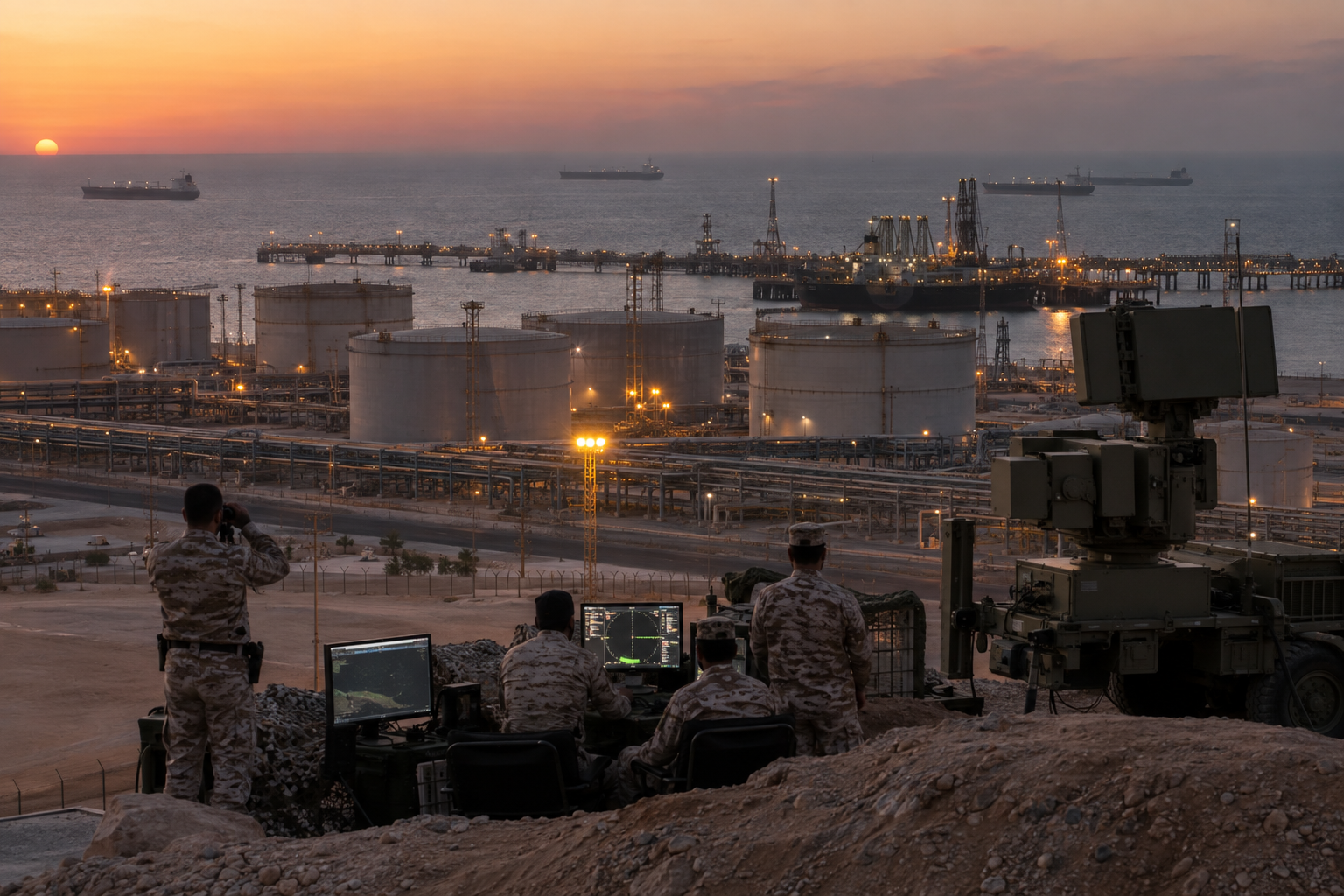
Saudi Arabia said it intercepted six Houthi ballistic missiles on Thursday, after civil-defence alerts warned residents in several regions—including Mecca—of possible attacks. The Saudi-led coalition said the missiles were aimed at Taif and Yanbu. The alerts were lifted within minutes. France, meanwhile, pledged to send military assets, including soldiers, radars and defence systems, to help protect Yanbu, a major Saudi oil export terminal on the Red Sea.
The attacks took place amid renewed fighting in Yemen between the Houthis and forces backing the internationally recognized government. Sources on both sides told AFP that at least 150 fighters and government personnel had been killed in the preceding 24 hours. Clashes included fighting over high ground near the Bab al-Mandab strait, a strategically important passage at the mouth of the Red Sea. The article says Houthi attacks against Saudi Arabia have escalated since July, when a fragile truce broke down and the conflict became entangled in the wider Middle East war. The Houthis have also targeted Saudi tankers and territory and taken areas of Yemen’s Red Sea coast, threatening routes important to Saudi oil exports.
Saudi Arabia recently accused the Houthis of targeting Mecca with a drone, an allegation the group denied; a later attack on Riyadh marked another escalation. The Houthis claimed to have launched missile and drone attacks against command centres and weapons depots in southern Saudi Arabia, and later said they targeted Aramco infrastructure in Yanbu and a site in Riyadh. Iran’s President Masoud Pezeshkian denied that Tehran directs Houthi operations, saying the group acts independently.
Yanbu is central to Saudi Arabia’s energy infrastructure. It is the kingdom’s main crude export terminal on the Red Sea, connected to eastern oil-producing regions by the East-West pipeline, or Petroline, and contains major storage and refining facilities. Its location gives Saudi Arabia an alternative export route toward European markets.
Entities: Saudi Arabia, Houthi movement, France, Emmanuel Macron, Masoud Pezeshkian • Tone: analytical • Sentiment: negative • Intent: inform