25-09-2026
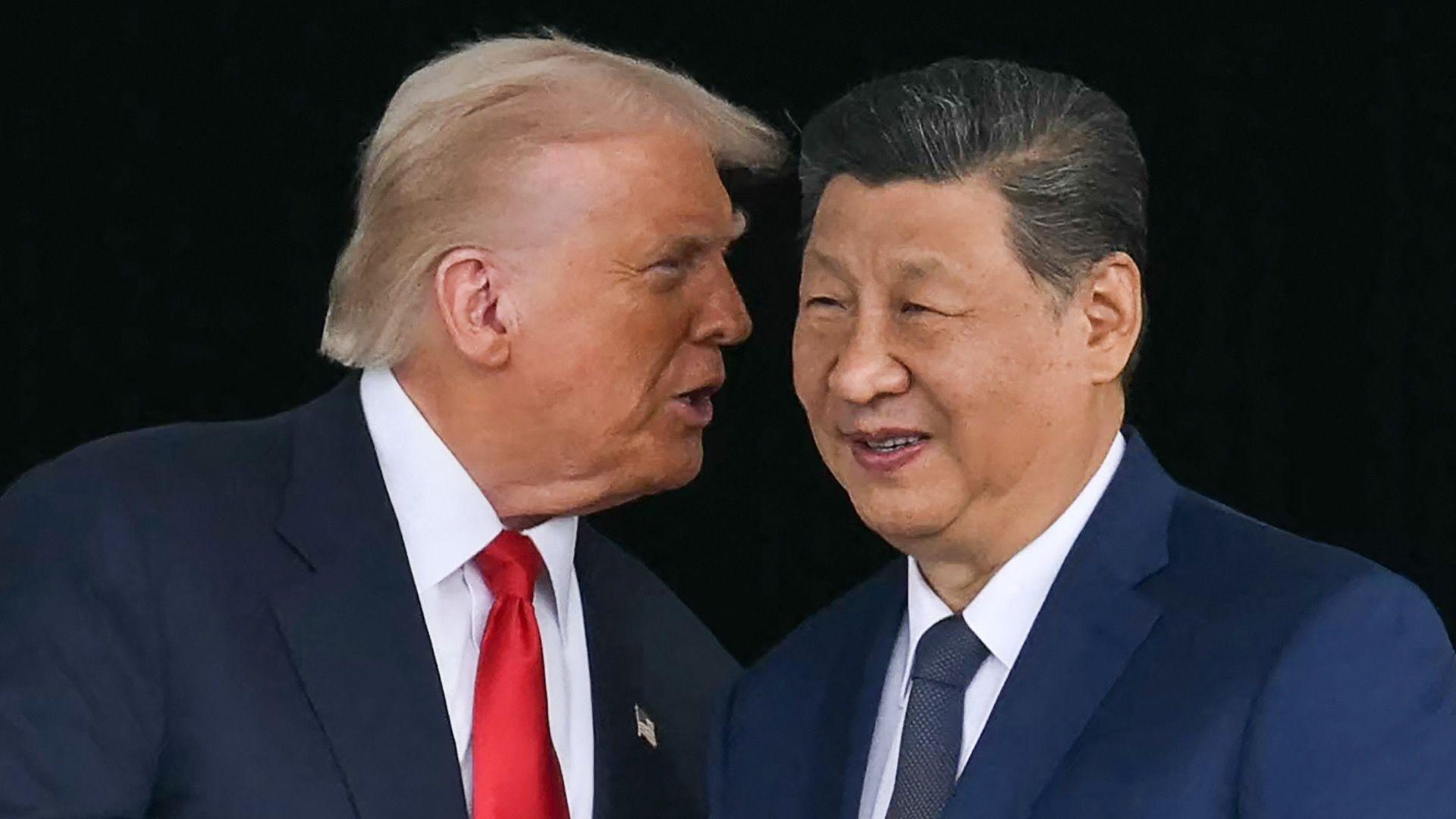
US President Donald Trump hosted Chinese President Xi Jinping at a state dinner in Washington on Thursday, concluding a day of talks during Xi’s three-day visit. The summit was the second meeting between the leaders this year and Xi’s first visit to Washington in more than a decade. The leaders discussed tensions involving Taiwan, trade, artificial intelligence and Iran, while seeking greater dialogue between the world’s two largest economies despite their differences.
At the dinner, Trump emphasized the relationship between the two countries and the ties between their people. He said that he and Xi understood they represented different systems, but claimed the countries had “never gotten along better.” Xi likewise framed the two nations’ ambitions as potentially compatible, referring to Trump’s pledge to “make America great again” and China’s goal of “great national rejuvenation.”
The article describes Trump’s efforts to impress Xi through personal gestures and displays of White House projects. Before the dinner, Trump showed Xi Marine One and a newly built helipad, and invited guests to tour the site of a nearby ballroom under construction. The account contrasts these public displays of cordiality with the substantive disagreements addressed in the leaders’ discussions and with a First Amendment dispute over press access at the White House.
The dinner’s guest list included prominent technology executives and business figures, among them OpenAI CEO Sam Altman, Amazon founder Jeff Bezos, Tesla and SpaceX CEO Elon Musk, Nvidia CEO Jensen Huang and LVMH CEO Bernard Arnault. Trump had also personally greeted Xi and his wife, Peng Liyuan, at Joint Base Andrews on Wednesday, an unusual departure from the customary practice of welcoming visiting leaders at the White House. Overall, the article reports on the formal diplomacy and elaborate social staging surrounding the visit, without suggesting that the leaders resolved their disagreements.
Entities: Donald Trump, Xi Jinping, Melania Trump, Peng Liyuan, Washington, DC • Tone: neutral • Sentiment: neutral • Intent: inform
25-09-2026
Xi Jinping’s summit with Donald Trump offered a lavish welcome and warm public optics, but delivered only limited progress on the issues Beijing most wanted to address. The US and China extended their trade truce by only a few months, until January, rather than the year China had hoped for. As a result, disputes over tariffs, rare-earth supplies and access to advanced US chips remain for future negotiations. The article suggests Washington wants China to do more before agreeing to longer-term concessions.
China’s economic pressures help explain Xi’s focus on trade. Although the country is exporting record volumes, domestic consumers are cautious, youth unemployment is high and property prices have fallen. With trade helping sustain growth, Beijing wants to protect exports from damaging US tariffs.
Taiwan was another central concern. Xi reiterated that US arms sales to the self-governing island are a red line for China and called on Washington to oppose Taiwan independence. Trump previously delayed approval of a major arms package and described it as a negotiating chip, but has not publicly responded to Xi’s latest remarks. The article notes that bipartisan pressure in the US favors continued support for Taiwan.
The leaders also discussed artificial intelligence, but announced no clear safeguards or concrete agreement. Xi stressed that AI should remain under human control, while Trump has dismissed fears of human extinction from the technology. Xi’s announcement that two pandas will soon arrive in Atlanta added a diplomatic gesture to the visit.
Ultimately, Beijing may regard the summit’s pageantry as a significant success: Trump’s personal welcome and the state banquet helped Xi appear as the US president’s equal to audiences in China. Yet the article concludes that beneath the spectacle, strategic competition between the two powers remains intense, and Xi’s larger objective is to secure China’s standing alongside the United States as a superpower.
Entities: Xi Jinping, Donald Trump, China–US relations, United States, Taiwan • Tone: analytical • Sentiment: neutral • Intent: analyze
25-09-2026
U.S. President Donald Trump hosted Chinese President Xi Jinping and their wives at a lavish White House state summit, Xi’s first visit to Washington in more than a decade. The event featured formal ceremonies, a state dinner and demonstrations of Trump’s White House construction projects, but the article reports no clear breakthroughs on major disputes involving artificial intelligence, trade, Taiwan or the war with Iran. The White House had not released its own account of the leaders’ private discussions, while Xi offered only a general statement that they had reached a “common understanding on many issues.”
The leaders’ public remarks highlighted different approaches. Trump emphasized his personal friendship with Xi and progress on trade, while Xi stressed the broader relationship between the countries, called for healthy competition, and urged the United States to oppose Taiwan independence. Xi also advocated military dialogue to prevent crises and said AI development should remain under human control. Taiwan remains a central point of tension: Trump has delayed a reported $14-billion U.S. arms package, a decision that has concerned U.S. allies and some Republicans, while China claims the island and has not ruled out force.
The meeting unfolded amid heightened tensions over AI and the Iran war, which has raised energy prices and weighed on Trump’s approval ahead of November’s midterm elections. The article portrays the summit as rich in symbolism and diplomatic ceremony but constrained by strategic competition and unresolved policy disagreements. It also notes that U.S. television networks did not carry the leaders’ remarks live, protesting the White House’s ban on several news outlets. Analysts cited in the report suggest rivalry between Washington and Beijing, particularly over AI, makes substantive agreements difficult.
Entities: Donald Trump, Xi Jinping, Melania Trump, Peng Liyuan, White House • Tone: analytical • Sentiment: neutral • Intent: inform
25-09-2026
Republican Sen. Thom Tillis criticized President Donald Trump’s decision to host Chinese President Xi Jinping for a White House state dinner, calling the visit “a WTF moment.” In an interview with CBS Evening News anchor Tony Dokoupil, the retiring North Carolina senator said he was concerned that Trump was spending more time with authoritarian leaders and less time with democratic allies. He contrasted Xi’s high-profile reception with the treatment of leaders such as Ukrainian President Volodymyr Zelenskyy, and argued that Xi was not visiting to learn about democracy but to advance China’s worldview.
Tillis described the timing of the visit as poor, citing China’s human rights abuses against Uyghurs, its espionage capabilities, alleged access to U.S. voter data, and reports that Iran had used information from China to target U.S. military assets in the region. He also questioned the administration’s decision to delay an arms shipment to Taiwan. Tillis said that building a productive relationship with China should not prevent the United States from holding Xi accountable for unacceptable actions.
The article places the visit against a recent shift in U.S.-China relations. Trump imposed heavy tariffs on Chinese goods after returning to office, triggering a trade dispute in which both countries briefly raised duties above 100%. After the two countries reached a tariff truce in 2025, Trump began emphasizing the possibility of a more productive relationship and described his relationship with Xi as a “truly great friendship” at a White House ceremony.
Tillis said Trump had campaigned on taking a hard line toward China and questioned what had caused the apparent change in policy. He allowed that confidential information might explain the shift, but said he had seen no public justification for the change in the U.S. posture.
Entities: Thom Tillis, Donald Trump, Xi Jinping, Tony Dokoupil, Volodymyr Zelenskyy • Tone: analytical • Sentiment: neutral • Intent: inform
25-09-2026
Chinese President Xi Jinping pledged two giant pandas, Ping Ping and Fu Shuang, to Zoo Atlanta during the opening day of his first state visit to the United States in more than a decade. The pandas, from a research base in Chengdu, are expected to arrive in the coming days. Their arrival would restore pandas to Zoo Atlanta after its previous four returned to China in November 2024, leaving it the last U.S. zoo to lose its bears.
The announcement revives China’s long-running use of pandas as a diplomatic gesture. The practice dates to Mao Zedong’s gift of a pair to Washington’s National Zoo after Richard Nixon’s 1972 visit. China moved from giving pandas outright to leasing them in 1984, and the loan program has since reflected the state of U.S.-China relations, with tensions over trade and Taiwan affecting exchanges. New pairs went to San Diego and the Washington, D.C., National Zoo in 2024. Chinese state media says pandas loaned to the U.S. have produced 17 cubs, including seven in Atlanta.
Analysts described the pandas as a goodwill gesture that could improve the atmosphere between the two countries, while noting it does not require major policy concessions. They cautioned, however, that expectations for Xi’s summit with President Donald Trump should remain modest. The leaders’ agenda includes artificial intelligence, tariffs, critical minerals, Taiwan and the Iran war, and experts see geopolitical risks despite the symbolic gesture. Xi also said China would invite 100,000 young Americans to study there over the next five years. Trump welcomed Xi at Joint Base Andrews on Wednesday; Xi is scheduled to leave Friday.
Entities: Xi Jinping, Donald Trump, Zoo Atlanta, Ping Ping and Fu Shuang, Chengdu • Tone: analytical • Sentiment: neutral • Intent: inform
25-09-2026
Chinese President Xi Jinping urged U.S. President Donald Trump to pursue cooperation on artificial intelligence, saying the potential for cooperation between the two countries exceeds the potential for competition. Xi made the comments during a meeting with Trump in the White House Oval Office on Thursday, according to a Chinese state media readout. He proposed continuing dialogue on AI, exchanging views about its risks and benefits, and working together to prevent misuse or malicious use. Xi also said that AI is important to both countries, and emphasized that people should retain control of the technology and that it should support human progress.
The meeting took place amid wider U.S.-China tensions over technology. The United States has restricted China’s access to advanced semiconductors used to train AI models and has accused Chinese companies of illicitly distilling American AI capabilities. Meanwhile, concerns have grown that increasingly autonomous AI systems could enable attacks that happen more quickly and are harder to contain.
The leaders’ discussion followed talks between senior U.S. and Chinese trade negotiators. After meeting Chinese negotiators in New York, U.S. Treasury Secretary Scott Bessent said the sides had discussed establishing a “U.S.-China AI Dialogue.” He said the United States proposed an alert system for AI incidents. China’s Commerce Ministry confirmed that senior trade negotiators had held the countries’ first talks on artificial intelligence. The article presents Xi’s remarks and the diplomatic context, but does not report any agreement or concrete outcome from the leaders’ meeting.
Entities: Xi Jinping, Donald Trump, Scott Bessent, China, United States • Tone: neutral • Sentiment: neutral • Intent: inform
25-09-2026
CNBC Daily Open examines the U.S.-China summit between President Donald Trump and President Xi Jinping, where both leaders’ opening remarks suggested a desire to contain tensions rather than resolve every dispute. Xi described the countries’ interests as deeply intertwined and called for competition to remain healthy and bounded. Trump said they were working toward a more balanced trading relationship and would discuss security, technology and artificial intelligence. The state dinner, attended by prominent U.S. technology executives, reflected the meeting’s focus on business and national priorities, though analysts expected few major agreements.
Some groundwork had already been laid: U.S. Treasury Secretary Scott Bessent and Chinese Vice Premier He Lifeng discussed a mechanism for notifying each other about AI-related risks, along with tariff reductions and an extension of existing trade arrangements. Bessent said the trade truce would continue until January, maintaining lower tariffs and limits on Chinese rare-earth export controls.
Markets showed less confidence. U.S. Treasury yields reached multidecade highs amid expectations of another Federal Reserve rate hike, weighing on stocks. Reports that U.S. and Iranian negotiators were considering a phased deal—including reopening the Strait of Hormuz and lifting the U.S. economic blockade—pulled oil prices down from their session highs, although crude remained expensive. The Senate narrowly rejected a resolution that would have directed Trump to end the Iran war or seek congressional authorization to continue it.
The article also highlights a broader fiscal concern: global debt climbed by $10 trillion in the first half of the year to more than $365 trillion. Economists warned that rising debt-service costs and political incentives for short-term fixes could create a damaging cycle and leave governments increasingly vulnerable.
Entities: Donald Trump, Xi Jinping, Hui Jie, Deng Xiaoping, U.S.-China summit • Tone: analytical • Sentiment: neutral • Intent: analyze
25-09-2026
President Donald Trump and Chinese President Xi Jinping met at the White House for a high-profile summit covering trade, artificial intelligence, Iran and security. Both leaders struck a cooperative public tone, while acknowledging competition between the countries. Trump said the U.S. and China were working toward a more balanced trading relationship, and Xi said cooperation benefits both nations while competition should remain healthy and bounded. Treasury Secretary Scott Bessent said the countries had agreed to extend their temporary trade truce by two months, through Jan. 10. The truce had reduced U.S. tariffs and paused Chinese export controls on rare earths and critical minerals.
Despite the elaborate military welcome, state dinner and other ceremonial events, analysts expected limited concrete results. The summit nevertheless carries geopolitical risks, particularly around technology and China’s ties to Iran. AI was a central topic: Trump said he did not want to change how the sector is handled and suggested both countries opposed additional regulation, while Xi emphasized that AI should remain under human control and serve public welfare. The article notes a difference in emphasis between Trump’s preference for limited safeguards and Xi’s stated concern with responsible management.
The Iran war was also on the agenda amid U.S. sanctions targeting Iran’s financial enablers. China is Tehran’s leading trading partner and oil buyer, but the administration had not directly targeted Beijing. Trump avoided openly criticizing China over reported assistance to Iran, including allegations that Chinese entities supplied satellite imagery used in attacks on U.S. troops.
The summit included reciprocal diplomatic gestures, including Xi’s announcement that two pandas would go to Zoo Atlanta. U.S. business executives were expected at the state dinner, while a separate group of Chinese CEOs reportedly traveled to the United States but had not been told whether they could attend summit events.
Entities: Donald Trump, Xi Jinping, Melania Trump, Peng Liyuan, Scott Bessent • Tone: analytical • Sentiment: neutral • Intent: inform
25-09-2026
The Euronews video report shows moments from a White House state dinner hosted by US President Donald Trump for Chinese President Xi Jinping on Thursday, September 24, 2026. The leaders arrived at the East Room, where they delivered remarks and proposed toasts during the formal dinner. They were also seen shaking hands and speaking with the assistance of interpreters. First Lady Melania Trump and Tesla CEO Elon Musk were among the attendees mentioned in the report. The dinner concluded a day of ceremony associated with Xi’s state visit to the United States. The article focuses on visible interactions and formal proceedings—arrival, remarks, toasts, handshakes, and conversation—rather than offering detailed analysis of the visit or the leaders’ discussions. It provides no further specifics about what was said during the remarks or interpreted conversations, and does not characterize the dinner as a turning point or describe any agreements reached there. Its framing is straightforward and descriptive, presenting the dinner as a ceremonial event and a closing moment in the day’s program.
Entities: Donald Trump, Xi Jinping, Melania Trump, Elon Musk, White House • Tone: neutral • Sentiment: neutral • Intent: inform
25-09-2026
The article reports that President Donald Trump and First Lady Melania Trump hosted a state dinner for Chinese President Xi Jinping and his wife, Peng Liyuan, at the White House on September 24, 2026. More than 130 people attended, according to the report, which reproduces the guest list provided by the White House. The gathering brought together senior officials from the US and China, members of the Trump family, judges, lawmakers, media figures, and leaders from major companies and financial institutions.
Prominent American technology executives included Tesla and SpaceX chief executive Elon Musk, Amazon chair Jeff Bezos, Nvidia CEO Jensen Huang, Apple executive chair Tim Cook, Meta CEO Mark Zuckerberg, OpenAI CEO Sam Altman, Google co-founder Sergey Brin, and Microsoft CEO Satya Nadella. Other business leaders represented sectors such as aerospace, energy, banking, pharmaceuticals, automotive manufacturing, and payments. The Chinese delegation included senior government and Communist Party officials, among them Cai Qi, Wang Yi, He Lifeng, and several ministers and diplomatic representatives.
The list also names US cabinet members and other officials, including Vice-President J.D. Vance, Secretary of State Marco Rubio, Defense Secretary Pete Hegseth, and Chief Justice John Roberts, alongside other Supreme Court justices. Family members and spouses are included for many guests. The article presents the breadth of attendance as a snapshot of the political, commercial, and diplomatic relationships surrounding Xi’s White House visit. It does not describe the dinner’s proceedings or announce specific agreements; its focus is the invited guests and the range of influential figures present. The story originally appeared in The New York Times.
Entities: Donald Trump, Xi Jinping, Melania Trump, Peng Liyuan, White House • Tone: neutral • Sentiment: neutral • Intent: inform
25-09-2026
US President Donald Trump and first lady Melania Trump hosted Chinese President Xi Jinping at a state dinner in the White House East Room on September 24. The three-course menu, released by the White House, was designed to combine American ingredients with what officials described as a “subtle Chinese influence.” The meal began with yellow squash velouté, wild mushroom fricassee, crispy pancetta and scallion oil. The main course was sesame-crusted sea bass with braised baby bok choy, roasted garden eggplant and sauce verte. Dessert included vanilla crémeux, White House honey ice cream, walnut frangipane and sour cherry confit.
The dinner’s décor also drew on Chinese cultural references. Tables were set with red linens, and urns held red blossoms. The administration said the colour was significant in China and described the setting as expressing warmth and celebration. Guests toasted with Schramsberg sparkling wine, a California wine associated with President Richard Nixon’s 1972 visit to Beijing, a landmark moment in the thawing of US-China relations.
Opera singer Christopher Macchio headlined the evening’s entertainment. Musicians from the US Army and Marine Corps also performed. Overall, the menu, décor, wine and musical programme presented the dinner as a celebration of both countries’ cultures and diplomatic relationship.
Entities: Donald Trump, Melania Trump, Xi Jinping, Leo Sands, The White House • Tone: neutral • Sentiment: neutral • Intent: inform
25-09-2026
A White House state dinner honouring Chinese President Xi Jinping brought together leading US technology executives and other business figures, including Jeff Bezos, Elon Musk, Jensen Huang, Tim Cook, Sam Altman and Sundar Pichai. Several senior executives from Chinese companies were also in Washington for the summit, although it was unclear whether they had been invited to the dinner.
The gathering took place amid uncertainty for businesses operating between the United States and China. The two countries face higher tariffs and trade barriers, as well as potential new rules governing artificial intelligence. President Donald Trump and Xi were expected to announce limited measures, including Chinese purchases of US energy and farm products and a renewed commitment to counter the fentanyl trade. They had also agreed to extend a trade truce by two months. Security and technology, including AI, were among the issues for discussion. The US had proposed that the countries notify each other when AI-related matters reach a national-security threshold.
The article notes concern among US business leaders that Chinese AI models could eventually outpace American ones. Hosting Xi was politically contentious with US midterm elections approaching: Democrats and Republicans criticised Trump’s welcome, while voters were concerned about prices partly driven by tariffs.
Trade with China also presents a tension between promoting US exports and limiting imports that could hurt domestic industries. Trump has said Chinese automakers could invest in the United States if they employ American workers. However, US auto-industry groups urged him to bar Chinese firms from selling, importing or manufacturing vehicles in the country. A 100 per cent tariff and restrictions on connected vehicles already make imports impractical, and some senators want legislation to formalise the effective ban.
Entities: Donald Trump, Xi Jinping, Jeff Bezos, Elon Musk, Tim Cook • Tone: analytical • Sentiment: neutral • Intent: inform
25-09-2026
At a White House summit with Donald Trump, Chinese president Xi Jinping called for sustained communication, peaceful coexistence and closer military dialogue to prevent tensions between the US and China from escalating into conflict. Invoking the “Thucydides trap”—the risk of conflict when an emerging power challenges an established one—Xi said cooperation could benefit both countries. He also proposed student exchanges, including inviting 100,000 young Americans to China. Trump and Xi both emphasized their personal rapport and described progress toward a constructive relationship, while Trump pointed to efforts to improve trade relations and expand market access for American farmers and ranchers. The visit included a formal welcome and a state dinner attended by prominent technology leaders, including executives from Nvidia, Meta, Apple, SpaceX, Tesla and OpenAI. The cordial public remarks contrasted with continuing disputes over trade, Taiwan, security and artificial intelligence. The US has imposed export controls on chips, software and chip-making equipment to slow China’s AI development. A tariff truce previously agreed by the two leaders was extended until February, according to US treasury secretary Scott Bessent. Analysts viewed the extension as evidence that Trump remains dissatisfied with China’s trade concessions and may be maintaining pressure ahead of a possible meeting at the G20 summit in Miami. Meanwhile, Chinese imports into the US continue to rise, and China is expected to record a trade surplus of $1tn for the second consecutive year. The article notes analysts’ skepticism that the leaders’ friendly tone will produce durable agreements across their many areas of disagreement.
Entities: Xi Jinping, Donald Trump, Peng Liyuan, United States, China • Tone: analytical • Sentiment: neutral • Intent: inform