25-09-2026
Brent crude rose above $105 a barrel as the U.N. General Assembly offered little sign of progress toward ending the seven-month war between the United States and Iran. The conflict continues to threaten regional energy routes: an attack on a commercial vessel in the Strait of Hormuz killed one crew member, while an Iranian adviser warned that Iran and its Houthi allies could open a new front against energy supplies in the Red Sea if the U.S. launches further attacks. France said it would deploy soldiers, radar and defensive systems to help protect Saudi Arabia’s Yanbu oil terminal from Houthi attacks.
Diplomatic efforts remain uncertain. Iran’s foreign minister said Tehran had given U.S. mediators a seven-day proposal that could lead to reopening the Strait of Hormuz and restarting talks, while U.S. officials have cautioned that there has been no breakthrough. The article also reports political and military disagreements over the war: Sen. John Kennedy said the U.S. must choose between escalating and withdrawing, and the Senate rejected a measure to limit President Trump’s war powers, 49 to 50.
Other updates describe the war’s effects across the region. Lebanon’s prime minister told Iran’s president that Lebanon should not be used as an arena for regional conflict, after Hezbollah’s involvement brought Israeli strikes and a ground invasion that killed more than 4,300 people. Separately, sources said U.S. troops killed in a drone attack in Kuwait might have been moved to safer bases in Saudi Arabia, but the unit’s commanding general rejected those plans despite warnings of a possible attack. The supplied article excerpt ends partway through the description of the Senate resolution.
Entities: Iran war, United States, Brent crude, Strait of Hormuz, Red Sea • Tone: analytical • Sentiment: negative • Intent: inform
25-09-2026
Iranian President Masoud Pezeshkian told Fox News that Iran does not seek a nuclear weapon, citing religious rulings against weapons of mass destruction. In an interview with Brett Baier, he said Tehran would be willing to dilute enriched uranium and submit its nuclear program to international verification. His comments come amid scrutiny of Iran’s uranium enrichment, which has reached levels beyond those typically used for civilian nuclear power. The article notes that President Donald Trump cited Iran’s nuclear program as a central rationale for launching Operation Epic Fury in February.
Pezeshkian also said Iran remained willing to pursue an agreement based on a memorandum of understanding signed with Trump in June. He claimed the framework had been agreed and that Iran was prepared to move forward, but said the process broke down after the United States attacked Iran, killed its supreme leader and blocked diplomatic avenues. The article describes the MOU as intended to halt hostilities and establish a broader agreement, including a 60-day process.
The Iranian president blamed Washington for the wider conflict and said Iran would defend itself if attacked. He rejected the idea that Iran seeks to kill Americans, while accusing the United States of seeking to kill Iranians. Addressing U.S. military strikes and secondary sanctions, Pezeshkian said Iran would continue resisting and endure economic hardship. The supplied article ends mid-sentence as he begins discussing the possibility of the current U.S. government pursuing an agreement within international legal frameworks.
Entities: Masoud Pezeshkian, Donald Trump, Brett Baier, Iran, United States • Tone: analytical • Sentiment: neutral • Intent: inform
25-09-2026
The France 24 live update centers on Iranian President Masoud Pezeshkian’s statement that the United States must decide whether to end the war in Iran. In an interview with Fox News broadcast on Thursday, Pezeshkian said Tehran does not want to continue fighting, placing responsibility for ending the conflict on Washington. The article also recalls his defiant address to the United Nations on Wednesday, where he said Iran would not “bend at the knee” to the United States. Pezeshkian had travelled to New York for the UN gathering and was due to meet Russian President Vladimir Putin.
The update also recaps three developments from the previous day. British Foreign Secretary Ed Miliband told Iranian Foreign Minister Abbas Araqchi that the United Kingdom would not tolerate intimidation, threats, or hostile activity on British soil by groups linked to Iran. French President Emmanuel Macron said France would send military resources to help protect Yanbu, a key Saudi oil terminal, from attacks by Yemen’s Iran-backed Houthis. Separately, China’s President Xi Jinping reportedly told US President Donald Trump that China supports a return by the United States and Iran to a June agreement intended to end the war and reopen the Strait of Hormuz. The report attributes that account to China’s Xinhua news agency and credits France 24, AFP, AP, and Reuters for the live update. Overall, the article presents diplomatic statements and security measures amid an ongoing regional conflict; it does not provide further detail about the June deal or the current state of negotiations.
Entities: Masoud Pezeshkian, United States, Iran, Fox News, United Nations • Tone: neutral • Sentiment: negative • Intent: inform
25-09-2026
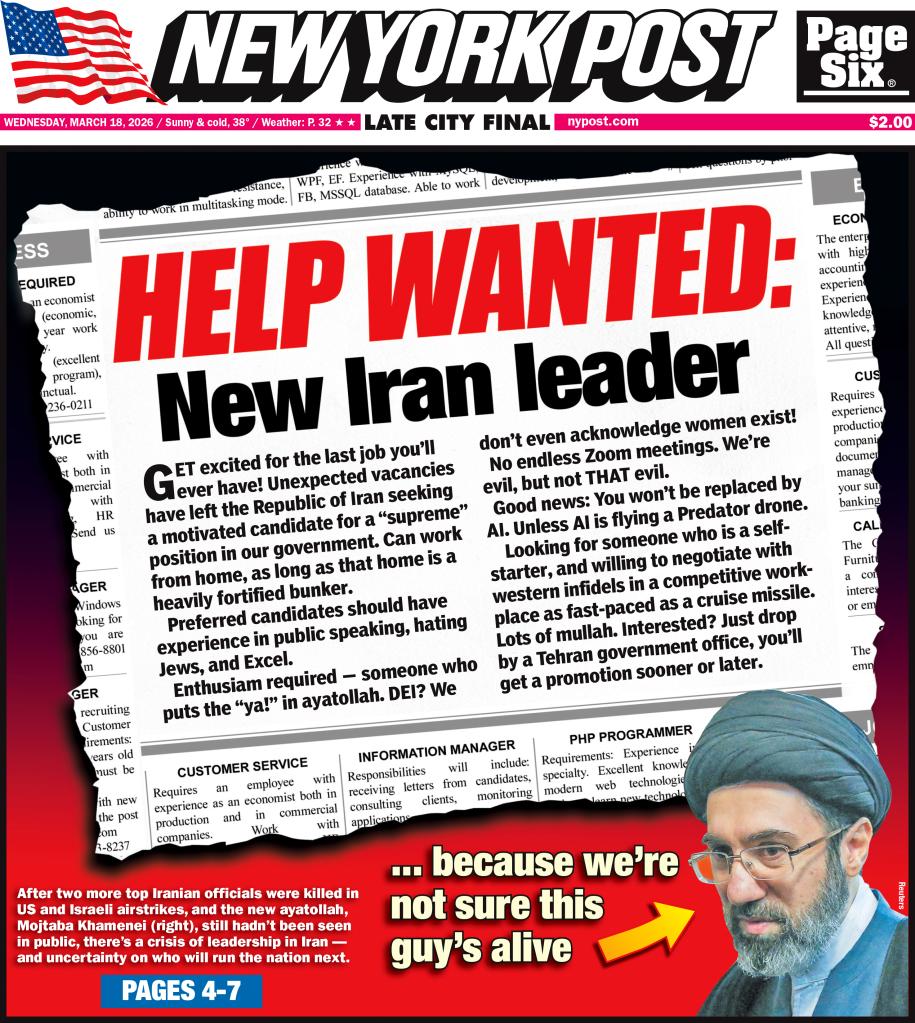
Iranian President Masoud Pezeshkian said in a Fox News interview that he met Supreme Leader Mojtaba Khamenei roughly a month to six weeks earlier and described him as “completely” healthy and able to govern. Pezeshkian said the meeting lasted about seven hours and that his administration continues to receive directions from Khamenei. The supreme leader, 56, has not appeared publicly or on video since taking power after his father was killed in airstrikes on Feb. 28, at the start of the US war against Iran. Reports say Mojtaba Khamenei sustained severe leg and facial injuries in the strike on his father’s compound. Pezeshkian attributed Khamenei’s reclusiveness to security concerns caused by foreign actions and the war.
The president said Iran is seeking an agreement with the United States to end the conflict and remains willing to pursue a memorandum of understanding signed in Pakistan in June. That agreement collapsed after the Islamic Revolutionary Guard Corps continued attacking commercial ships in the Strait of Hormuz. Pezeshkian attributed the breakdown to poor coordination and misunderstandings about implementation, rather than the ship attacks. He also warned that Iran would continue resisting and respond strongly to US attacks, while saying Iran did not want the war to continue and that the United States must decide whether to end it.
Asked about reports that Chinese entities provided Iran with satellite images of US bases in the Middle East for targeting, Pezeshkian said he was unaware of the images and characterized military dealings between countries as their own business. He did not say whether he thought a deal could be reached before the end of the year.
Entities: Masoud Pezeshkian, Mojtaba Khamenei, Bret Baier, Iran, United States • Tone: analytical • Sentiment: neutral • Intent: inform
25-09-2026
Saudi Arabia, Turkey and Pakistan are preparing an urgent meeting of their military chiefs under the Mecca Joint Defence Agreement, following intensified Houthi attacks on Saudi territory and interests. The Houthis said they launched dozens of missiles and drones at Saudi targets; Saudi authorities reported intercepting six ballistic missiles and had issued alerts for areas including Mecca, Jeddah and Yanbu. Saudi Arabia’s Grand Mufti urged soldiers to be prepared to die fighting the Houthis. The three countries’ foreign ministers condemned attacks on Mecca and other civilian sites and affirmed Saudi Arabia’s right to defend itself. The defence pact says an attack on one party is an attack on all.
The developments come amid a broader regional war that began with US and Israeli strikes on Iran in February. Iranian President Masoud Pezeshkian said the Houthis were responsible for their own actions, while Iran’s Foreign Minister Abbas Araqchi described a proposal to the United States: Iran would reopen the Strait of Hormuz after seven days if hostilities ended across all fronts, the US lifted its blockade on Iranian ports, released frozen Iranian funds and waived oil sanctions. Oil prices fell as markets considered the possibility of a truce, although shipping through the strait remained sharply reduced.
The article describes the wider effects of the conflict on energy and shipping. The Houthis have disrupted traffic at the mouth of the Red Sea, Iran has restricted tanker traffic through the Strait of Hormuz, and an attack by Iran-backed militias temporarily disabled Saudi Arabia’s East-West Pipeline. It also notes debate over how directly Tehran controls the Houthis, alongside accounts alleging Iranian Revolutionary Guard Corps guidance for their advance along Yemen’s Red Sea coast.
Meanwhile, Washington is expanding sanctions to target third-country companies doing business with Iran. Iranian airlines were barred from the UAE and Oman following new US sanctions, a move that could deepen Iran’s isolation and economic crisis. A Tehran resident described life in the country as being like “an open-air prison.”
Entities: Saudi Arabia, Houthis, Turkey, Pakistan, Mecca Joint Defence Agreement • Tone: neutral • Sentiment: neutral • Intent: inform
25-09-2026
Iranian President Masoud Pezeshkian said the United States must decide whether it wants to end the war with Iran, while emphasizing that Tehran does not want the conflict to continue. He made the remarks in an interview aired Thursday on Fox News’ “Special Report with Bret Baier,” in response to a question about whether the war could end by the close of the year.
The comments followed Pezeshkian’s address to the United Nations General Assembly on Wednesday, where he said Iran would not surrender to US pressure. The article describes the two sides as remaining far apart over how to end the conflict. US President Donald Trump said on Tuesday that he could “annihilate” Iran if no deal is reached, while also suggesting that an agreement might be possible soon. The report notes that Trump has presented changing aims and timelines for the war.
The conflict began on February 28, when the United States and Israel attacked Iran. Tehran responded with strikes on Israel and Gulf states that host US bases. US-Israeli strikes on Iran and Israeli attacks on Lebanon have killed thousands and displaced millions, according to the article.
Trump has identified weakening Iran’s nuclear capabilities as one of the war’s objectives. Iran denies seeking nuclear weapons and says it has the right to develop nuclear technology for peaceful purposes as a party to the Nuclear Non-Proliferation Treaty. The article also notes that Iran does not possess nuclear weapons, while the United States is nuclear-armed. Overall, the report presents Pezeshkian’s remarks and the parties’ competing positions without endorsing either side.
Entities: Masoud Pezeshkian, Donald Trump, Iran, United States, Israel • Tone: neutral • Sentiment: neutral • Intent: inform
25-09-2026
Russian Foreign Minister Sergei Lavrov and Iranian Foreign Minister Abbas Araqchi met in New York on Thursday, on the sidelines of the United Nations General Assembly. According to a statement from Russia’s Foreign Ministry, they discussed regional and international affairs, focusing on the situation surrounding Iran. Moscow said both sides considered a diplomatic settlement the only way to resolve the crisis and attributed the crisis to what it called illegal actions by the United States and Israel.
The report places the meeting in the context of closer Russia-Iran relations. Russian President Vladimir Putin and Iranian President Masoud Pezeshkian signed a strategic cooperation partnership in 2025, providing for deeper bilateral ties and closer defence cooperation. The agreement does not, however, include a mutual defence clause. The article also says each country has supplied the other with military know-how and equipment.
Earlier in September, Pezeshkian thanked Putin for Moscow’s position on the Iran war and argued that the two countries could resist what he described as US “unilateralism”. In an interview published on Thursday, Pezeshkian said the United States would determine when the war ends. He made the comment when asked whether the conflict could conclude by the end of the year. The article reports these statements without offering further details on the meeting or the prospects for a diplomatic settlement.
Entities: Sergei Lavrov, Abbas Araqchi, Vladimir Putin, Masoud Pezeshkian, Russia • Tone: neutral • Sentiment: neutral • Intent: inform
25-09-2026
Iranian President Masoud Pezeshkian told Fox News that the United States must decide whether to end the war with Iran, saying Tehran does not want the fighting to continue. His comments followed a defiant address to the United Nations General Assembly in New York, where he said Iran would not “bend at the knee” to Washington. Pezeshkian blamed Israel for helping bring about the conflict and argued that disputes should be resolved through dialogue rather than violence.
Pezeshkian said Iran was prepared to reach an agreement with US President Donald Trump, but questioned why a fragile ceasefire had collapsed only two weeks after it was signed. He said Iran would consider a deal reached within international legal frameworks, adding that the timing of any agreement relative to US midterm elections was not important to Tehran. Iranian Foreign Minister Abbas Araghchi had met with Trump envoy Steve Witkoff and Jared Kushner on the sidelines of the UN General Assembly, but the talks produced no immediate breakthrough.
The interview also addressed the Houthis’ role in the regional conflict. As fighting intensified between Yemen’s Houthi movement and Saudi Arabia and its Yemeni allies, Pezeshkian denied that Tehran directs the group. He said Iran has contact with the Houthis but no systematic relationship with them, and described their actions as their own. Washington and its allies accuse Iran of supporting the Houthis, who have launched ballistic missiles at Saudi Arabia and fought Saudi-backed forces in Yemen. Saudi Arabia said it intercepted Houthi missiles on Sept 24, after warnings for several regions, including Mecca. The Houthis’ attacks and control of parts of Yemen’s Red Sea coast have disrupted Saudi oil routes and contributed to rising energy prices.
Entities: Masoud Pezeshkian, United States, Iran, Fox News, United Nations General Assembly • Tone: neutral • Sentiment: neutral • Intent: inform
25-09-2026
Iran is refusing to resume formal negotiations with the United States unless Washington first lifts its blockade on Iranian ports and eases military pressure. Talks held through mediators on the sidelines of the UN General Assembly in New York have so far amounted to exchanges of positions, not substantive negotiations. Iranian representatives made no concessions and are waiting for Washington to respond to a document setting out Tehran’s demands.
Iranian Supreme National Security Council secretary Mohsen Rezaei said Tehran had conveyed seven conditions to the US through regional mediators, including Pakistan and Qatar. He declared that the Strait of Hormuz would remain closed until those conditions were met. President Masoud Pezeshkian also said the US must decide whether it wants to end the conflict.
The Iranian stance conflicts with international calls for the strait to reopen unconditionally. Bahrain’s Foreign Minister Abdullatif Al Zayani presented a joint statement at the UN, backed by about 80 countries, demanding the waterway’s urgent reopening and condemning Iranian attacks on regional states and shipping. Meanwhile, European and US officials are drafting a separate UN Security Council initiative to provide political backing for an international maritime mission protecting navigation. They believe it may gain more support from China and Russia than an earlier proposal, though Iran opposes such a mission.
The blockade and conflict are adding economic and political pressure. Iran is suffering under sanctions and the blockade, while high energy costs are worrying US voters ahead of November’s midterm elections. The US Senate narrowly rejected a resolution calling on President Donald Trump to end the war or seek congressional authorisation. With polls showing Republicans at risk of losing their narrow congressional majorities, some party members have begun distancing themselves from the conflict.
Entities: Iran, United States, Strait of Hormuz, United Nations General Assembly, Mohsen Rezaei • Tone: analytical • Sentiment: negative • Intent: inform
25-09-2026
The article excerpt reports that Iran has sent the Trump administration a new proposal intended to advance diplomacy and address the ongoing conflict. Iranian Foreign Minister Abbas Araghchi said Thursday that the proposal would reopen the Strait of Hormuz and restart talks on ending the broader war within seven days. The statement was made at the United Nations. The proposal therefore appears to link a near-term step concerning the strategic waterway with a renewed diplomatic process about the wider conflict.
The excerpt does not provide the proposal’s terms, explain what reopening the Strait would involve, or clarify how the seven-day period would work. It also contains no response from the Trump administration, no assessment from other governments, and no details about the status or history of prior negotiations. The available text does not say whether the proposal has been formally accepted or whether talks have been scheduled. As a result, the report establishes Iran’s stated offer and its proposed timeline, but not whether the initiative will lead to negotiations or an agreement.
Because the supplied article text consists of only one reported sentence, the summary is limited to those facts. The headline characterizes the proposal as one for peace talks, while the excerpt itself describes reopening the Strait of Hormuz and restarting discussions about ending the broader war. No further background or analysis is included in the provided material.
Entities: Iran, Trump administration, Abbas Araghchi, United Nations, Strait of Hormuz • Tone: neutral • Sentiment: neutral • Intent: inform
25-09-2026
Oil prices declined Friday as reports of renewed U.S.-Iran diplomacy raised the possibility of a deal to ease the standoff in the Persian Gulf. Brent crude futures for November delivery fell 1% to $93.66 a barrel, while U.S. West Texas Intermediate futures declined 0.68% to $105.86.
Reuters reported that U.S. and Iranian negotiators in New York were discussing a phased agreement. A senior Iranian official described the most realistic path forward as Tehran allowing navigation through the Strait of Hormuz in exchange for the United States ending its naval blockade. The two countries had agreed to a similar approach in a June 17 memorandum of understanding, but that arrangement quickly broke down and fighting resumed. The article notes that it is unclear what has changed in the current negotiations.
According to Al Jazeera, Iranian President Masoud Pezeshkian said on the sidelines of the UN General Assembly that Iran wants the United States to return to the memorandum before the U.S. midterm elections. Trade Nation senior market analyst David Morrison said the two sides were understood to be communicating through mediators. He also cautioned that investors remained concerned about persistent inflation, elevated energy prices, and hostile statements from both countries at the UN gathering in New York. Thus, diplomatic prospects pressured prices, while broader economic and geopolitical risks continued to weigh on investor sentiment.
Entities: Brent crude, West Texas Intermediate (WTI), Iran, United States, Strait of Hormuz • Tone: analytical • Sentiment: neutral • Intent: inform