24-09-2026
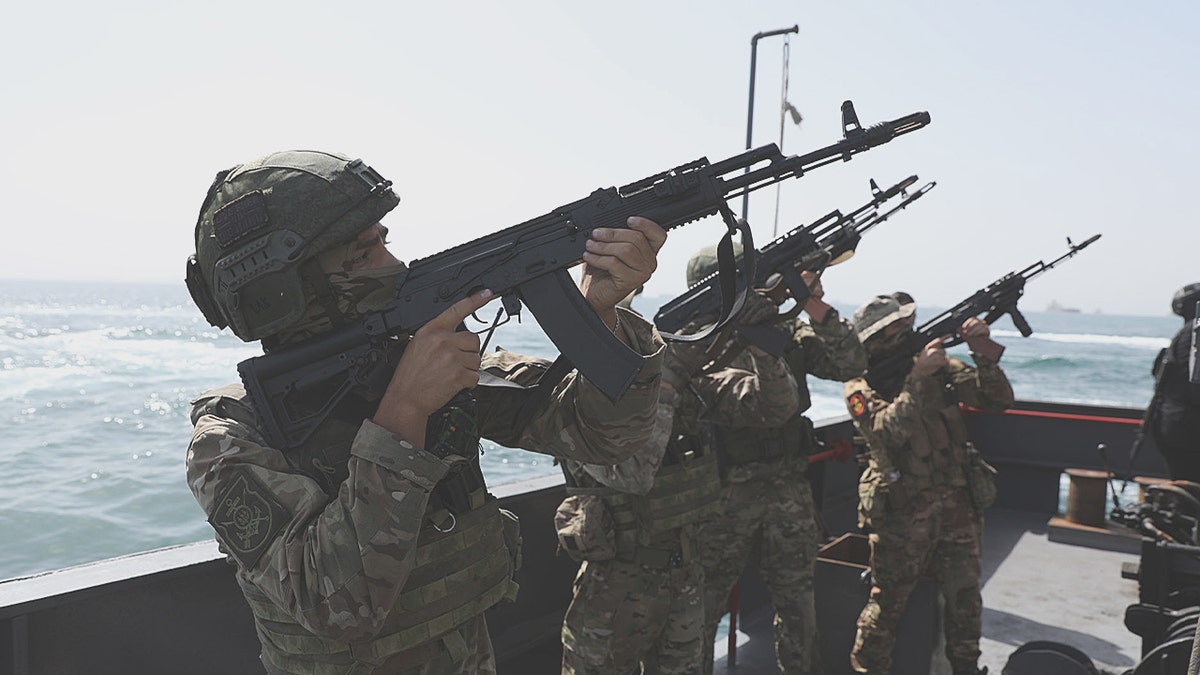
Latvian President Edgars Rinkēvičs told Fox News Digital at the United Nations General Assembly that Latvia has decided to contribute explosive ordnance disposal (EOD) diver specialists to a prospective U.S.-led effort in the Strait of Hormuz or wider Middle East. The contribution would answer President Donald Trump’s request for European support. Rinkēvičs said Latvia hopes operations will lead to a political solution and the restoration of global energy supplies, though he described diplomacy with Iran and Russia as very difficult.
Rinkēvičs warned that Russia and Iran’s military cooperation is a growing security concern. He said Iranian-designed drones were used early in Russia’s war against Ukraine, and that Russia has since modernized them. The article also references Russian Foreign Ministry documents describing a 2024–2026 cooperation roadmap between Moscow and Tehran covering areas such as nuclear policy, finance, aviation and infrastructure.
On Latvia’s security, Rinkēvičs said the country does not see evidence of an imminent Russian invasion. He argued that Russia’s military is weaker than it was in 2022, while emphasizing that sabotage, cyberattacks and information campaigns are intensifying threats to Latvia and Europe. He said governments must prepare the public without causing unnecessary panic.
The president also urged NATO to adapt faster to warfare shaped by drones and missiles. He welcomed higher defense spending, crediting Trump’s pressure for greater investment, but cautioned that money alone cannot resolve readiness problems. The supplied article ends mid-quotation as Rinkēvičs begins discussing the limits of what defense funding can buy.
Entities: Edgars Rinkēvičs, Donald Trump, Latvia, Russia, Iran • Tone: analytical • Sentiment: neutral • Intent: inform
24-09-2026
Slovenian Prime Minister Janez Janša told Fox News Digital at the United Nations General Assembly that the UN applies “double standards” by giving Gaza more attention and resources than Russia’s war in Ukraine and other humanitarian crises. He argued the organization should use its diplomatic and security tools consistently, and said Ukraine’s war is an immediate security concern for Slovenia and other European countries. Janša also pointed to the persecution of Christians in Nigeria and said he planned to raise the issue in his General Assembly address.
The article describes a change in Slovenia’s approach to Israel since Janša returned to power. The previous government, led by Robert Golob, recognized Palestinian statehood in 2024 and imposed an arms embargo on Israel in 2025. Janša’s government has sought closer ties with Israel, including following the opening of Israel’s first resident embassy in Slovenia and a visit by Israeli Foreign Minister Gideon Sa’ar. The two countries signed a cooperation program in several fields through 2030. Janša characterized this as a restoration of traditionally good relations.
Janša also criticized European governments for what he sees as inconsistency in their policies toward Ukraine and Iran. He argued that Tehran’s relationship with Moscow links the conflicts in Ukraine and the Middle East, and said lasting peace in the Middle East would require political change in Iran. He cited Ireland, Spain, and Slovenia’s previous government as examples of governments whose positions he disputes. The supplied article text cuts off mid-sentence while describing his further criticism of European leaders. The headline and introduction also report that President Donald Trump has promised to visit Slovenia, Melania Trump’s home country.
Entities: Janez Janša, Donald Trump, Melania Trump, United Nations (UN), Slovenia • Tone: analytical • Sentiment: neutral • Intent: inform
24-09-2026
Denmark’s Defense Intelligence Service (FE) warned that Russia could carry out a limited military attack on a NATO country in the coming months, describing the risk as low but growing. The attack could involve a small deployment of ground troops or long-range strikes against infrastructure supporting Ukraine. FE chief Thomas Ahrenkiel said Moscow might justify an incursion by claiming it was protecting Russian minorities, potentially using troops without Russian insignia—a tactic the article says Russia used in parts of Ukraine before its 2022 full-scale invasion. Another possibility raised by the agency is a false-flag operation, such as using Ukrainian-made drones to attack a NATO member. Ahrenkiel said the purpose would be to divide NATO, rather than seize territory.
The warning also covers an expected escalation in Russia’s hybrid warfare against Western countries. The FE says future attacks could have greater consequences than previous incidents, target more than infrastructure, and carry a high risk of casualties. The article cites accusations that Russia was involved in cutting undersea cables in Europe and an attempted drone attack on Germany’s Leipzig/Halle Airport. EU members have called for new sanctions in response to such incidents. Russia denies involvement in hybrid warfare and sabotage against NATO countries.
Danish Defense Minister Jeppe Bruus said Russia is targeting support for Ukraine because it is under pressure and failing to meet its objectives. Denmark’s assessment also estimates that Russia could wage a local war against a neighboring NATO country in about six months, pose a credible regional threat in two years, and recover sufficiently from the Ukraine invasion to wage a large-scale European war in five years. The article presents these projections as intelligence warnings, not as confirmation that an attack is imminent.
Entities: Denmark, Danish Defense Intelligence Service (FE), Russia, NATO, Ukraine • Tone: urgent • Sentiment: negative • Intent: warn