17-09-2026
DW examines how disinformation is shaping perceptions of the renewed Houthi-Saudi conflict in Yemen. The fighting has reportedly intensified, with Houthi forces making gains near the Red Sea and Bab el-Mandeb Strait, while Saudi Arabia has responded with airstrikes and the Houthis have launched drones and missiles toward Saudi territory. The escalation has also raised concerns about international shipping and trade through the Red Sea.
The article fact-checks two widely circulated videos. The first, a nine-second clip showing a huge explosion, was falsely presented as footage of Houthi attacks in Saudi Arabia. DW found that it was both old and AI-generated. Visual inconsistencies include unnatural explosion and smoke patterns, a lamppost appearing suddenly, and a lack of expected damage or audible reaction. Hive Moderation’s technical analysis also indicated artificial generation. A reverse-image search showed that the same clip had previously been falsely labeled as footage from Iran.
The second video showed military vehicles moving through a desert before explosions appeared to destroy the convoy. It was falsely described as a recent Houthi ambush of Saudi-backed forces. DW traced it to a 2024 Houthi military exercise and found that its dramatic audio had been replaced with football commentary from a 2018 match. The exercise footage had also circulated in other misleading contexts.
Researcher Hannah Porter explains that limited international attention, restricted access, threats to journalists, and pressure on independent media have created an information vacuum in Yemen. These conditions make it difficult to verify events, particularly in northern Yemen, and allow old, unrelated, or fabricated footage to spread widely. DW concludes that audiences should be highly skeptical of videos claiming to depict specific battles and should seek independent verification before accepting or sharing them.
Entities: Yemen, Houthi movement, Saudi Arabia, Red Sea, Bab el-Mandeb Strait • Tone: analytical • Sentiment: negative • Intent: analyze
17-09-2026
The article reports an escalation in fighting between Saudi Arabia and the Iran-backed Houthi movement in Yemen, which is battling Yemen’s internationally recognized government with Saudi support. At least five people were reported killed across the conflict, although the deaths were described through different sources and accounts. Saudi Arabia said one person was killed by shrapnel from a downed drone near Mecca, while buildings and vehicles were damaged. Saudi authorities also accused the Houthis of launching a “cowardly” strike on Mecca, Islam’s holiest city and a major destination for the hajj and umrah pilgrimages. The Houthis denied responsibility for that alleged attack.
The Houthis claimed that Saudi warplanes struck three telecommunications towers in Taiz, southwestern Yemen. Houthi-backed Almisrah TV reported that one civilian was killed in Abs in northwestern Yemen and later said that three children had been killed in strikes carried out by Yemen’s internationally recognized government.
The latest violence follows the collapse in July of a 2022 truce between the Houthis and Saudi Arabia. The truce broke down after the Houthis allowed an Iranian aircraft to land in Sanaa, challenging Saudi control of Yemeni airspace. The Houthis subsequently announced a maritime blockade on Saudi Arabia. They have controlled Sanaa and much of Yemen’s populated western region since the civil war began in 2014.
The article says the Houthis have recently advanced toward coastal areas near the Bab al-Mandab Strait, a strategically important Red Sea shipping route, and have reported dozens of Saudi airstrikes during the offensive. The route’s importance has grown amid restrictions on the Strait of Hormuz linked to the conflict involving Iran, the United States, and Israel. The broader war has displaced more than 100,000 people, according to United Nations figures.
Entities: Saudi Arabia, Houthi movement, Yemen’s internationally recognized government, Iran, Mecca • Tone: analytical • Sentiment: negative • Intent: inform
17-09-2026
Fox News reports that Saudi Arabia faces what Hussain Abdul-Hussain, a research fellow at the Foundation for Defense of Democracies, describes as the most serious threat to its oil production since the kingdom’s founding in 1932. The assessment centers on escalating activity by Yemen’s Iran-backed Houthi movement near the Bab el-Mandeb Strait, a strategic Red Sea passage connecting Middle Eastern oil producers with Asian markets.
According to Abdul-Hussain, Iran may be using the Houthis to pressure Saudi Arabia after broader efforts to restrict Iranian oil exports and the alleged closure of the Strait of Hormuz. Saudi Arabia reportedly redirected some oil shipments from its eastern facilities near Hormuz to the western port of Yanbu, with tankers traveling south through the Red Sea and Bab el-Mandeb. The expert argues that Houthi attacks could be intended to prevent Saudi Arabia from maintaining this alternative export route.
The article cites several recent incidents, including Saudi Arabia’s temporary closure of its East-West oil pipeline after a drone attack launched from Iraq, which President Donald Trump said he believed Iran was behind. Saudi forces also destroyed a Houthi drone that approached airspace near Mecca. Fox News separately reported that Crown Prince Mohammed bin Salman urged Trump to take military action against the Houthis.
Trump said the Houthis had contacted the United States and did not want Washington to intervene. Abdul-Hussain likewise suggested that the United States may be reluctant to enter the conflict because the Houthis claim to be targeting only Saudi vessels and navigation, rather than American or European shipping. He said Washington expects Saudi Arabia to use the military equipment and support it has received from the United States to protect its own tankers and keep the waterway open.
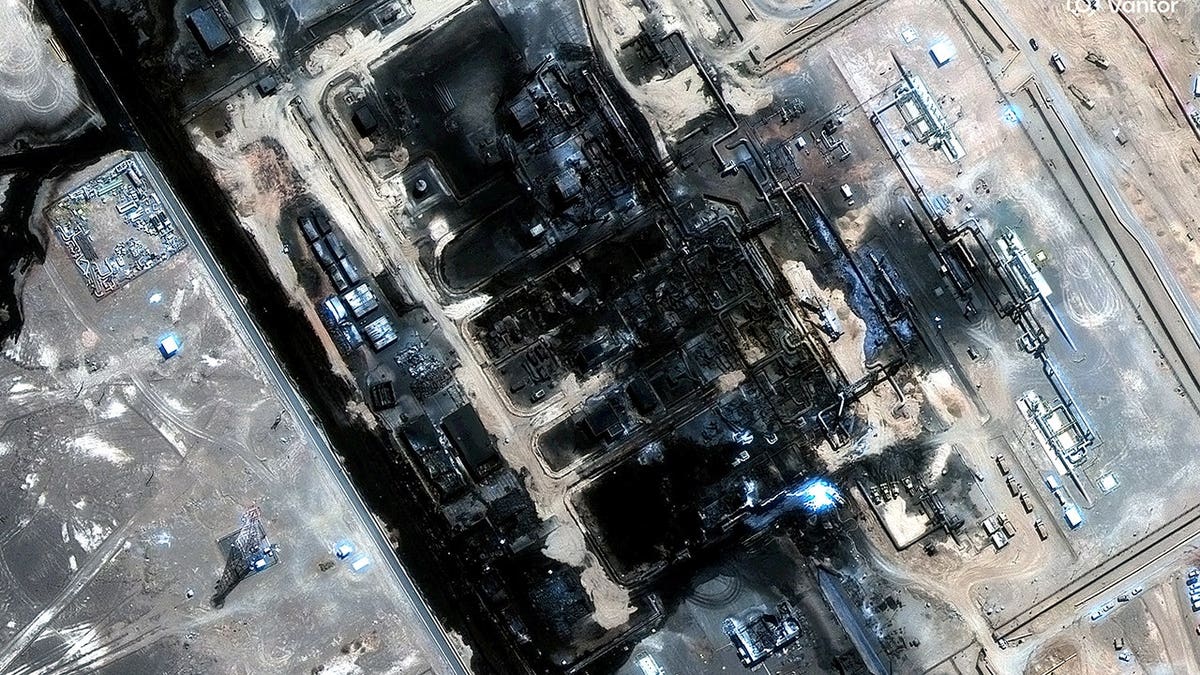
The article presents the situation as both an oil-security crisis and a strategic dilemma for Washington. The supplied text ends in the middle of an image caption, so it may not include the article’s full conclusion.
Entities: Saudi Arabia, Hussain Abdul-Hussain, Houthis, Iran, Yemen • Tone: urgent • Sentiment: negative • Intent: inform
17-09-2026
China has privately urged Iran to use its influence over Yemen’s Houthi movement to curb the group’s attacks and advances, according to three Iranian sources cited by Reuters. The request reportedly followed an appeal from Saudi Arabia, whose oil exports and shipping routes have become more vulnerable after Houthi forces advanced along Yemen’s Red Sea coast and near the Bab el-Mandeb Strait. Beijing has publicly called for restraint, dialogue and safe navigation, but its private message apparently reflected concerns about the security of energy routes vital to China.
The sources said Iran responded that regional stability depended on ending what it described as the US-Israeli war on Iran. China did not threaten sanctions or other economic consequences if Tehran failed to act. Beijing’s Foreign Ministry said that further escalation in Yemen and the Red Sea was not in any party’s interests and called for respect for national sovereignty, protection of civilian infrastructure and negotiations.
China has significant leverage with Iran. It has been Iran’s largest trading partner for more than a decade and purchased more than 80% of Iran’s seaborne oil exports in 2025. At the same time, China relies heavily on Middle Eastern energy and conducts substantial trade with Gulf Cooperation Council states. Analysts said Beijing therefore has an interest in both restraining the Houthis and reopening the Strait of Hormuz, which the article says has been effectively shut amid the wider conflict.
The Houthi attacks have increased pressure on global energy markets already affected by disruptions in the Gulf. The Strait of Hormuz previously carried about 20% of global oil and liquefied natural gas supplies, while a prolonged closure of Saudi Arabia’s East-West pipeline could affect roughly 4% of global oil supply. Although China brokered the restoration of Iran-Saudi diplomatic ties in 2023, it remains uncertain whether Beijing will attach meaningful consequences to its request or whether Tehran will act on it.
Entities: China, Iran, Yemen’s Houthi movement, Saudi Arabia, Red Sea • Tone: analytical • Sentiment: negative • Intent: analyze
17-09-2026
Pakistan has reaffirmed that its recently signed defence agreement with Saudi Arabia and Türkiye would apply if the territorial integrity or geographical boundaries of any member were attacked. The statement came after Saudi Arabia said its air defences intercepted and destroyed a Houthi drone south of Mecca before it entered the city’s prohibited airspace. The Houthis denied targeting Mecca or any Islamic holy site.
Pakistan Defence Minister Khawaja Asif said Islamabad would fulfil its obligations under the Mecca defence agreement, but stressed that Pakistan did not need a formal pact to defend Muslim holy sites. Foreign Office spokesperson Sajjad Haider Khan likewise confirmed Pakistan’s commitment while declining to disclose when, where, or how military force might be used, citing operational confidentiality. Pakistan’s military has described the trilateral agreement as defensive and intended for collective deterrence, with no regional ambitions.
Saudi Arabia has reportedly sought air-defence assistance from France, Britain, Pakistan, and Egypt amid shortages of missile interceptors. However, Pakistani and Turkish officials told the Associated Press that Riyadh had not requested military support in response to the latest escalation. Pakistan Prime Minister Shehbaz Sharif nevertheless expressed full support for Saudi Arabia and condemned the reported attack.
Islamabad also warned that continued Houthi activity around the Red Sea and Bab el-Mandab posed serious risks to regional security, maritime trade, and Pakistan’s economy. Pakistani officials urged dialogue and diplomacy, while noting that disruptions to routes including the Strait of Hormuz and Bab el-Mandab could affect economies across the region. Asif said Pakistan had conveyed Saudi Arabia’s message to Iran and believed Tehran would not deliberately open another front, while distinguishing the Iranian state from non-state groups that may act independently. Türkiye also condemned the Houthi threat and called attention to its implications for global stability.
Entities: Pakistan, Saudi Arabia, Türkiye, Mecca, Khawaja Asif • Tone: analytical • Sentiment: negative • Intent: inform
17-09-2026
The article reports that attacks on Saudi Arabia’s 1,200-kilometre East-West oil pipeline are intensifying fears of a further rise in global oil and diesel prices. The pipeline was intended to provide an alternative to the strategically vital Strait of Hormuz, which has been affected by conflict. Houthi and Iraqi attacks have forced its temporary closure, putting up to 4% of global oil supply at risk. Brent crude has traded above $113 a barrel, while Saudi output had already fallen sharply in August.
European governments are responding to the threat of higher fuel prices, which are politically sensitive ahead of elections in France and Italy in 2027. French President Emmanuel Macron ordered a government mobilisation to limit fuel-price pressures and linked energy security to diplomacy, freedom of navigation in Hormuz and the protection of regional infrastructure. Italy’s Prime Minister Giorgia Meloni abolished a vehicle stamp duty for small and medium-powered cars, requested greater fiscal flexibility from the European Commission and backed faster domestic oil and gas development. Spain doubled its diesel tax reduction to 20 cents per litre after a sharp increase in diesel prices. Germany is preparing measures to cushion record petrol and diesel costs, although Chancellor Friedrich Merz acknowledged that Berlin has limited control over international prices.
The European Commission said the immediate problem is pricing rather than a physical shortage. It reported that demand for diesel and jet fuel is being met through higher European refinery output and alternative global supplies, while warning that conflict escalation and seasonal demand could tighten markets. Kpler analyst Homayoun Falakshahi said the Saudi disruption could put millions of barrels per day of exports at risk and would likely remain supportive of diesel prices. As inflation rises, European lawmakers and leaders are also gaining momentum behind a windfall tax on energy companies to fund social support.
Entities: Saudi Arabia, East-West oil pipeline, Strait of Hormuz, Houthi attacks, Iraqi attacks • Tone: urgent • Sentiment: negative • Intent: inform
17-09-2026
The United Arab Emirates considers attacks on Saudi Arabia a direct threat to its own security and economic prosperity, according to Dr Anwar Gargash, diplomatic adviser to UAE President Sheikh Mohamed. Speaking at the Arab Media Summit in Dubai, Gargash referred to a reported Houthi drone attack aimed at Makkah. The drone was intercepted and destroyed before entering the holy city’s airspace.
Gargash also warned about Iran-backed armed groups operating outside formal government control, arguing that such militias destabilize Iran and pose a wider threat to Middle Eastern countries. He said the region’s future prosperity depends heavily on how the conflict involving Iran is resolved and whether trust can be restored afterward.
Although the UAE must defend its sovereignty and protect its interests, Gargash said it is also preparing for dialogue with Iran. He argued that relations between the two countries are necessary, but rebuilding trust could take many years because Iran’s attacks affected not only the UAE but Gulf states more broadly.
Gargash described Iran’s decision to attack neighboring Gulf countries as a strategic mistake and said Tehran must adopt a different view of the Gulf Co-operation Council. He insisted that attacks must stop before meaningful negotiations about the region’s future can begin.
He pointed to Iranian President Masoud Pezeshkian’s criticism of the attacks as a constructive signal. Pezeshkian recently met Abu Dhabi Crown Prince Sheikh Khaled bin Mohamed at the BRICS summit in New Delhi. Gargash said reasonable voices in Iran could help the region emerge from the crisis and suggested there was an understanding that the parties should eventually turn the page for the benefit of the UAE, Iran and the wider region.
Entities: United Arab Emirates (UAE), Saudi Arabia, Iran, Dr Anwar Gargash, President Sheikh Mohamed • Tone: analytical • Sentiment: negative • Intent: inform
17-09-2026
The article examines how far Egypt may go in supporting Saudi Arabia’s efforts to secure the Red Sea after Iran-aligned Houthi rebels expanded their control over Yemen’s Red Sea coast and gained influence near the Bab al-Mandeb strait, the southern gateway to the Suez Canal. The developments have prompted Saudi air attacks in Yemen and repeated Houthi strikes on Saudi oil infrastructure, while threatening Egypt’s Suez Canal revenues, foreign-currency earnings and strategic influence.
Analysts describe Egypt and Saudi Arabia as increasingly sharing a view of the Red Sea and surrounding region as one interconnected security space. Their cooperation could include intelligence sharing, maritime surveillance, protection of commercial shipping and broader naval coordination. Egypt is already part of a Saudi-led coalition for Red Sea maritime security, although the coalition has not yet taken military action against the Houthis.
The article argues that Cairo is likely to support maritime defense but will avoid becoming deeply involved in Yemen. Egypt’s costly intervention in the North Yemen Civil War during the 1960s remains a warning against direct military entanglement. The countries’ wider strategic alignment also extends to Sudan, Libya, Somalia and the Palestinian issue, with both governments opposing state fragmentation, separatist movements and externally backed militias.
However, their regional vision conflicts with that of the United Arab Emirates, particularly over Yemen and Sudan. Egypt and Saudi Arabia have opposed threats to state unity, while Cairo supports Sudan’s government against the Rapid Support Forces, which the UAE has been accused—though it denies it—of supporting. The article presents the relationship as part of a potential new Arab security framework, shaped partly by Riyadh’s reported disappointment with the level of United States support against the Houthis.
Entities: Egypt, Saudi Arabia, Abdel Fattah el-Sisi, Mohammed bin Salman, Iran-aligned Houthi rebels • Tone: analytical • Sentiment: neutral • Intent: analyze
17-09-2026
Fighting intensified in Yemen between the Saudi-led coalition and Houthi forces as the United States reiterated its support for Yemen’s internationally recognised government while indicating that it was not taking a direct combat role. Yemeni government forces said Saudi-led coalition aircraft struck Houthi positions and equipment near the southwestern port city of Mocha, while government forces carried out drone attacks against Houthi fighters in northern Marib. The Houthis claimed that they had shot down a Saudi F-15 fighter jet over Marib using a locally made surface-to-air missile, a claim that could not be independently verified.
Houthi military spokesman Yahya Saree said Saudi warplanes had conducted 40 air strikes over 24 hours in Taiz, Marib and Hodeidah. The Houthis said they retaliated by targeting the Khamis Mushait airbase and an oil facility in Yanbu, a Saudi Red Sea port city.
Saudi Arabia is reportedly running short of missile interceptors and has asked France, Pakistan, Egypt and the United Kingdom for air-defence assistance. The United States, Saudi Arabia’s main ally and arms supplier, is also said to have depleted some of its interceptor stock during its war with Iran. A US Central Command spokesman said Washington was closely monitoring the conflict and maintained a longstanding military relationship with Saudi Arabia.
At the same time, US officials reportedly held direct talks with Houthi representatives in Oman. According to Reuters sources, the Houthis said they did not intend to attack US vessels and remained committed to a 2025 ceasefire with the United States. Washington’s Yemen envoy also reaffirmed strong US support for Yemen’s internationally recognised government and condemned what the embassy described as Iran-backed Houthi aggression. Al Jazeera’s Yemen correspondent said the reported downing of a Saudi fighter could affect the balance of power because Saudi Arabia relies heavily on air strikes against Houthi positions.
Entities: Houthis, Yemen’s internationally recognised government, Saudi-led coalition, United States, Saudi Arabia • Tone: analytical • Sentiment: negative • Intent: inform
17-09-2026
NPR’s A Martínez interviews oil markets expert Ellen R. Wald about the effects of escalating fighting between the Houthis and Saudi Arabia on global oil and fuel prices. Wald explains that Saudi Arabia’s East-West Pipeline has become a critical route for transporting oil from fields on the Persian Gulf to the Red Sea after closures in the Strait of Hormuz. The pipeline can carry up to 7 million barrels per day and connects Saudi production to refineries, export facilities, the Suez Canal and European markets. Its shutdown therefore limits Saudi Arabia’s ability to deliver crude oil and refined products to customers worldwide.
Wald says gasoline and diesel supplies are especially constrained because Middle Eastern countries are prioritizing the export of crude oil rather than refined products such as gasoline, diesel and jet fuel. Refineries are operating at sharply reduced rates, contributing to tight global fuel markets. Disruptions at Russian refineries caused by Ukrainian attacks are adding to the strain. As a result, international buyers are seeking more gasoline and diesel from the United States, increasing prices for American consumers.
The interview also examines alternatives to shipping oil through the Strait of Hormuz. The United Arab Emirates has a pipeline to Fujairah, outside the strait, but its capacity is only 1.8 million barrels per day and the port has also faced attacks. Saudi Arabia’s East-West Pipeline is another major alternative, but its vulnerability means it cannot fully replace the normal shipping route when it is offline. Some vessels are making “dark crossings” with transponders turned off and receiving guidance from the U.S. military, but these ships generally carry less oil than the very large tankers that operate when the strait is open. Consequently, global oil flows remain substantially below normal levels.
Entities: A Martínez, Ellen R. Wald, Atlantic Council, Global Energy Center, Houthis • Tone: analytical • Sentiment: negative • Intent: analyze