17-09-2026
The Al Jazeera report states that a spokesman for US Central Command described the US blockade of the Strait of Hormuz as “highly effective.” Captain Tim Hawkins reportedly told Al Jazeera that Iran does not control the strategically important waterway. He also said that approximately 900 million barrels of oil have passed through the strait since May.
The report presents the claims as statements from the US military official and does not provide additional comment from Iranian authorities, independent verification, or further detail about how the blockade is being enforced. Its focus is the reported effectiveness of the US operation and the continued movement of oil through the Strait of Hormuz despite the alleged blockade. The strait is a major maritime route for global energy shipments, making claims about its accessibility and control significant in the context of the US-Israel war on Iran referenced in the headline.
Published on September 17, 2026, the article is a brief news video item rather than a detailed analysis. It primarily relays the CENTCOM spokesman’s assessment: that Iran lacks control over the waterway and that substantial oil traffic has continued. The wording “highly effective” reflects the US military’s characterization of its own operation, while the reported oil-flow figure is offered as evidence of activity in the strait. The article does not explain whether the blockade is intended to stop all shipping, restrict particular vessels, or achieve another military objective.
Entities: US Central Command (CENTCOM), Al Jazeera, Captain Tim Hawkins, Iran, Strait of Hormuz • Tone: neutral • Sentiment: neutral • Intent: inform
17-09-2026
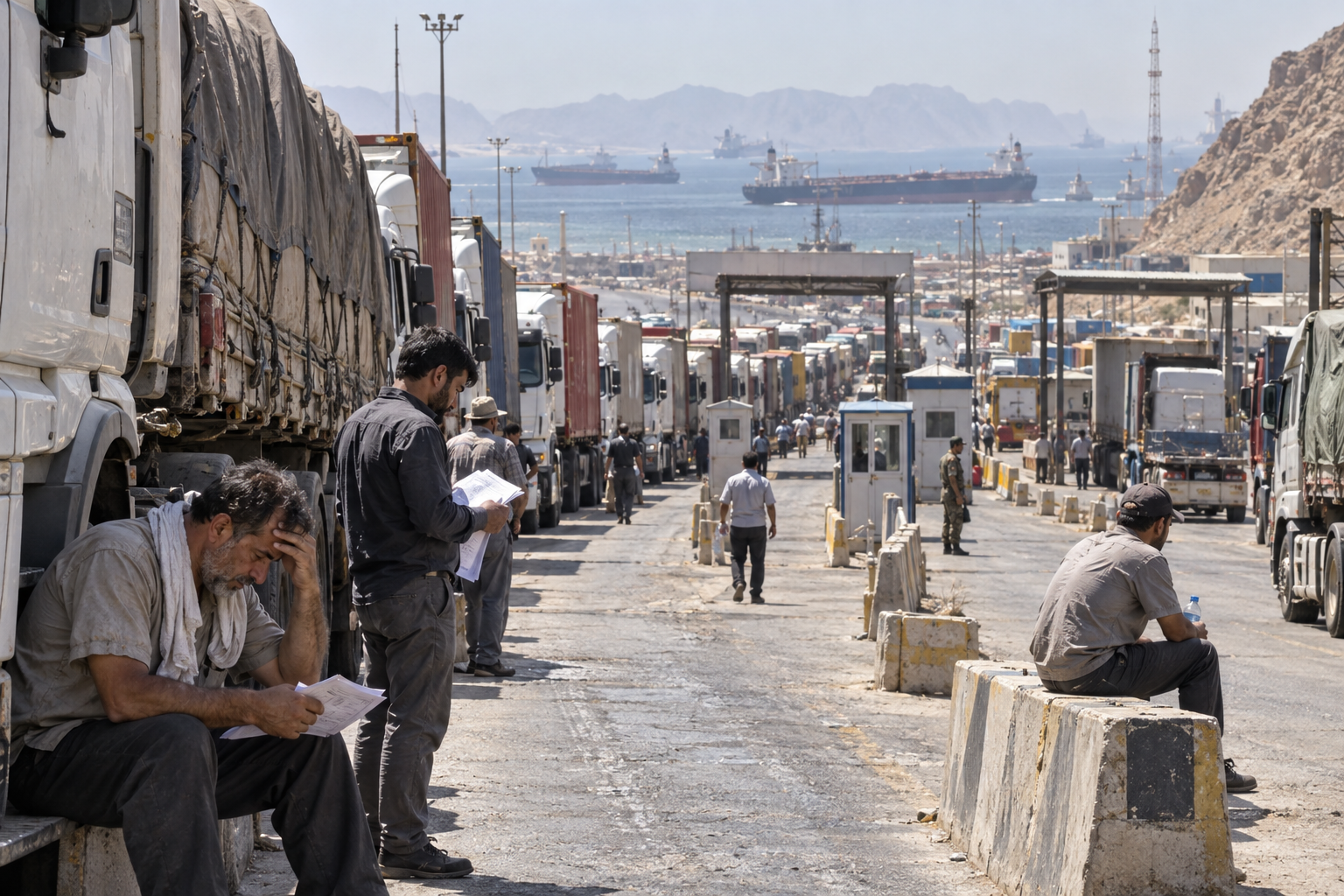
Iran’s trade and exports are reportedly deteriorating as the country attempts to bypass a US naval blockade of the Strait of Hormuz by moving oil and other goods overland. The shift has created severe congestion at Iran’s borders with Turkey and Pakistan, where more than 3,700 cargo trucks are reportedly stranded. Drivers carrying iron ore, cement and gas have waited as long as 20 days, while facing record fuel prices, shortages of food and water, inadequate sanitation and temperatures reaching 120 degrees Fahrenheit. Iranian truckers are also experiencing disruptions at the Iraqi border after terminals were temporarily closed following an attack on a Saudi oil pipeline from within Iraq.
The disruption has affected both exports and imports. Iran’s non-oil exports fell nearly 30% to approximately $15 billion by August 16, compared with about $45 billion during the previous fiscal year. Oil exports declined to roughly 210,000 barrels per day in August, their lowest level since 2020 and about one-tenth of their prewar volume, according to Vortexa. Imports also fell approximately 25% year over year to about $17 billion.
The article attributes part of the problem to bureaucratic and infrastructure bottlenecks, including limitations in Iran’s rail connections with China. Import-sector expert Mohammad Reza Khodarahm said these constraints now account for nearly one-third of the cost of goods entering Iran, intensifying inflation for Iran’s population of 93 million.
Iran has partially reduced the impact by expanding trade through the Caspian Sea and increasing rail shipments from China. Caspian transit volumes have risen 70% in five months, with Russia supplying wheat, corn and cooking oil. Trains to eastern China are reportedly operating every three to four days instead of once weekly. Despite these measures, Iran’s hardliners insist the country can withstand the economic pressure while the regime and its allied militant groups continue disrupting oil and cargo transport around the Arabian Peninsula.
Entities: Iran, United States naval blockade, Strait of Hormuz, Turkey, Pakistan • Tone: analytical • Sentiment: negative • Intent: inform
17-09-2026
The provided excerpt from The Washington Post reports that gasoline and diesel prices in the United States are expected to rise sharply as a consequence of the U.S.-led war on Iran. Analysts cited in the article predict that the immediate effects of the conflict on fuel markets have not yet fully materialized, suggesting that consumers may soon face substantially higher costs at the pump and throughout the broader economy.
The article also indicates that the situation could worsen beyond the initial price increases. Although the Trump administration has offered assurances about the economic consequences of the conflict, the authors warn that a new phase of the war may be imminent and could produce even greater economic damage. This framing suggests that the expected fuel-price increase is connected not only to current disruptions but also to the possibility of a longer or more extensive conflict.
The excerpt emphasizes uncertainty and escalation. It does not provide specific price forecasts, identify the precise causes of the expected market disruption, or describe the alleged damage to infrastructure mentioned in the headline. It also does not include details about government policy, international reactions, or the effects on households and businesses. Those details may appear in the full article, but they are absent from the supplied text.
Overall, the passage serves as an early warning about worsening energy costs and the potential economic consequences of military escalation involving Iran. Because only the headline, byline, and opening paragraphs were provided, this analysis is limited to the article’s stated predictions and framing rather than the full report.
Entities: Evan Halper, Rachel Chason, Joyce Sohyun Lee, The Washington Post, United States • Tone: urgent • Sentiment: negative • Intent: warn