17-09-2026
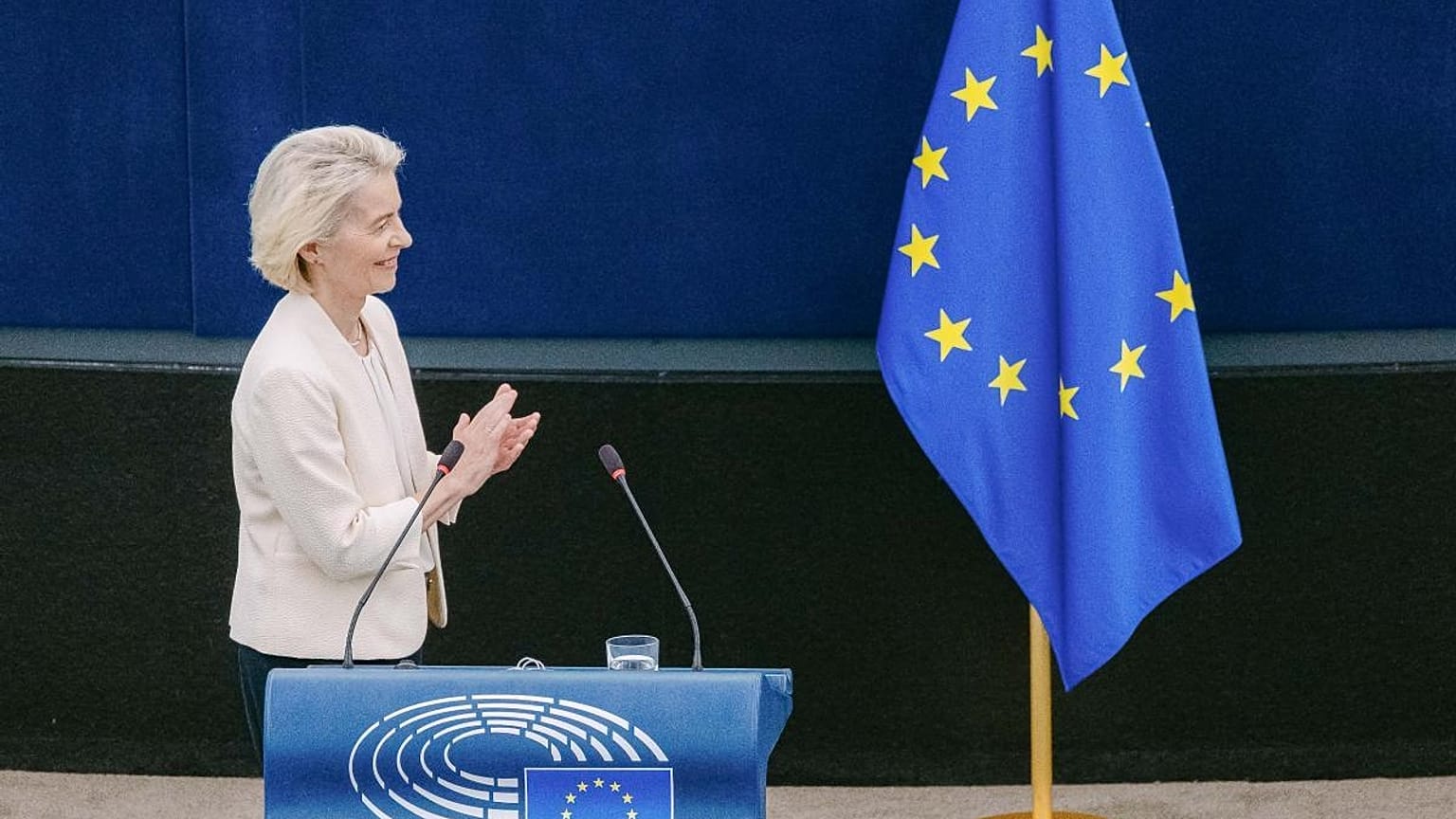
In her State of the Union speech, European Commission President Ursula von der Leyen presented several proposals intended to reshape Europe’s security and defence architecture amid Russia’s war against Ukraine, suspected sabotage operations, drone incursions and uncertainty over the future of the US military presence in Europe. The proposals are expected to form part of a broader EU security strategy due next month, but the article stresses that many practical details remain unresolved.
The most prominent proposal is a European Security Council, a security-focused format within the EU leaders’ framework that would include close partners such as Ukraine, the United Kingdom, Norway and Canada. Although similar ideas have been proposed by France and Germany before, von der Leyen did not provide a timetable, specific deliverables or a clear explanation of how the body would relate to NATO or the Coalition of the Willing.
Von der Leyen also called for an Emergency Security Protocol to help EU countries coordinate responses to hybrid threats that fall below the threshold of armed attack. The mechanism would build on the EU’s mutual defence clause and could be activated in response to sabotage, cyberattacks or other lower-intensity incidents without automatically requiring military intervention. However, officials and experts question whether a new protocol would add meaningful deterrence, given that both the EU and NATO already have response procedures.
Finally, she announced a European Instrument for Strategic Enablers to support investment in satellites, airlift, refuelling and intelligence capabilities. These assets are viewed as essential to modern military operations, particularly if the United States reduces its military presence in Europe. Yet the scale and funding of the initiative remain unclear, with estimates suggesting that replacing US capabilities could cost around €500 billion. Overall, the speech outlines an ambitious direction but leaves major questions about implementation, financing, institutional overlap and political commitment.
Entities: Ursula von der Leyen, European Union, NATO, Russia’s war in Ukraine, European Security Council • Tone: analytical • Sentiment: neutral • Intent: analyze
17-09-2026
Euronews reports on reactions from four European Commissioners following Ursula von der Leyen’s annual State of the Union speech. Commissioners Valdis Dombrovskis, Maroš Šefčovič, Wopke Hoekstra and Andrius Kubilius discuss the priorities and challenges facing the European Union after the Commission president’s address.
The video focuses on four major policy areas: the economy, trade, climate and defence. The Commissioners outline what they believe should happen next, including measures to improve the EU’s competitiveness, strengthen trade relations, address climate change and reinforce Europe’s defence capabilities.
The report presents the Commissioners’ views as an indication of how the European Commission may pursue von der Leyen’s agenda in the period following the speech. Competitiveness and economic performance are linked to the EU’s ability to compete internationally, while trade policy is presented as an important part of the bloc’s future strategy. Climate change remains a central policy challenge, and defence is identified as another area requiring stronger European action.
The article does not provide detailed excerpts from the Commissioners’ interviews or explain their individual positions. Instead, it serves as a video introduction to their collective response to the State of the Union address and highlights the broad policy questions likely to shape the EU’s next steps. The report was updated on 17 September 2026.
Entities: Ursula von der Leyen, Valdis Dombrovskis, Maroš Šefčovič, Wopke Hoekstra, Andrius Kubilius • Tone: analytical • Sentiment: neutral • Intent: inform
17-09-2026
European Commission President Ursula von der Leyen used her state-of-the-union speech to adopt a notably forceful tone toward China, although she provided few concrete details about possible new trade measures. Analysts interpreted the speech as a deliberate signal to Beijing that the European Union intends to take a firmer approach to its trade relationship with China.
Von der Leyen warned that Europe was already experiencing what she called a “second China shock,” suggesting that Chinese economic activity and trade practices were creating renewed pressure on European industries and markets. She said Brussels would use all available tools to rebalance trade with China, but did not specify which measures the EU might introduce.
The speech came as an October deadline approaches for the EU to secure tangible progress in correcting trade imbalances with Beijing. That timing gave the remarks added significance, as the bloc prepares for further discussions with Chinese officials. EU Trade Commissioner Maros Sefcovic held a scheduled video conference with China’s Commerce Minister Wang Wentao on Thursday, highlighting that diplomatic and trade engagement is continuing alongside the tougher public rhetoric.
According to the analysts cited, the main purpose of von der Leyen’s comments was not to announce a fully developed policy package, but to establish a firm negotiating position ahead of looming EU-China trade talks. The article therefore presents the speech as a strategic communication aimed at influencing Beijing, while noting the gap between the EU’s strong language and the limited specifics disclosed about future action.
Entities: Ursula von der Leyen, European Commission, European Union (EU), China, Beijing • Tone: analytical • Sentiment: neutral • Intent: inform