16-09-2026
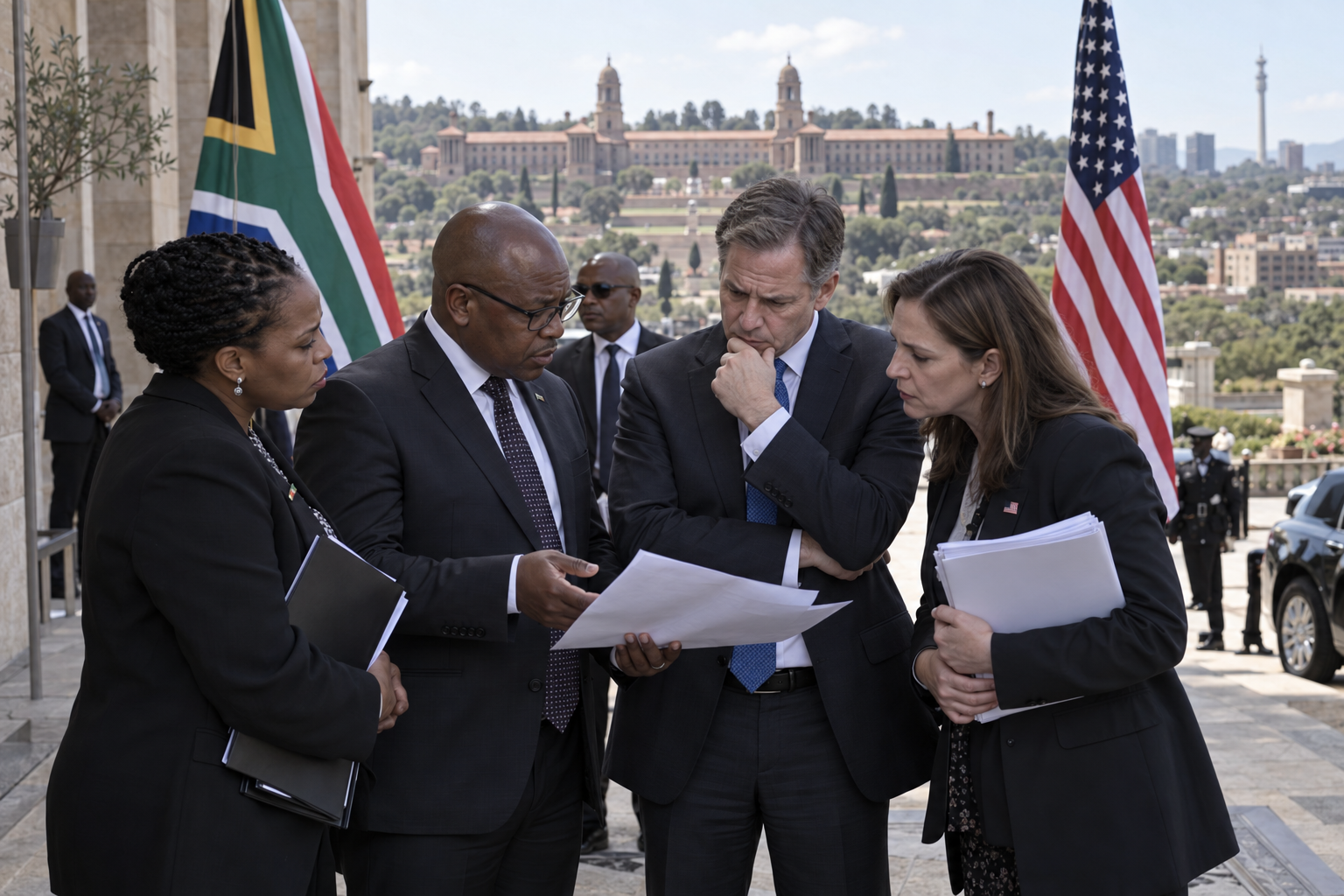
The United States has announced targeted visa restrictions against foreign nationals connected to policies in South Africa that Washington characterizes as enabling race-based discrimination, incitement of violence, or uncompensated land seizures. US Secretary of State Marco Rubio said the restrictions would apply to individuals responsible for, or complicit in, implementing such policies. The measures are not a blanket visa ban on South African citizens, and the US has not identified the individuals affected or indicated how many people could face restrictions.
The announcement deepens an already strained relationship between Washington and Pretoria. The central disagreements involve South Africa’s land reform policies, racial inequality, and allegations concerning the treatment of minority groups, particularly Afrikaners. South Africa maintains that its land policies are intended to remedy the legacy of apartheid and address longstanding disparities in land ownership. Its government has rejected US claims that Afrikaners are being persecuted.
The restrictions are being imposed under a provision of US immigration law that permits visa limitations when an individual’s entry into the country could create serious adverse consequences for US foreign policy. By using this authority against people linked to South African policies, Washington is signaling that it views the issues as significant enough to warrant immigration-related pressure rather than a general measure against the South African public.
The move represents another deterioration in bilateral relations. While the announcement does not provide names or specify the scale of the restrictions, it introduces an additional point of conflict over South Africa’s domestic policies and the United States’ assessment of racial discrimination, land ownership, and minority rights in the country.
Entities: United States, South Africa, US Secretary of State Marco Rubio, Washington, Pretoria • Tone: analytical • Sentiment: negative • Intent: inform
16-09-2026
The United States has imposed visa restrictions on people it accuses of promoting discrimination against South Africa’s white minority, intensifying an already strained relationship between Washington and Pretoria. US Secretary of State Marco Rubio said the restrictions would apply to individuals involved in what the US describes as race-based discrimination, incitement of violence, or land confiscation without compensation. He did not identify anyone affected by the policy.
The Trump administration has repeatedly criticised South Africa’s efforts to address racial and economic inequality, arguing that policies aimed at correcting apartheid-era injustices discriminate against Afrikaners, who are mainly descended from Dutch and French settlers. South Africa rejects this characterisation. Foreign Minister Ronald Lamola said the US announcement misrepresented the country’s domestic policies and was promoted by fringe groups claiming to speak for Afrikaners.
The dispute centres partly on South Africa’s land reform programme. A recently signed law permits the state to expropriate property in the public interest and, in limited circumstances, set compensation at zero. The government says the law does not allow arbitrary seizures and is necessary to address the historic dispossession of the black majority under apartheid. Land ownership remains highly unequal, with most private farmland owned by white South Africans, who represent just over 7% of the population.
Relations have deteriorated since Donald Trump returned to office. The US has cut aid, expelled South Africa’s ambassador, offered refugee status to Afrikaners, and imposed 30% tariffs on South African exports. South Africa has also faced repeated US allegations of a “white genocide”, which it says are unsupported and widely discredited.
The US embassy in Pretoria described the visa restrictions as the first in a series of escalatory measures, saying dialogue had failed to resolve Washington’s concerns. Pretoria maintains that it has a sovereign right to enact laws addressing centuries of racial injustice.
Entities: United States government, Donald Trump, Marco Rubio, South Africa, Cyril Ramaphosa • Tone: analytical • Sentiment: negative • Intent: inform
16-09-2026
The Trump administration announced new visa restrictions against South African officials whom it accuses of enabling discrimination against White people and other minority groups. Secretary of State Marco Rubio said the United States would revoke visas or reject applications from foreign nationals responsible for, or complicit in, policies involving uncompensated land seizures, race-based discrimination, or incitement of violence against minority ethnic and racial groups.
South Africa rejected the allegations, describing them as baseless and driven by misinformation. Its foreign ministry said the restrictions reflected a mischaracterization of the country’s domestic policies promoted by fringe groups. Rubio did not identify the officials who might be affected, although a White minority advocacy organization has previously urged sanctions against members of the African National Congress, the party of President Cyril Ramaphosa.
The visa restrictions are the latest in a series of measures taken by the Trump administration over what it characterizes as anti-White and anti-American policies. The United States has cited South Africa’s land expropriation law, affirmative-action policies favoring Black South Africans and other disadvantaged groups, and violent crimes against some White farmers as evidence of discrimination. Washington has also criticized South Africa’s legal case accusing Israel of genocide against Palestinians in Gaza.
Other U.S. actions include excluding South African officials from Group of 20 meetings in the United States, reducing aid for South Africa’s HIV treatment program, and creating a refugee program for Afrikaners and other White South Africans. The administration claims Afrikaners face escalating hostility and a humanitarian emergency, while South African officials have disputed those claims and said a raid on a U.S. refugee processing center involved the arrest of Kenyan workers employed there illegally.
The United States warned that visa restrictions were only the first in a series of escalating measures. Rubio said the South African government was harming the country’s economy through what he called an obsessive pursuit of racial grievance against the Afrikaner minority.
Entities: United States, South Africa, Donald Trump, Marco Rubio, Cyril Ramaphosa • Tone: analytical • Sentiment: neutral • Intent: inform
16-09-2026
The United States has announced new visa restrictions targeting South Africans whom the Trump administration says promote racial discrimination, incite violence, or support the confiscation of land without compensation. The move follows repeated US criticism of South Africa’s policies toward its white Afrikaner minority, particularly land reform and employment laws intended to address racial inequalities that persist three decades after apartheid.
US Secretary of State Marco Rubio accused the South African government of pursuing an “obsessive” racial agenda that is damaging the country’s economy and said Washington would not allow what he described as threats to peace, economic stability, and the rule of law to go unanswered. The US ambassador to South Africa characterized the visa restrictions as the first in a series of potentially escalating measures. Rubio did not identify specific individuals who would immediately face restrictions.
South African President Cyril Ramaphosa has rejected claims that white South Africans are being systematically persecuted, arguing that there is no evidence of such discrimination and calling for international efforts to counter misinformation about alleged “white genocide.” Despite this, President Donald Trump has continued to criticize Pretoria. In 2025, he confronted Ramaphosa in the Oval Office over the claims, imposed high tariffs on South Africa, boycotted a G20 summit hosted in Johannesburg, and created a program permitting thousands of white Afrikaners to resettle in the United States.
Relations between Washington and Pretoria have also deteriorated because of South Africa’s case against Israel at the International Court of Justice. South Africa accuses Israel, a US ally, of war crimes and crimes against humanity in Gaza. The visa announcement therefore forms part of a broader diplomatic dispute involving racial policy, land reform, immigration, and divergent positions on the Gaza conflict.
Entities: United States, South Africa, Donald Trump, Cyril Ramaphosa, Marco Rubio • Tone: analytical • Sentiment: negative • Intent: inform
16-09-2026
South Africa’s foreign ministry has criticised the United States after Washington announced visa restrictions affecting some South African nationals. The restrictions were announced by US Secretary of State Marco Rubio on Sept 15, although the US government has not clarified who will be affected. South Africa said it viewed the measures with concern and argued that the US had adopted a distorted understanding of its domestic policies, reflecting what it called the “mischaracterisation” promoted by fringe groups.
The ministry said disputes between the two countries should be addressed through constructive diplomatic engagement between state representatives rather than through unilateral measures. Its statement reflects growing strain in relations between Pretoria and Washington, particularly since US President Donald Trump began his second term.
Trump has repeatedly accused South Africa of racially persecuting its white minority. He has cited the country’s affirmative action laws, which were introduced to address economic and social inequalities that remain from the apartheid era. South Africa rejects the characterisation of its policies implied by those accusations.
The US ambassador to South Africa subsequently warned on social media that the visa restrictions were “only the first step in a series of escalatory measures”, suggesting that further action could follow. The ambassador’s comment adds to uncertainty about the future direction of bilateral ties and indicates that Washington may pursue additional pressure against Pretoria.
The dispute comes amid broader controversy over US efforts to offer refugee opportunities to South African Afrikaners, an issue that has further heightened tensions. At the time of the report, details about the individuals who would be subject to the new visa restrictions remained unknown.
Entities: South Africa, United States, South African foreign ministry, Marco Rubio, Donald Trump • Tone: analytical • Sentiment: negative • Intent: inform
16-09-2026
The United States has announced visa restrictions against unspecified South African nationals accused of implementing or enabling policies that promote racial discrimination, incite violence, or permit land confiscation without compensation. The measure is the latest escalation by Donald Trump’s administration in its campaign against South Africa, which the administration claims discriminates against the country’s white Afrikaner minority.
US Secretary of State Marco Rubio accused South Africa’s government of pursuing racial grievance, failing to address rural crime and violent rhetoric, and discriminating against Afrikaners and other minorities. The US ambassador to South Africa, Leo Brent Bozell III, described the restrictions as the first step in a broader series of escalatory measures.
The article notes that Trump has repeatedly and falsely claimed that a “white genocide” is occurring in South Africa. Since 2025, the US has cut aid to South Africa, excluded it from a G20 summit, and created a refugee program for Afrikaners and other South African minorities, even as the administration has weakened refugee and asylum programs for people fleeing war and persecution.
South Africa’s foreign ministry rejected the US characterization of its domestic policies. Spokesperson Chrispin Phiri said the country’s laws address centuries of racial injustice and that South Africa has the sovereign right to enact them, while acknowledging that Washington may disagree with their implementation.
The article provides historical context, explaining that Afrikaners are descended from European settlers who ruled under apartheid, a system that oppressed the Black majority. Post-apartheid governments have pursued racial redress through land redistribution and Black economic empowerment, although racial inequality remains extreme. The article also discusses a land law allowing expropriation without compensation in limited circumstances, noting there is no large-scale land seizure, and examines controversy over the anti-apartheid chant “Kill the Boer.”
Entities: United States government, Donald Trump, Marco Rubio, Leo Brent Bozell III, South Africa • Tone: analytical • Sentiment: negative • Intent: inform