16-09-2026
Yemen’s internationally backed coastguard has evacuated to Djibouti after Houthi forces advanced on Mokha and captured Perim island, ending the protection previously provided by forces loyal to Gen Tariq Saleh. The withdrawal threatens internationally supported efforts to combat piracy, intercept weapons shipments and disrupt smuggling routes across the Red Sea, Bab Al Mandeb strait and Gulf of Aden.
The UK had pledged $4 million to upgrade Yemen’s coastguard fleet, refurbish interceptor vessels and purchase two patrol boats. One of the British-sponsored vessels, the Mayun, was stationed on Perim island before its capture. Western governments are expected to continue supporting the coastguard, but assistance will now be restricted largely to areas of the Gulf of Aden still controlled by Yemen’s internationally recognised government.
The Houthis reportedly seized advanced coastal-surveillance equipment supplied to Saleh’s forces. Analysts fear this will allow the group to expand smuggling networks linked to Al Shabab and the Sudanese Armed Forces, while making it easier for weapons, dual-use components and other supplies to reach Houthi-controlled territory. In July, Saleh’s forces intercepted a large Iranian weapons shipment containing more than 750 tonnes of munitions and hardware.
The article also examines Saleh’s retreat to Saudi Arabia and his political background as the nephew of former president Ali Abdullah Saleh. Although his loss of the south-western coast is a major setback, former British ambassador Nicholas Hopton argues that Gen Saleh is likely to re-emerge politically. Experts say the crisis exposes the limits of international policy, which focused on securing Yemen’s coastline without adequately strengthening the country’s government or addressing the wider civil war.
Entities: Yemen, Houthi movement, Yemeni coastguard, Gen Tariq Saleh, Djibouti • Tone: analytical • Sentiment: negative • Intent: analyze
16-09-2026
The article reports that Djibouti has heightened its alert status as people leave Yemen following the Houthi takeover of Mayyun, an island located near the Bab al-Mandeb Strait. The development is presented as a potential security and humanitarian concern for Djibouti, which lies across the strategically important maritime passage from Yemen. The Bab al-Mandeb is a vital waterway connecting the Red Sea with the Gulf of Aden and is heavily used by commercial and other ships, making instability in the area significant for regional security and international maritime traffic.
Al Jazeera’s report is filmed from aboard a Djiboutian naval vessel assigned to protect ships and secure maritime movement through the strait. From that vessel, an Al Jazeera team says it is monitoring the situation on the ground and observing developments in the waterway. The report links the movement of people from Yemen with the Houthi takeover of Mayyun, suggesting that the change in control has prompted concern and displacement across the nearby maritime border.
The available article text provides only a brief overview and does not include detailed figures on the number of people fleeing, information about casualties, or statements from Houthi authorities, Djiboutian officials, or displaced civilians. It also does not describe the precise circumstances of the takeover or identify any specific military or humanitarian response beyond Djibouti’s naval patrol and heightened vigilance. Published on 16 September 2026, the report primarily functions as a concise video-news introduction, highlighting the connection between political change in Yemen, population movement, and the security of one of the world’s key shipping routes.
Entities: Djibouti, Yemen, Houthi movement, Mayyun, Bab al-Mandeb Strait • Tone: urgent • Sentiment: negative • Intent: inform
16-09-2026
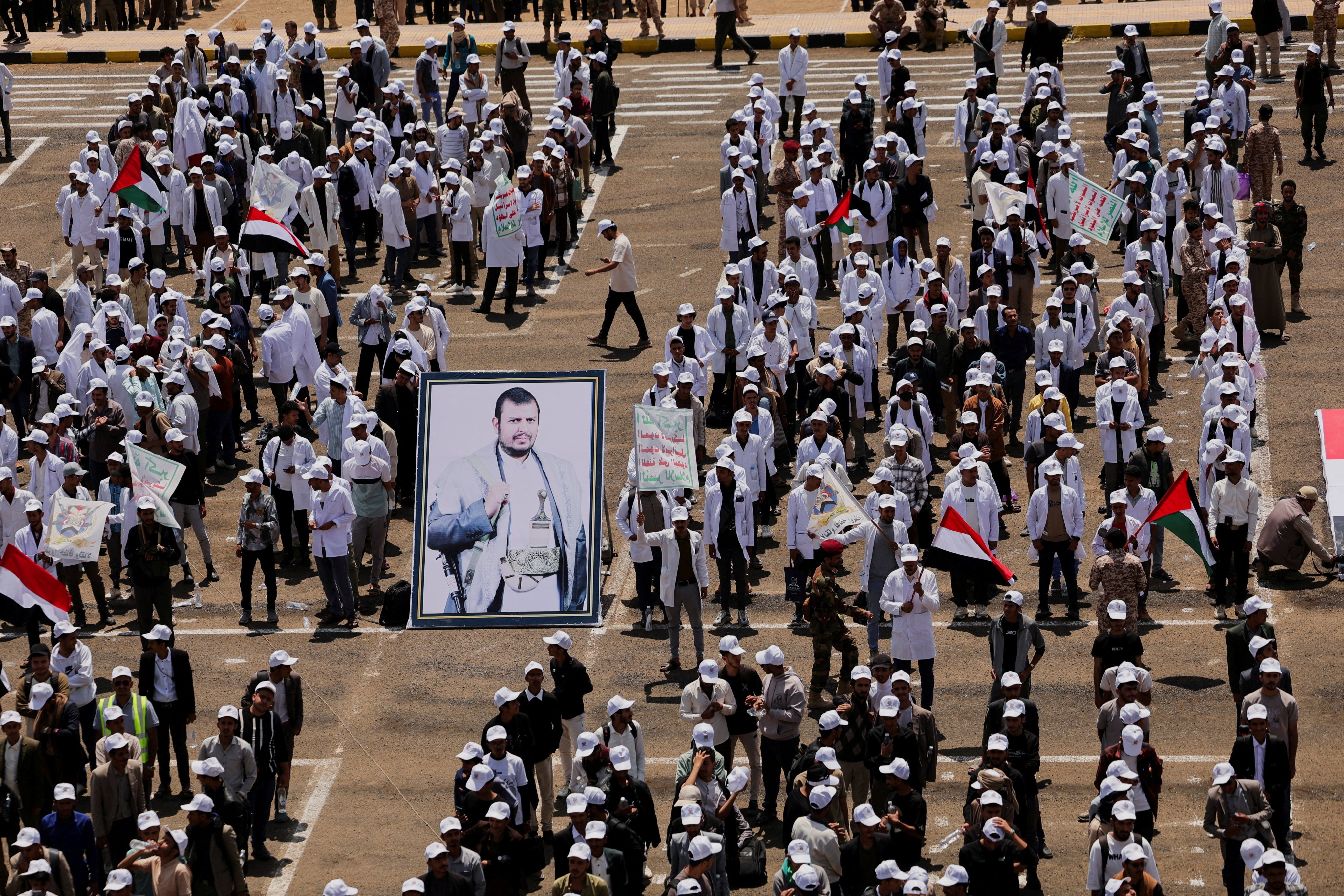
The article profiles Abdul Malik al-Houthi, the elusive leader of Yemen’s Iran-aligned Houthi movement, and examines how he transformed the group from a tribal insurgency into a large, battle-hardened military force. Under his leadership, Houthi fighters expanded their control along Yemen’s Red Sea coastline and strengthened their position near the Bab el-Mandeb strait, a strategically important maritime passage connecting major global trade routes.
The group’s latest offensive, accompanied by attacks on Saudi Arabia, has increased pressure on Riyadh and raised concerns about the security of international shipping. Control or disruption of the Bab el-Mandeb could affect the movement of goods, commodities and oil through one of the world’s most important waterways. The article presents al-Houthi as a commander whose forces have become capable of challenging Saudi interests despite years of air strikes by a Saudi-led coalition during Yemen’s civil war.
The Houthis are described as tens of thousands of fighters, originally known for their mountain warfare and use of khat, but now equipped with drones and ballistic missiles. Their military development has enabled them to withstand sustained coalition attacks and emerge as a powerful force in Yemen’s conflict.
Although a United Nations-brokered truce in 2022 halted much of the heavy fighting, it did not produce a lasting political settlement. As a result, Yemen remains impoverished and unstable, while al-Houthi’s movement has gained leverage over both the country’s internal conflict and a vital international shipping route. The article therefore portrays him as a central figure in a regional security crisis with potential consequences for Saudi Arabia, global commerce and energy supplies.
Entities: Abdul Malik al-Houthi, Houthi movement, Yemen, Red Sea coastline, Saudi Arabia • Tone: analytical • Sentiment: negative • Intent: inform