16-09-2026
Ukraine’s sanctions envoy, Vladyslav Vlasiuk, said Russia could be compelled to retreat from its war against Ukraine within six months if Western and Asian governments succeed in cutting Moscow’s oil revenues by at least half. Speaking in Singapore during a diplomatic tour of Asia, Vlasiuk argued that sanctions remain the most effective means of pressuring Russia into serious peace negotiations. He said previous sanctions had already constrained the Russian economy, but that a further round of “crushing sanctions” could place the Kremlin in an untenable position.
The envoy’s comments reflect Kyiv’s intensified efforts to close gaps in the sanctions system established by the United States, European Union and Group of Seven after Russia’s 2022 invasion. India and China have purchased large quantities of discounted Russian crude, while Southeast Asian ports and free-trade zones have reportedly facilitated ship-to-ship transfers intended to conceal the origin of sanctioned oil. Vlasiuk plans to discuss these activities, including Russia’s “shadow fleet” of tankers, with officials in Malaysia, Indonesia, Japan and Thailand.
He also highlighted the continuing flow of foreign-made microelectronics and mechanical components into Russia’s defense industry. Components recovered from a missile intercepted over the Kyiv region reportedly originated in the United States, Russia, China, Taiwan and Japan, illustrating the difficulty of preventing sanctioned goods from reaching Russian weapons manufacturers through global supply chains. Vlasiuk warned that similar components could also reach the military industries of Iran and North Korea.
Beyond sanctions evasion, Vlasiuk cautioned that Russia is increasingly using “gray-zone” tactics against European countries, including drone incursions, sabotage and cyberattacks. He urged Western governments to recognize that Moscow poses a dangerous and evolving security threat, particularly as its forces struggle to make progress in Ukraine and face Ukrainian strikes against targets inside Russia.
Entities: Vladyslav Vlasiuk, Volodymyr Zelenskyy, Ukraine, Russia, Singapore • Tone: urgent • Sentiment: negative • Intent: inform
16-09-2026
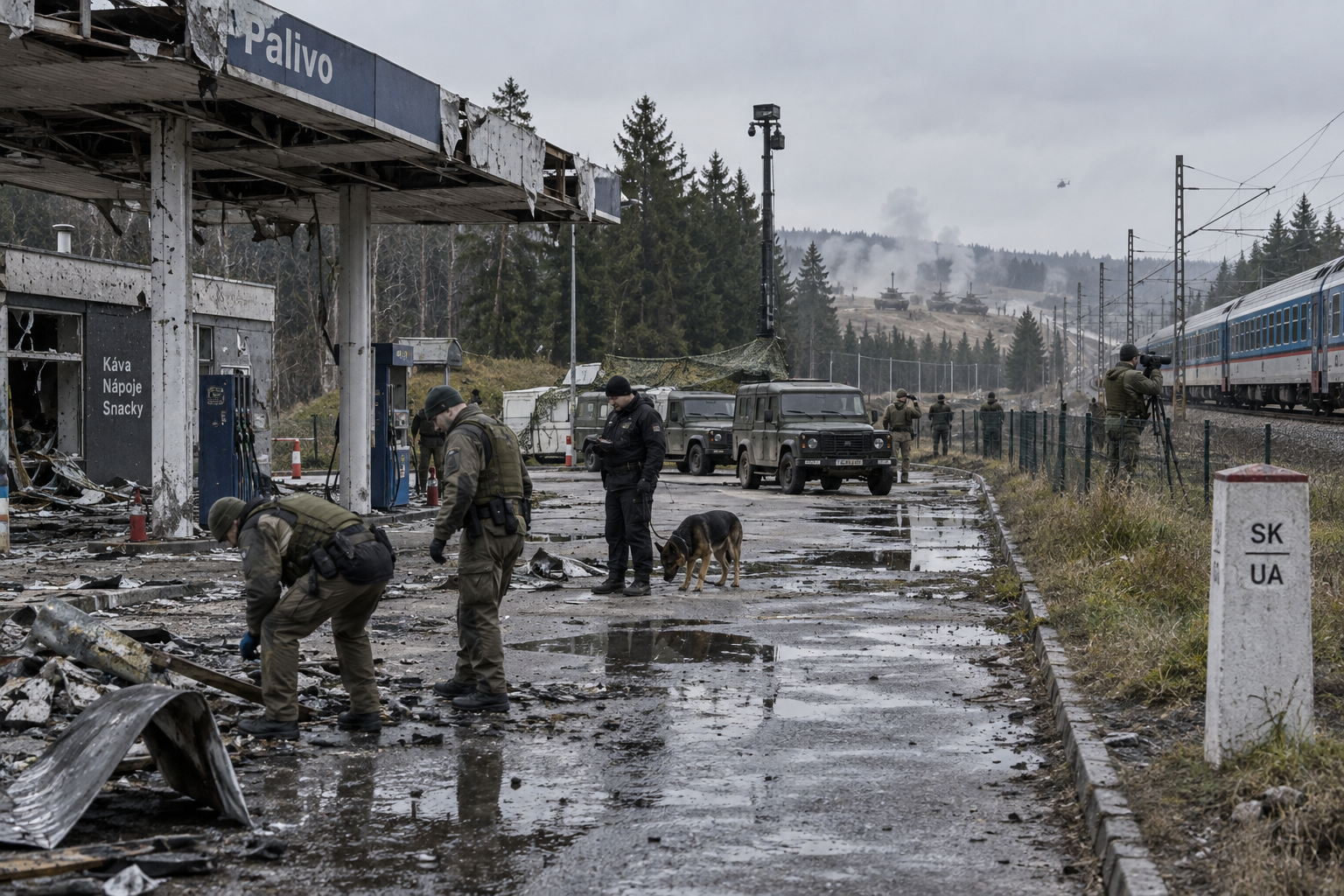
Poland has reaffirmed its commitment to supporting Ukraine after Russian drone strikes damaged a gas station and destroyed the locomotive of a passenger train near the Dorohusk-Yahodyn border crossing. Polish officials say the attacks, which occurred close to Polish territory, are intended to intimidate countries assisting Ukraine and discourage continued support for Kyiv.
Deputy Prime Minister and Defense Minister Wladyslaw Kosiniak-Kamysz described support for Ukraine as a matter of Polish national security, warning that Poland would be less safe if Ukraine were defeated. Prime Minister Donald Tusk convened a security meeting with ministers and military commanders to discuss strengthening border defenses. Foreign Minister Radoslaw Sikorski said Poland would deliver a serious but nonprovocative response and seek a coordinated approach with European allies.
The attacked train was traveling between Kyiv and Warsaw. Its passengers and crew were evacuated safely. Nearby trains carried prominent attendees returning from a security conference in Kyiv, including former leaders from Sweden, the United Kingdom, Finland and Poland. Witnesses said the incident was tense but orderly and strengthened their determination to support Ukraine.
The article also highlights growing skepticism toward Ukraine in Poland. Support for continued military assistance has fallen from 77.5% after Russia’s 2022 invasion to 52% in a mid-July survey, while opposition has risen to 45%. Polish officials and commentators blame Russian propaganda for the shift and warn that attacks, sabotage and cyber incidents are bringing the conflict closer to Poland.
Polish newspapers characterized the strikes as acts approaching the threshold of war and warned that Russia may be testing NATO’s response. Meanwhile, drone incidents continue across Poland, including an unarmed reconnaissance drone found on the Baltic coast. Polish authorities say they do not know how far Russia intends to escalate, but believe Moscow may be prepared to go further.
Entities: Poland, Ukraine, Russia, Donald Tusk, Wladyslaw Kosiniak-Kamysz • Tone: urgent • Sentiment: negative • Intent: inform
16-09-2026
Belarus has begun four-day military exercises near its borders with Poland and Lithuania, involving mechanised and tank battalions. According to Radio Free Europe, citing Belarus’s defence ministry, the drills are focused on border protection, counter-sabotage operations, and defence against attacks by drones and light aircraft. Minsk describes the exercises as purely defensive and says their scale remains below the thresholds established by the 2011 Vienna Document, meaning that advance notification would not be required. However, Belarus has not disclosed the precise number of participating troops.
The exercises are taking place at several locations close to NATO’s eastern flank, including the Hoża training ground near Lithuania and the Brzeski and Różański ranges, approximately 15 and 60 kilometres from the Polish border. Their proximity to the Suwałki Gap is especially significant. The 104-kilometre corridor between Poland and Lithuania is NATO’s land connection to the Baltic states and separates Belarus from Russia’s Kaliningrad region, making it one of Europe’s most strategically sensitive areas.
The drills are part of broader efforts to assess Belarusian military readiness. President Alyaksandr Lukashenka recently visited the Obuz-Lesnowski training ground and said he wanted to review the country’s entire national security sector. Belarus has frequently held exercises near NATO borders, sometimes with Russian participation, including the Slavic Brotherhood manoeuvres in 2020 and Zapad 21 in 2021.
The current exercises are occurring amid Russia’s war against Ukraine and Belarus’s close military relationship with Moscow. Minsk allowed Russian forces to use its territory and infrastructure for operations against Ukraine in 2022, although Belarus has not sent its own forces into direct combat in Ukraine. Ukraine’s Border Guard Service has also reported that Russian forces are using Belarusian relay stations to control drones attacking western Ukraine, adding to international criticism of Belarusian logistical and military support for Russia.
Entities: Belarus, Poland, Lithuania, Russia, Ukraine • Tone: analytical • Sentiment: neutral • Intent: inform