16-09-2026
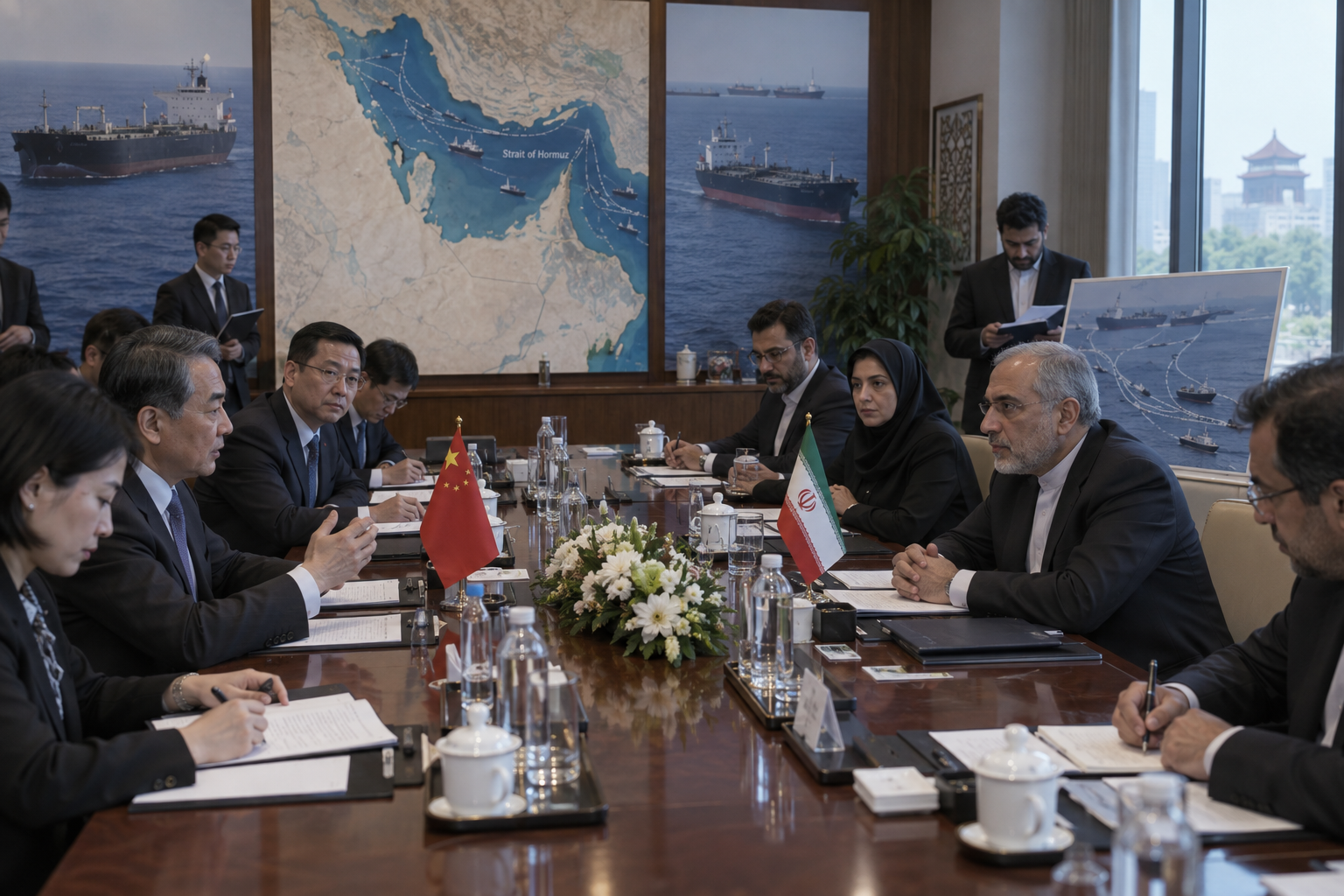
Chinese Foreign Minister Wang Yi told Iran’s Foreign Minister Abbas Araghchi that Beijing is prepared to strengthen dialogue and cooperation with Tehran and safeguard Iran’s “legitimate rights and interests.” The two ministers met in Beijing on September 16, shortly before Chinese President Xi Jinping’s planned visit to the United States, where he is expected to meet President Donald Trump. The leaders are anticipated to discuss the war involving Iran and the continuing closure of the Strait of Hormuz.
Wang urged Iran and the United States to remain rational and restrained, while calling on all parties to take effective steps to reopen the Strait of Hormuz. He warned that China did not want regional tensions to spread further into Yemen and the Red Sea. Wang also argued that Tehran and Washington should restore a negotiating mechanism based on agreements reached previously.
The Chinese minister said the conflict demonstrated that the Middle East’s existing security architecture was inadequate and required reform and strengthening. He presented China as willing to promote peace, fairness and justice in the region, while emphasizing that Beijing’s policy toward Iran had remained consistent and stable.
The meeting came after China rejected US media reports alleging that Chinese entities had provided Iran with satellite imagery of a military base hosting US troops in Jordan. The article also notes that Trump said in April that he had written to Xi asking him not to sell weapons to Iran. China is a major economic partner of Iran and the largest buyer of Iranian crude oil, giving Beijing significant economic and diplomatic interests in the conflict.
Entities: China, Iran, Chinese Foreign Minister Wang Yi, Iranian Foreign Minister Abbas Araghchi, Chinese President Xi Jinping • Tone: analytical • Sentiment: neutral • Intent: inform
16-09-2026
China has urged Iran and the United States to resume dialogue and take immediate steps to reopen the Strait of Hormuz, a vital energy and shipping route. Chinese Foreign Minister Wang Yi made the appeal during talks in Beijing with Iranian Foreign Minister Abbas Araghchi on September 16, 2026. Wang called on both sides to remain rational, exercise restraint and engage in “substantive consultations” on issues of mutual concern. He also warned against the conflict spreading further into Yemen and the Red Sea.
The appeal comes as shipping through the Strait of Hormuz has fallen sharply following intensified regional attacks. Before the regional war began on February 28, the waterway typically handled approximately 125 large commercial vessels a day and carried around one-fifth of global crude oil and liquefied natural gas supplies. Preliminary data showed that only four vessels passed through the strait on Tuesday, down from seven the previous day and well below the 10-day average of 18. Traffic through the Bab Al Mandeb strait also declined slightly, although 22 ships still transited it.
Araghchi travelled to Beijing with a diplomatic delegation for discussions on bilateral relations and regional and international affairs. The meeting was the ministers’ second in-person discussion in Beijing since US and Israeli strikes on Iran began in February. China is one of Iran’s largest economic partners and purchases a substantial share of Iranian oil exports.
Wang reaffirmed China’s support for Iran’s sovereignty, security and national dignity. He described a June 17 framework for future US-Iran talks as a significant result of multilateral mediation and said that the opportunity for dialogue should remain open. The meeting also preceded a planned summit between US President Donald Trump and Chinese President Xi Jinping later in the month.
Entities: China, Iran, United States, Chinese Foreign Minister Wang Yi, Iranian Foreign Minister Abbas Araghchi • Tone: analytical • Sentiment: negative • Intent: inform
16-09-2026
The supplied extract is a partial capture of The National’s live Iran-war coverage, updated on September 16, 2026, at 10:59 AM. It does not include the full body of the article, so the available material supports only a summary of the headline, listed updates, and accompanying video items.
The main headline reports that China urged Iran to reopen the Strait of Hormuz during talks with Iranian Foreign Minister Abbas Araghchi. The strait is a crucial energy and shipping route, so its reopening is presented as a major diplomatic and economic issue amid the conflict. Other listed updates indicate that the East-West pipeline could reopen within days, according to the US Energy Secretary, while US Treasury Secretary Scott Bessent reportedly estimated that the war has cost the United States $38 billion. Bessent also said the US had seen “forward-facing” statements from the UAE concerning efforts to cut off Iranian finances.
The update list further reports allegations that Iran used spyware against dissidents overseas and says the US expects a change in the Red Sea security situation “soon.” The page includes video reports concerning Houthi fighting with Saudi-backed forces, a Houthi projectile strike in Saudi Arabia’s Jazan region, the arrival of approximately 1,400 Yemeni refugees in Djibouti, and a rescue of a US airman from Iran. Other clips cover US and Gulf resilience, criticism of Iran, energy-market officials meeting in Bangkok, and statements by US President Donald Trump and Defence Secretary Pete Hegseth at a September 11 memorial.
Overall, the extract presents a fast-moving regional crisis involving diplomacy, energy infrastructure, maritime security, financial pressure, armed groups, humanitarian displacement, and US military activity. Because the article narrative and source attributions beyond the visible headlines are missing, no further details can be reliably inferred.
Entities: China, Iran, Abbas Araghchi, Strait of Hormuz, East-West pipeline • Tone: urgent • Sentiment: negative • Intent: inform