16-09-2026
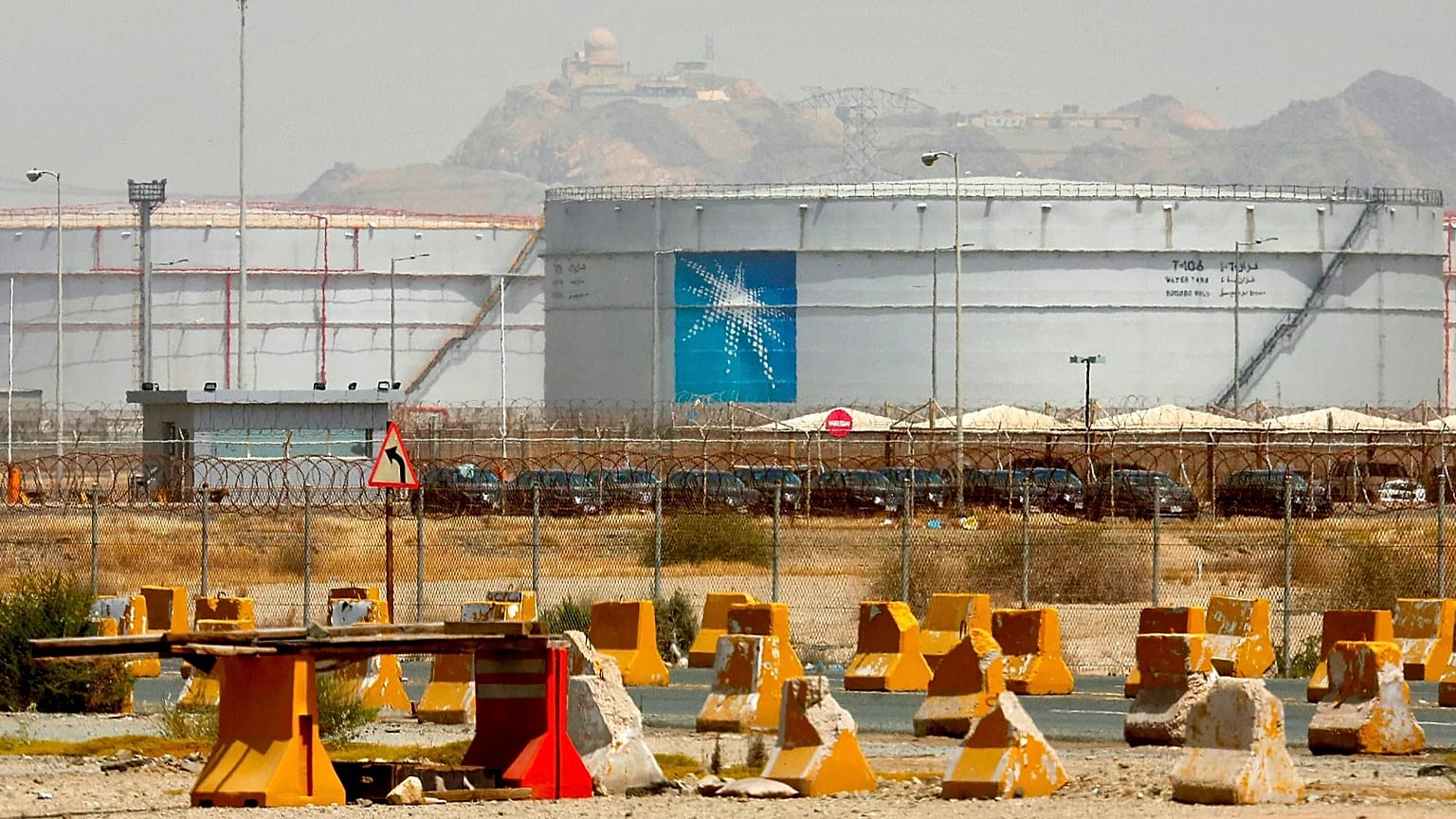
Crude oil prices declined Wednesday after the Trump administration sought to reassure markets that Saudi Arabia’s damaged East-West oil pipeline would resume operations within days. U.S. West Texas Intermediate futures fell 1.6% to $104.09 per barrel, while Brent crude dropped 1.1% to $107.57. Despite the daily decline, oil prices have risen roughly 20% this month as fighting in the Persian Gulf has intensified.
U.S. Energy Secretary Chris Wright described the Saudi pipeline outage as a “brief and temporary interruption” and said the disruption would be measured in days. However, independent analysts disputed that optimistic assessment, citing satellite imagery that reportedly showed significant damage to a pumping station and suggesting that repairs could take weeks. Saudi Arabia has not released a formal damage assessment or a timeline for restoring the pipeline.
While the pipeline is offline, Saudi Arabia is increasing oil exports through the Strait of Hormuz with assistance from the U.S. military. Four supertankers capable of carrying approximately 8 million barrels were seen loading at the Saudi Persian Gulf ports of Ras Tanura and Juaymah. Matt Smith of Kpler said the vessels were likely preparing to shuttle oil through the Omani route and the Strait of Hormuz.
The pipeline was shut late the previous week after drone attacks launched from Iraq damaged it. It normally allows Saudi Arabia to redirect exports to the Red Sea, reducing reliance on Hormuz, which had been the Gulf states’ primary export corridor before the war. Although the U.S. military has established a protected route along Oman’s coast, exports remain well below pre-war levels, and the passage is still dangerous. Iran continues to attack tankers, with at least two vessels reportedly targeted in the Strait of Hormuz since Saturday.
Entities: Chris Wright, Saudi Arabia, Saudi East-West oil pipeline, Trump administration, U.S. Department of Energy • Tone: analytical • Sentiment: negative • Intent: inform
16-09-2026
Oil prices declined on Wednesday as traders balanced unexpectedly large increases in U.S. energy inventories against continuing concerns about supply disruptions linked to the conflict in the Middle East. Brent crude futures for November delivery fell 1.02% to $107.64 per barrel, while U.S. West Texas Intermediate futures for October dropped 1.29% to $104.46 per barrel.
The American Petroleum Institute data, cited by Reuters, reportedly showed that U.S. crude inventories increased by 7.1 million barrels in the week ending Sept. 11. Analysts had expected inventories to decline by approximately 1.6 million barrels. Gasoline and distillate inventories also rose, adding to downward pressure on oil prices by suggesting stronger domestic supply and potentially weaker near-term market tightness.
At the same time, investors continued monitoring security developments around Gulf export routes. An attack by Iran, described in the article as Iran-backed in its key points, damaged Saudi Arabia’s East-West pipeline and resulted in its closure over the weekend. U.S. Energy Secretary Chris Wright characterized the interruption as brief and likely to last days, while oil analyst Andy Lipow said available images suggested repairs could take months.
The financial impact of the conflict is also attracting attention. A Congressional Budget Office report estimated that the U.S. war with Iran had cost the Pentagon $38.1 billion through Aug. 1, with an additional $2 billion to $3 billion potentially required for every further month of fighting.
Analysts said oil prices will remain closely tied to security conditions along Gulf shipping routes and the timeline for restoring Saudi infrastructure. Further interruptions to maritime flows or a prolonged pipeline outage could tighten physical oil supplies and push prices higher, despite the bearish inventory data.
Entities: Brent crude, West Texas Intermediate (WTI), U.S. crude, gasoline and distillate inventories, American Petroleum Institute, Reuters • Tone: analytical • Sentiment: negative • Intent: inform
16-09-2026
The article examines how the Houthi movement’s growing control and military presence around Yemen’s coast is increasing economic and geopolitical pressure on Egypt, as well as on Saudi Arabia. The Houthis control Mayun, or Perim, Island at the southern entrance to the Red Sea and have threatened to restrict passage for Saudi-linked ships while allowing other vessels to transit. Although traffic through the Bab el-Mandeb Strait has not yet collapsed, maritime activity has declined substantially from its mid-July average, raising concerns about possible disruption to the Suez Canal route between Asia and Europe.
Egypt is particularly vulnerable because Suez Canal fees are a major source of national income. Houthi attacks in late 2023 contributed to a sharp fall in canal revenues, which the International Monetary Fund estimated at approximately $6 billion in 2024. Revenues had begun recovering as higher oil prices made rerouting ships around Africa more expensive, and the Suez Canal Authority reported a 23% increase in revenue during the 2025–2026 fiscal year. A renewed Houthi offensive could reverse that recovery.
The situation is further complicated by damage to Saudi Arabia’s east-west oil pipeline to Yanbu, which had provided an alternative to the Strait of Hormuz. If both maritime chokepoints become insecure, oil and global trade flows could face wider disruption. Analysts quoted in the article argue that Egypt has limited military options and is unlikely to intervene directly, given its past experience in Yemen and the limited success of Saudi and US efforts against the Houthis. Egypt will probably prioritize diplomacy, although it fears that direct talks could imply recognition of Houthi authority. Cairo must balance its alliance with Saudi Arabia against the economic damage it would suffer from a wider escalation. The eventual impact will depend on whether the Houthis restrict only Saudi-linked vessels or broaden their attacks to international shipping.
Entities: Houthi movement, Egypt, Saudi Arabia, Yemen, Suez Canal • Tone: analytical • Sentiment: negative • Intent: analyze
16-09-2026
The France 24 video is titled “Middle East: Iran war exposes limits of US power” and was issued on 16 September 2026. However, the accompanying article text focuses primarily on Saudi Arabia’s security concerns and its diplomatic response to intensified attacks by Yemen’s Houthi rebels. According to the report, Saudi Arabia’s crown prince sought support from Egypt’s president on Tuesday. Egypt is described as a key Saudi ally across the Red Sea, highlighting the regional diplomatic relationships involved in the crisis.
The attacks have reportedly targeted Saudi shipping and infrastructure. The article links these attacks to a surge in global oil prices, suggesting that the conflict is producing consequences beyond the immediate region and affecting international energy markets. The report therefore presents the situation as both a security emergency for Saudi Arabia and a broader economic concern.
France 24 identifies Rochelle Ferguson Bouyahi as the reporter and video producer who provides further coverage. The supplied page contains no detailed discussion of the Iran war or of the limits of US power beyond the headline, so the relationship between that headline and the Saudi-Houthi-focused description is not fully explained in the available text. The article also does not provide specific details about the number, timing, or precise locations of the attacks, nor does it identify the Saudi and Egyptian leaders by name. Overall, the report portrays escalating regional instability, growing pressure on Saudi infrastructure and shipping, increased diplomatic coordination between Saudi Arabia and Egypt, and repercussions for global oil prices.
Entities: Iran war, United States power, Middle East, Saudi Arabia, Saudi crown prince • Tone: urgent • Sentiment: negative • Intent: inform
16-09-2026
Saudi Arabia has not commented on reports that it cancelled or postponed crude-oil shipments to European refiners after a precautionary shutdown of its East-West pipeline following drone strikes last week. Energy-pricing agency Argus reported that at least three European refiners had cargoes scheduled for late September cancelled or delayed, in some cases until November, citing unnamed market sources. Saudi Aramco declined to comment when contacted by Euronews.
The Saudi energy ministry said technical teams were inspecting the pipeline, which transports crude from the kingdom’s eastern oilfields to the Red Sea port of Yanbu. The route allows Saudi exports to Europe to bypass the Strait of Hormuz, with tankers continuing north toward the Suez Canal. Existing inventories at export terminals may temporarily sustain deliveries, but the duration of that cushion depends on stock levels and how quickly pumping resumes. US Energy Secretary Chris Wright said the interruption would likely last only “days.”
The article also describes broader threats to regional shipping. Yemen’s Iran-backed Houthis reportedly seized control of the Bab el-Mandeb strait after taking the port of Mokha and nearby islands from Yemen’s Saudi-supported government. Although Europe-bound tankers from Yanbu do not directly use the strait, Bab el-Mandeb is a major Europe-Asia trade route. Qatar warned that losing access would intensify disruptions already affecting shipping through the Strait of Hormuz and called the consequences potentially “catastrophic for the entire world.”
A Saudi-led coalition also said it intercepted a Houthi drone south of Mecca, while the Houthis denied targeting the city. Saudi Crown Prince Mohammed bin Salman and Egyptian President Abdel Fattah el-Sisi discussed regional maritime security, with Egypt expressing support for Saudi measures and advocating a political settlement in Yemen. Overall, the article presents an uncertain but increasingly serious picture of oil-supply and shipping risks across the region.
Entities: Saudi Arabia and Riyadh, Saudi Aramco, East-West pipeline, European refiners and delayed crude deliveries, Drone strikes in the Riyadh and Medina regions • Tone: analytical • Sentiment: negative • Intent: inform
16-09-2026
A drone attack on Saudi Arabia’s East-West oil pipeline, launched from Iraqi territory, has intensified pressure on Iraqi Prime Minister Ali al-Zaidi to demonstrate that armed factions operate under state authority. The strike threatened a major share of global oil supplies and pushed Brent crude above $108 per barrel, while also raising the prospect of renewed US and Saudi military action against Iraqi groups.
No organization has claimed responsibility. The Islamic Resistance in Iraq, an umbrella of pro-Iranian factions, denied involvement, while Iraqi authorities said they found launch traces in Maysan province and seized a drone-launch platform. Iraqi officials suspect a splinter faction, but analysts believe the attack may have been carried out by an established faction or a cell linked directly to Iran’s Islamic Revolutionary Guard Corps, using a front group to obscure responsibility.
Al-Zaidi responded by dismissing a regional commander, creating an investigative committee, closing border crossings with Iran and deploying troops. However, critics view these measures as largely symbolic, noting that similar attacks have occurred before and that enforcement against powerful factions has repeatedly failed. Attempts to search or arrest members of Harakat al-Nujaba were blocked or reversed, although a Kataib Hezbollah member was sentenced for kidnapping a US journalist.
The attacks also threaten Iraq’s improving relationship with Saudi Arabia, including potential investment, energy and transport projects. Some Iran-aligned factions oppose Baghdad’s outreach to Riyadh and efforts to diversify Iraq’s economy and reduce reliance on Iran.
The article argues that al-Zaidi’s central problem is not a lack of military capability but a lack of political confidence and reliable support from Washington and Gulf partners. Although Iraq’s Counter Terrorism Service may be capable of confronting faction leaders, officials fear that the US would not back the government in a major internal confrontation. As the US-led coalition prepares to withdraw, armed groups appear increasingly confident that they can resist state control without facing decisive consequences.
Entities: Ali al-Zaidi, Iraq, Saudi Arabia’s East-West oil pipeline, Maysan province and the Duwayrij River, Islamic Resistance in Iraq • Tone: analytical • Sentiment: negative • Intent: analyze
16-09-2026
The article reports that Saudi Arabia has cancelled some oil deliveries to Europe following drone attacks that shut down the East-West pipeline, a major export route carrying oil toward the Red Sea. The disruption represents a rare interruption to Saudi oil shipments and has reportedly triggered concern in global energy markets. According to the report, buyers are rushing to find alternative supplies after the pipeline blast affected the flow of Saudi crude.
The article presents the incident as a significant energy and geopolitical development because Saudi Arabia is a major oil producer and Europe relies on international markets to maintain fuel and industrial supplies. However, the brief report does not provide details about who carried out the drone attacks, the exact location of the blast, the extent of the pipeline damage, or how long the shutdown is expected to last. It also does not specify how much oil was cancelled, which European customers were affected, or what alternative producers buyers are approaching.
The report emphasizes the immediate market reaction, describing global panic and a rush for replacement supplies. Its focus is therefore on the disruption to oil deliveries and the potential implications for energy security rather than on a detailed account of the attack itself. The publication date is listed as 16 September 2026, and the report is presented by Al Jazeera under its conflict and news coverage.
Entities: Saudi Arabia, Europe, East-West pipeline, Red Sea, Drone attacks • Tone: urgent • Sentiment: negative • Intent: inform
16-09-2026
Saudi Crown Prince Mohammed bin Salman and Egyptian President Abdel Fattah al-Sisi called for freedom and security of navigation through the Red Sea and the strategic Bab al-Mandab and Hormuz straits during talks in Cairo. Their meeting followed the Houthi seizure of Yemen’s entire Red Sea coastline and control of the Bab al-Mandab, a development that threatens vital shipping routes for both countries.
The strait is especially important to Saudi Arabia because it has become a key outlet for the kingdom’s oil exports after Iran blocked the Strait of Hormuz during the Middle East war. Saudi Arabia has also relied more heavily on Egypt’s Sumed pipeline since the Houthis announced a naval blockade of the kingdom. However, a drone attack that Riyadh said originated in Iraq forced the closure of the East-West pipeline feeding the Saudi port of Yanbu, contributing to a rise in global oil prices above $100 per barrel.
Egypt also faces major economic risks from disruption in the Red Sea. The country depends heavily on Suez Canal tolls for foreign revenue, but canal income has fallen to $4.67 billion in the 2025/2026 fiscal year from $8.8 billion in 2022/2023. Average daily ship transits remain only slightly above half their pre-Gaza War levels, while Egypt’s foreign minister estimated that total Suez Canal losses have reached $11 billion.
Although Sisi expressed support for Saudi measures to protect its security, analysts said Cairo is unlikely to enter a military conflict unless it considers intervention necessary and unavoidable. Mirette Mabrouk of the Middle East Institute said the Saudi crown prince was likely seeking assurances of Egyptian support if securing the Bab al-Mandab becomes necessary. The talks occurred amid reports that US President Donald Trump had declined a request from Mohammed bin Salman to intervene in the conflict.
Entities: Mohammed bin Salman, Abdel Fattah al-Sisi, Saudi Arabia, Egypt, Yemen's Houthis • Tone: analytical • Sentiment: negative • Intent: inform
16-09-2026
The US military and Gulf nations have reportedly begun escorting oil tankers through the Strait of Hormuz during daylight hours, marking the first daytime escorts since the brief Operation Project Freedom in May. Although the US has protected commercial vessels in recent months, those movements were conducted at night. The shift to daylight transits comes as Iran continues attacking ships in and around the strategic waterway, including the Panama-flagged El Gaia, which was struck Monday and left two sailors missing.
Shipping traffic under US protection has increased significantly, with as many as 40 vessels crossing the strait in one day last week. Satellite imagery and maritime analysts have indicated that large tankers are now successfully transiting the waterway during the day. However, the current operation appears more extensive than Project Freedom, which lasted fewer than two days and involved only two US ships crossing the strait.
The article notes uncertainty over how much oil is actually leaving the waterway. The Trump administration has claimed that as much as 17 million barrels per day are exiting the strait, but commercial shipping analysts dispute that figure. TankerTracker.com estimates the 60-day average at approximately 7.85 million barrels per day, while overall traffic remains well below prewar levels.
Iran has been linked to at least 22 seafarer deaths in 79 confirmed incidents since the war began. Tehran has blamed sea mines for several recent attacks, while Western officials believe Iranian missiles or drones were responsible. In response to the heightened danger, the US has reportedly established designated time windows for commercial transits, with schedules varying by day and distributed through internal naval shipping guidance.
Entities: Strait of Hormuz, United States military, Gulf nations, Iran, Operation Project Freedom • Tone: analytical • Sentiment: negative • Intent: inform
16-09-2026
The article reports that gasoline and diesel prices in the United States are expected to rise sharply as the consequences of the U.S.-led war on Iran intensify. Analysts cited in the article anticipate that consumers and businesses will soon face substantially higher fuel costs, suggesting that the economic effects of the conflict have not yet fully emerged. The warning applies not only to gasoline used by motorists but also to diesel, which is essential for trucking, agriculture, construction, and other sectors that depend on transportation and heavy equipment.
The article presents the expected price increases as part of a potentially more damaging phase of the conflict. Although the Trump administration has offered assurances about the situation, the authors indicate that those reassurances may not reflect the risks facing energy markets or the broader economy. A prolonged disruption involving damaged energy infrastructure or pipelines could further constrain fuel supplies and increase volatility, although the supplied excerpt does not provide details about the specific infrastructure involved, the expected size of the price increases, or the administration’s full explanation.
Overall, the excerpt frames the situation as an escalating energy and economic threat. It emphasizes that the most severe consequences may still be ahead, with fuel-price increases likely to affect households, transportation networks, and businesses. The article’s central message is cautionary: market disruptions connected to the war could intensify quickly, and official assurances should be weighed against analysts’ projections of worsening conditions.
Entities: The Washington Post, Evan Halper, Rachel Chason, Joyce Sohyun Lee, United States • Tone: urgent • Sentiment: negative • Intent: warn