15-09-2026
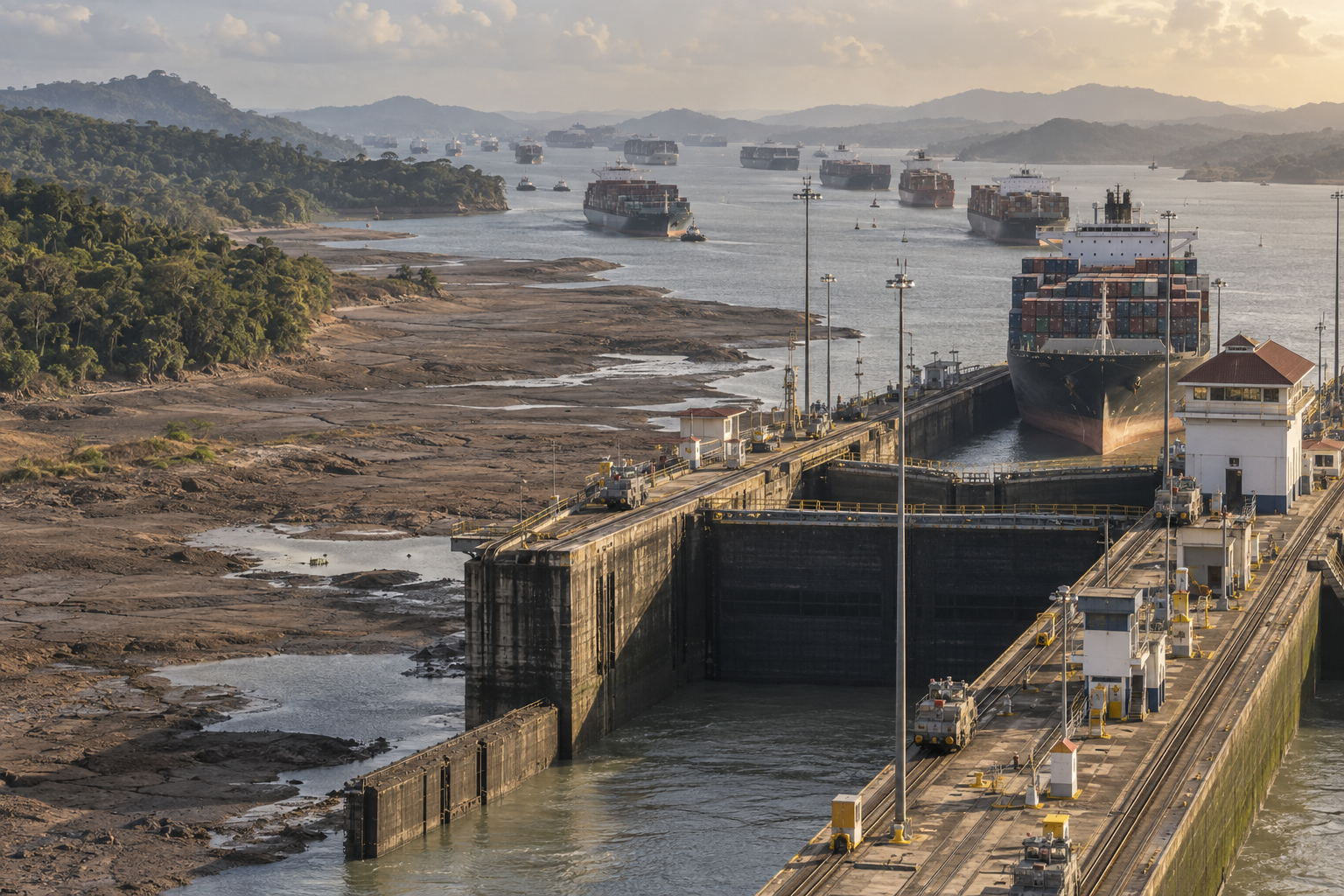
The Panama Canal plans to reduce maritime traffic further because a severe drought linked to the 2026 El Nino weather pattern is limiting the water available to operate its locks. The canal’s administrator announced on Sept 14 that daily ship transits, already reduced from 36 to 32 on Sept 4, are expected to fall to an average of 29.5 per day from October. The proposed reduction is included in a draft budget submitted to Panama’s Parliament.
Panama has declared a nationwide emergency over El Nino, which is developing over the Pacific Ocean and influencing weather patterns and global temperatures. The resulting drought in Central America is particularly serious for the canal because its locks require large quantities of water to raise and lower ships as they cross between the Atlantic and Pacific oceans. Approximately 5 per cent of global trade passes through the waterway.
Canal Affairs Minister Jose Ramon Icaza said the approved budget would allow the canal to continue operating safely, continuously, efficiently and profitably despite the restrictions. The 2026 El Nino is expected to be the strongest since records began four decades ago, raising concerns about prolonged disruption to global shipping.
The article notes that a previous El Nino in 2023 forced the canal to reduce daily transits from 38 to 22. Current traffic pressures are also being intensified by geopolitical developments: the US-Israeli war on Iran has reportedly increased demand for passage through the Panama Canal because shipping through the Strait of Hormuz has come to a standstill. The Strait of Hormuz carries about one-fifth of the world’s oil and gas, making the canal’s reduced capacity especially significant for international trade and energy-related shipping.
Entities: Panama Canal, El Nino, Panama, Central America, Pacific Ocean • Tone: analytical • Sentiment: negative • Intent: inform
15-09-2026
The Panama Canal is preparing to reduce daily vessel traffic further as drought linked to the El Niño climate phenomenon worsens. Beginning in October, an average of 29.5 ships will be permitted to transit each day, down from 36 in August and 32 in September, according to a draft plan submitted to Panama’s parliament. The canal carries approximately 5% of global maritime trade and around 40% of US container traffic, making restrictions a significant concern for international shipping, particularly trade between Asia and the United States.
Low rainfall has reduced water levels in the watershed supplying Lake Gatun, whose freshwater is essential to operating the canal’s locks. The locks raise ships 26 metres from sea level to the lake and then lower them on the opposite side. If water levels become unsafe, the Panama Canal Authority limits ship size and daily traffic to protect the canal’s water supply and ensure safe operations.
The restrictions are already creating delays and higher costs. In August, ships waited as long as 10 days to enter the canal, and one container ship reportedly paid approximately $4m to bypass the queue through an auction system. Disruptions have been compounded by instability around the Strait of Hormuz, which has complicated global logistics and increased shipping expenses.
The situation could deteriorate because El Niño is expected to peak later in the year and may become the strongest such event in four decades. Similar restrictions in 2023 reduced daily transits from 38 to 22, causing major bottlenecks and forcing companies to seek alternative routes. The drought is part of broader climate-related extremes: nine Central and South American countries recorded their hottest June-August period, while 52 countries worldwide broke seasonal temperature records, according to meteorological data analyzed by Agence France-Presse.
Entities: Panama Canal, El Niño, Drought and water scarcity, Panama Canal Authority, Lake Gatun • Tone: analytical • Sentiment: negative • Intent: inform
15-09-2026
The Panama Canal is preparing to reduce daily vessel traffic again as worsening drought, linked to the El Niño climate pattern, lowers water levels in the canal’s watershed. A draft plan submitted to Panama’s parliament would allow an average of 29.5 vessels to transit each day from October, down 18% from the 36 daily crossings permitted in August. Officials had already reduced traffic to 32 vessels per day in September.
The canal is a crucial global shipping route, handling about 5% of worldwide maritime trade and roughly 40% of US container traffic. It is particularly important for trade between China, other parts of Asia and the United States because it reduces shipping distances, costs and transit times. Restrictions are therefore expected to increase congestion and expenses for shipping companies.
The article reports that vessels were waiting as long as 10 days to enter the canal in August. One container ship reportedly paid approximately $4m to bypass the queue through an auction system that allows shipowners to bid for priority passage. Disruptions to the Strait of Hormuz caused by the US and Israel’s war on Iran have further complicated global logistics and increased costs.
The 82km canal depends on freshwater flowing into Lake Gatun to operate its locks, which raise and lower ships between the Caribbean Sea and the Pacific Ocean. If lake levels fall too far, the Panama Canal Authority imposes restrictions to protect navigation safety and conserve water. Similar measures in 2023 reduced daily transits from 38 to 22, creating a major shipping bottleneck and forcing companies to seek alternative routes.
The situation could worsen because El Niño is forecast to peak later in the year and may become the strongest such event in four decades. The broader climate effects have already contributed to record temperatures across Central America, northern South America, Africa and other regions, alongside drought, heatwaves and toxic smoke.
Entities: Panama Canal, El Niño, Panama Canal Authority, Lake Gatun, Panama • Tone: analytical • Sentiment: negative • Intent: inform