15-09-2026
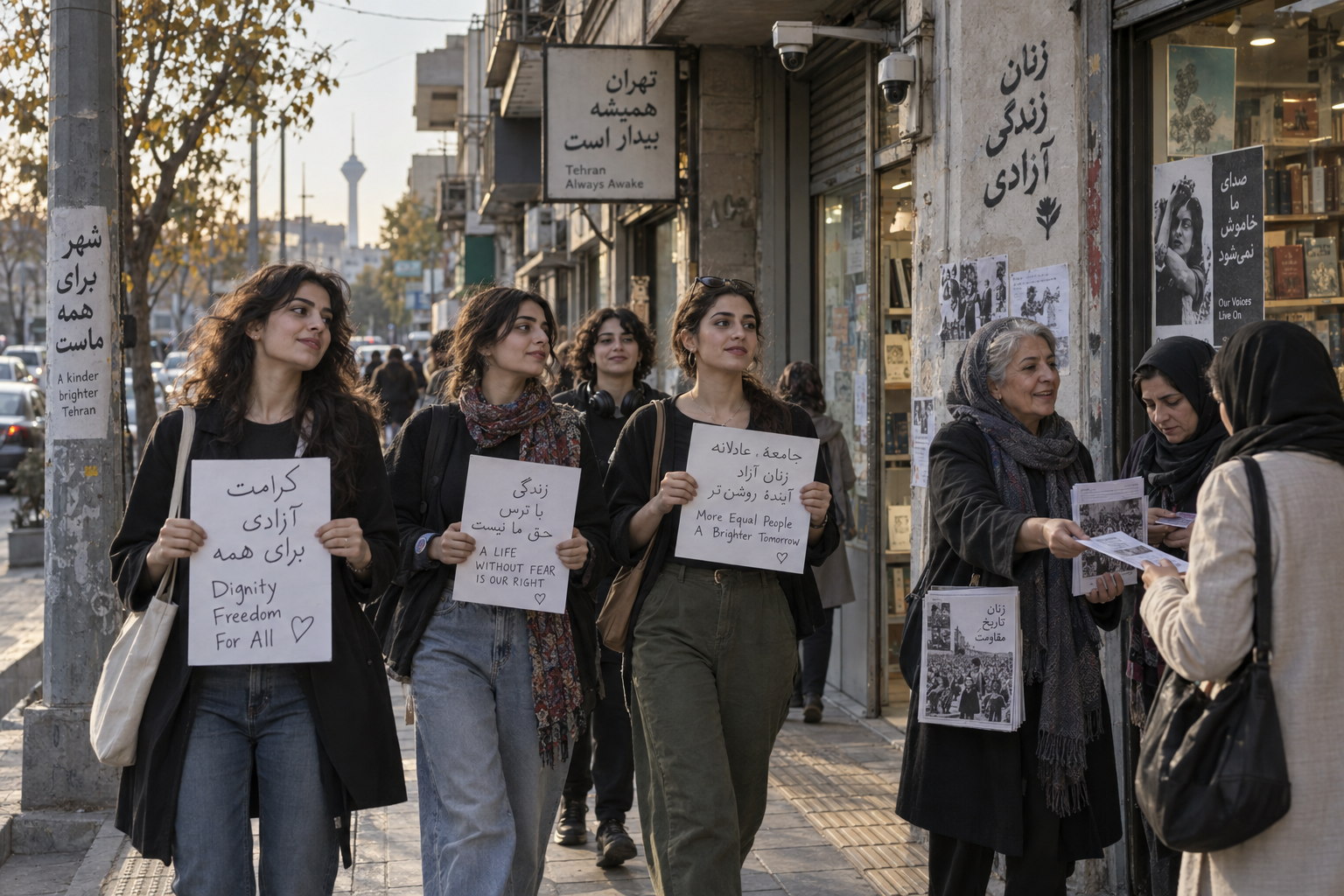
The article examines how the “Woman, Life, Freedom” movement continues to influence Iranian society despite its suppression by the government and the country’s ongoing war with the United States. The movement began after Jina Mahsa Amini, a 22-year-old Kurdish woman, died in September 2022 after being arrested by Tehran’s morality police for allegedly violating compulsory hijab rules. Her death sparked nationwide protests demanding an end to the hijab mandate and state violence. Although authorities eventually crushed the demonstrations through arrests and violence, activist Pouran Nazemi argues that the movement produced the biggest social and cultural change in Iran in decades. Many Iranians, particularly young women, now recognize their ability to challenge official rules. Some women openly appear in public without head coverings, while others post images of themselves in colorful clothing on social media. Nevertheless, state institutions continue to use arrests and physical violence, and political leaders are still debating a bill that would impose harsher punishments for violations of the hijab law.
The article places the 2022 uprising within a much longer history of women’s resistance. Activist Mansoureh Shojaee describes the “One Million Signatures” campaign, launched in 2006 to challenge laws discriminating against women. Although it failed to collect its target number of signatures, the campaign expanded public discussion of women’s rights through outreach, workshops, study groups and cultural events. The authorities responded with surveillance, arrests and legal repression. The article also highlights the experiences of Nobel Peace Prize winners Shirin Ebadi and Narges Mohammadi, both of whom faced state pressure, as well as Shojaee’s eventual exile. Shojaee views “Woman, Life, Freedom” not as an isolated rupture, but as one chapter in Iran’s continuing history of dissent. Overall, the article presents a mixture of repression, gradual social change and enduring resistance.
Entities: Iran, Tehran, Jina Mahsa Amini, Pouran Nazemi, Mansoureh Shojaee • Tone: analytical • Sentiment: neutral • Intent: analyze
15-09-2026
The article examines how the spirit of Iran’s “Woman, Life, Freedom” movement continues despite the government’s violent suppression of the 2022 protests and the country’s ongoing war with the United States. The movement began after the death of 22-year-old Kurdish woman Jina Mahsa Amini, who was arrested by morality police over alleged violations of Iran’s compulsory hijab rules. Her death sparked nationwide demonstrations demanding an end to the hijab mandate and state violence.
Although the protests were eventually crushed, activist Pouran Nazemi argues that they produced a profound social and cultural transformation. Many Iranians, particularly young women, now recognize their ability to challenge government restrictions. A 17-year-old student interviewed by DW describes appearing in public without a hijab as normal, although her mother still carries a scarf in case she needs to cover herself quickly. At the same time, lawmakers continue to debate legislation that would impose harsher punishments on women who do not comply with the hijab requirement.
The article places the 2022 movement within a much longer history of Iranian women’s resistance. Activist Mansoureh Shojaee recalls the “One Million Signatures” campaign, launched in 2006 to challenge discriminatory laws involving divorce, custody, inheritance, testimony and polygamy. Although the campaign failed to collect its target number of signatures, it broadened public discussion about women’s legal and social rights.
The state responded to both movements with arrests, prosecutions and institutional repression. Women’s rights activists including Nobel Peace Prize laureates Shirin Ebadi and Narges Mohammadi have faced pressure, imprisonment or forced exile. Shojaee therefore views “Woman, Life, Freedom” not as an isolated rupture, but as a significant chapter in Iran’s continuing history of feminist activism and resistance.
Entities: Iran, Jina Mahsa Amini, Tehran, Iranian morality police, Woman, Life, Freedom movement • Tone: analytical • Sentiment: negative • Intent: analyze
15-09-2026
Taraneh and Romina Rahimi, 20-year-old twin sisters from Isfahan, Iran, were arrested after allegedly participating in anti-government protests. Their U.S.-based cousin said masked security forces removed them from their home at night, placed bags over their heads and gave the family no explanation about their whereabouts. Their mother reportedly spent months searching for them before being allowed to visit them at Dowlatabad Prison, where she saw signs of severe physical abuse, including bruising, swelling, injuries and hair loss.
According to the Human Rights Activists News Agency (HRANA), Taraneh was sentenced to death and an additional 11 years in prison, while Romina received a 36-year sentence. The verdicts were issued by Branch 1 of the Isfahan Revolutionary Court and remain subject to appeal or further proceedings. The sisters are among 16 defendants in the so-called “Isfahan Shohada Square” case; HRANA reported that 10 defendants received death sentences and that the group collectively received 256 years in prison.
The family alleges that the sisters were tortured and threatened with sexual violence against each other to force confessions. Taraneh reportedly told the court that statements attributed to her were extracted through torture. The Hana Human Rights Organization told Fox News Digital that it had verified the torture allegations. Other defendants also alleged abuse, including the use of an electric stun gun, while defense lawyers complained that they lacked sufficient access to case files and evidence.
The case is presented as part of a broader escalation in Iran’s use of executions and repression against protesters and dissidents. The Abdorrahman Boroumand Center reported 901 executions in Iran during the first seven months of 2026, including 56 involving political or national-security charges. Behnam Ben Taleblu of the Foundation for Defense of Democracies described the domestic crackdown as the Islamic Republic’s “real war” against civil society and dissent.
Entities: Taraneh Rahimi, Romina Rahimi, Marzieh Nourmohammadi, Masoud Nourmohammadi, Ahmadreza Saeidi • Tone: urgent • Sentiment: negative • Intent: inform