15-09-2026
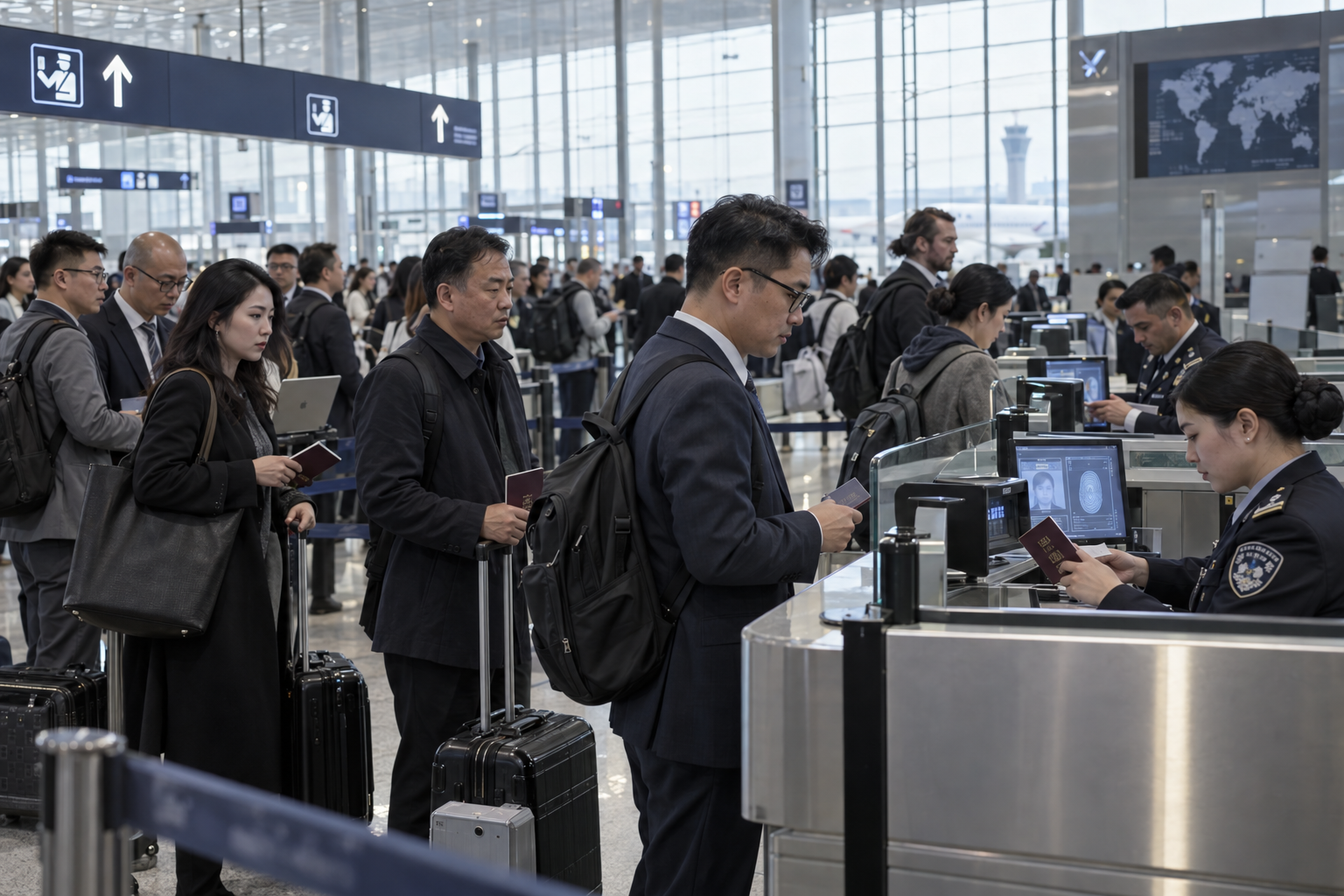
China has introduced new rules that expand the circumstances in which its citizens can be prevented from leaving the country. The regulations allow authorities to impose exit bans of up to three years on people judged to have harmed China’s national security or interests while overseas. Individuals who violate technology import and export rules that could threaten national industrial or technological security may also be restricted from travelling abroad. Chinese authorities say the measures are intended to protect national sovereignty and security, combat scams, illegal gambling and coercive recruitment abroad, and target only high-risk individuals and destinations. They deny that ordinary citizens’ travel is being restricted.
Critics, however, argue that the regulations give Beijing another mechanism to control citizens’ speech and activities overseas. Legal scholar Tom Kellogg said the measures could be used against people who criticize the government or advocate for rights. The article describes the case of Pipi, a Chinese citizen whose passport application was rejected after he attended and spoke to media during Hong Kong’s 2019 pro-democracy protests. He says officials gave him no written explanation and that he fears challenging the decision.
The article also highlights the lack of transparency surrounding exit controls. Citizens generally cannot check whether they are subject to a ban and may discover restrictions only when applying for documents or attempting to cross the border. Data supplied by Safeguard Defenders indicates that court records mentioning exit bans rose from 89 in 2016 to 188,760 in 2025, although the true figure may be higher. Travel controls also affect civil servants and employees of state-owned enterprises, some of whom must surrender passports or obtain official approval before travelling. Critics say the expanding restrictions reflect intensified ideological control under Xi Jinping and evoke China’s isolation during the Mao era.
Entities: China, Chinese citizens, Tom Kellogg, Center for Asian Law at Georgetown University, Piyao • Tone: analytical • Sentiment: negative • Intent: inform
15-09-2026
China has introduced new border-control regulations that give authorities clearer and more permanent legal authority to prevent people from leaving the country, with the stated aim of retaining capital and talent. The rules allow officials to bar Chinese nationals from departing if their travel is linked to export-control or technology-transfer violations that could threaten national security. Analysts say this could convert previously ad hoc restrictions into a more systematic exit-control regime, particularly for technology professionals and individuals connected to sensitive industries such as rare earths, electric-vehicle batteries and solar panels.
The regulations also intensify scrutiny of wealthy households and the financial and immigration professionals who help Chinese clients transfer assets, establish overseas residences or move family members abroad. Private bankers have reportedly faced questioning at border checkpoints, while some are avoiding sensitive documents during trips to China and disguising overseas-investment events as other types of gatherings. Foreign companies are barred from providing immigration services inside mainland China, and registered agencies must report public-sector and military personnel who improperly seek foreign nationality or permanent residency abroad.
Local authorities also receive stronger legal support for restricting the departure of people suspected of owing taxes on offshore wealth. The new framework follows a series of tax measures, including a 20% tax on assets transferred into offshore trusts since 2023, reported taxes on overseas insurance income and salaries, and a 20% tax on dividends received by foreigners from foreign-invested enterprises.
Analysts and lawyers warn that the combined measures are increasing compliance uncertainty and creating the perception that regulations can change without notice or apply retroactively. Wealthy Chinese with few remaining ties to the country may leave permanently, while those with family or assets in China are more likely to comply. Beijing views retaining talent and capital as essential to innovation, productivity and competition with the United States.
Entities: China's State Council, Beijing, Neo Wang, Evercore ISI, Dan Wang • Tone: analytical • Sentiment: negative • Intent: inform
15-09-2026
CNBC’s China Connection newsletter examines China’s new restrictions on citizens who violate technology export controls. Beginning Tuesday, Chinese authorities can restrict the international travel of individuals involved in violations, extending Beijing’s oversight beyond companies and transactions to the movement of executives and technical personnel. The rules build on broader controls over overseas investment that took effect July 1 and are intended to close loopholes through which people and capital could leave China without government supervision. Singapore and other jurisdictions have been used by Chinese companies to establish overseas operations.
Shuai Peng, CEO of Lex Magister, said companies expanding internationally must assess their compliance, particularly when executives travel abroad for negotiations. Although semiconductor and artificial-intelligence companies are expected to face the greatest scrutiny, the rules apply across industries through measures such as the Commerce Ministry’s export-control lists. Analysts cited in the newsletter expect the effects to be concentrated in Singapore and Japan, amid concerns about technology transfers and rare-earth exports, rather than significantly damaging global business sentiment toward China.
The article places China’s policy in the context of tightening technology and talent controls in the United States. New U.S. rules reduce grace periods for certain student-visa holders and shorten visa terms for mainland Chinese journalists, citing espionage and technology-transfer risks. Scrutiny is increasing as Chinese AI companies recruit U.S.-trained scientists, while Washington and Beijing exchange accusations over AI capabilities and alleged espionage.
The newsletter also covers China’s plan to establish a BRICS AI open-source community, competition in the country’s foldable-phone market, August trade and inflation data, and the stock-market debut of AI-chipmaker Enflame. Upcoming events include Chinese economic data releases and Huawei’s annual Connect conference.
Entities: China, Beijing, Shuai Peng, Lex Magister, Guo Shan • Tone: analytical • Sentiment: neutral • Intent: analyze