14-09-2026
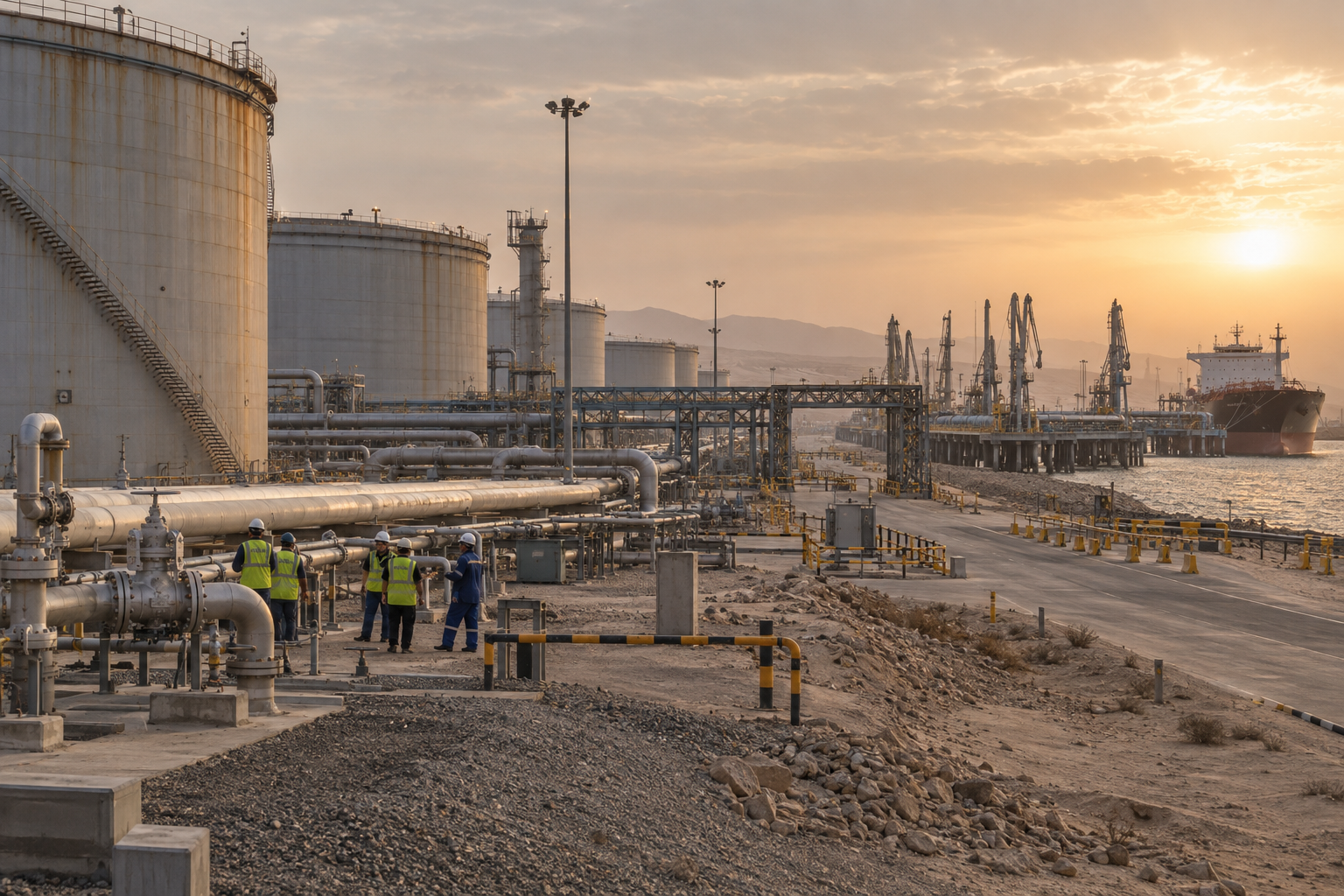
Saudi Arabia has shut down its East-West oil pipeline after drone attacks in the Riyadh and Medina regions, raising concerns about the kingdom’s ability to maintain crude exports to Europe and Asia. The Saudi energy ministry said the shutdown was a precautionary measure while emergency and technical teams assess the pipeline and secure it, but it did not provide a restart timeline or a detailed account of the damage. Saudi and Iraqi officials said the attack originated in Iraq.
Traders and oil buyers cited in reports estimated that a prolonged shutdown could place as much as 4 million barrels per day at risk, equivalent to roughly 4% of global oil supply. However, Saudi authorities have not confirmed those figures. Stored oil at the Red Sea port of Yanbu could reportedly sustain exports for five to seven days, depending on available inventories and the speed at which pumping resumes.
The approximately 1,200-kilometre pipeline transports oil from eastern Saudi Arabia to Yanbu, allowing exports to avoid the Strait of Hormuz. Although the pipeline has a maximum capacity of 7 million barrels per day, the shutdown would not immediately remove that entire volume from global markets because tankers can continue loading oil already stored near export terminals. Those supplies would eventually decline without new deliveries.
Exports to Europe can travel through the Red Sea, Suez Canal and Mediterranean, while Asian shipments normally pass through Bab el-Mandeb. That route faces threats from Yemen’s Houthis, and an alternative voyage around Africa would be significantly longer. The disruption comes as global oil inventories and Gulf exports have already fallen sharply. Brent crude rose about 3% in early Monday trading, while diesel prices in Europe and Asia increased as fuel supplies tightened.
Entities: Saudi Arabia, East-West oil pipeline, Riyadh and Medina regions, Yanbu, Red Sea • Tone: analytical • Sentiment: negative • Intent: inform
14-09-2026
Oil prices climbed sharply on September 14, 2026, after Saudi Arabia suspended operations on its East-West oil pipeline following multiple attacks in the Riyadh and Madinah regions. Brent crude, the benchmark for roughly two-thirds of the world’s oil, rose as much as 3.7 per cent before easing to a 3.19 per cent gain at $107.95 a barrel. West Texas Intermediate increased 3.14 per cent to $103.19.
Saudi Arabia’s Energy Ministry said the pipeline shutdown was a precautionary measure after the attacks, which caused several injuries. The ministry did not provide details on possible pipeline damage or say when crude flows would resume. The East-West pipeline links oil production facilities in Saudi Arabia’s Eastern Province with Yanbu on the Red Sea coast and has a total pumping capacity of about seven million barrels per day.
The pipeline is particularly important because it enables Saudi Arabia to export crude through Yanbu while avoiding the Strait of Hormuz, where shipping has been severely disrupted amid the US-Iran war. Its closure removes a major alternative route for Gulf oil exports and heightens concerns about a global supply shortage.
Ahmad Assiri, a research strategist at Pepperstone, said the pipeline had reportedly carried between six million and seven million barrels per day before the suspension, equivalent to 30 to 40 per cent of crude supplies from the Gulf. He said oil prices had already moved above $100 and briefly approached $110 in response to the closure. If the disruption continues, markets could reprice crude significantly higher, potentially reaching levels seen earlier in the conflict. Assiri added that escalating regional tensions may have exhausted temporary measures for managing supply disruptions and that a lasting resolution to the Strait of Hormuz crisis may now be required.
Entities: Saudi Arabia, East-West oil pipeline, Saudi Arabia’s Energy Ministry, Riyadh, Madinah • Tone: analytical • Sentiment: negative • Intent: inform
14-09-2026
The US Federal Reserve is facing a difficult decision over whether to raise interest rates by 25 basis points this week as renewed oil-price increases threaten to prolong inflation. Nearly 90 per cent of traders expect a hike, which would end the Fed’s nine-month pause. The UAE Central Bank is also expected to follow the Fed’s decision.
Brent crude rose almost 8 per cent last week to $104.50 a barrel amid escalating tensions linked to the Iran war, attacks on Saudi infrastructure and the seizure of Yemen’s port city of Mokha by Houthi rebels. Saudi Arabia’s decision to close its East-West Pipeline, which can transport seven million barrels of oil per day, has added to concerns about energy supplies. Traffic through the Strait of Hormuz also remains well below pre-war levels.
Although inflation has eased from its May peak, the latest US data showed headline inflation holding at 3.4 per cent in August and core inflation at 2.4 per cent year on year. Petrol prices were 27.4 per cent higher than a year earlier, with the average US pump price rising to $4.29 per gallon. Diesel prices exceeded $6 per gallon, increasing transportation costs that could eventually be passed on to consumers.
Fed Chairman Kevin Warsh has said he remains unconvinced by recent improved inflation readings. Economists describe the central bank as being on a “knife edge,” weighing the risk that higher rates could weaken the economy against the possibility that energy costs will prevent inflation from returning to the Fed’s 2 per cent target.
Policymakers are also under pressure from a sell-off in global bond markets. US long-term yields have approached two-decade highs despite a Treasury announcement that it would buy back $6 billion in government debt. The Fed’s handling of the meeting and Warsh’s communication will be closely watched for evidence that the central bank remains credible on inflation.
Entities: US Federal Reserve, Kevin Warsh, Federal Reserve interest-rate decision, Iran war, Oil-price inflation • Tone: analytical • Sentiment: negative • Intent: analyze