14-09-2026
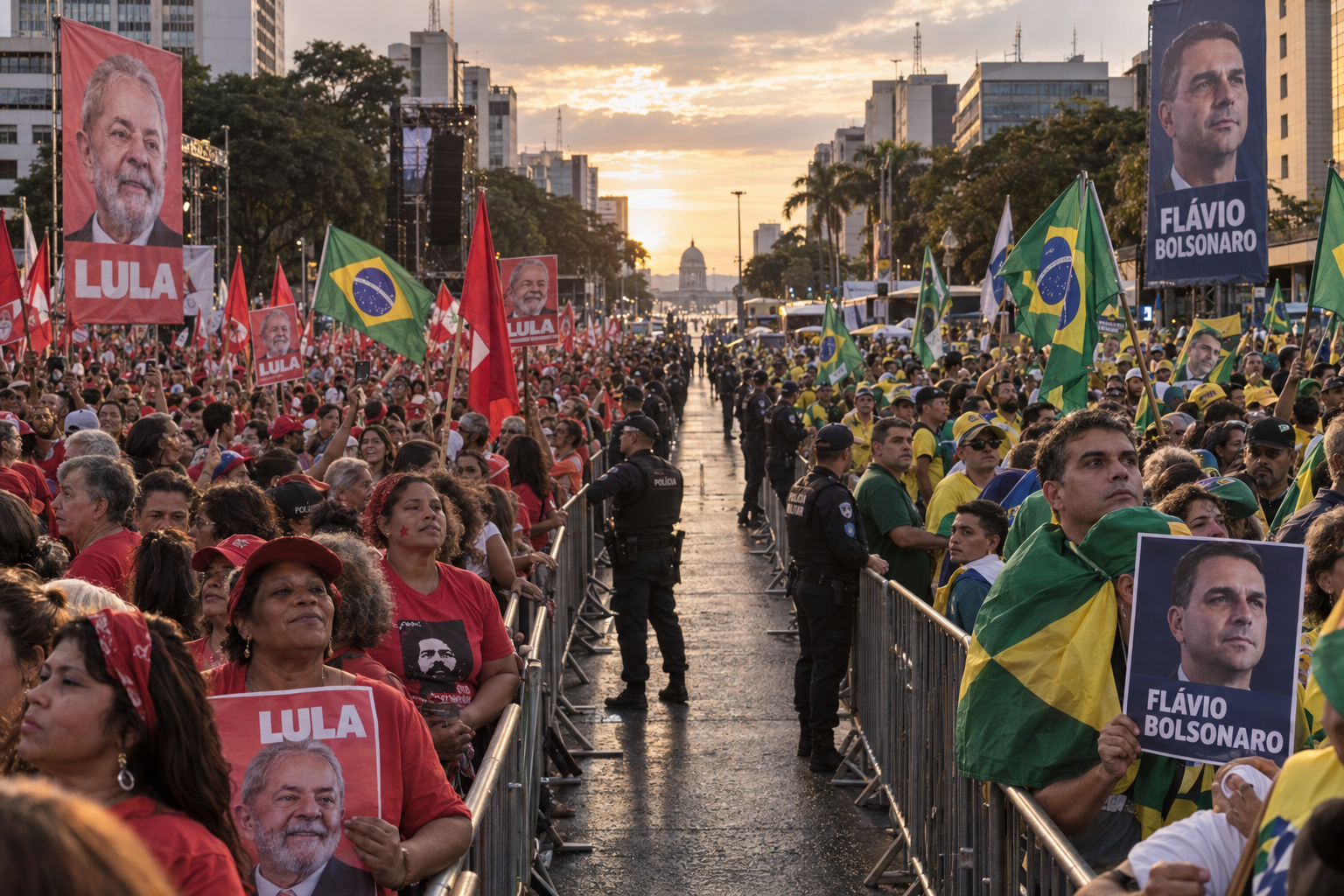
France 24 reports that thousands of people have rallied in support of Brazilian President Luiz Inacio Lula da Silva as campaigning intensifies ahead of Brazil’s presidential election. The vote is scheduled for October 4, 2026, according to the report. Supporters of both Lula, the incumbent, and his main opponent, Flavio Bolsonaro, have been holding street demonstrations as the election approaches.
The article presents the contest as highly competitive. Polls reportedly show Lula and Bolsonaro running neck and neck, with the two candidates positioned at opposite ends of Brazil’s political spectrum. The rallies reflect the polarization surrounding the election and the importance of public mobilization during the campaign period.
The short video report focuses primarily on the visible demonstrations in support of Lula. It does not provide detailed information about the size, location, organizers, speeches, policy proposals, or campaign strategies associated with the rallies. It also offers only limited context about Flavio Bolsonaro’s events beyond noting that supporters of both candidates have taken to the streets.
Overall, the report depicts an increasingly active and closely fought presidential race. The reference to competing rallies and tight polling suggests that both campaigns are seeking to demonstrate momentum and consolidate their bases before election day. The article remains concise and factual, offering a brief overview rather than a detailed analysis of the candidates, the issues shaping the campaign, or the likely electoral outcome.
Entities: Brazil, Luiz Inacio Lula da Silva, Flavio Bolsonaro, France 24, Brazilian presidential election • Tone: analytical • Sentiment: neutral • Intent: inform
14-09-2026
Brazilian President Luiz Inacio Lula da Silva has regained a narrow lead over Senator Flavio Bolsonaro in a simulated runoff for Brazil’s upcoming presidential election, according to the latest BTG Pactual/Nexus poll. Lula was supported by 47% of respondents, compared with 46% for Bolsonaro, a result within the survey’s two-percentage-point margin of error and therefore indicating that the race remains statistically tied.
The result reverses the position recorded in the previous survey, conducted on September 8, when Bolsonaro led Lula by 46% to 45%. That earlier poll was the first since March to show Bolsonaro numerically ahead. The shift helped Brazilian financial assets rally because Flavio Bolsonaro, the eldest son of former President Jair Bolsonaro, is viewed by markets as more economically and financially friendly than Lula.
In a first-round voting scenario, Lula leads with 42% support, followed by Bolsonaro with 37%. Augusto Cury is at 6%, Ronaldo Caiado at 5%, and Renan Santos at 2%. Compared with the previous first-round survey, Lula’s support rose from 39% to 42%, while Bolsonaro’s increased from 35% to 37%; Cury’s support fell from 9% to 6%.
Brazil’s first round is scheduled for October 4. If no candidate wins more than 50% of valid votes, the two leading candidates will compete in a runoff on October 25. Nexus surveyed 2,003 people between September 11 and 13. Given the poll’s margin of error, the small difference between Lula and Bolsonaro should not be interpreted as a definitive lead.
Entities: Luiz Inacio Lula da Silva, Flavio Bolsonaro, Jair Bolsonaro, São Paulo, Brazil, BTG Pactual • Tone: analytical • Sentiment: neutral • Intent: inform
14-09-2026
Brazil’s 4 October presidential election is portrayed as a highly competitive contest between incumbent leftwing president Luiz Inácio Lula da Silva and far-right senator Flávio Bolsonaro, the son of former president Jair Bolsonaro. Polls show the two candidates neck-and-neck, while Minas Gerais—a large, politically pivotal state that has backed every winning presidential candidate since Brazil’s return to democracy—could again determine the result.
Flávio Bolsonaro is campaigning heavily among his father’s supporters, beginning in Juiz de Fora, where Jair Bolsonaro was stabbed during the 2018 campaign. The visit drew enthusiastic Bolsonarista supporters who called for Lula’s removal, demanded Jair Bolsonaro’s freedom, invoked God and displayed support for US President Donald Trump. Trump has been accused of attempting to influence Brazil’s election through economic and diplomatic pressure.
The article recalls Jair Bolsonaro’s turbulent presidency, including the destruction of the Amazon rainforest, expanded gun ownership, his handling of the Covid-19 pandemic, attacks on Brazil’s electronic voting system and the January 2023 Brasília riots. Jair Bolsonaro was sentenced to 27 years in prison for leading an attempted coup after losing the 2022 election, but his supporters expect Flávio to help secure his release if elected.
Flávio’s platform is presented as a continuation of his father’s politics, including harsher policing, looser gun laws and the appointment of five conservative Supreme Court justices opposed to abortion and drugs. Progressives fear a “Jair Bolsonaro 2.0” presidency, while supporters describe Flávio as a modern alternative to Lula. Political analyst Thomas Traumann calls the election “a coin flip,” warning that an unexpected scandal could decide it. That possibility emerged when Flávio was placed under investigation over suspected corruption connected to a film about his father’s stabbing.
Entities: Flávio Bolsonaro, Jair Bolsonaro, Luiz Inácio Lula da Silva, Brazilian presidential election, Minas Gerais • Tone: analytical • Sentiment: neutral • Intent: inform