13-09-2026
US President Donald Trump has expressed support for the reunification of Ireland during a visit to Ireland that combined official meetings with a trip to a tournament at his golf course in Doonbeg. Speaking alongside Irish Prime Minister Micheal Martin in Dublin, Trump said he would “love to see” the Republic of Ireland and Northern Ireland unified, adding that it would be “fantastic” and suggesting it might as well happen now. He acknowledged that the United Kingdom would have a say in the matter. Later, however, Trump told business leaders that there was “no good answer” to the question of reunification.
The comments came during a controversial visit that prompted protests in Dublin. Demonstrators in and around Phoenix Park waved Irish and Palestinian flags and chanted that Trump was not welcome. His son, Eric Trump, defended the family’s presence in Ireland, pointing to the Doonbeg golf course as a major local employer and highlighting the family’s investment in the country.
The article explains that Ireland’s constitutional division has roots in competing nationalist and unionist identities. Northern Ireland, which has a Protestant majority, remained part of the United Kingdom after the creation of the largely Catholic Irish state. The resulting tensions led to decades of violence known as The Troubles. A 1998 peace agreement, negotiated with significant US involvement, largely ended the violence while leaving Northern Ireland’s constitutional future unresolved. Under the agreement, a referendum on unification can be held if it appears likely that a majority would support it.
Trump’s remarks were criticized by British and Northern Irish unionist politicians. UK Prime Minister Andy Burnham’s office referred to his position that a referendum should only be considered after public opinion changes. Democratic Unionist Party leader Gavin Robinson and Ulster Unionist Party leader Jon Burrow argued that Northern Ireland’s future should be determined by its residents, not foreign leaders. The article also links Trump’s comments to his separate statements about the Falkland Islands and tensions involving Britain, Argentina and the US-Israeli war against Iran.
Entities: Donald Trump, Micheal Martin, Ireland, Northern Ireland, United Kingdom • Tone: analytical • Sentiment: neutral • Intent: inform
13-09-2026
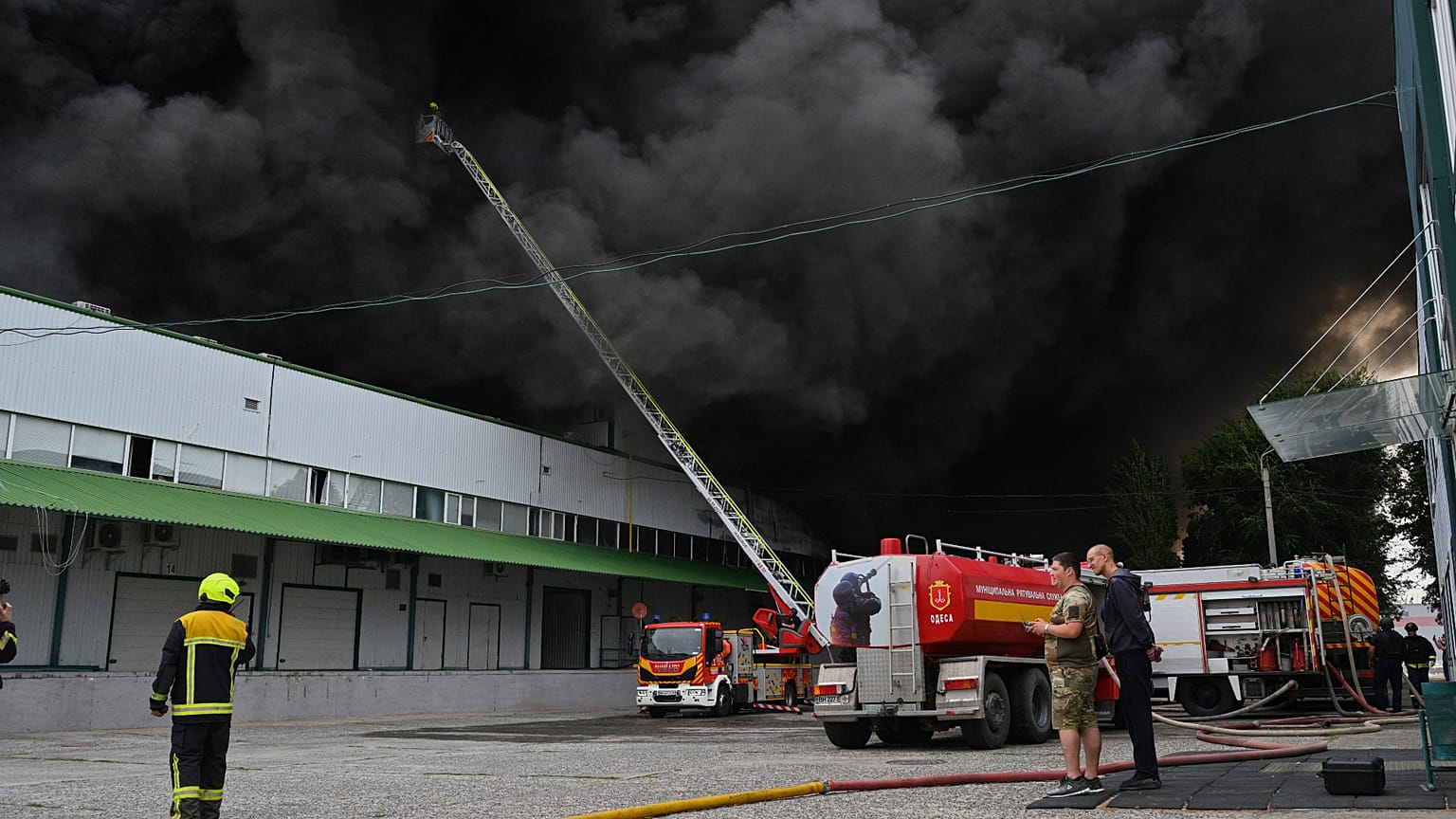
A Russian drone strike on a truck near Yahodyn in western Ukraine, roughly 2 kilometres from the Polish border, has intensified fears that the war is moving closer to NATO territory. Ukrainian Foreign Minister Andrii Sybiha described the attack as part of Russia’s escalating campaign of “terror” against the European Union and NATO. Polish border guards said the nearby Dorohusk–Yahodyn crossing temporarily stopped operating after the strike, which occurred approximately 800 metres from Poland, before reopening.
The incident was part of a broader series of attacks near Ukraine’s western borders. Ukrainian Railways said a drone struck the locomotive of a passenger train in Volyn, also about 2 kilometres from Poland, without causing injuries. Russia said it was targeting infrastructure used to move military cargo from Europe, while Ukraine relies heavily on border crossings with Poland, Romania and Moldova for arms, humanitarian aid and trade.
Concerns about spillover also grew after Lithuania briefly closed Vilnius airport following a suspected drone sighting. NATO dispatched a fighter jet, but the object was later identified as a flock of birds. Similar drone incursions or sightings near Finland, Estonia, Latvia and Lithuania have raised concerns about the war’s effects on NATO’s northern borders.
Diplomatic efforts remain uncertain. At the BRICS summit in New Delhi, Russian President Vladimir Putin said Russia had not ruled out resuming three-way talks with Ukraine and the United States in October. India, China, Brazil and Kazakhstan have urged an end to the conflict, but Russia continues to demand Ukrainian withdrawal from the Donbas, a condition Kyiv rejects.
The article also reports continued attacks around the Russian-held Zaporizhzhia nuclear plant and Ukrainian drone strikes inside Russia, including an incident in Nizhnekamsk that killed at least two people. Ukraine separately claimed to have struck an oil refinery in Krasnodar.
Entities: Russia, Ukraine, Poland, Yahodyn and the Dorohusk–Yahodyn border crossing, NATO • Tone: urgent • Sentiment: negative • Intent: inform
13-09-2026
Russia and Ukraine exchanged large-scale drone attacks overnight, causing at least four reported deaths and more than 20 injuries, according to officials from both countries. Ukraine’s General Staff said Russia launched 863 drones at Ukrainian targets over a 24-hour period, while Russia’s Defence Ministry claimed its forces downed 389 Ukrainian drones over Russian regions, Tatarstan and occupied Crimea.
Several incidents occurred near Ukraine’s border with NATO member Poland. A drone attack on a truck approximately 0.8km from Poland temporarily halted operations at the Dorohusk-Yahodyn crossing, although the crossing later reopened. Polish and Ukrainian officials also said a Russian drone struck a train travelling toward Warsaw in Ukraine, without causing casualties. Moscow said its overnight attacks targeted Ukrainian logistics and energy facilities, as well as infrastructure used to transport military supplies from Europe. Ukraine relies heavily on routes through Poland, Romania and Moldova for trade and weapons deliveries.
In Odesa, at least nine people were injured in a Russian attack. The strategically important Black Sea port has faced repeated drone and missile strikes, with Ukrainian authorities accusing Russia of attempting to disrupt the country’s exports. Rosatom chief Alexey Likhachev said two people were killed in drone strikes on fuel trucks near the Zaporizhzhia Nuclear Power Plant. Separately, Russian authorities reported two deaths and 12 injuries in a Ukrainian drone attack on Nizhnekamsk in Tatarstan.
Despite the escalation, diplomatic possibilities remain open. Kremlin spokesperson Dmitry Peskov said Russia did not rule out three-way talks involving Russia, Ukraine and the United States in October. US officials have recently travelled to Kyiv and Moscow, while Donald Trump and Vladimir Putin have spoken by phone. Ukrainian President Volodymyr Zelenskyy said he would be prepared to meet Putin at the G20 summit in Miami in December, although previous US-backed negotiation efforts have failed.
Entities: Russia-Ukraine war, Ukraine, Russia, Poland-NATO border, Odesa • Tone: urgent • Sentiment: negative • Intent: inform
13-09-2026
The supplied material does not include the body of the AP News article. It consists almost entirely of AP website navigation, section labels, newsletter promotions, unrelated headlines, and other site content. Based on the article title and the related headline visible in the material, former President Donald Trump said that Ukrainian strikes against targets in Russia are contributing to a shortage of diesel fuel. Trump called on Ukraine to stop attacks on Russian diesel infrastructure, citing what he described as a broader global shortage.
The available text indicates that the article concerns the interaction between the Russia-Ukraine war and international energy supplies. It presents Trump’s position as a claim or argument, rather than providing enough information to independently assess its accuracy. The supplied excerpt does not identify the specific Ukrainian strikes, their locations or targets, the scale of any impact on Russian diesel production or exports, or evidence connecting those attacks to global fuel conditions. It also does not include reactions from Ukrainian or Russian officials, market data, comments from energy analysts, or information about the timing of Trump’s remarks.
Consequently, a full summary of the article’s reporting, sourcing, context, and conclusions is not possible from the provided content alone. The central reported point is that Trump linked Ukrainian attacks on Russian fuel-related targets to diesel-supply concerns and urged Ukraine to halt them. The article appears to frame the issue as both a wartime strategic dispute and an international energy-market concern, but the missing body prevents further characterization.
Entities: Donald Trump, Ukraine, Russia, Russian diesel fuel, Diesel shortage • Tone: neutral • Sentiment: neutral • Intent: inform
13-09-2026
President Donald Trump urged Ukrainian President Volodymyr Zelenskyy to stop targeting Russian diesel fuel and refineries, arguing that the attacks are creating fuel shortages in Russia. Trump made the comments in Ireland after being asked whether he had spoken with Zelenskyy following a recent conversation with Russian President Vladimir Putin. Ukraine has defended its strikes on Russia’s oil and gas sector by saying the industry finances and directly supports Moscow’s war effort. The attacks have reportedly contributed to fuel rationing across Russia and have also targeted major online retailers, bringing the conflict closer to Russian civilians.
The comments came as Russia and Ukraine exchanged another series of overnight drone attacks. Russian officials said two people were killed in Tatarstan, while Ukrainian authorities reported Russian strikes on the Black Sea port of Odesa and a fire near the Polish border. Russia has intensified its air campaign, using ballistic missiles and jet-powered drones against Ukrainian defenses and the power grid ahead of winter. Ukrainian officials say the attacks are intended to demoralize civilians and exploit shortages of missile interceptors.
A Russian drone also struck a train near the Ukraine-Poland border shortly after a train carrying senior Western figures, including David Petraeus and Boris Johnson, had passed through the area. No casualties were reported, and Russia said it had targeted railway infrastructure used to transport military equipment from Europe. Johnson condemned the attack and called for stronger air defenses for Ukraine.
Separately, Kremlin spokesman Dmitry Peskov said Russia was open to resuming peace talks involving Russia, Ukraine and the United States as early as October. Jared Kushner said territorial concessions remain the central obstacle, with the positions of Moscow and Kyiv still far apart despite recent U.S. diplomatic efforts.
Entities: Donald Trump, Volodymyr Zelenskyy, Vladimir Putin, Jared Kushner, Steve Witkoff • Tone: analytical • Sentiment: negative • Intent: inform
13-09-2026
Russia launched two drone strikes on western Ukraine near the Polish border, Ukrainian and Polish authorities said. One drone struck the locomotive of a Warsaw-bound passenger train at Yahodyn railway station in the Volyn region, approximately two kilometers from the border crossing with Poland. The train crew was warned in advance, allowing the locomotive to be evacuated; no one was injured. Poland’s PKP Intercity said the train was carrying 206 passengers, none of them Polish citizens, and would continue to Warsaw after customs procedures were completed. A nearby gas station was also damaged and caught fire after falling debris.
Ukrainian railway authorities later reported that senior Western figures had been at the station shortly before the attack. Former British Prime Minister Boris Johnson and former CIA Director David Petraeus were among those reportedly in the area, while former Swedish Prime Minister Carl Bildt said a train carrying his group had departed shortly before the strike and was evacuated as the drone approached.
Polish officials described the incident as a serious escalation. Foreign Minister Radoslaw Sikorski called for increased assistance to Ukraine, while Prime Minister Donald Tusk chaired an emergency meeting and warned that Poland could not rule out future drone attacks on its territory. Ukrainian President Volodymyr Zelenskyy said the locomotive had been deliberately targeted. Foreign Minister Andrii Sybiha characterized the attack as Russian terror reaching the borders of the European Union and NATO and urged Western countries to impose tougher sanctions and other measures against Moscow. Russia had not immediately commented on the reports.
Entities: Russia, Ukraine, Poland, Yahodyn railway station, Volyn region • Tone: urgent • Sentiment: negative • Intent: inform
13-09-2026
Russia and Ukraine carried out major overnight drone attacks against each other, with both sides targeting infrastructure as winter approaches. Ukraine’s Armed Forces said Russia launched 453 drones of various types across Ukraine. Of these, 409 were neutralised, although 13 locations were hit. Russian strikes damaged residential, school-related and railway buildings in Stryi, in the Lviv region near the Polish border. In Kharkiv and 15 nearby settlements, three people were injured, while a 26-year-old woman died in Izyum after an explosive device detonated. In the western Volyn region, at least five people were injured during an attack lasting more than four hours. Debris struck an evacuated train in Lutsk, causing a fire, but no injuries were reported there.
Ukraine also attacked Russian energy infrastructure. Russian authorities said a Ukrainian drone strike caused a fire at an industrial facility in Nizhnekamsk, in Tatarstan, killing two people and injuring 12. Ukraine’s Defence Intelligence said it separately struck the Slavyansk-ECO oil refinery in Krasnodar Krai, damaging an oil-processing unit and the refinery’s tank farm. The article says both countries continue to target energy-related facilities, with Russia primarily attacking Ukraine’s electricity and energy systems and Ukraine focusing mainly on Russia’s oil and gas infrastructure.
The attacks occurred amid uncertainty over possible peace talks. Ukrainian President Volodymyr Zelenskyy said he was prepared to attend the G20 summit in Miami and meet Russian President Vladimir Putin on the sidelines, arguing that concrete results mattered more than statements. Kremlin spokesperson Dmitry Peskov rejected the prospect as impossible, saying Putin would meet Zelenskyy only in Moscow. Russian Foreign Minister Sergey Lavrov also said Russia would not halt its military operation during possible negotiations.
Entities: Russia, Ukraine, Volodymyr Zelenskyy, Vladimir Putin, Dmitry Peskov • Tone: urgent • Sentiment: negative • Intent: inform
13-09-2026
A Russian drone struck the locomotive of a passenger train in Ukraine’s Volyn region, approximately two kilometres from the Polish border, according to Ukraine’s state-owned railway operator, Ukrzaliznytsia. No casualties were reported. The railway company said its threat-monitoring team detected the danger early and warned the train crew, allowing measures to be taken to protect passengers and staff. The strike was the second consecutive day of Russian attacks on Ukraine’s rail infrastructure.
The incident occurred during a major Russian overnight air offensive. Ukraine’s Air Force said Russia launched more than 450 drones, including jet-propelled and Banderol missile drones, across Ukraine. The strikes killed at least three people and injured 36 others, with western Ukrainian regions near Poland also targeted. A lorry was reportedly destroyed around 800 metres from the Jagodzin border crossing.
Because of the attacks, Poland temporarily suspended checks at several Polish-Ukrainian border crossings, including Dorohusk, Zosin and Dołhobyczów, although traffic later returned to normal and processing at Hrebenne was expected to resume. Poland’s Border Guard said there was no direct threat to Polish crossings and no violation of Polish airspace.
A train carrying political figures and diplomats, reportedly including former British Prime Minister Boris Johnson, was also stopped and partially evacuated while travelling from Kyiv to Poland amid drone warnings. Ukrainian Foreign Minister Andrii Sybiha described the attacks as Russian terror reaching the “doors” of the EU and NATO and called for tougher sanctions against Moscow.
Poland scrambled F-16 aircraft, helicopters and a Saab reconnaissance aircraft to monitor and protect its airspace. Polish Defence Minister Władysław Kosiniak-Kamysz said drones had struck one and five kilometres from the border but confirmed that Polish territory had not been breached.
Entities: Russian drone strike on passenger train, Ukrzaliznytsia (Ukrainian Railways), Volyn region, Ukraine, Polish-Ukrainian border, Ukraine’s overnight Russian air offensive • Tone: urgent • Sentiment: negative • Intent: inform
13-09-2026
US President Donald Trump, speaking during a two-day visit to Ireland, urged Ukrainian President Volodymyr Zelenskyy to stop attacks on Russian diesel infrastructure. Trump argued that strikes on Russian refineries are worsening global diesel shortages and energy prices, saying Ukraine should focus on other military targets instead. The article contrasts Trump’s explanation with experts’ assessment that his war against Iran, Israel’s involvement, and the closure of the Strait of Hormuz—through which about 20% of global oil supplies normally pass—are the main causes of rising energy costs.
Trump’s visit to Ireland combined political meetings with attendance at the Irish Open Golf Tournament at his private golf resort in Doonbeg, County Clare. He met Taoiseach Micheál Martin and President Catherine Connolly, and repeatedly raised the prospect of Irish reunification. Trump described the merging of the Republic of Ireland and Northern Ireland as natural, saying a united Ireland would be fantastic and would eventually happen. Connolly, who has previously criticized Trump, gave him a book of poems by Belfast-born poet Michael Longley.
The article says Irish government sources believe Trump frequently raises reunification with diplomats and officials. However, newly appointed UK Prime Minister Andy Burnham has said a referendum on Irish unity is currently off the table unless there is overwhelming evidence of public support. Under the 1998 Good Friday Agreement, a border poll can be held if the majority in Northern Ireland favors reunification, but the British government must trigger it.
The article also links Trump’s comments to deteriorating US-UK relations over the Iran war, British military basing rights, NATO participation, and the Falkland Islands dispute. It reports that Washington has criticized European allies for not joining the conflict and suggests Trump may be retaliating against the UK.
Entities: Donald Trump, Volodymyr Zelenskyy, Ukraine, Russia, Ireland • Tone: analytical • Sentiment: negative • Intent: inform
13-09-2026
Ukraine and Poland condemned Russian drone strikes near the Polish border on September 13, describing them as a dangerous escalation of the war. One drone struck a Kyiv–Warsaw passenger train approximately two kilometres from Poland, damaging the locomotive but causing no reported casualties. Ukraine’s railway operator, Ukrzaliznytsia, said former British Prime Minister Boris Johnson and former CIA Director David Petraeus were at Yagodyn station nearby at the time, along with European security advisers and former leaders. The operator did not specify how close they were to the targeted train.
Ukrainian President Volodymyr Zelensky accused Moscow of deliberately targeting the locomotive and warned that Ukraine was fighting to prevent the conflict from spreading into Europe. Polish Prime Minister Donald Tusk chaired an emergency meeting and said Russia could intensify the war in the coming weeks, potentially affecting Polish territory. Foreign Minister Radoslaw Sikorski called for allies to double their support for Ukraine, while Ukrainian Foreign Minister Andriy Sybiga said Russia’s hostile actions showed that it was already effectively at war with the Euro-Atlantic community.
Russia said it had targeted railway infrastructure used to transport military cargo from European countries. The strikes occurred as US President Donald Trump urged Zelensky to stop attacks on Russian oil refineries, arguing that they were contributing to diesel shortages and that other targets were available.
Additional Russian attacks killed at least two people in Kramatorsk and wounded 20 others, including two children, in Odesa. Meanwhile, the Kremlin said trilateral negotiations involving Russia, Ukraine and the United States could take place in October, although previous talks have failed. Moscow rejected Zelensky’s proposal for a meeting with President Vladimir Putin at the December G20 summit in Miami, insisting that any such meeting must take place in Russia.
Entities: Russia, Ukraine, Poland, Volodymyr Zelensky, Vladimir Putin • Tone: urgent • Sentiment: negative • Intent: inform
13-09-2026
President Donald Trump attributed the record rise in US diesel prices to Ukraine’s attacks on Russian oil refineries and urged Ukrainian President Volodymyr Zelensky to stop targeting diesel facilities. Speaking at his golf course in Doonbeg, Ireland, Trump said the price increase was not primarily caused by developments in the Middle East, but by the conflict between Russia and Ukraine. He argued that Ukraine should pursue other targets and warned that attacks on diesel infrastructure were harming the global economy.
According to recent AAA data cited in the article, the national US average for diesel has reached $6.06 per gallon, surpassing the previous record of $5.82 set in June 2022 after Russia’s invasion of Ukraine. The price was below $4 per gallon as recently as March. Because diesel powers commercial trucks, agricultural machinery, trains and large ships, the article warns that higher fuel costs could increase the prices of a wide range of consumer goods.
Ukraine has intensified long-range strikes against Russian oil and gas facilities in an effort to reduce the Kremlin’s revenue and disrupt the resources supporting its invasion. The attacks have contributed to Moscow’s decision to ban diesel exports. At the same time, Iran and allied groups have attacked refineries in the Gulf, reducing production there as well. CNBC reported that global diesel supplies have declined by 8%, while US refineries are already operating at approximately 98% capacity, limiting the ability to compensate for shortages.
Trump said he had discussed the issue with Zelensky and emphasized that the United States did not want Ukraine to target diesel fuel facilities. Kyiv maintains that strikes on Russia’s energy sector are intended to weaken Moscow’s war effort and directly undermine the financing of its invasion.
Entities: Donald Trump, Volodymyr Zelensky, Ukraine, Russia, United States • Tone: analytical • Sentiment: negative • Intent: inform
13-09-2026
Poland and Ukraine have condemned a series of Russian strikes in western Ukraine, including an attack on a passenger train traveling toward Warsaw and another strike near a Polish border checkpoint. The incidents occurred roughly 2 kilometers from Poland and caused no reported casualties, but officials described them as a dangerous escalation because of the location and the route’s use by senior Western visitors.
Ukraine’s rail operator said former British Prime Minister Boris Johnson and former US CIA Director David Petraeus had been at a nearby border railway station around the time the train was hit. Their presence, along with recent visits by US envoys to Kyiv and Moscow, has heightened concern over the security of diplomatic and political travel in the region.
The attacks came as US President Donald Trump urged Ukrainian President Volodymyr Zelensky to stop targeting Russian oil refineries. Trump argued that the strikes were contributing to a diesel shortage and said Ukraine had “plenty of other targets.” Ukraine has increasingly attacked Russian refineries as part of an effort to disrupt Moscow’s military operations and war financing.
The reported strikes took place amid renewed diplomatic efforts to end the war, which the article describes as Europe’s worst conflict since World War II. European governments are also increasingly concerned about alleged Russian-backed sabotage operations on their territory. The proximity of the drone attacks to Poland, a NATO member and a major Western support hub for Ukraine, has raised fears that the conflict could create wider regional security risks, even though no casualties were reported in the train incident.
Entities: Poland, Ukraine, Russia, Boris Johnson, David Petraeus • Tone: urgent • Sentiment: negative • Intent: inform
13-09-2026
Russia’s state nuclear energy corporation has accused Ukraine of attacking diesel fuel trucks supplying the Russian-held Zaporizhzhia nuclear power plant, alleging that the strike killed two Russian servicemen and injured several others. Alexei Likhachev, the corporation’s head, said the attack occurred on Friday and involved “a series of combined strikes” against trucks delivering diesel fuel to the station. According to his statement, the strikes landed close to the perimeter of the plant, which is located in Ukraine and controlled by Russian forces.
Likhachev characterized the fuel deliveries as a civilian-support mission and said the attack deliberately jeopardized the plant’s safety. He reported that two servicemen were killed and that a large number of Russian soldiers were wounded, with some injuries described as serious. The article does not include a response from Ukrainian authorities or independent confirmation of Russia’s claims.
The Zaporizhzhia facility is Europe’s largest nuclear power plant, with six reactors. Russian forces seized it during the early weeks of the war that began with Russia’s full-scale invasion of Ukraine in February 2022. Since then, Russia and Ukraine have repeatedly accused each other of carrying out actions that could threaten the plant’s safety and increase the risk of a nuclear accident. The report places the latest allegation within that broader pattern of mutual accusations. It focuses on the Russian official’s account and the potential security implications of attacks near the plant, while providing no additional details about the weapons used, the condition of the facility, or any confirmed damage to its reactors.
Entities: Russia’s state nuclear energy corporation, Alexei Likhachev, Ukraine, Russia, Zaporizhzhia nuclear power plant • Tone: neutral • Sentiment: negative • Intent: inform
13-09-2026
A Russian drone struck near the Ukrainian-Polish border in the small town of Yahodyn overnight, according to Ukrainian Foreign Minister Andrii Sybiha. Sybiha initially said the drone had hit the Yahodyn border crossing itself, but later corrected his statement, clarifying that the strike occurred nearby. The Polish border guard service said the attack site was about 800 metres from the Polish border and that the crossing was temporarily closed while the attack was taking place.
Sybiha condemned the incident as a deliberate escalation, describing Russia’s actions as attacks on Ukraine’s state borders and warning that Russian aggression was effectively reaching the European Union and NATO. His comments framed the strike as a direct threat to Ukraine’s Western partners, rather than solely as an incident affecting Ukraine.
Ukrainian Railways, known as Ukrzaliznytsia, separately reported that a drone attacked the locomotive of a passenger train in Volyn, another Ukrainian region bordering Poland. The train was struck approximately 2 km from the Polish border, but no injuries were reported.
The incidents occurred near important transit routes. Ukraine operates several border crossings with Poland, which handle a significant share of military and humanitarian assistance delivered by allied countries. The reported strikes therefore have potential implications for the movement of people, aid and other supplies, although the article does not report broader damage or disruption. The report, attributed to Reuters, presents the Ukrainian and Polish accounts without independently verifying the circumstances of the strikes.
Entities: Russia, Ukraine, Poland, Yahodyn, Ukrainian-Polish border • Tone: urgent • Sentiment: negative • Intent: inform
13-09-2026
The head of Russia’s state nuclear energy corporation, Alexei Likhachev, accused Ukrainian forces of launching a series of strikes on Sept. 11 against diesel fuel trucks near the Russian-held Zaporizhzhia nuclear power plant. Likhachev said two Russian servicemen were killed and several others were injured, some seriously. He described the soldiers as supporting a civilian mission to deliver fuel to the facility, although the article does not independently verify the allegation.
The Zaporizhzhia plant, Europe’s largest nuclear facility, has been under Russian control since the early weeks of the war that began in February 2022. Russia and Ukraine have repeatedly accused each other of actions that could compromise the plant’s safety and increase the risk of a nuclear accident. The facility’s six reactors require cooling, and diesel generators are essential when the plant loses access to its external electricity supply. Both of its external power links were reportedly unavailable for nearly three weeks in August and September. The diesel fuel currently supports emergency systems rather than electricity generation.
Ukraine has demanded that Russia withdraw from the plant and return operational control to Kyiv, while Moscow has rejected that demand. The International Atomic Energy Agency maintains a permanent observer team at Zaporizhzhia and has personnel at Ukraine’s other operating nuclear plants. The agency has also acted as an intermediary during disputes and helped arrange a local ceasefire in August so that technicians could repair the facility and restore external power connections. The article presents the latest accusation within the broader pattern of competing Russian and Ukrainian claims over the plant’s security.
Entities: Alexei Likhachev, Russia’s state nuclear energy corporation, Ukraine, Russia, Zaporizhzhia nuclear power plant • Tone: neutral • Sentiment: negative • Intent: inform
13-09-2026
A passenger train travelling from Kyiv to Warsaw was struck by a Russian drone near the Ukraine-Poland border on Sept 13, according to Ukraine’s foreign minister and Ukraine’s state railway operator, Ukrzaliznytsia. The locomotive was hit in Volyn, roughly 2km from the border, while the train was carrying 208 people. No one was injured because the crew had been warned about the threat in advance, although the incident caused a delay of about six hours before the train continued into Poland.
Ukrainian Foreign Minister Andrii Sybiha described the attack as “Putin’s terror” reaching the doorstep of the European Union and NATO, and called for tougher European sanctions against Russia. Poland’s Foreign Minister Radoslaw Sikorski said the country’s border had not been violated but characterized the strike as an escalation by Russian President Vladimir Putin. Polish authorities said the drones were Geran-5 jet-powered models. Russian officials had not commented at the time of publication.
The strike was described as the second attack on Ukrainian railway infrastructure that weekend. Earlier, Russian strikes reportedly damaged railway facilities in Lutsk and Fastiv. Ukrainian officials accused Russia of expanding attacks against civilian infrastructure and transportation systems after failing to achieve its objectives on the battlefield. A separate fire was also reported at a petrol station near the Yahodyn-Dorohusk border crossing, where Estonian officials said members of their team had been stranded because of the drone threat.
The incident occurred amid wider concerns about Russian drones approaching NATO territory. Later the same day, Vilnius airport in Lithuania was temporarily closed while NATO fighter jets responded to a possible drone sighting in Lithuanian airspace. Although Poland said its territory had not been breached, the attacks heightened regional security concerns and disrupted cross-border travel.
Entities: Ukraine, Russia, Poland, Kyiv-Warsaw passenger train, Russian drone strike • Tone: urgent • Sentiment: negative • Intent: inform
13-09-2026
The article reports that Ukrainian President Volodymyr Zelenskyy is willing to meet Russian President Vladimir Putin at the upcoming G20 summit in Miami if both leaders are invited. Zelenskyy said such a meeting should focus on substantive decisions and results rather than rhetoric, presenting it as a possible opportunity to discuss ending Russia’s war against Ukraine, which the article describes as having lasted more than four years.
The Kremlin has not decided whether Putin will attend the December 14–15 gathering of world leaders. At the same time, it reiterated Putin’s demand that Zelenskyy travel to Russia for negotiations. According to the report, Putin has repeatedly rejected proposals for a direct meeting with Zelenskyy aimed at brokering an end to the conflict.
Zelenskyy’s latest offer comes as the United States attempts to restart negotiations that have been stalled for some time. US negotiators are visiting both Kyiv and Moscow, while US President Donald Trump and Putin have held phone talks during the week. The United States holds the G20 presidency this year, and the group includes 19 countries as well as the European Union and African Union.
In an interview with German broadcaster Deutsche Welle, Zelenskyy said that both leaders should attend, meet, speak and make decisions if invited. He emphasized that the outcome, rather than the words exchanged, would be the important measure of success. The report does not indicate whether Moscow has accepted the proposal or whether Putin intends to attend the summit.
Entities: Volodymyr Zelenskyy, Vladimir Putin, Ukraine, Russia, G20 summit • Tone: analytical • Sentiment: neutral • Intent: inform
13-09-2026
The Washington Post article reports that President Donald Trump said Sunday that he had spoken with Ukrainian President Volodymyr Zelensky about Ukraine’s attacks on Russian energy infrastructure. According to Trump, he asked Zelensky to stop targeting what he described as “diesel fuel” targets in Russia. Trump argued that the attacks were contributing to a global shortage of diesel fuel.
The report presents Trump’s comments as a direct appeal to Ukraine to limit or halt strikes against Russian energy-related facilities. His stated concern is not only the effect of the attacks on Russia but also their potential impact on global fuel supplies. The article therefore connects the war in Ukraine with broader international energy-market concerns.
The available excerpt does not provide Zelensky’s response, details about the targets, information about the scale or frequency of the attacks, or independent confirmation of Trump’s claim that they are contributing to a worldwide diesel shortage. It also does not explain whether Trump’s request reflects a formal change in U.S. policy or describe any subsequent diplomatic or military developments.
Overall, the article is a concise account of Trump’s statement and his reported conversation with Zelensky. Its central focus is the tension between Ukraine’s military strategy against Russian energy infrastructure and concerns about the effects of those attacks on fuel availability beyond the conflict zone.
Entities: Donald Trump, Volodymyr Zelensky, The Washington Post, Russia, Ukraine • Tone: neutral • Sentiment: negative • Intent: inform
13-09-2026
The article reports that US President Donald Trump expressed support for the possibility of a united Ireland during a two-day visit to Ireland. Trump said he would “love to see” Ireland become united, a position that has provoked criticism from the British government and unionists in Northern Ireland, who support the region remaining part of the United Kingdom. His comments touch on one of the most politically sensitive issues on the island and have drawn attention during his visit. The report also notes that protesters have rallied against Trump’s support for Israel’s military campaign in Gaza, which the article characterizes as genocide. These demonstrations add another layer of controversy to the presidential trip, placing his remarks on Irish unity alongside criticism of his foreign-policy position. The article provides a concise account of Trump’s statement, the reaction from pro-union voices and the British government, and the protests taking place during his visit. It does not include detailed quotations from British officials, Northern Irish unionists, or protesters, nor does it explain how Trump’s remarks might affect relations among Ireland, Northern Ireland, and the United Kingdom. The report was published on September 13, 2026.
Entities: Donald Trump, United States president, Ireland, United Ireland, Northern Ireland • Tone: neutral • Sentiment: negative • Intent: inform
13-09-2026
US President Donald Trump said he would remove all tariffs on Irish whiskey during the final day of his two-day visit to Ireland. He made the announcement at Trump International Golf Links in Doonbeg, County Clare, before presenting the Irish Open trophy to winner Shane Lowry.
Whiskey distilled in the Republic of Ireland currently faces the standard 15% US tariff on goods from the European Union. Whiskey produced in Northern Ireland and elsewhere in the United Kingdom is not subject to the same tariff following an earlier US decision to remove tariffs on UK-made whiskey. The proposed change would remove a competitive advantage for some Northern Irish producers, particularly those using whiskey made in the Republic of Ireland because of integrated supply chains. BBC economics and business editor John Campbell explained that newer distilleries often rely on licensed whiskey produced by the Great Northern Distillery in Dundalk, meaning some Northern Irish brands have been classified as EU rather than UK producers.
Trump also reiterated his support for Irish reunification, describing the creation of a united Ireland as “one of the naturals of all time.” He said putting Northern Ireland and the Republic together was his personal opinion, while Taoiseach Micheál Martin said the president’s position was not surprising and that reactions to it had been excessive.
The visit prompted significant protests. More than 10,000 people marched in Dublin, while around 100 demonstrated in Doonbeg. Three women were arrested for allegedly trespassing on the golf links. Protesters criticized Trump’s policies and the welcome given to him.
At the same time, local business owners praised Trump’s golf resort and the Irish Open for creating jobs and supporting the rural economy. They described the course as a major employer, with more than 300 people working there, and compared its economic importance to that of major technology companies in Dublin. Trump departed Ireland from Shannon Airport for Washington after the trophy ceremony.
Entities: Donald Trump, Shane Lowry, Micheál Martin, Catherine Connolly, Andy Burnham • Tone: analytical • Sentiment: neutral • Intent: inform
13-09-2026
The supplied material is only the opening portion of a Washington Post article, so it does not provide enough information to summarize the full report. In the available excerpt, journalist Steve Hendrix introduces a renewed and increasingly intense debate over whether Northern Ireland should leave the United Kingdom and join the independent Republic of Ireland. The issue is politically and historically sensitive, reflecting the competing identities and constitutional aspirations associated with Northern Ireland’s relationship with Britain and Ireland.
According to the excerpt, American presidents have generally approached the question cautiously, avoiding language or interventions that might inflame tensions. The article presents President Donald Trump as an apparent departure from that tradition. Through the metaphor that Trump prefers “boxing gloves” to “kid gloves,” Hendrix characterizes the president’s approach as more confrontational and less restrained than that of his predecessors.
The headline and opening suggest that Trump’s comments have helped bring Irish reunification into a much more prominent public debate in the United Kingdom. The wording “catches fire” indicates that the controversy has rapidly intensified, while “explosive debate” underscores the potential political sensitivity of the subject. The excerpt does not include Trump’s specific remarks, responses from British or Irish officials, polling data, or analysis of how a possible referendum or constitutional change might proceed. Consequently, the available text supports a summary of the article’s framing and central issue, but not of the full range of arguments, reactions, or developments likely covered in the complete story.
Entities: Donald Trump, Steve Hendrix, The Washington Post, London, United Kingdom • Tone: analytical • Sentiment: negative • Intent: analyze