14-09-2026
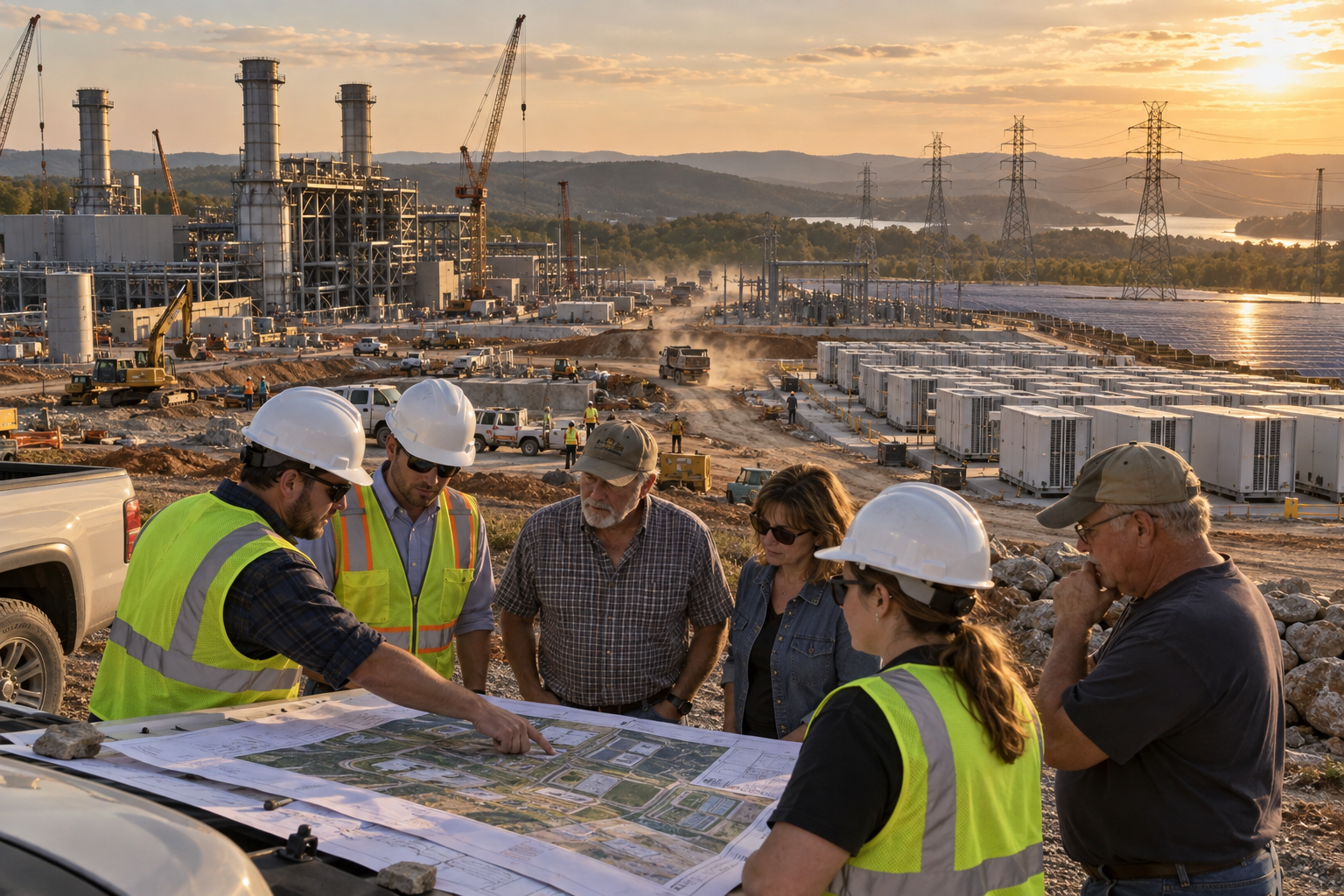
Project River is a proposed industrial and energy campus on roughly 850 acres in Bradley County, Tennessee, near the Hiwassee River. The Wright family, owners of Wright Brothers Construction, is seeking to rezone and annex the currently agricultural land. The proposed $11.3 billion development could include up to 1,500 megawatts of on-site power generation: a 500-megawatt woody biomass plant and two natural-gas plants totaling 1,000 megawatts. A connection to the Tennessee Valley Authority grid would provide up to 360 megawatts for backup and peak demand.
The project does not yet have a confirmed industrial tenant, although developers say a data center is the most likely customer. Other possibilities include advanced manufacturing, robotics and semiconductor production. That uncertainty is a major source of public concern because residents are being asked to approve rezoning and annexation without knowing exactly what will operate on the site.
Supporters describe Project River as a major economic opportunity that could create approximately 2,600 jobs, expand the local tax base, attract billions of dollars in investment and support forestry, construction, trucking and skilled trades. Union representatives have also supported the potential employment benefits. Developers say the campus would be built in phases over about five years and would generate most of its own electricity without increasing local household power bills.
Residents and opponents remain concerned about the project’s environmental and community impacts. Their questions include possible effects on river and groundwater quality, wildlife, erosion, stormwater, sediment, emissions, ash disposal, truck traffic, noise and the character of the riverfront. The Hiwassee River supports recreation, tourism and local businesses. Developers say the campus would not use municipal water or draw water from the river, and would not require an intake or discharge pipe, but detailed environmental and traffic studies were still pending as the first planning commission and city council votes approached.
Entities: Project River, Wright family, Wright Brothers Construction, Bradley County, Tennessee, Hiwassee River • Tone: analytical • Sentiment: neutral • Intent: inform
14-09-2026
An analysis by Moody’s Ratings estimates that the United States will need about US$110 billion (S$140 billion) in new power plants by 2030 to support the country’s rapidly expanding data-centre industry. The investment would provide approximately 45 gigawatts of additional generation capacity, with more than 30 gigawatts expected to come from natural-gas-fired plants. This would require roughly 4 billion cubic feet of additional gas supply each day. Most of the remaining capacity would come from solar power and energy storage, while nuclear restarts would account for less than 5 per cent of the total. The estimate is based on an International Energy Agency forecast that US data centres will consume 426 terawatt-hours of electricity in 2030, doubling their share of national power usage to 10 per cent from 2025 levels.
The expansion is being driven by artificial intelligence and cloud computing, which are creating the largest increase in US electricity demand in decades. The White House has described the AI competition as a national imperative and is supporting major technology companies. However, the infrastructure expansion is generating opposition from communities concerned about higher electricity bills, pollution, water shortages, and impacts on public and private land.
Moody’s estimates that the new power plants alone could add US$25 billion to US$30 billion annually to US electricity costs. Data-centre operators may directly fund up to US$15 billion of those costs through power plants built on their own campuses, representing about 30 per cent of the total capacity expansion. The rest will be allocated through local rate-making and regulatory processes.
The report also highlights a growing mismatch between the speed of data-centre construction and the slower process of adding generation, transmission, and grid interconnection capacity. Although gas plants are attractive because they can operate on demand, they require long lead times. Affordability reviews and regulatory scrutiny could therefore delay new data-centre projects.
Entities: United States, New York, El Paso, Texas, Moody’s Ratings, International Energy Agency • Tone: analytical • Sentiment: negative • Intent: analyze
14-09-2026
Baker Hughes CEO Lorenzo Simonelli said the company has not seen higher borrowing costs slow investment in major energy projects, despite elevated interest rates and renewed inflation concerns. Speaking at the Gastech conference in Bangkok, Simonelli attributed continued project activity to strong demand for natural gas and electricity, supported by population growth, industrial expansion, and the rapid construction of artificial-intelligence infrastructure and data centers. He said project financing remains important, but lenders are also assessing the strength of long-term offtake agreements and the outlook for energy demand.
Simonelli’s comments come amid significant disruption to global energy markets from the Iran war, which has pushed oil prices above $100 per barrel and threatened LNG shipments through the Strait of Hormuz. Restrictions on shipping could affect supplies from Qatar, one of the world’s largest LNG exporters. However, Simonelli said elevated prices can encourage new investment that eventually increases supply. Baker Hughes expects LNG development to continue at full speed and estimates installed LNG capacity will need to reach 900 million tons per year by 2035 to satisfy future demand. The company does not anticipate a prolonged glut from the expected wave of new LNG supply and believes prices will ultimately remain range-bound.
Artificial intelligence and data-center expansion are becoming increasingly important drivers of electricity and gas demand. Simonelli said Baker Hughes does not expect data-center growth to slow despite concerns about power and water consumption, and the company is expanding its capacity to serve the market. In Southeast Asia, constrained electricity grids are prompting some operators to use behind-the-meter and distributed generation, where Baker Hughes supplies equipment. With a backlog exceeding $37 billion across gas infrastructure, LNG, and data-center power generation, Simonelli described the coming period as an “energy demand decade” and said natural gas would be central to meeting it.
Entities: Baker Hughes, Lorenzo Simonelli, CNBC, Gastech conference, Bangkok • Tone: analytical • Sentiment: neutral • Intent: inform